Part 6: Early Modern · 1700–1800
21.Eastern European Jewry
Hasidism vs Mitnagdim
21 min read
The Heartland of Ashkenazi Civilization Verified
By the 18th century, the overwhelming majority of the world's Jews lived in Eastern Europe — primarily in the territories of the Polish-Lithuanian Commonwealth and, after the Partitions of Poland (1772, 1793, 1795), under the rule of Russia, Austria, and Prussia. This vast Jewish population, numbering perhaps one million by 1700 and growing rapidly, constituted the heartland of Ashkenazi civilization — a world of synagogues and study halls, markets and artisan workshops, Yiddish language and culture, and a dense network of communal institutions that governed nearly every aspect of Jewish life.
The roots of this Eastern European Jewish civilization stretched back to the medieval period. Jews had been settling in Polish lands since at least the 12th century, attracted by royal charters that granted favorable terms. The Statute of Kalisz (1264), issued by Prince Boleslaw the Pious of Greater Poland, guaranteed Jews freedom of worship, trade, and movement, as well as legal protection and judicial autonomy. This charter — confirmed and expanded by subsequent Polish kings — established the legal framework for Jewish life in Poland for centuries and was exceptional in medieval Europe for its relative generosity.
The influx of Ashkenazi Jews from the German lands accelerated after the Black Death massacres of 1348–1349 and continued through the 15th and 16th centuries. These immigrants brought with them the Yiddish language (a Germanic language written in Hebrew characters, incorporating Hebrew, Aramaic, and Slavic elements), the Ashkenazi liturgical tradition, the Tosafist method of Talmud study, and a communal organizational model that they adapted to Polish conditions.
The Council of Four Lands Verified
The most remarkable expression of Jewish self-governance in the early modern period was the Va'ad Arba Aratzot — the Council of Four Lands — which functioned as a kind of Jewish parliament for the Polish-Lithuanian Commonwealth from the mid-16th century until its abolition in 1764.
The "four lands" were Greater Poland (Wielkopolska), Lesser Poland (Malopolska), Ruthenia (Volhynia), and Podolia (though some accounts substitute Lithuania, which had its own separate council, the Va'ad Medinat Lita). Representatives — rabbis, communal leaders, and wealthy merchants — gathered annually or biannually, typically at the great fairs of Lublin (in spring) and Jaroslawl (in fall), to legislate on matters affecting Jewish communities across the commonwealth.
The Council's authority was extensive. It apportioned the collective Jewish tax burden among communities, adjudicated intercommunal disputes, issued takkanot (regulations) governing commerce, education, communal elections, and moral behavior, and served as the Jewish community's official representative before the Polish crown. Its records, partially preserved in the pinkas (communal record book) of the Lithuanian Council and in scattered references in responsa literature, reveal a sophisticated governing body that managed the affairs of hundreds of communities across a vast territory.
The Council also exercised censorship and ideological control. In the aftermath of the Sabbatean crisis, the Council of Four Lands issued bans against Sabbatean literature and practices. It regulated the printing of Jewish books and attempted to maintain communal discipline in an era of rapid demographic growth and social change.
The Polish Sejm (parliament) abolished the Council of Four Lands in 1764, replacing the collective Jewish tax with individual head taxes — a measure that eliminated the primary financial rationale for the Council's existence and marked the beginning of the end of traditional Jewish corporate autonomy in Eastern Europe.
The Chmielnicki Massacres Verified
The deepest trauma of Polish Jewish life before the modern era was the Cossack uprising led by Bohdan Chmielnicki (Khmelnytsky) in 1648–1649. The uprising, directed against Polish rule in Ukraine, targeted Jews — who were widely (though inaccurately) perceived as agents of Polish landlord oppression — with savage violence.
The massacres swept across Ukraine, Podolia, and Volhynia with terrifying speed. Jewish communities in Nemirov, Tulchin, Bar, Narol, and hundreds of other towns were destroyed. Contemporary Jewish chronicles — Nathan Hannover's Yeven Metzulah ("Abyss of Despair," 1653) and Shabbetai ha-Kohen's Megillat Eifah ("Scroll of Darkness") — describe mass killings, torture, rape, forced baptism, and the destruction of synagogues and Torah scrolls.
The number of Jewish casualties has been debated by historians. Contemporary Jewish sources claimed 100,000 or more dead. Modern estimates range from 15,000–20,000 (Shaul Stampfer) to perhaps 40,000–50,000 (Bernard Weinryb), with additional thousands sold into slavery or forced to convert. Hundreds of Jewish communities were destroyed, and the economic infrastructure of Polish Jewry was devastated.
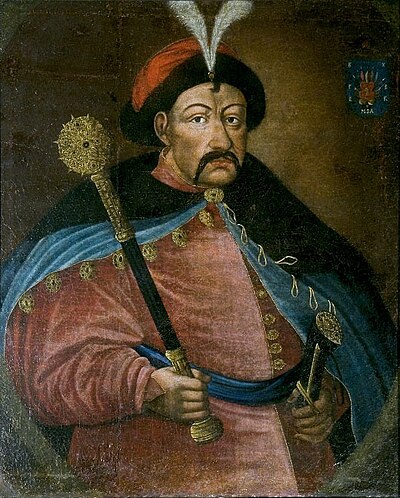
The Chmielnicki massacres reverberated through Jewish consciousness for generations. In Jewish memory, they were known as gezerot tach v'tat — the "decrees of 5408–5409" (Hebrew dates for 1648–1649). Liturgical elegies (kinot and selichot) were composed to memorialize the martyrs. Fast days were proclaimed. Some scholars, including Gershom Scholem, have argued that the trauma of 1648 helped create the psychological conditions for the Sabbatean messianic movement of 1665–1666 — a desperate population grasping at the promise of redemption.
In modern Ukrainian national memory, Chmielnicki is celebrated as a national hero and liberator. His equestrian statue stands in the central square of Kyiv. The stark divergence between Jewish and Ukrainian memory of the same events illustrates how a single historical episode can carry diametrically opposed meanings for different communities.
The Baal Shem Tov and the Birth of Hasidism Tradition
In the aftermath of the Chmielnicki massacres, the Sabbatean debacle, and the general spiritual malaise of 18th-century Polish Jewry, a revolution in Jewish religious life emerged from the most unlikely source: an itinerant healer and mystic from the rural margins of the Jewish world.
Rabbi Israel ben Eliezer (c. 1698–1760), known as the Baal Shem Tov (abbreviated Besht, "Master of the Good Name"), is the founder of Hasidism — the most successful religious revival movement in modern Jewish history. Born in Okopy, a small town in Podolia (modern western Ukraine), the Besht spent years as a wandering folk healer, amulet writer, and storyteller before revealing himself as a spiritual master around 1740.
We know remarkably little about the historical Besht with certainty. He left no written works. The primary source for his life and teachings is Shivhei ha-Besht ("In Praise of the Baal Shem Tov"), a collection of hagiographic tales first published in 1814 — over fifty years after his death — that blends historical memory with legend, miracle stories, and folk motifs. His teachings were transmitted orally and recorded by disciples, particularly Rabbi Jacob Joseph of Polonnoye, whose Toldot Ya'akov Yosef (1780) is the earliest published Hasidic text.
The Besht's revolutionary message, as reconstructed from these sources, can be summarized in several key principles:
Devekut ("Cleaving" to God): The Besht taught that the goal of religious life was not merely intellectual mastery of Torah but a state of constant, intimate communion with the Divine. God was present everywhere — in nature, in daily activities, in the simplest human experiences — and the task of the pious Jew was to perceive and connect with that divine presence at every moment.
Joy in Worship: Against the prevailing tone of asceticism and mournfulness in much of contemporary Jewish piety, the Besht emphasized that God was to be served with joy (simcha). Sadness and depression were not signs of piety but obstacles to divine connection. Music, dance, ecstatic prayer, and even eating and drinking could become vehicles for worship when performed with the right intention (kavvanah).
The Sanctity of the Common Jew: The Besht taught that the simple, sincere prayer of an unlearned Jew could be more precious to God than the sophisticated scholarship of an arrogant scholar. This radical democratization of spiritual worth challenged the rabbinic meritocracy in which learning was the supreme value and unlettered Jews occupied the lowest rung of the social hierarchy.
The Tzaddik ("Righteous One"): Central to Hasidic teaching was the role of the tzaddik — a spiritually elevated leader who served as an intermediary between ordinary Jews and God. The tzaddik could "raise up" the prayers and sparks of his followers, guide them in their spiritual lives, and intercede on their behalf in the heavenly courts. This concept evolved into the institution of the Hasidic rebbe — a charismatic spiritual master whose court (chatzer) became the center of a devotional community.
The Spread of Hasidism Verified
After the Besht's death in 1760, his teachings were carried forward by a remarkable group of disciples who established Hasidic courts across Eastern Europe. The movement's rapid growth in the late 18th and early 19th centuries transformed the landscape of Jewish life.
Rabbi Dov Ber of Mezeritch (the Maggid, d. 1772): The Besht's primary successor, the Maggid attracted a brilliant circle of disciples who would become the founders of the major Hasidic dynasties. Unlike the Besht, who traveled among the common people, the Maggid taught an elite circle of students in his court, emphasizing a more intellectualized mysticism based on the concept of ayin ("nothingness") — the dissolution of self-consciousness in contemplation of the divine.
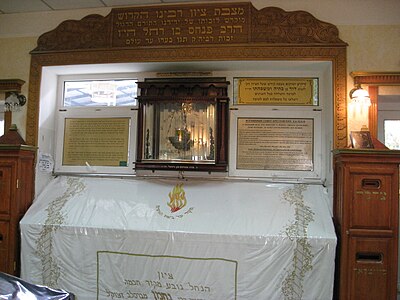
Rabbi Nachman of Breslov (1772–1810): The Besht's great-grandson, Nachman developed a unique approach combining ecstatic mysticism with literary creativity. His Sipurei Ma'asiyot ("Tales"), published in 1816, are allegorical fairy tales of extraordinary beauty and complexity that scholars have compared to Kafka and magical realism. His most famous teaching — "The whole world is a very narrow bridge, and the essential thing is not to be afraid at all" — captures the paradox of faith in a world of suffering. Uniquely among Hasidic dynasties, Breslov never appointed a successor after Nachman's death, remaining "the dead Hasidim" (as their critics called them) — followers of an absent rebbe. The Breslov community in Uman, Ukraine, where Nachman is buried, attracts tens of thousands of pilgrims annually for Rosh Hashanah.
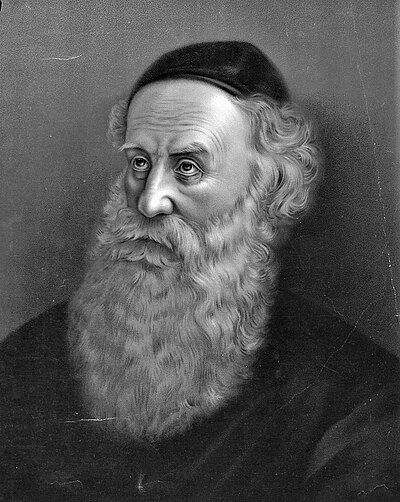
Rabbi Shneur Zalman of Liady (1745–1812): The founder of Chabad (Lubavitch) Hasidism, Shneur Zalman authored the Tanya (1796), a systematic philosophical work that attempted to reconcile Hasidic mysticism with rabbinic intellectualism. His approach, called Chabad (an acronym of Chokhmah, Binah, Da'at — Wisdom, Understanding, Knowledge), emphasized contemplative prayer and intellectual engagement with kabbalistic concepts, distinguishing it from more ecstatic forms of Hasidism. The Chabad-Lubavitch movement, now headquartered in Crown Heights, Brooklyn, has become one of the largest and most visible Jewish organizations in the world.
The Vilna Gaon and Mitnagdic Opposition Verified
The explosive growth of Hasidism provoked fierce opposition from the rabbinic establishment of Lithuania. The opposition — known as the Mitnagdim ("opponents") — found its towering champion in Rabbi Elijah ben Solomon Zalman (1720–1797), the Vilna Gaon (Genius of Vilna), widely regarded as the greatest Talmudic scholar of the modern era.
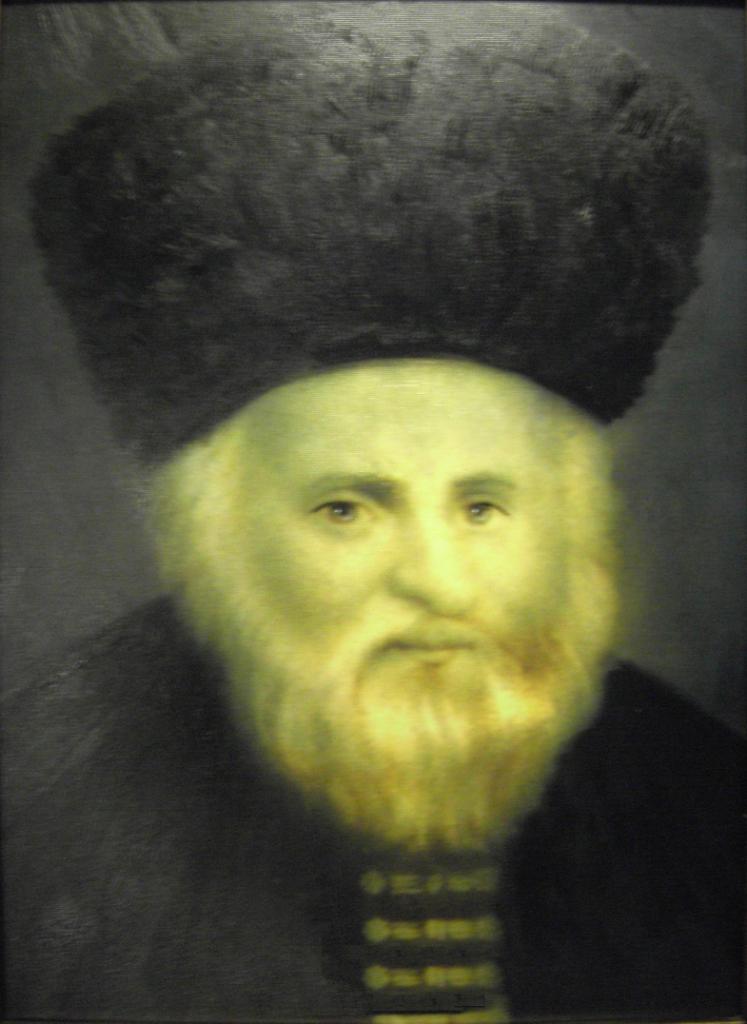
The Gaon was a figure of almost legendary intellectual power. Born in Vilna (Vilnius, modern Lithuania), he was recognized as a prodigy from childhood, reportedly mastering the entire Talmud by age seven. He never held a formal rabbinical position, spending his life in intense private study — reportedly sleeping only two hours per day in four half-hour intervals. His writings, mostly published posthumously by his students, covered the entire range of Jewish literature: Bible, Mishnah, Talmud, Midrash, Kabbalah, grammar, geometry, and astronomy.
The Gaon's objections to Hasidism were both theological and practical:
Theological concerns: The Gaon accused the Hasidim of pantheism — the belief that God and the world are identical — which he considered a heretical distortion of kabbalistic teaching. He objected to the Hasidic emphasis on prayer over Torah study, which he regarded as an inversion of priorities. And he was deeply suspicious of the tzaddik institution, which he saw as a form of idolatry — the cult of personality replacing the cult of learning.
Practical concerns: The Gaon objected to Hasidic deviations from established prayer rites (Hasidim adopted the Sephardic-influenced nusach of Isaac Luria rather than the traditional Ashkenazi rite), their modification of the times for prayer (Hasidim often prayed later than the prescribed times, using the delay for preparatory meditation), and their boisterous worship style (singing, dancing, and shouting during prayer, which the Mitnagdim considered disrespectful).
In 1772, the Gaon and the Vilna communal leadership issued a herem (ban of excommunication) against the Hasidim, forbidding contact with them and ordering the burning of Hasidic books. The ban was renewed in 1781 and 1797. Shneur Zalman of Liady was arrested twice (in 1798 and 1800) on charges — apparently instigated by Mitnagdic informers — of treason against the Russian state.
Despite the vehemence of the conflict, Hasidism and Mitnagdism gradually reached an accommodation over the course of the 19th century. The rise of shared threats — the Haskalah (Jewish Enlightenment), Reform Judaism, secularism, and political upheaval — pushed the two camps toward pragmatic coexistence. Today, both traditions thrive within Orthodox Judaism, and the old animosities, while not entirely forgotten, have largely been replaced by mutual respect.
The Shtetl: Myth and Reality Debated
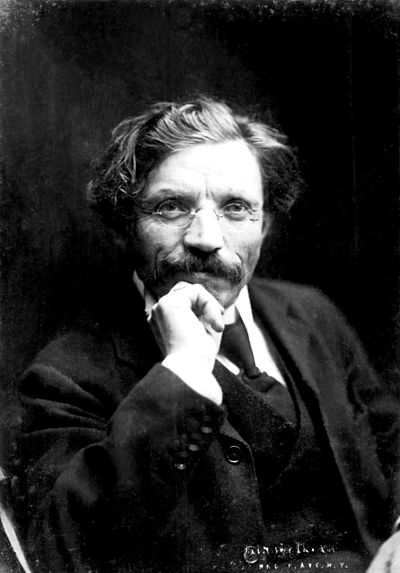
The shtetl — the small Jewish town of Eastern Europe — has become one of the most iconic and romanticized settings in Jewish cultural memory, immortalized in the stories of Sholem Aleichem, the paintings of Marc Chagall, and the musical Fiddler on the Roof. The reality was more complex than either nostalgia or condescension allows.
The typical shtetl was a market town in which Jews constituted a significant portion — often a majority — of the population. Jews dominated petty trade, artisan crafts (tailoring, shoemaking, carpentry, blacksmithing), innkeeping, and the tavern trade. They served as intermediaries between the Polish landed gentry (szlachta) and the peasant population — a position that was economically necessary but socially precarious, as it exposed Jews to resentment from both above and below.
Life in the shtetl was shaped by the rhythm of the Jewish calendar: the weekly Sabbath, which transformed the bustling market town into a place of rest and worship; the annual cycle of festivals; and the lifecycle events — brit milah (circumcision), bar mitzvah, weddings, and funerals — that marked the passage of time. The synagogue (shul), the study house (beit midrash), the ritual bath (mikveh), and the marketplace were the four poles of shtetl geography.
Shtetl society was hierarchical. Scholars and their families occupied the top of the social pyramid. Wealthy merchants came next, followed by artisans and small traders. At the bottom were the poor — and there were many poor, particularly by the 18th century, as population growth outpaced economic opportunity. The gemilut chasadim (charitable loan society) and the hekdesh (poorhouse) were standard communal institutions.
The degree of Jewish-Gentile interaction in the shtetl is debated. Some scholars (Yohanan Petrovsky-Shtern, in his study The Golden Age Shtetl) have emphasized the relatively peaceful coexistence between Jews and their non-Jewish neighbors, the economic interdependence, and the cultural exchanges that occurred in daily life. Others have stressed the fundamental separateness of the communities, the undercurrent of antisemitic hostility, and the vulnerability of Jewish life to periodic violence.
Yeshiva Culture and Torah Learning Verified
The yeshiva — the advanced academy of Talmudic study — was the supreme institution of Ashkenazi Jewish civilization. In the Polish-Lithuanian Commonwealth, yeshivot were typically attached to the synagogue of a major community and supported by communal taxes and the hospitality of local families who hosted students (eat days — a rotation system ensuring that poor students received daily meals from different households).
The curriculum centered on the Babylonian Talmud, studied with the commentaries of Rashi and the Tosafists, and analyzed through the dialectical method known as pilpul (literally "pepper") — a rigorous, often elaborate style of argumentation that sought to resolve contradictions between different Talmudic passages through subtle distinctions. The pilpul method was championed by Rabbi Jacob Pollak (c. 1460–1541) and his student Rabbi Shalom Shachna (c. 1500–1558), who established the dominant Talmudic methodology in Polish yeshivot.
Not everyone admired pilpul. Rabbi Judah Loew of Prague (the Maharal, c. 1520–1609) criticized excessive dialectical ingenuity as detached from the plain meaning of the text and from ethical application. The tension between virtuosic intellectual display and the practical, moral purpose of Torah study remained a recurring theme in yeshiva culture.
The great yeshivot of the Polish-Lithuanian Commonwealth — in Lublin, Cracow, Poznan, Ostrog, Brisk (Brest-Litovsk), and elsewhere — produced generations of scholars who served as rabbis, judges, and communal leaders across the Ashkenazi world. The semikha (rabbinical ordination) granted by these institutions was the gold standard of rabbinic authority.
The Pale of Settlement Verified
The Partitions of Poland (1772, 1793, 1795) brought the vast majority of Eastern European Jews under Russian rule — an empire that had previously excluded Jews almost entirely. Catherine the Great's government, inheriting a population of approximately 800,000 Jews it had not sought and did not want, established the Pale of Settlement (cherta osedlosti) in 1791 — a defined territory within which Jews were permitted to reside, encompassing the former Polish territories and extending from the Baltic to the Black Sea (roughly modern Lithuania, Belarus, Ukraine, Moldova, and eastern Poland).
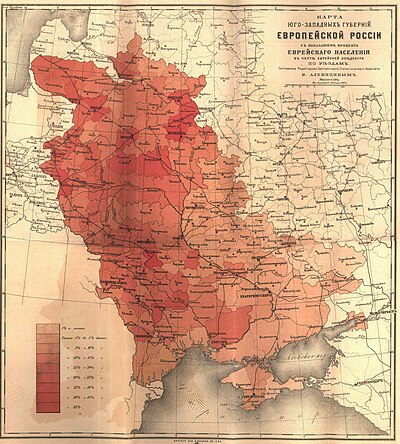
Jews were generally forbidden to live outside the Pale, with exceptions for wealthy merchants (of the "first guild"), university graduates, skilled artisans, and soldiers who had completed their military service. The Pale confined the Jewish population to a limited geographic area while subjecting it to a battery of restrictive legislation: quotas on university admission, prohibitions on land ownership, restrictions on certain professions, and periodic expulsions from rural areas.
The Pale of Settlement shaped Eastern European Jewish life for over a century (1791–1917, when it was abolished after the Russian Revolution). Within its boundaries, Jewish population density was extraordinary — by the late 19th century, approximately five million Jews lived in the Pale, constituting 11–12% of the total population in some provinces. This concentration created both the conditions for a vibrant Yiddish-speaking civilization and the grinding poverty that would eventually drive mass emigration to America, Palestine, and elsewhere.
Economic Life and Occupations Verified
The economic profile of Eastern European Jewry was shaped by centuries of legal restriction and social circumstance. Excluded from land ownership and agriculture in most areas, Jews concentrated in commerce, artisan trades, and services. The 1897 Russian census — the first comprehensive demographic study of the Pale — provides a detailed snapshot:
Approximately 38% of employed Jews worked in manufacturing and artisan trades (primarily tailoring, shoemaking, and other crafts). About 32% were engaged in commerce and trade. Around 5% worked in transportation. Professional occupations (teachers, doctors, lawyers) accounted for about 5%. Only about 3% were engaged in agriculture, despite periodic government efforts to encourage Jewish farming.
This occupational profile reflected both legal constraints (prohibitions on certain trades and professions) and cultural preferences (the high value placed on intellectual occupations and the flexibility of commercial enterprise). It also made Jews vulnerable to economic disruption and to antisemitic accusations of parasitism — the claim that Jews were "unproductive" because they did not work the land.
The poverty of the Jewish masses was real and widespread. Visitors to the Pale in the 18th and 19th centuries described overcrowded towns, dilapidated housing, and widespread hunger. The philanthropic organizations that emerged in Western Europe and America — the Alliance Israelite Universelle (founded 1860 in Paris), the Jewish Colonization Association (founded 1891 by Baron de Hirsch) — were motivated in significant part by the dire conditions of Pale Jewry.
Between Worlds: The Eve of Modernity Tradition
By the end of the 18th century, Eastern European Jewry stood at a crossroads. The traditional world of Torah study, communal autonomy, and Sabbath observance was being challenged from within by the Hasidic revolution and from without by the forces of modernity — the Haskalah (Jewish Enlightenment), political emancipation (in Western Europe), and the social and economic upheavals of industrialization.
The Hasidic-Mitnagdic conflict, for all its bitterness, was an internal argument within a shared framework of Torah observance. Both sides agreed on the authority of the Talmud, the binding nature of halakhah, the centrality of prayer, and the ultimate hope for messianic redemption. Their disagreement was about emphasis, method, and style — not about the fundamental categories of Jewish life.
The challenges that lay ahead — the Enlightenment's promise of civic equality in exchange for cultural assimilation, the rise of secular Jewish movements (socialism, nationalism, Yiddishism), the mass emigration to America and Palestine, and the ultimate catastrophe of the Holocaust — would test the resilience of Eastern European Jewish civilization in ways that neither the Hasidim nor their opponents could have imagined.
Yet the spiritual and institutional legacy of this world endures. The Hasidic dynasties that survived the Holocaust — Lubavitch, Satmar, Breslov, Ger, Belz, Vizhnitz, and dozens of others — continue to thrive in Israel, America, and across the world. The yeshiva tradition, carried to new centers by refugees and immigrants, sustains the same Talmudic conversation that began in the study houses of Vilna and Lublin. The Yiddish language, declared dead so many times, persists in Hasidic communities and in the work of scholars, writers, and enthusiasts who refuse to let it go. And the melodies — the niggunim that the Besht and his followers sang to open the gates of heaven — are still heard wherever Jews gather to pray, to celebrate, and to remember.
Wooden Synagogues: A Lost Architectural Tradition Verified
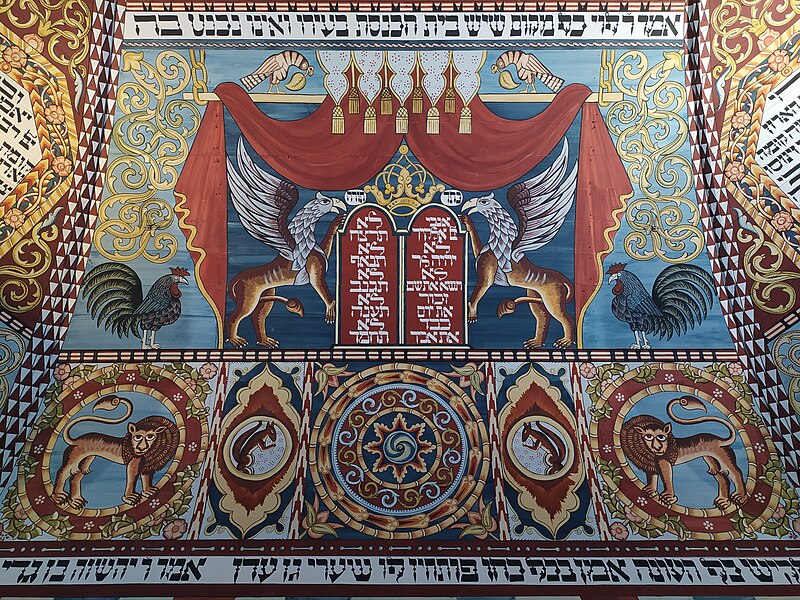
One of the most distinctive and tragically lost artistic achievements of Eastern European Jewry was the tradition of wooden synagogues. Built primarily in the 17th and 18th centuries across Poland, Lithuania, Belarus, and Ukraine, these structures featured elaborate carved and painted interiors — vaulted ceilings decorated with zodiac signs, animals, floral motifs, and Hebrew calligraphy — that transformed modest wooden buildings into spaces of extraordinary beauty.
The most famous examples included:
- The Great Synagogue of Wolpa (Vawkavysk district, Belarus), built c. 1643, with a multi-tiered roof and richly painted interior
- The synagogue of Gwozdziec (modern Hvizdets, Ukraine), built c. 1650, whose painted cupola was one of the masterpieces of Jewish folk art
- The synagogue of Zabludow (Poland), built 1639, with an unusual octagonal bimah canopy
Nearly all of these synagogues were destroyed — first by fires and neglect, then systematically by the Nazis during World War II. Their appearance is known primarily through drawings, photographs, and the pioneering documentation work of the An-sky Ethnographic Expedition (1912-1914), which photographed and documented Jewish material culture across Ukraine before it was destroyed.
In 2014, the Museum of the History of Polish Jews (POLIN Museum) in Warsaw opened with a full-scale reconstruction of the painted ceiling and bimah of the Gwozdziec synagogue as its centerpiece — a stunning tribute to a vanished world, painstakingly recreated by a team of artists and scholars led by Rick and Laura Brown of Handshouse Studio.
Locations in This Chapter
Loading map...