Part 6: Early Modern · 1750–1880
22.Enlightenment & Emancipation
Haskalah, Mendelssohn
21 min read
The Philosopher of Dessau Verified
In 1743, a fourteen-year-old hunchbacked boy walked through the Rosenthaler Gate — the only entrance in Berlin through which Jews and cattle were permitted to pass. His name was Moses Mendelssohn, and he had traveled on foot from Dessau to study with Rabbi David Fränkel, who had recently been appointed chief rabbi of Berlin. Within three decades, this self-taught philosopher would become one of the most celebrated intellectuals in Europe, befriended by Gotthold Ephraim Lessing, Immanuel Kant, and Frederick the Great — and he would ignite a revolution in Jewish thought that reverberates to this day.
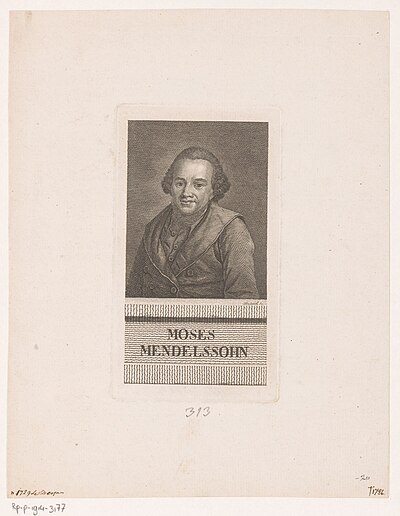
Mendelssohn (1729–1786) arrived in an era when European Jews lived under a thicket of legal restrictions. In most German states, Jews could not own land, enter most professions, or reside outside designated areas without special permission. The "Jew toll" (Leibzoll) taxed Jewish travelers as if they were merchandise. Frederick the Great's 1750 "Revised General Privilege" classified Jews into categories ranging from "generally privileged" (a handful of wealthy families) to "tolerated" (the vast majority, who could be expelled at any time). This was the legal landscape Mendelssohn navigated as he rose to prominence.
His philosophical breakthrough came with Phaedon (1767), a dialogue on the immortality of the soul modeled on Plato. The book was a sensation — translated into nearly every European language — and earned Mendelssohn the epithet "the German Socrates." It was a remarkable achievement for a man who had taught himself German, French, Latin, Greek, and English largely through self-study. The Royal Prussian Academy of Sciences awarded him its prize in 1763 for an essay on metaphysics, ranking him above Immanuel Kant.
The Lavater Affair and Jewish Identity Verified
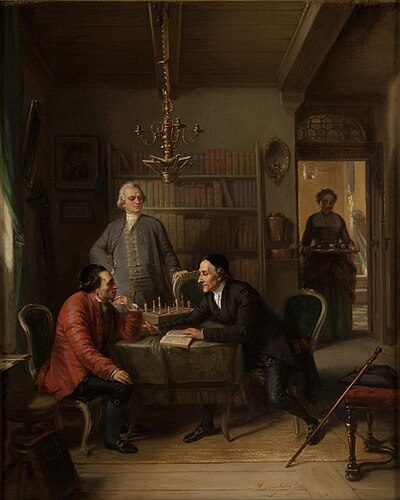
Mendelssohn's fame brought an unwelcome challenge. In 1769, the Swiss theologian Johann Caspar Lavater publicly dedicated his translation of Charles Bonnet's Christian apologetics to Mendelssohn and challenged him either to refute it or to convert. The affair put Mendelssohn in an impossible position: a public defense of Judaism risked provoking Christian authorities, while silence might be taken as agreement.
Mendelssohn's measured response — asserting his commitment to Judaism while declining to engage in interfaith polemics — revealed the precariousness of even the most celebrated Jew's position in Enlightenment Europe. The incident deeply affected his health and prompted him to turn his intellectual energies more directly toward Jewish questions.
His most consequential Jewish project was his German translation of the Torah, the Bi'ur (1780–1783), rendered in elegant German but printed in Hebrew characters. This was a deliberate bridge: it enabled German Jews to acquire fluent German — the key to participation in wider culture — while maintaining engagement with the Hebrew text. Traditional rabbis in cities including Prague, Frankfurt, Altona, and Fürth recognized the implicit threat and several issued bans against the translation. Rabbi Rafael Cohen of Altona condemned it publicly. Yet the work spread rapidly, and within a generation it had transformed Jewish literacy across Central Europe.
Jerusalem and the Philosophy of Judaism Debated
Mendelssohn's philosophical masterwork on Judaism, Jerusalem, or On Religious Power and Judaism (1783), made a radical argument: Judaism was not a "revealed religion" in the Christian sense but a "revealed legislation." God had given the Jews not dogmas to believe but laws to follow. The implications were profound — if Judaism demanded practice rather than belief, then Jews could participate fully in the intellectual life of the Enlightenment without abandoning their faith.
This formulation remains debated among scholars. Some, like Alexander Altmann in his definitive biography Moses Mendelssohn (1973), see it as a genuine philosophical innovation that preserved Jewish distinctiveness. Others, including Gershom Scholem, argued that Mendelssohn's rationalism stripped Judaism of its mystical and messianic core, setting the stage for assimilation. The historian Michael A. Meyer has characterized the tension as "the Mendelssohnian dilemma" — the difficulty of being both fully modern and fully Jewish.
Mendelssohn died in 1786, just three years before the French Revolution would begin to transform the political landscape for European Jewry. Of his six children, four converted to Christianity. His grandson, Felix Mendelssohn Bartholdy, was baptized as a child and became one of the greatest composers of the Romantic era. This family trajectory — from ghetto to Enlightenment to conversion in three generations — haunted advocates of Jewish modernization for the next two centuries.
The Haskalah: A Jewish Enlightenment Verified
The intellectual movement Mendelssohn inspired, the Haskalah (from the Hebrew sekhel, "reason"), spread across Europe in waves. Its adherents, called maskilim, advocated secular education, linguistic modernization, and economic productivization of the Jewish community. The movement developed distinct regional flavors:
In Germany (1770s–1820s): The Berlin Haskalah centered on Mendelssohn's circle and the journal Ha-Me'asef (The Gatherer), founded in 1783 — the first Hebrew-language periodical. Contributors included Naphtali Herz Wessely, whose Divrei Shalom ve-Emet (Words of Peace and Truth, 1782) called for Jews to study secular subjects alongside Torah. The work provoked furious opposition from Rabbi Ezekiel Landau of Prague and Rabbi David ben Nathan of Lissa, who saw it as an assault on traditional education.
In Galicia (1810s–1860s): The Galician Haskalah, centered in Lemberg (Lviv) and Brody, was represented by figures like Nachman Krochmal, whose Moreh Nevukhei ha-Zeman (Guide for the Perplexed of the Time, published posthumously in 1851) attempted a Hegelian philosophy of Jewish history. Joseph Perl (1773–1839) wielded satire against Hasidism in his novel Megaleh Temirin (Revealer of Secrets, 1819).
In Russia (1840s–1880s): The Russian Haskalah, delayed by the czarist government's ambivalence toward Jewish modernization, produced major literary figures including Abraham Mapu, whose Ahavat Tziyon (The Love of Zion, 1853) was the first Hebrew novel, and Judah Leib Gordon (1831–1892), whose poem "Hakitzah Ami" ("Awake, My People") became the movement's anthem with its famous line: "Be a man in the street and a Jew at home."
The French Revolution and Emancipation Verified
The French Revolution of 1789 posed a direct question about the status of Jews as citizens. The Declaration of the Rights of Man and of the Citizen (August 26, 1789) proclaimed universal rights, but the application of these rights to Jews was fiercely debated in the National Assembly.
The Sephardic Jews of Bordeaux and Bayonne — relatively assimilated, French-speaking, and economically integrated — were granted full citizenship on January 28, 1790. The far more numerous Ashkenazi Jews of Alsace-Lorraine waited another eighteen months. It was not until September 27, 1791, that the National Assembly voted to extend full citizenship to all Jews in France, with the condition (proposed by Adrien Duport) that they renounce any separate communal jurisdiction.
Count Stanislas de Clermont-Tonnerre's famous formulation during the 1789 debate encapsulated the bargain: "To the Jews as a nation, nothing; to the Jews as individuals, everything." This framing — rights in exchange for the dissolution of collective Jewish autonomy — would define the emancipation debate across Europe for the next century.
Napoleon's Sanhedrin Verified
Napoleon Bonaparte's relationship with the Jews was characteristically bold and calculated. In 1806, he convened an Assembly of Jewish Notables — 112 delegates from across the French Empire — and presented them with twelve questions designed to determine whether Jewish law was compatible with French citizenship. Could Jews serve in the army? Did Jewish law permit intermarriage? Did Jews consider France their country?
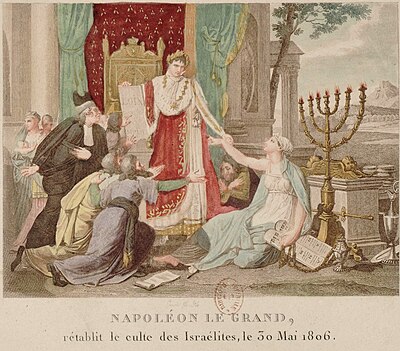
Satisfied with the Assembly's answers, Napoleon took the dramatic step of convening a "Great Sanhedrin" — deliberately evoking the ancient Jewish supreme court — in February 1807. Seventy-one delegates (the same number as the ancient Sanhedrin) met in the Hôtel de Ville in Paris. They formally endorsed the compatibility of Jewish law with French citizenship and declared that Jews regarded France as their fatherland.
The Sanhedrin's practical effects were mixed. Napoleon's "Infamous Decree" of March 17, 1808, imposed special restrictions on Jewish commercial activities in Alsace for ten years, undermining the promise of full equality. Yet the symbolic weight of the Sanhedrin was enormous. For the first time since antiquity, a Jewish legislative body had been convened by a head of state, and its proceedings — recorded in detail in the Procès-verbal des séances de l'Assemblée des Israélites — demonstrated that Jewish law could accommodate modernity.
The Struggle Across Europe Debated
Emancipation did not follow a single timeline. It advanced, retreated, and advanced again across the continent:
The Netherlands was among the earliest, granting citizenship to Jews in 1796 under French influence. Prussia extended partial rights in 1812 through the Edict of Emancipation, but these were rolled back after the Congress of Vienna in 1815. Full emancipation in the German states came only with the unification of Germany in 1871. Austria-Hungary granted full civil equality in 1867 as part of the Ausgleich (Compromise). Great Britain admitted Jews to Parliament in 1858 after a protracted debate (Lionel de Rothschild was elected repeatedly from 1847 but could not take his seat because of the Christian oath required). Italy achieved full emancipation in 1870 with the unification of the peninsula. Switzerland was among the last in Western Europe, extending full rights only in 1866. Russia — home to the largest Jewish population in Europe — never granted full emancipation before the Revolution of 1917.
The pattern was uneven and often fragile. Each advance triggered backlash. The "Hep-Hep riots" of 1819 — which began in Würzburg and spread across German cities — demonstrated that legal emancipation did not guarantee social acceptance. The cry of "Hep! Hep!" (whose etymology remains debated — possibly an acronym for Hierosolyma est perdita, "Jerusalem is lost," or simply a herding cry) accompanied attacks on Jewish homes, shops, and synagogues in more than thirty cities.
The Wissenschaft des Judentums Verified
The response to these pressures included a revolutionary intellectual movement: the Wissenschaft des Judentums, or "Science of Judaism." Founded in 1819 by a group of young Jewish intellectuals in Berlin — including Leopold Zunz (1794–1886), Eduard Gans (1797–1839), and Heinrich Heine (1797–1856) — the Verein für Cultur und Wissenschaft der Juden (Society for the Culture and Science of the Jews) sought to apply modern critical methods to the study of Jewish history, literature, and religion.
Leopold Zunz's Die gottesdienstlichen Vorträge der Juden (The Liturgical Sermons of the Jews, 1832) established the academic study of Jewish liturgy and literature. His work demonstrated that the Jewish sermon had a continuous history stretching back to antiquity — a finding with practical implications, since Prussian authorities had attempted to ban sermons in German in synagogues on the grounds that they were a Christian innovation.
Abraham Geiger (1810–1874), who would become a founder of Reform Judaism, produced groundbreaking scholarship on the development of Jewish law and the relationship between Judaism and early Christianity. His Urschrift und Übersetzungen der Bibel (Original Scripture and Translations of the Bible, 1857) argued that the biblical text had undergone a long process of development — a claim that placed him at the forefront of both Jewish and general biblical scholarship.
Heinrich Graetz (1817–1891) produced the monumental Geschichte der Juden (History of the Jews, 1853–1876), an eleven-volume narrative history that became the standard reference for Jewish history in the modern period. Graetz's work was the first attempt to write a comprehensive Jewish history using modern scholarly methods, and it shaped how Jews understood their own past for generations.
Heinrich Heine: Poet Between Worlds Debated
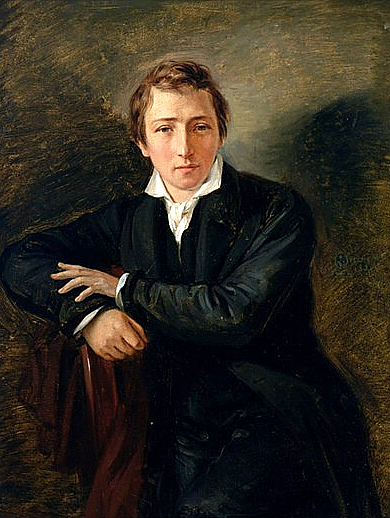
Heinrich Heine (1797–1856), born Harry Heine in Düsseldorf, embodied the agonies of the emancipation era. One of the greatest lyric poets of the German language — his Buch der Lieder (Book of Songs, 1827) was set to music by Schubert, Schumann, Mendelssohn, Brahms, and Wagner — Heine converted to Christianity in 1825 to gain access to a university career. He famously called his baptismal certificate "the entrance ticket to European culture."
Yet the ticket proved counterfeit. Heine's conversion opened no doors; German academia remained hostile to Jews regardless of baptism. He spent most of his adult life in Parisian exile, writing with devastating wit about German politics, philosophy, and culture. His relationship to Judaism remained complex. He never practiced Christianity, and in later years he returned to Jewish themes, writing poems about medieval Jewish martyrs and the Sabbath.
Heine's prophetic warning in 1820 — recorded in his play Almansor — has been quoted with chilling frequency since the twentieth century: "Where they burn books, they will ultimately burn people also" (Dort wo man Bücher verbrennt, verbrennt man auch am Ende Menschen). He was writing about the burning of the Quran during the Spanish Inquisition, but the words acquired terrible new meaning a century later.
The Salon Culture Verified
Between roughly 1780 and 1814, a remarkable cultural phenomenon emerged in Berlin: the Jewish salon. Educated Jewish women — barred from formal institutions but possessing both intellect and inherited wealth — hosted gatherings that brought together the city's literary, philosophical, and aristocratic elites.
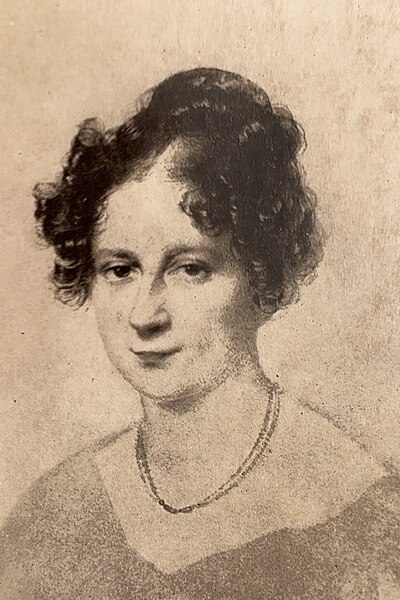
Rahel Varnhagen (née Levin, 1771–1833) ran the most celebrated of these salons from her attic apartment on the Jägerstrasse. Her guests included the brothers August Wilhelm and Friedrich Schlegel, Alexander and Wilhelm von Humboldt, Prince Louis Ferdinand of Prussia, the diplomat Friedrich von Gentz, and the actress Friederike Unzelmann. For a brief window, social barriers of class, religion, and gender dissolved in the shared pursuit of Romantic Bildung (cultivation).
Henriette Herz (1764–1847) hosted a competing salon that emphasized philosophical discussion and the "Tugendbund" (League of Virtue). Dorothea Schlegel (née Brendel Mendelssohn, Moses Mendelssohn's daughter) was a regular participant before her conversion to Christianity and marriage to Friedrich Schlegel.
The salon era ended with the rise of German nationalism after the Napoleonic Wars. The "Christian-German dining clubs" (Christlich-Deutsche Tischgesellschaft), founded in 1811 by Achim von Arnim and Clemens Brentano, explicitly excluded Jews, women, and "Frenchified" Germans, signaling a new era of exclusionary nationalism.
The Birth of Reform Judaism Verified
The Enlightenment's emphasis on reason and universalism, combined with the social pressures of emancipation, produced the first modern denominational movement in Judaism: Reform.
The movement's institutional origins can be traced to the Seesen Temple, established by the philanthropist Israel Jacobson in 1810 in the Kingdom of Westphalia. Jacobson introduced choral singing, organ music, sermons in German, and the elimination of certain prayers considered anachronistic (such as the plea for a return to Zion). When Westphalia was dissolved after Napoleon's defeat, Jacobson moved his reforms to Berlin, holding private services in his home and later in the salon of Jacob Herz Beer (father of the composer Giacomo Meyerbeer).
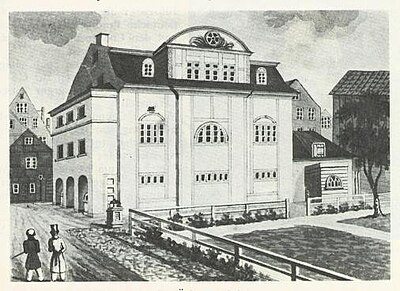
The Hamburg Temple, established in 1818, became the first permanent Reform synagogue. Its prayer book, the Gebetbuch, made significant liturgical changes: prayers for the restoration of the Temple sacrifices were removed, references to a personal Messiah were replaced with hope for a messianic age, and German was introduced alongside Hebrew. The rabbinical establishment reacted with alarm. The Hamburg rabbinical court, led by Rabbi Akiva Eger's son-in-law Moses Sofer (the Chatam Sofer), issued a comprehensive ban, arguing that any alteration to the traditional prayer rite was forbidden by Jewish law. Sofer's famous dictum — chadash asur min ha-Torah ("novelty is forbidden by the Torah," a wordplay on the prohibition of new grain) — became a rallying cry for traditional resistance.
Abraham Geiger and the Reform Rabbinical Conferences Debated
The theological architect of Reform Judaism was Abraham Geiger (1810–1874), who served as rabbi in Wiesbaden, Breslau, Frankfurt, and Berlin. Geiger argued that Judaism had always evolved and that the present generation had both the right and the duty to continue that evolution. He called for equality of women in religious life, questioned the binding authority of the Talmud in its entirety, and envisioned Judaism as a universal ethical religion whose prophetic tradition spoke to all humanity.
A series of rabbinical conferences in the 1840s attempted to formalize Reform principles. The Brunswick Conference (1844), the Frankfurt Conference (1845), and the Breslau Conference (1846) debated issues including the use of Hebrew in services, Sabbath observance, circumcision, and dietary laws. The conferences revealed deep divisions. Zacharias Frankel (1801–1875), who advocated a middle path of "positive-historical Judaism," walked out of the Frankfurt Conference when the majority voted that Hebrew was not "objectively necessary" for prayer — a dramatic moment that would eventually lead to the founding of the Conservative movement.
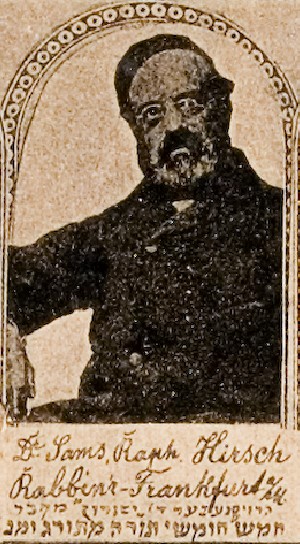
Samson Raphael Hirsch (1808–1888), serving as rabbi of the separatist Orthodox community in Frankfurt am Main, offered a different response: his philosophy of Torah im Derech Eretz ("Torah with the way of the land") argued that Jews could and should engage with modern culture while maintaining strict adherence to halakha (Jewish law). Hirsch's approach — combining secular education with Orthodox practice — laid the groundwork for Modern Orthodoxy.
The Tension Between Integration and Identity Debated
The emancipation era confronted European Jewry with a question that had no precedent in Jewish history: could Jews be full citizens of a modern nation-state while remaining Jews? The question was not abstract. It played out in thousands of individual lives.
Some chose full assimilation. In Berlin alone, between 1800 and 1830, an estimated one-third of the Jewish community converted to Christianity. The Mendelssohn family's trajectory was not unusual. The poet Ludwig Börne (born Juda Löb Baruch) converted in 1818. The political theorist Karl Marx was baptized at age six — his father had converted to advance his legal career.
Others sought a middle path. The emerging Reform movement argued that Jews could modernize their religious practice to fit the contours of bourgeois European life without abandoning Judaism entirely. The Orthodox, meanwhile, insisted that the tradition could not be compromised, even in pursuit of social acceptance.
Still others concluded that the entire project of emancipation was flawed. The socialist Moses Hess, once a champion of universalism (and a collaborator of Marx), published Rome and Jerusalem in 1862, arguing that Jewish national identity was ineradicable and that Jews should seek their own state. The book was largely ignored in its time but would later be recognized as a precursor to political Zionism.
The historian Jacob Katz, in his influential Out of the Ghetto (1973), argued that the emancipation contract was always unequal: Jews were expected to transform themselves utterly, while Christian society was required to change hardly at all. This structural asymmetry ensured that no amount of Jewish acculturation could fully satisfy the demand for acceptance, setting the stage for the crises of the late nineteenth century.
The Rise of Modern Antisemitism as a Reaction Debated
Paradoxically, emancipation itself generated new forms of hostility. As Jews entered professions, universities, and cultural institutions previously closed to them, resentment grew among those who felt displaced. The sociologist Werner Sombart's The Jews and Modern Capitalism (1911) argued that Jews were the driving force behind capitalism — a thesis that, whether intended as compliment or critique, reinforced stereotypes of Jewish economic power.
Richard Wagner's essay "Judaism in Music" (1850, republished under his own name in 1869) attacked Jewish influence on German culture with particular venom, targeting Mendelssohn's grandson Felix and Giacomo Meyerbeer by name. Wagner's antisemitism was cultural rather than racial — he accepted converted Jews into his circle — but its influence on German nationalist thought was profound.
The "Damascus Affair" of 1840, in which Jews in Damascus were accused of murdering a Capuchin friar for ritual purposes, demonstrated that even as Western European Jews gained legal equality, the medieval blood libel remained a potent weapon. The affair provoked the first coordinated international Jewish defense effort: Sir Moses Montefiore of Britain and Adolphe Crémieux of France traveled to the Middle East and secured the release of the accused Jews. The episode led to the founding of organizations dedicated to Jewish self-defense and mutual aid, including the Alliance Israélite Universelle (1860), one of the first modern Jewish international organizations.
The Lasting Legacy Debated
The Enlightenment and emancipation era — spanning roughly 1750 to 1880 — transformed every aspect of Jewish life. It produced the modern denominations (Reform, Orthodox, and the incipient Conservative movement), the academic study of Judaism, modern Hebrew literature, and a new kind of Jewish intellectual who moved between Jewish and general culture.
It also produced an enduring tension. The generation of Mendelssohn asked whether reason and revelation could coexist. The generation of Geiger asked whether tradition and reform could coexist. The generation of Heine asked whether Jewish identity and European belonging could coexist. None of these questions have been definitively answered. They continue to shape Jewish life today — in debates over denominational boundaries, in struggles over the relationship between religion and state in Israel, and in the ongoing negotiation between particularism and universalism that defines modern Jewish identity.
The period also demonstrated, with painful clarity, that legal equality did not guarantee social acceptance. The gap between de jure emancipation and de facto equality would haunt European Jewry throughout the nineteenth and twentieth centuries, and its echoes can still be heard in contemporary debates about antisemitism, minority rights, and the limits of liberal tolerance.
The Eastern European Experience Verified
While Western European Jews debated the terms of emancipation, the vast majority of world Jewry — concentrated in the Russian Empire's Pale of Settlement — lived under very different conditions. The approximately five million Jews of the Russian Empire in the late nineteenth century experienced modernization not as a gradual process of legal inclusion but as a volatile mix of government hostility, economic restriction, and internal cultural ferment.
The Hovevei Zion (Lovers of Zion) movement, founded in 1884 in Kattowitz (now Katowice, Poland), drew many of its adherents from the Russian Haskalah's disillusionment with the promise of integration. After the 1881 pogroms, the maskil Leon Pinsker published Auto-Emancipation (1882), arguing that antisemitism was a permanent psychosocial phenomenon and that Jews could only achieve dignity through self-liberation — a thesis that anticipated Theodor Herzl by fourteen years.
The Yiddish language — the mame-loshn (mother tongue) of Ashkenazi Jewry — became the vehicle for a literary and cultural renaissance in the late nineteenth century. The three classic Yiddish writers — Mendele Mocher Sforim (Sholem Abramovich, 1836–1917), Sholem Aleichem (Sholem Rabinovich, 1859–1916), and I.L. Peretz (1852–1915) — created a modern Yiddish literature of extraordinary depth and range. Their works, which depicted the joys and sorrows of shtetl life with humor, pathos, and unflinching social criticism, gave literary voice to a world that was already beginning to disappear.
The Haskalah's ultimate legacy was not the triumph of reason over tradition but the fracturing of Jewish consensus. By 1880, the old model of communal authority — in which the rabbi, the kahal (community council), and shared ritual practice held the community together — had been irreversibly broken. In its place arose the multiple paths that would define modern Jewish life: religious reform, cultural nationalism, political socialism, territorial Zionism, and the reassertion of tradition in modern dress. All of these paths trace their origins to the upheavals of the Enlightenment and emancipation era.
The physical traces of this transformation survive: Mendelssohn's grave in the Jüdischer Friedhof Berlin-Mitte, the Hamburg Temple's original prayer book in the Jewish Museum of Hamburg, the archives of the Ha-Me'asef in the National Library of Israel. These scrolls and stones — the texts and the material remnants — document one of the most consequential transformations in Jewish history: the moment when a people defined by covenant and community confronted a world that demanded they become something new.
Locations in This Chapter
Loading map...