Part 7: Modern Era · 1800–present
23.Denominational Judaism
Reform, Conservative, Orthodox movements
20 min read
A Religion Divides — and Multiplies Verified
For most of its history, Judaism did not have denominations. There were disagreements — fierce ones, between Pharisees and Sadducees, between Karaites and Rabbanites, between Hasidim and Mitnagdim — but there was no structural equivalent of Catholicism and Protestantism, no formal schism that produced separate institutions, seminaries, and legal authorities. That changed in the nineteenth century. The forces of Enlightenment, emancipation, and modernity fractured the old communal structure and produced a denominational landscape that, by the twentieth century, would define Jewish life in the Western world.
Today, the major movements in Judaism — Reform, Conservative, Orthodox, and Reconstructionist — represent not merely different levels of observance but fundamentally different theologies of revelation, law, and the meaning of Jewish peoplehood. Understanding how these movements emerged, and what they believe, is essential to understanding modern Judaism.
Reform Judaism: The American Story Verified
Reform Judaism's transplantation to America transformed it from a Central European intellectual movement into the dominant form of Jewish religious life in the New World. The key figure in this transformation was Isaac Mayer Wise (1819–1900), a Bohemian-born rabbi who arrived in the United States in 1846 and settled in Cincinnati in 1854.
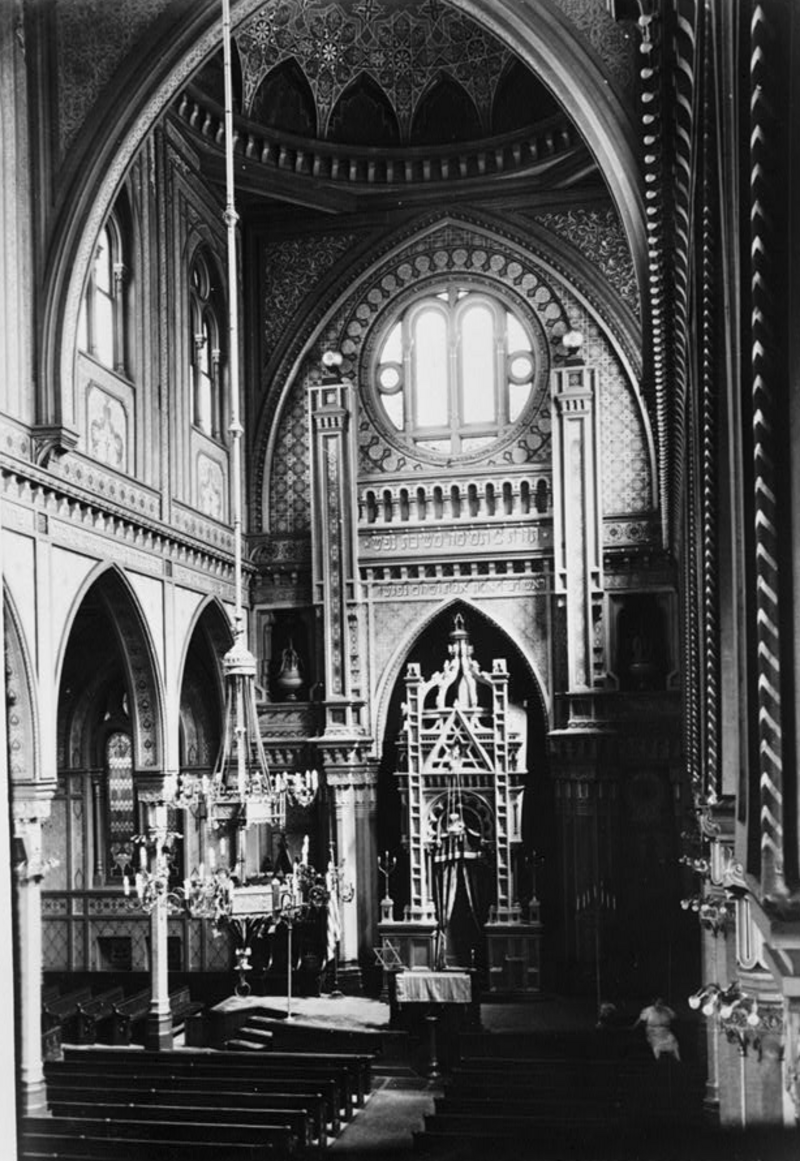
Wise was less a theologian than an organizer. He founded the Union of American Hebrew Congregations (UAHC, now the Union for Reform Judaism) in 1873, Hebrew Union College (HUC) in 1875 — the first rabbinical seminary in the Americas — and the Central Conference of American Rabbis (CCAR) in 1889. He also produced a standardized prayer book, Minhag America (American Rite, 1857), designed to unite American Jewry under a moderate reform. His ambition was to create a single unified American Judaism, but the forces of polarization proved stronger than the pull of unity.
The "Trefa Banquet" of July 11, 1883, became a watershed moment. At the first graduation dinner of Hebrew Union College — meant to celebrate the unity of American Jewry — the menu included clams, soft-shell crabs, shrimp, and frogs' legs. Whether the non-kosher menu was an oversight by the caterer (as some claimed) or a deliberate provocation (as others believed), the effect was dramatic. Traditional Jews were horrified, and the incident accelerated the formation of a separate Conservative movement.
The Pittsburgh Platform Verified
Two years later, in November 1885, a group of nineteen Reform rabbis gathered in Pittsburgh and adopted an eight-point declaration that became the founding document of American Reform Judaism. The Pittsburgh Platform, drafted primarily by Kaufmann Kohler (1843–1926), made sweeping claims:
It declared that Judaism "presents the highest conception of the God-idea" and acknowledged that the Bible reflects "the primitive ideas of its own age." It rejected the binding authority of Mosaic and rabbinic law "as not adapted to the views and habits of modern civilization." Dietary laws, priestly purity laws, and dress regulations were dismissed as originating "in ages and under the influence of ideas entirely foreign to our present mental and spiritual state." The platform rejected Jewish nationalism and the hope for a return to Palestine, declaring: "We consider ourselves no longer a nation, but a religious community, and therefore expect neither a return to Palestine... nor the restoration of any of the laws concerning the Jewish state."
The Pittsburgh Platform defined "Classical Reform" for the next half-century. Services were conducted largely in English, men and women sat together, organ music accompanied worship, and the aesthetic consciously echoed liberal Protestantism. Many Reform temples held their main service on Sunday morning rather than Saturday.
The Columbus Platform and Reform's Evolution Debated
By the 1930s, the Pittsburgh Platform's anti-Zionist position and its radical break with tradition were being questioned from within. The rise of Nazism and the urgent need for a Jewish homeland rendered the 1885 rejection of Jewish nationalism untenable for many Reform Jews. In 1937, the Central Conference of American Rabbis adopted the Columbus Platform, which marked a dramatic shift: it affirmed "the obligation of all Jewry to aid in [Palestine's] upbuilding as a Jewish homeland," called for the rehabilitation of Hebrew as a living language, and acknowledged the value of "customs, symbols, and ceremonies" that had been dismissed a half-century earlier.
The San Francisco Platform of 1976 went further, embracing religious pluralism and acknowledging the centrality of Israel to Jewish identity. The 1999 Pittsburgh Principles ("A Statement of Principles for Reform Judaism") completed the arc, calling for increased engagement with Hebrew, Torah study, and ritual observance — effectively reversing many of the original Pittsburgh Platform's positions.
Women's ordination came to Reform Judaism in 1972, when Sally Priesand was ordained at Hebrew Union College in Cincinnati, becoming the first woman ordained by a major Jewish denomination. Today, Reform Judaism is the largest denomination in American Judaism, with approximately 35% of affiliated American Jews identifying as Reform according to the Pew Research Center's 2020 survey.
Conservative Judaism: The Middle Path Verified
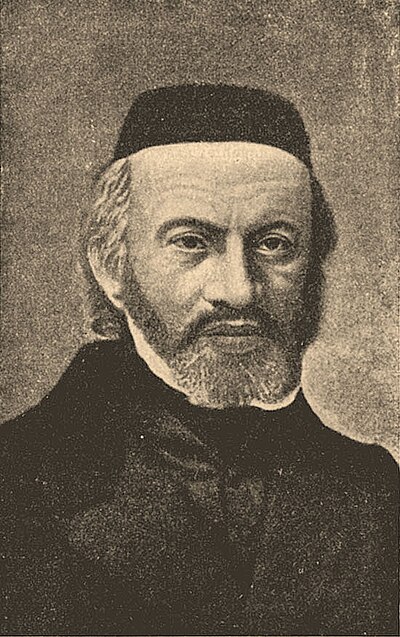
The Conservative movement arose from the conviction that both Reform and Orthodoxy had gone too far — Reform in abandoning tradition, Orthodoxy in refusing to engage with modernity. Its intellectual roots lie in Zacharias Frankel's (1801–1875) concept of "positive-historical Judaism" — the idea that Jewish law was binding but had always evolved in response to historical circumstances, and that this evolution should continue through disciplined scholarship rather than radical reform.
The institutional founding of Conservative Judaism in America is tied to the Jewish Theological Seminary (JTS), established in New York in 1887 by Sabato Morais and Alexander Kohut as a traditionalist alternative to Hebrew Union College. The seminary struggled until 1902, when Solomon Schechter (1847–1915) was recruited from Cambridge University to serve as its president.
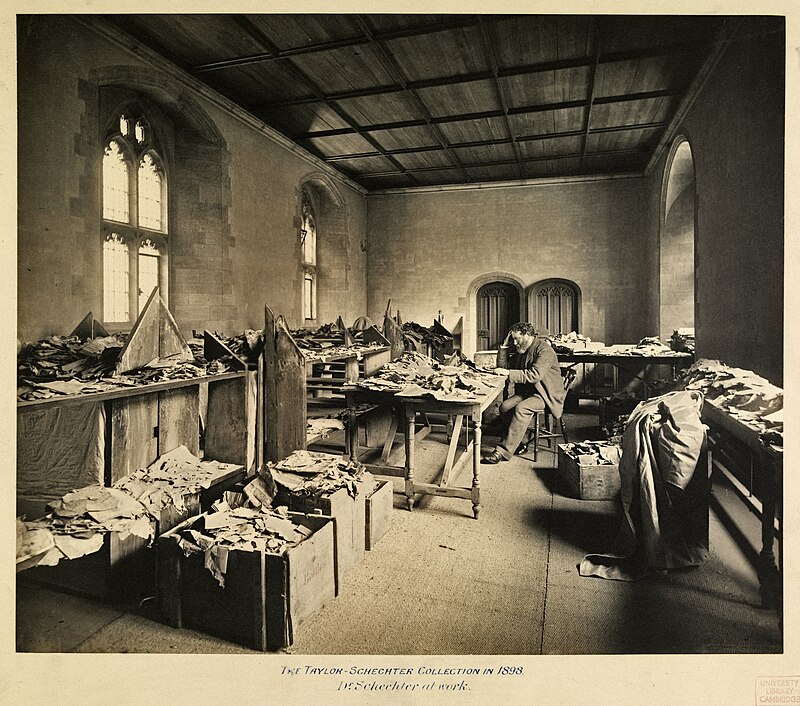
Schechter was already famous. In 1896, he had identified fragments from the Cairo Genizah — a repository of over 300,000 manuscript fragments found in the Ben Ezra Synagogue in Old Cairo — as containing a previously unknown Hebrew text of the Book of Ben Sira (Ecclesiasticus). His subsequent expedition to Cairo, funded by Charles Taylor, the Master of St John's College, Cambridge, recovered approximately 140,000 fragments, now housed in the Cambridge University Library. This discovery was one of the most important manuscript finds in the history of Jewish studies.
At JTS, Schechter assembled a world-class faculty and articulated the concept of "Catholic Israel" (Klal Yisrael) — the idea that Jewish law derived its authority not from a single legislative act at Sinai but from the collective practice of the Jewish people throughout history. Changes in practice were legitimate when they reflected the evolving consensus of the community, but they had to emerge organically, not be imposed from above.
Conservative Judaism's Halakhic Process Debated
Conservative Judaism's distinctive approach to Jewish law is centered in its Committee on Jewish Law and Standards (CJLS), established in 1927. The committee, composed of twenty-five rabbis and representatives of the Conservative laity, issues legal opinions (teshuvot) on questions of halakha. Unlike Orthodox poskim (legal decisors), who consider themselves bound by precedent, the CJLS explicitly weighs historical context, ethical considerations, and the needs of the contemporary community.
This approach has produced both flexibility and controversy. In 1950, the CJLS permitted driving to synagogue on Shabbat — a decision that would have been unthinkable in Orthodox circles, but that reflected the reality of suburban American Jewish life where families could not walk to services. The decision was carefully limited: driving was permitted only to and from the synagogue, and only when walking was genuinely impractical.
The most contentious debate concerned the ordination of women. In 1983, JTS voted to admit women to the rabbinical program after a decade of fierce internal debate. Amy Eilberg became the first female Conservative rabbi in 1985. The vote was close and painful — several prominent faculty members, including Talmud scholar David Weiss Halivni, left JTS in protest.
In 2006, the CJLS issued multiple opinions on the status of gay and lesbian Jews, ultimately approving a responsum by Rabbis Elliot Dorff, Daniel Nevins, and Avram Reisner that permitted the ordination of openly gay and lesbian rabbis and the celebration of same-sex commitment ceremonies, while maintaining the prohibition on specific sexual acts mentioned in Leviticus 18:22 through a legal mechanism that reinterpreted the scope of the biblical prohibition.
Orthodox Judaism: Tradition and Modernity Verified
"Orthodoxy" is itself a modern category — the term was first applied to traditional Jews in the early nineteenth century, in deliberate contrast to "Reform." Before the Enlightenment, there was simply Judaism, and what we now call "Orthodoxy" was its default state. The emergence of Orthodoxy as a self-conscious movement was, paradoxically, a response to modernity.
The intellectual architect of Modern Orthodoxy was Samson Raphael Hirsch (1808–1888), who served as rabbi of the separatist Orthodox community (Austrittsgemeinde) in Frankfurt am Main from 1851 until his death. Hirsch's philosophy of Torah im Derech Eretz ("Torah with worldly engagement") held that Jews should acquire secular education, participate in civic life, and appreciate the achievements of Western culture — but only insofar as these activities were consistent with full observance of halakha.
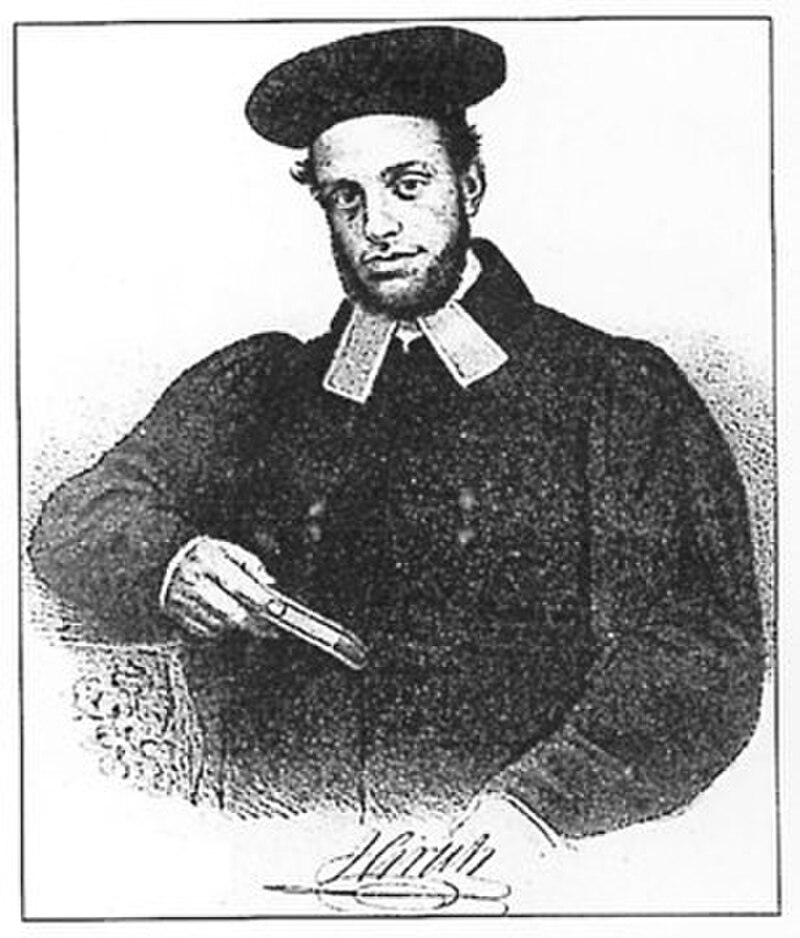
Hirsch's voluminous writings — commentaries on the Torah and Psalms, his Nineteen Letters (1836), and Horeb (1837) — presented Orthodox Judaism not as a relic of the past but as a vibrant, intellectually coherent system that addressed every aspect of modern life. His symbolic interpretation of the commandments (ta'amei ha-mitzvot) sought to demonstrate their rational and ethical foundations.
In Eastern Europe, Orthodoxy took a different path. The yeshiva movement, revitalized by Rabbi Chaim of Volozhin (1749–1821, a student of the Vilna Gaon), established intensive Torah study as the central institution of Jewish life. The Volozhin Yeshiva (founded 1803) became the model for the "Lithuanian" yeshiva tradition, emphasizing rigorous Talmudic analysis. 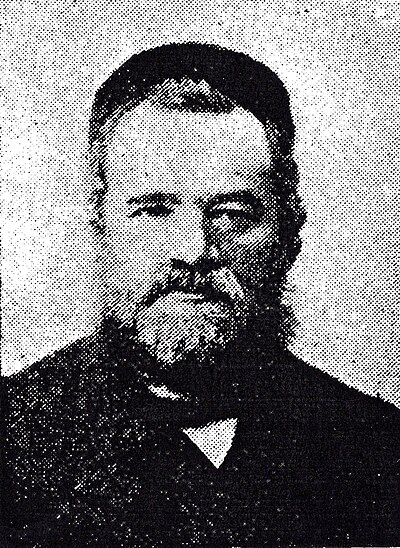
The Mussar (ethical self-improvement) movement, founded by Rabbi Israel Salanter (1809–1883), added a dimension of systematic character development to the yeshiva curriculum.
The Haredi World Verified
The Haredi (ultra-Orthodox) community — the term comes from the Hebrew harad, "to tremble," as in Isaiah 66:5, "Hear the word of the Lord, you who tremble at His word" — rejected both Reform and Modern Orthodox accommodations with modernity. The Chatam Sofer's dictum — chadash asur min ha-Torah ("innovation is forbidden by the Torah") — became a guiding principle.
Haredi Judaism encompasses several distinct subgroups. Hasidic communities, organized around dynastic rebbes, include the Lubavitch (Chabad), Satmar, Breslov, Ger, Belz, and Bobov movements, among many others. Each has its own customs, dress codes, and institutional structures. 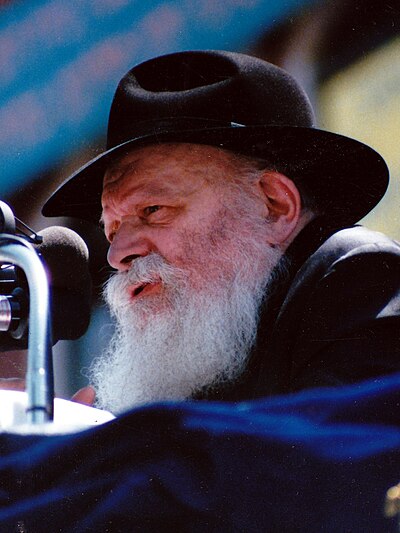
The Chabad-Lubavitch movement, under the leadership of Rabbi Menachem Mendel Schneerson (1902–1994), became uniquely outward-facing, establishing some 5,000 emissary centers (Chabad houses) in over 100 countries by the early twenty-first century.
Non-Hasidic Haredi Jews (often called "Litvish" or "Yeshivish") maintain the Lithuanian yeshiva tradition. Major yeshivot include Ponevezh in Bnei Brak, Mir in Jerusalem, and Lakewood (Beth Medrash Govoha) in New Jersey, founded in 1943 by Rabbi Aharon Kotler. Lakewood has grown to become the largest yeshiva outside Israel, with over 6,700 students as of 2023.
Haredi demographics are significant. With average family sizes of six to seven children and retention rates exceeding 90%, Haredi communities are the fastest-growing segment of world Jewry. The Pew Research Center's 2013 and 2020 surveys documented this trend, projecting that Haredi Jews will constitute an increasing share of both American and Israeli Jewry in coming decades.
Reconstructionist Judaism: Judaism as Civilization Verified
The fourth major denomination, Reconstructionist Judaism, was founded by Mordecai Kaplan (1881–1983), a professor at the Jewish Theological Seminary who never formally left the Conservative movement. Kaplan's magnum opus, Judaism as a Civilization (1934), argued that Judaism was not merely a religion but an "evolving religious civilization" encompassing language, art, literature, folkways, and ethics alongside theology and law.
Kaplan rejected supernatural theology. He redefined God not as a personal being who intervenes in history but as "the power that makes for salvation" — the sum of the natural forces that enable human flourishing. Prayer, in Kaplan's view, was not petition to a divine person but a communal act of self-reflection and aspiration. He edited a new prayer book, the Sabbath Prayer Book (1945), which eliminated references to the chosen people, the resurrection of the dead, and the restoration of the Temple sacrifices. The Orthodox rabbinical organization Agudath Harabonim responded by excommunicating Kaplan and publicly burning the prayer book — an extraordinary act that recalled medieval heresy proceedings.
Kaplan was also a pioneer of Jewish feminism. In 1922, he organized the first public bat mitzvah ceremony for his daughter Judith Kaplan at the Society for the Advancement of Judaism in New York — an event that would eventually transform Jewish practice across all denominations. It took decades: bat mitzvah did not become common in Conservative synagogues until the 1960s and in some Orthodox communities not until the 1970s and 1980s, and then often in modified form.
The Reconstructionist Rabbinical College was established in 1968 in Philadelphia, and the denomination formally organized as the Jewish Reconstructionist Federation. In 2018, it rebranded as Reconstructing Judaism. With approximately 100 affiliated congregations, it remains the smallest of the four major movements.
Women's Ordination: A Denominational Fault Line Debated
The ordination of women as rabbis became one of the defining issues separating the denominations. The timeline reveals the gradual progression:
Reform Judaism ordained Sally Priesand in 1972. The Reconstructionist Rabbinical College admitted women from its founding in 1968, ordaining Sandy Eisenberg Sasso in 1974. Conservative Judaism ordained Amy Eilberg in 1985 after the contentious 1983 vote at JTS. Orthodox Judaism has not ordained women as rabbis, though Yeshivat Maharat in New York, founded by Rabbi Avi Weiss in 2009, ordains women with the title Maharat (an acronym for manhigah hilkhatit rukhanit Toranit, "a leader in Jewish law, spirituality, and Torah") — a move rejected by the Rabbinical Council of America (RCA) and the Orthodox Union (OU).
The debate over women's roles extends beyond ordination. The question of women serving as witnesses, leading prayer services, reading from the Torah, and serving as synagogue presidents varies widely even within Orthodoxy. "Partnership minyanim," which maximize women's participation within halakhic boundaries, have emerged since the early 2000s, provoking intense debate within the Modern Orthodox world.
Interfaith Marriage: The Great Divide Debated
No issue more sharply divides the denominations than interfaith marriage. The statistics are stark: the Pew Research Center's 2020 survey found that among Jews who married since 2010, 61% of non-Orthodox Jews married non-Jewish partners.
Orthodox and Conservative rabbis do not officiate at interfaith weddings (the Conservative movement's CJLS has reaffirmed this prohibition repeatedly). Reform Judaism's position has evolved: while the CCAR's 1973 resolution discouraged rabbis from officiating at interfaith weddings, it did not prohibit it, and by 2015 surveys indicated that a majority of Reform rabbis would officiate. The Reconstructionist movement officially permitted its rabbis to officiate at interfaith ceremonies in 2015.
The broader question is whether interfaith marriage represents a crisis of assimilation or an opportunity for outreach. The "continuity" camp argues that intermarriage leads inexorably to the dissolution of Jewish identity over generations. The "welcoming" camp counters that inclusive policies bring more people into Jewish life and that the children of interfaith families can be raised as committed Jews. The data supports both positions to some degree: while intermarried families are less likely to raise children as Jewish, those who do are increasingly engaged, particularly in Reform and Reconstructionist communities.
American Jewish Demographics Verified
The Pew Research Center's 2020 survey, "Jewish Americans in 2020," provides the most comprehensive portrait of American Jewish denominational life. Among its key findings:
Approximately 7.5 million adults in the United States identify as Jewish (by religion or ethnicity). Among Jewish adults who identify with a denomination: 37% identify as Reform, 17% as Conservative, 9% as Orthodox, and the remainder as other movements or unaffiliated. The trend lines show Reform holding relatively steady, Conservative declining significantly (from 43% in 1990 to 17% in 2020), and Orthodox growing through high birth rates despite modest attrition.
The fastest-growing category is "Jews of no denomination" — those who identify as Jewish by religion but do not affiliate with any movement. This group, at 32% of Jewish adults, reflects broader American trends of religious "de-churching." Many of these unaffiliated Jews maintain strong ethnic and cultural Jewish identities even as they disengage from institutional religious life.
Approaches to Halakha: A Comparative View Debated
The most fundamental theological question separating the denominations is the nature and authority of halakha (Jewish law):
Orthodox: Halakha is divinely revealed — the Written Torah (Pentateuch) was given by God to Moses at Sinai, and the Oral Torah (eventually codified in the Mishnah and Talmud) was transmitted alongside it. Halakha is binding in its entirety. Change occurs only within the system's own mechanisms (legal interpretation, custom, rabbinic authority) and cannot be driven by external social pressure.
Conservative: Halakha is binding but has always evolved in response to historical circumstances. The Oral Torah represents the Jewish people's ongoing interpretation of divine will, and this interpretive process continues. Changes must be grounded in legal reasoning and scholarly analysis, not arbitrary preference.
Reform: Halakha is a sacred heritage to be studied and engaged with, but individual autonomy is the supreme value. Each Jew has the right — and the responsibility — to make informed choices about which practices are meaningful. The 1999 Pittsburgh Principles urged greater engagement with tradition while maintaining the primacy of personal choice.
Reconstructionist: Halakha has a "vote but not a veto." Traditional practices are valued as expressions of Jewish civilization, but they must be evaluated in light of contemporary ethical standards and communal consensus.
These theological differences produce dramatically different lived experiences. A Shabbat morning in a Haredi synagogue in Borough Park, Brooklyn — men and women separated by a mechitza, the service entirely in Hebrew, lasting three hours — bears little resemblance to a Shabbat morning at a Reform temple in suburban Los Angeles, where the congregation sits together, the rabbi may play guitar, and English readings alternate with Hebrew prayers. Yet both communities understand themselves as authentically, faithfully Jewish, and both trace their practices to the same ancient sources.
Looking Forward Debated
The denominational landscape continues to evolve. "Post-denominational" Judaism — exemplified by independent minyanim like Kehilat Hadar in New York (founded 2001), IKAR in Los Angeles, and the broader "emergent" Jewish community — attracts young Jews who seek serious engagement with text and tradition outside institutional denominational frameworks. These communities often combine traditional liturgy with egalitarian practice, drawing from multiple movements without identifying with any single one.
The question of whether denominational Judaism will survive in its current form is itself debated. Some scholars, including Jack Wertheimer of JTS, argue that the denominations remain the essential infrastructure of American Jewish life. Others, including sociologist Steven M. Cohen, have predicted a gradual dissolution of denominational boundaries as individual choice and community affinity replace institutional loyalty.
What is clear is that the denominational diversity born of the nineteenth-century encounter with modernity has produced a Judaism of extraordinary range — from Hasidic courts to humanistic congregations, from rigorous yeshivot to innovative start-up communities — all claiming, with varying degrees of justification, to represent the authentic continuation of a tradition that stretches back to Sinai.
Humanistic Judaism and Smaller Movements Verified
Beyond the four major denominations, several smaller movements occupy distinctive niches. Humanistic Judaism, founded by Rabbi Sherwin Wine in 1963 in Detroit, affirms Jewish identity and culture while embracing a secular, non-theistic worldview. Humanistic congregations celebrate Jewish holidays with revised liturgies that emphasize human agency rather than divine intervention. The movement's seminary, the International Institute for Secular Humanistic Judaism, has ordained rabbis since 1992.
Jewish Renewal, inspired by the neo-Hasidic teachings of Rabbis Zalman Schachter-Shalomi and Arthur Green, seeks to revitalize Jewish practice through meditation, chanting, and mystical experience. The ALEPH ordination program has trained rabbis who serve communities across the denominational spectrum, and Renewal's emphasis on kavanah (spiritual intentionality) has influenced prayer practices in Reform and Conservative congregations.
The Open Orthodox movement, associated with Rabbi Avi Weiss and Yeshivat Chovevei Torah (founded 2000), positions itself as a more progressive alternative within Orthodoxy — ordaining women as clergy (with the title Maharat), engaging in interfaith dialogue, and adopting more inclusive stances on LGBTQ issues, while maintaining commitment to halakha. The mainstream Orthodox establishment, represented by the Rabbinical Council of America and the Orthodox Union, has formally distanced itself from Open Orthodoxy, and the movement's long-term position within the Orthodox world remains uncertain.
The Denominational Question in Israel Debated
The denominational landscape in Israel differs fundamentally from that of the diaspora. The Israeli rabbinate, which controls marriage, divorce, conversion, and burial for Jews, operates exclusively under Orthodox authority — a legacy of the "status quo" agreement between David Ben-Gurion and the ultra-Orthodox Agudat Yisrael leadership in 1947. This arrangement grants the Orthodox rabbinate a legal monopoly over Jewish personal status law, meaning that Reform and Conservative conversions performed in Israel are not recognized for purposes of marriage, and interfaith marriages cannot be performed within the country (though marriages performed abroad, including civil marriages, are recognized).
The consequences are far-reaching. Hundreds of thousands of Israeli citizens — immigrants from the former Soviet Union who are Jewish under the Law of Return but not according to halakha, as well as others — cannot marry within Israel. The situation has generated persistent legal challenges, Knesset debates, and social tension. The struggle for religious pluralism in Israel — led by organizations including the Israel Religious Action Center (Reform), the Masorti Movement, and secular advocacy groups — remains one of the most contentious issues in Israeli public life.
The paradox of denominational Judaism is that it is both a division and a testament to vitality. A religion that produces only one answer to the question "What does God demand of us?" may be unified, but it is also static. The proliferation of movements within Judaism — each with its own seminaries, publishing houses, summer camps, and legal authorities — reflects a tradition that takes the obligation to interpret seriously, even at the cost of consensus. As the Talmud itself records: "These and these are the words of the living God" (Eruvin 13b).
Locations in This Chapter
Loading map...