Part 7: Modern Era · 1880–1939
24.Antisemitism
Protocols (debunked), pogroms
23 min read
From Religion to Race Verified
For most of European history, hostility toward Jews was rooted in religious difference. Jews were persecuted as Christ-killers, as stubborn refusers of salvation, as practitioners of a superseded faith. But the logic of religious anti-Judaism always contained an escape clause: a Jew who converted to Christianity was, at least in theory, no longer a Jew. The baptismal font offered a way out.
In the late nineteenth century, this changed. A new form of hatred emerged — one that defined Jews not by what they believed but by what they were. 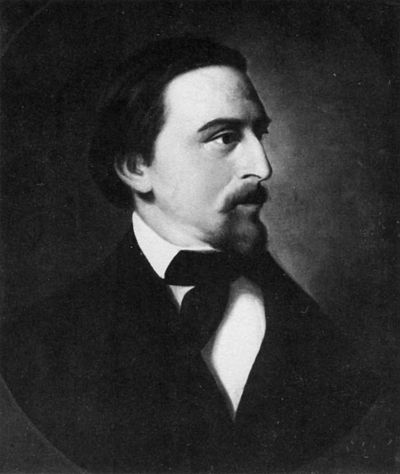
The German journalist Wilhelm Marr coined the term Antisemitismus in 1879, deliberately choosing a scientific-sounding word derived from the linguistic classification "Semitic." Marr's pamphlet, Der Sieg des Judenthums über das Germanenthum (The Victory of Jewry over Germandom), argued that Jews constituted a distinct and hostile race whose characteristics were biologically fixed and unalterable by conversion or assimilation. He founded the Antisemiten-Liga (Anti-Semitic League), the first political organization devoted to anti-Jewish agitation on explicitly racial grounds.
The shift from religious anti-Judaism to racial antisemitism was gradual and uneven. The two forms coexisted, reinforced each other, and drew on overlapping stereotypes. But the racial version was, in a precise and terrible sense, more dangerous — because it offered no exit. A converted Jew was still, in the racist framework, a Jew. This logic would reach its ultimate expression in the Nazi racial laws of the twentieth century.
The Russian Pogroms Verified
The Russian Empire, home to approximately five million Jews by the 1880s — the largest Jewish population in the world — became the epicenter of anti-Jewish violence. Jews were confined to the Pale of Settlement, a western strip of the empire encompassing parts of modern-day Lithuania, Belarus, Poland, Moldova, Ukraine, and western Russia. Within the Pale, Jews faced restrictions on residence in major cities, quotas in universities (the numerus clausus), and exclusion from most professions.
The assassination of Tsar Alexander II on March 13, 1881, triggered a wave of pogroms — a Russian word meaning "devastation" or "destruction" — that swept through southern Ukraine and eastern Poland. Although the assassin was not Jewish (he was a Russian revolutionary named Nikolai Rysakov, part of the Narodnaya Volya group; only one of the conspirators, Hesya Helfman, was Jewish), rumors of Jewish responsibility spread rapidly. Pogroms erupted in Elizavetgrad (now Kropyvnytskyi) on April 15, 1881, and spread to Kiev, Odessa, Warsaw, and dozens of smaller towns over the following two years.
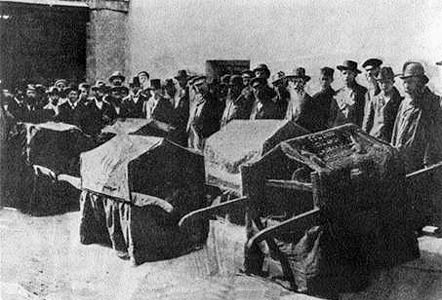
The "May Laws" of May 3, 1882, enacted under Tsar Alexander III, intensified the persecution. Jews were prohibited from settling in rural areas within the Pale, forbidden from conducting business on Sundays and Christian holidays, and subjected to further educational quotas. The minister of the interior, Count Nikolai Ignatyev, reportedly expressed the government's goal for the Jews: "One-third will emigrate, one-third will convert, and one-third will die."
The Kishinev Pogrom Verified
The most infamous of the Russian pogroms occurred in Kishinev (now Chișinău, Moldova) on April 6–7, 1903, during Easter. The violence was preceded by months of incitement in the local newspaper Bessarabets, edited by Pavolachi Krushevan, which published accusations of Jewish ritual murder. When the body of a Christian boy was found (he had been murdered by a relative in an unrelated crime, as later established), the newspaper blamed Jews.
The pogrom lasted two days. According to official reports and the subsequent investigation by the journalist Michael Davitt, 49 Jews were killed, approximately 500 were injured, 700 houses were looted or destroyed, and 600 businesses were ransacked. Women were raped. The police stood by, and in some cases actively participated. Governor V.S. von Raaben had reportedly received orders from Interior Minister Vyacheslav von Plehve not to intervene.
The international reaction was unprecedented. In the United States, a petition signed by prominent Americans including President Theodore Roosevelt was presented to the Russian government (which refused to accept it). The Hebrew poet Hayyim Nahman Bialik traveled to Kishinev to gather testimony and wrote "In the City of Slaughter" (1904), one of the most searing poems in Hebrew literature, which excoriated not only the perpetrators but also the Jewish men who, as Bialik perceived it, had failed to defend their families. The poem galvanized Jewish self-defense movements across the Russian Empire.
A second wave of pogroms erupted in 1903–1906, coinciding with the abortive Russian Revolution of 1905. The worst occurred in Odessa in October 1905, where approximately 400 Jews were killed over four days. The pogroms were often organized by the Black Hundreds, right-wing nationalist organizations with covert government support.
The Dreyfus Affair Verified
While Eastern European Jews faced physical violence, Western European Jews confronted a more insidious threat: the erosion of the emancipation promise in the most liberal nations of the continent.
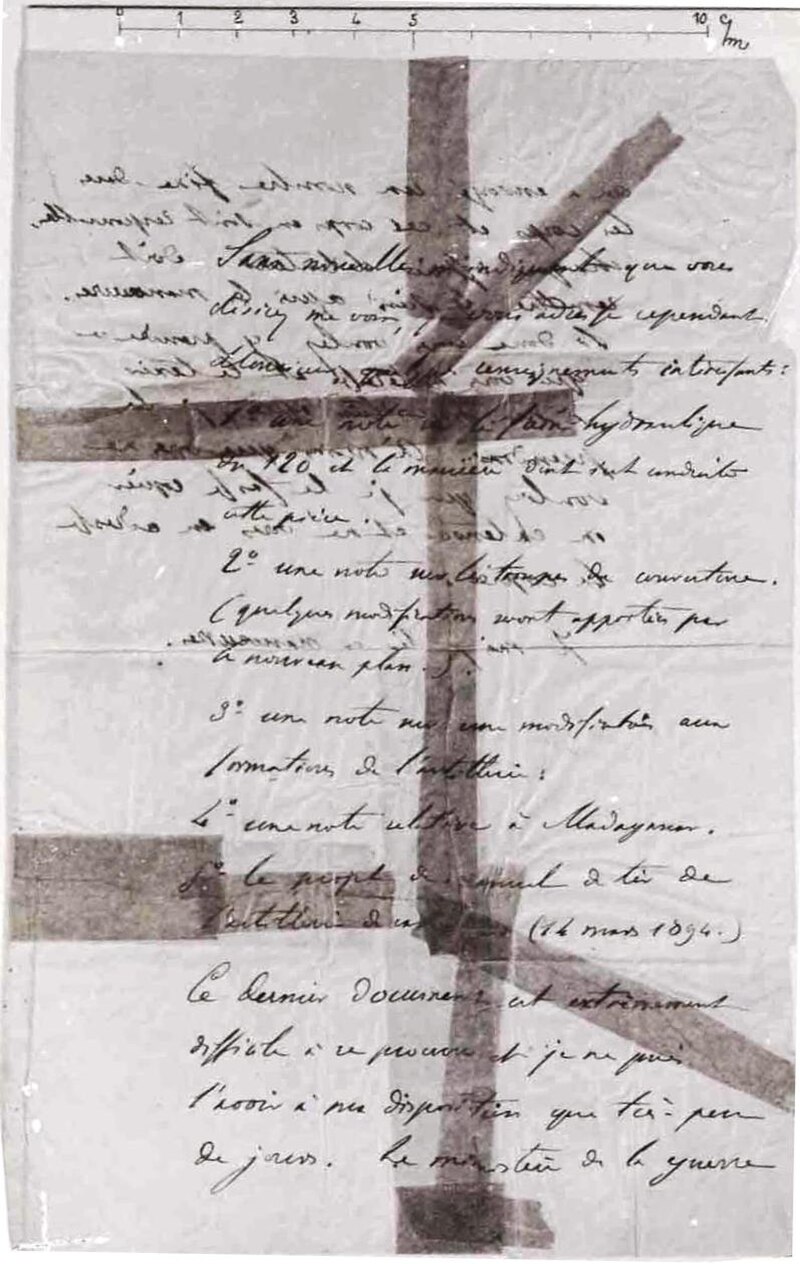
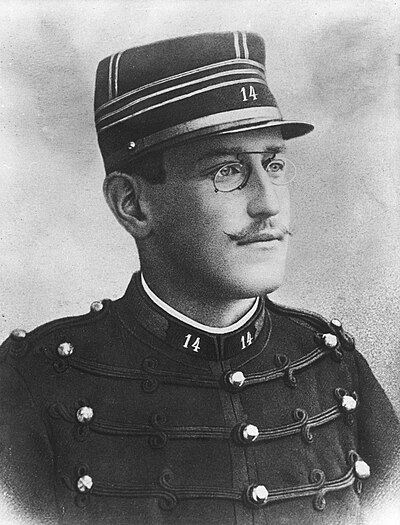
The Dreyfus Affair, which convulsed France from 1894 to 1906, began as a military espionage case and became the defining political crisis of the Third Republic. In October 1894, Captain Alfred Dreyfus (1859–1935), an Alsatian Jewish officer on the French General Staff, was arrested on charges of passing military secrets to Germany. The evidence consisted primarily of a handwritten memorandum (the bordereau) found in a wastebasket at the German embassy. Despite significant doubts about the handwriting analysis, Dreyfus was convicted by a military court-martial on December 22, 1894, publicly degraded in the courtyard of the École Militaire (his epaulettes torn off, his sword broken), and sentenced to life imprisonment on Devil's Island in French Guiana.
The real traitor was Major Ferdinand Walsin Esterhazy, as Lieutenant Colonel Georges Picquart discovered in 1896 when he became head of the army's intelligence section and noticed that the handwriting on the bordereau matched Esterhazy's, not Dreyfus's. Picquart reported his findings to his superiors, who responded by transferring him to a remote post in Tunisia. The army had no intention of admitting its error.
The affair became public in January 1898 when Émile Zola published his explosive open letter "J'Accuse...!" on the front page of the newspaper L'Aurore, edited by Georges Clemenceau. Zola accused the French military of a deliberate cover-up and named specific officers responsible. The letter was a sensation — 300,000 copies were sold — and France split into warring camps: Dreyfusards (who saw the case as a matter of justice and republican values) and anti-Dreyfusards (who prioritized military honor and, in many cases, blamed Jews for the crisis).
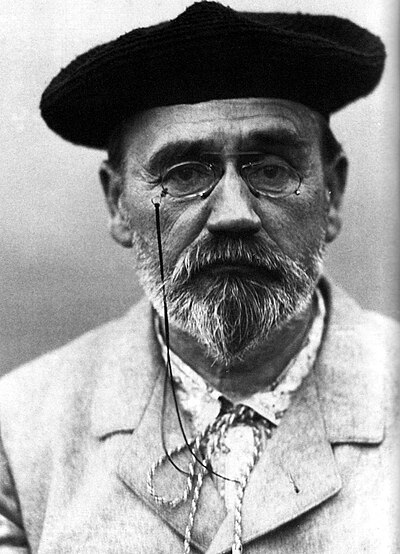
Dreyfus was eventually pardoned in 1899 and fully exonerated in 1906 by the Court of Cassation. He was reinstated in the army and served with distinction in World War I. Zola, convicted of libel and briefly exiled, died in 1902 under suspicious circumstances (carbon monoxide poisoning; a chimney sweep later claimed to have blocked his chimney as a political act, though this was never proven in court).
The affair's impact on Jewish history was immense. It demonstrated that antisemitism could thrive even in the most "civilized" European society — France, the birthplace of the Rights of Man, the first European nation to emancipate its Jews. A young Viennese journalist named Theodor Herzl, covering the trial for the Neue Freie Presse, was profoundly affected. The extent to which the Dreyfus Affair directly caused Herzl's conversion to Zionism is debated by historians — his diaries suggest the transformation was more gradual — but the affair was unquestionably a catalyst. Debated
The Protocols of the Elders of Zion Verified
No antisemitic text has caused more harm than The Protocols of the Elders of Zion, a fabricated document purporting to be the minutes of a secret meeting of Jewish leaders plotting world domination. The text has been conclusively proven to be a forgery — a fact established more than a century ago and confirmed by every reputable scholar who has examined it. Documenting its fraudulent origins is not merely an academic exercise; it is a moral necessity, because the text continues to circulate and to inspire hatred.
The forgery was manufactured by agents of the Russian secret police (the Okhrana) in Paris, most likely in 1903. The principal author appears to have been Pyotr Ivanovich Rachkovsky, head of the Okhrana's foreign bureau, or someone working under his direction. The text was first published in serialized form in the St. Petersburg newspaper Znamya (The Banner) in 1903, edited by Krushevan — the same man who had incited the Kishinev pogrom.
The forgery is largely plagiarized from two sources, neither of which has anything to do with Jews:
Maurice Joly's Dialogue in Hell Between Machiavelli and Montesquieu (1864): A French political satire attacking Napoleon III's authoritarian ambitions, this book contains no reference to Jews whatsoever. The forger simply took Joly's text — in which Machiavelli describes schemes for political domination — and replaced "Napoleon III" with "the Elders of Zion." The Russian-born scholar and journalist Philip Graves demonstrated this plagiarism in a series of articles in The Times of London in August 1921, publishing parallel columns showing verbatim correspondence between the Protocols and Joly's dialogue. Entire passages were copied nearly word for word. Verified
Hermann Goedsche's novel Biarritz (1868): This German pulp novel, written under the pseudonym Sir John Retcliffe, contains a chapter titled "In the Jewish Cemetery in Prague" that imagines representatives of the twelve tribes of Israel meeting at midnight to plot world domination. This fictional scene was extracted from the novel, presented as fact, and circulated as "The Rabbi's Speech." Elements of it were incorporated into the Protocols.
The exposure of the forgery has been thorough and repeated. In addition to Graves's 1921 exposé, a Swiss court in the "Berne Trial" of 1934–1935 examined the Protocols in detail and declared them "ridiculous nonsense" and "obvious forgeries." The Russian historian Vladimir Burtsev, a renowned expert on the Okhrana, established the police origins of the text. The U.S. Senate Judiciary Committee investigated the Protocols in 1964 and concluded they were "fabricated." Yet the text has continued to circulate, translated into dozens of languages, reprinted in the Arab world, and cited by conspiracy theorists. Its persistence is a testament to the durability of antisemitic tropes. Verified
Political Antisemitism in Vienna Verified
Vienna at the turn of the twentieth century was both a center of Jewish cultural achievement and a laboratory for political antisemitism. The city's Jewish population grew from approximately 6,000 in 1857 to over 175,000 by 1910 (approximately 8.6% of the city's population), and Jewish prominence in the professions, arts, and commerce provoked resentment.
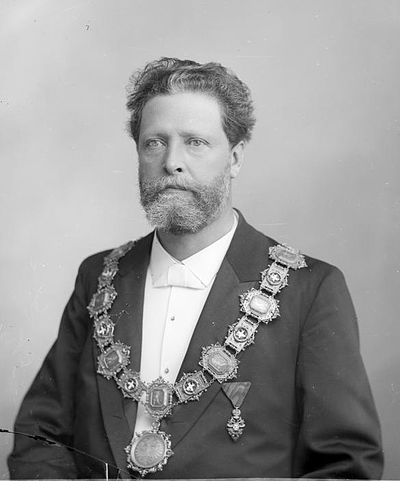
Karl Lueger (1844–1910), leader of the Christian Social Party, rose to power on an explicitly antisemitic platform, promising to protect "little people" from Jewish economic influence. He was elected mayor of Vienna in 1895, though Emperor Franz Joseph refused to confirm his appointment twice before finally relenting in 1897. Lueger served as mayor until his death in 1910, using antisemitic rhetoric to mobilize political support while maintaining cordial personal relationships with individual Jews (prompting his famous remark, "I decide who is a Jew").
The young Adolf Hitler, who arrived in Vienna in 1907 at the age of eighteen, observed Lueger's techniques closely. In Mein Kampf, Hitler credited Lueger and the pan-German politician Georg Ritter von Schönerer as key influences. Schönerer, unlike Lueger, was a racial rather than opportunistic antisemite — he demanded the exclusion of Jews from public life on biological grounds and advocated for the incorporation of Austria into the German Reich. Between them, Lueger and Schönerer established the two strands of political antisemitism — the populist-economic and the racial-ideological — that would converge with catastrophic consequences in the twentieth century.
Racial Pseudo-Science Verified
The rise of racial antisemitism was inseparable from the broader intellectual catastrophe of "scientific racism" — the attempt to classify human beings into a hierarchy of races using the methods (or pseudo-methods) of biology, anthropology, and statistics.
Arthur de Gobineau's Essay on the Inequality of the Human Races (1853–1855) provided the theoretical foundation, arguing that racial mixing was the cause of civilizational decline. Houston Stewart Chamberlain (1855–1927), an English-born Germanophile and son-in-law of Richard Wagner, published The Foundations of the Nineteenth Century (1899), which presented world history as a racial struggle between the creative "Aryan" race and the parasitic "Semitic" race. The book sold over 100,000 copies and was admired by Kaiser Wilhelm II.
Eugenics — the pseudoscientific program of "improving" the human race through selective breeding — gained institutional support across Europe and America in the early twentieth century. While eugenics targeted many groups (the disabled, the "feebleminded," immigrants), its application to Jews was particularly venomous. Racial theorists developed elaborate cranial measurements, blood type analyses, and genealogical charts to "prove" Jewish biological inferiority — all of which have been thoroughly discredited by modern genetics, which has demonstrated that the concept of discrete biological "races" has no scientific basis. Verified
The Great Migration Verified
The pogroms and persecution triggered one of the largest migrations in Jewish history. Between 1881 and 1924, approximately 2.5 million Jews left the Russian Empire — the vast majority for the United States. This wave transformed American Jewry from a small, predominantly Sephardic and German community into a mass society centered on the Lower East Side of Manhattan and similar urban neighborhoods in Philadelphia, Chicago, and Boston.
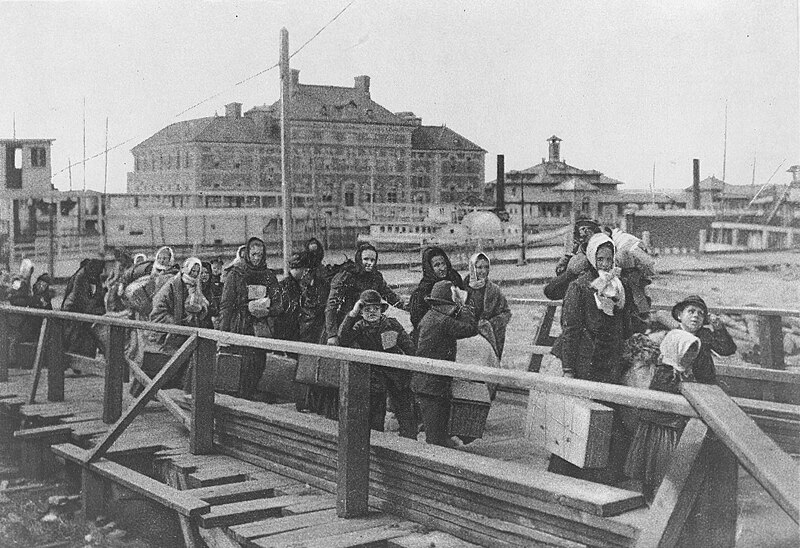
The immigrants arrived at Castle Garden (until 1892) and then Ellis Island (1892–1954), where they were processed, medically examined, and occasionally turned away. The Yiddish-speaking newcomers established a vibrant cultural world: the Yiddish theater (with stars like Boris Thomashefsky and Jacob Adler), the Yiddish press (the Forverts, founded by Abraham Cahan in 1897, reached a circulation of over 200,000 by the 1920s), labor unions (the International Ladies' Garment Workers' Union, the Amalgamated Clothing Workers), and a dense network of landsmanshaftn — mutual aid societies organized by town of origin.
The American immigration door began to close with the Immigration Acts of 1921 and 1924 (the Johnson-Reed Act), which established national origin quotas designed to restrict immigration from Eastern and Southern Europe. The 1924 act reduced Jewish immigration to a trickle — a fact with devastating consequences when European Jews desperately sought refuge in the 1930s and 1940s.
A smaller but historically significant migration went to Palestine. The First Aliyah (1882–1903) and Second Aliyah (1904–1914) brought approximately 65,000 to 75,000 Jewish immigrants to Ottoman Palestine, laying the demographic and institutional foundations of what would become the Zionist enterprise.
The Tightening Noose: 1918–1933 Verified
The aftermath of World War I brought both hope and catastrophe for European Jewry. The collapse of the Russian, Austro-Hungarian, Ottoman, and German empires and the creation of new nation-states offered the promise of minority rights. The Treaty of Versailles and its associated treaties included minority protection clauses, and the newly independent states of Poland, Czechoslovakia, Romania, and the Baltic nations were theoretically bound to protect their Jewish populations.
In practice, the interwar period saw a sharp rise in antisemitism across Eastern Europe. Poland, home to over three million Jews (approximately 10% of the population), imposed economic restrictions and university quotas. Romania, which had pledged minority rights as a condition of international recognition in 1878 and again in 1919, systematically evaded its obligations. Hungary, after the traumatic experience of Béla Kun's short-lived Communist regime in 1919 (Kun was of Jewish origin), enacted the numerus clausus law in 1920, the first explicitly antisemitic legislation in post-war Europe.
In Germany, the Weimar Republic (1918–1933) was haunted by the "stab-in-the-back" myth (Dolchstoßlegende) — the false claim that Germany had not been defeated militarily in World War I but betrayed by internal enemies, chief among them Jews and socialists. This myth, propagated by figures including General Erich Ludendorff and the extreme right, provided the narrative framework for Nazi antisemitism.
Antisemitism in France Beyond Dreyfus Verified
The Dreyfus Affair was not an isolated episode in French antisemitism. Édouard Drumont's La France Juive (Jewish France, 1886) — a sprawling, two-volume compilation of antisemitic conspiracy theories, economic grievances, and pseudo-historical claims — had sold over 100,000 copies within its first year, making it one of the best-selling books in nineteenth-century France. Drumont founded the Ligue Nationale Antisémitique de France in 1889 and the newspaper La Libre Parole in 1892, which became a platform for anti-Jewish agitation.
The Panama Canal scandal of 1892, in which two Jewish financiers (Baron Jacques de Reinach and Cornelius Herz) were implicated in the bribery of French parliamentarians, fueled the narrative of Jewish financial conspiracy. Drumont and La Libre Parole exploited the scandal relentlessly, and it set the stage for the anti-Dreyfus hysteria that followed. The Action Française movement, founded by Charles Maurras in 1899, combined monarchism, Catholicism, and virulent antisemitism into an ideology that would influence French politics for decades.
Antisemitism in the Habsburg Empire Debated
The Austro-Hungarian Empire presented a complex case. Jewish emancipation had been granted in 1867, and Jews had risen to prominence in Vienna's commercial, cultural, and professional life. Sigmund Freud, Gustav Mahler, Arthur Schnitzler, Stefan Zweig, and Karl Kraus were all products of the Viennese Jewish milieu. Yet this visibility bred resentment.
The Hilsner Affair of 1899 — a ritual murder accusation against Leopold Hilsner, a Jewish vagrant in the Bohemian town of Polná — demonstrated that medieval superstitions persisted even in the heart of "civilized" Central Europe. Hilsner was convicted of murder (later commuted to life imprisonment; he was pardoned in 1918) despite the complete absence of evidence for ritual murder. The future Czechoslovak president Tomáš Garrigue Masaryk was one of the few prominent intellectuals to publicly challenge the blood libel.
Georg von Schönerer's pan-German movement in Austria promoted a racial antisemitism that explicitly rejected the possibility of Jewish assimilation. His Los von Rom ("Away from Rome") movement combined anti-Catholicism with anti-Jewish sentiment, and his followers adopted the swastika as their symbol as early as the 1880s — decades before the Nazis. The continuity between Habsburg-era political antisemitism and the Nazi movement that would destroy Austrian Jewry has been traced by historians including Bruce Pauley in From Prejudice to Persecution: A History of Austrian Anti-Semitism (1992).
The Gathering Storm Debated
By the early 1930s, the elements of catastrophe were in place: a deeply rooted tradition of religious anti-Judaism, a newer ideology of racial antisemitism claiming scientific legitimacy, political movements organized around Jew-hatred, a global economic crisis that bred desperation and scapegoating, a culture of conspiracy thinking sustained by the Protocols and similar fabrications, and a weakened international order incapable of protecting minority rights.
Could the catastrophe have been averted? Historians debate this intensely. Some point to specific turning points — the failure of the Weimar Republic's democratic parties to form a unified front against Nazism, the decision by conservative elites to appoint Hitler chancellor on January 30, 1933, the international community's tepid response to early Nazi persecutions. Others argue that the deeper structural forces — economic collapse, the fragility of democratic institutions, the depth of antisemitic sentiment across European society — made some form of catastrophe likely, if not inevitable.
What is certain is that by 1933, European Jewry stood on the edge of an abyss. The long history of anti-Jewish hatred — from the medieval blood libels to the Enlightenment's broken promises to the modern ideologies of racial purity — had produced a continent primed for the unimaginable. The chapters that follow will trace what happened when that hatred was given the full power of a modern industrial state.
A Note on Terminology Verified
The word "antisemitism" itself merits scrutiny. As the scholar James Parkes noted, the term is a "misnomer" — it was coined by antisemites to give their prejudice a scientific veneer, and it implies a hostility to "Semites" (a linguistic category including Arabs, Ethiopians, and others) rather than specifically to Jews. Some scholars prefer "anti-Judaism" for religious hatred and "antisemitism" (without a hyphen, following the convention advocated by the International Holocaust Remembrance Alliance) for the modern racial version. Others use "Jew-hatred" as the most direct and accurate term. In this text, "antisemitism" is used in its conventional sense — hostility toward Jews as Jews — while acknowledging its imprecise origins.
The Jewish Response: Self-Defense and Organization Verified
The crisis of modern antisemitism provoked an unprecedented organizational response from Jewish communities. The Alliance Israélite Universelle, founded in Paris in 1860, established a network of schools across the Ottoman Empire, North Africa, and the Middle East, educating tens of thousands of Jewish children and promoting French language and culture alongside Jewish identity. The Anglo-Jewish Association (1871) and the Hilfsverein der Deutschen Juden (1901) served similar functions in the British and German spheres of influence.
In the Russian Empire, Jewish self-defense organizations formed in the wake of the pogroms. Young Jews in Odessa, Kishinev, and other cities organized armed groups to protect their communities — a development that would feed directly into the Zionist labor movement and, eventually, the Haganah. The Bund (General Jewish Labour Bund in Lithuania, Poland, and Russia), founded in Vilna in 1897 — the same year as the First Zionist Congress — combined socialism with Jewish cultural autonomy, advocating for Yiddish-language rights and secular Jewish nationhood within a democratic, socialist framework. At its height, the Bund was the largest Jewish political movement in Eastern Europe.
In the United States, Jewish defense organizations emerged to combat antisemitism through legal advocacy and public education. The American Jewish Committee was founded in 1906 in response to the Kishinev pogrom and the rising tide of Russian pogroms. The Anti-Defamation League (ADL) was established in 1913 by B'nai B'rith in response to the Leo Frank case — in which a Jewish factory superintendent in Atlanta was convicted of murder on dubious evidence and subsequently lynched by a mob in 1915. The American Jewish Congress, founded in 1918, advocated for Jewish rights at the Versailles peace conference.
These organizations represented a new phenomenon in Jewish history: the professionalization of Jewish self-defense. Where medieval Jewish communities had relied on shtadlanut — the intercession of wealthy or well-connected individuals with gentile authorities — modern Jews created permanent institutions with professional staffs, legal departments, and public relations capacities. This organizational infrastructure would prove essential in the crises of the twentieth century, even as it proved tragically insufficient to prevent the ultimate catastrophe.
The Intellectual Landscape: Jewish Thinkers Respond Debated
The crisis of antisemitism provoked profound intellectual responses from Jewish thinkers. Simon Dubnow (1860–1941), the great historian of Russian Jewry, developed a theory of Jewish "autonomism" — arguing that Jews constituted a nation defined by shared culture and history rather than territory, and that they should seek cultural and political autonomy within the states where they lived. His World History of the Jewish People (10 volumes, 1925–1929) provided a comprehensive narrative framework for understanding Jewish civilization.
Ahad Ha'am (Asher Ginsberg, 1856–1927), the essayist and cultural Zionist, argued that the spiritual malaise of modern Jewry was more dangerous than physical persecution. His vision of Palestine as a "spiritual center" that would renew Jewish culture — rather than a mass immigration destination — influenced a generation of Zionist intellectuals. His famous essay "The Truth from Eretz Israel" (1891), written after visiting the early Jewish settlements in Palestine, offered a prescient warning about the complexities of Arab-Jewish relations.
The response to antisemitism, in short, was not only defensive but creative. It produced political movements (Zionism, Bundism, Jewish socialism), cultural programs (Hebrew revival, Yiddish literature, Wissenschaft des Judentums), and organizational structures (defense agencies, communal federations, international alliances) that would shape Jewish life for the century to come. The bitter irony is that this extraordinary burst of Jewish creativity and self-organization occurred in the very decades when the forces of destruction were gathering their most terrible power.
The Cultural Dimension: Antisemitism in Literature and Art Verified
Antisemitism was not confined to politics and street violence; it permeated the high culture of nineteenth-century Europe. Richard Wagner's essay "Das Judenthum in der Musik" (Judaism in Music, 1850) attacked Jewish musicians — particularly Felix Mendelssohn and Giacomo Meyerbeer — as incapable of genuine artistic expression, arguing that Jewish art was inherently imitative and rootless. Wagner's operas, with their mythological Aryan heroes and subtly coded Jewish villains (Mime in the Ring cycle, Beckmesser in Die Meistersinger), embedded antisemitic tropes in the canon of Western art music.
In literature, the figure of the parasitic or conspiratorial Jew appeared in works from Charles Dickens's Fagin (Oliver Twist, 1838) to Fyodor Dostoevsky's anti-Jewish polemics in A Writer's Diary (1873–1881). The "Jewish question" — framed always as a question about what should be done with Jews, never as a question about what should be done about antisemitism — became a fixture of European intellectual discourse.
The normalization of antisemitism in elite culture ensured that when political movements arose to translate prejudice into policy, they found a receptive audience among the educated classes, not merely among the dispossessed. This cultural embedding helps explain why antisemitism proved so resistant to the forces of reason and progress that the Enlightenment was supposed to have unleashed — and why the catastrophe, when it came, was administered not by barbarians but by bureaucrats with university degrees.
Jewish artists and writers responded to antisemitism with works of enduring power. The Yiddish writer Sholem Aleichem's Tevye stories (1894–1914), set in a Ukrainian shtetl under the shadow of pogroms, captured the humor, resilience, and heartbreak of Jewish life on the margins — and would later become the basis for Fiddler on the Roof. The painter Marc Chagall (1887–1985), born in Vitebsk in the Pale of Settlement, transmuted the imagery of shtetl life into a universal visual language. Franz Kafka (1883–1924), writing in Prague, created fictions of alienation, bureaucratic terror, and incomprehensible authority that spoke to the Jewish experience without ever naming it directly.
Locations in This Chapter
Loading map...