Part 7: Modern Era · 1933–1945
26.The Holocaust
Documented evidence, resistance
23 min read
A Note on Evidence Verified
The Holocaust — the systematic, state-sponsored murder of six million Jews by Nazi Germany and its collaborators between 1933 and 1945 — is among the most thoroughly documented events in human history. This documentation comes from multiple independent sources: the Nazis' own meticulous records (the perpetrators documented their crimes in extraordinary detail); the testimony of survivors (over 50,000 recorded testimonies in the USC Shoah Foundation's Visual History Archive alone); the records of neutral nations, international organizations, and Allied intelligence; contemporaneous photographs and film, including footage taken by the liberating armies; and the physical evidence of the camps, mass graves, and killing sites themselves.
This chapter relies overwhelmingly on documented, verified evidence. Every major claim is supported by surviving records — often the perpetrators' own. The scale of documentation is itself significant: the International Military Tribunal at Nuremberg processed over 3,000 tons of Nazi records. The Nazis were a bureaucracy, and bureaucracies keep records. Their crime was not committed in secret — it was administered through official channels, recorded in official files, and carried out by hundreds of thousands of perpetrators, bystanders, and functionaries whose own writings survive.
The Nazi Rise to Power Verified
Adolf Hitler was appointed Chancellor of Germany on January 30, 1933. The Nazi seizure of power was rapid: the Reichstag fire of February 27, 1933, provided the pretext for the Enabling Act (March 23, 1933), which gave Hitler dictatorial powers. Within months, all political parties except the Nazi Party were banned, trade unions dissolved, and the press brought under state control.
Anti-Jewish measures began immediately. On April 1, 1933, the Nazi government organized a nationwide boycott of Jewish businesses — SA stormtroopers stood outside Jewish-owned shops with signs reading "Germans! Defend yourselves! Don't buy from Jews!" The Law for the Restoration of the Professional Civil Service (April 7, 1933) expelled Jews (and political opponents) from government employment. Over the following years, Jews were progressively excluded from the professions, universities, cultural life, and the economy through a cascade of over 400 anti-Jewish laws and decrees, catalogued in detail by the legal scholar Joseph Walk in his compilation Das Sonderrecht für die Juden im NS-Staat (1981).
The Nuremberg Laws Verified
On September 15, 1935, at the annual Nazi Party rally in Nuremberg, Hitler announced two laws that formalized the regime's racial ideology:
The Reich Citizenship Law stripped Jews of German citizenship, reducing them to "subjects" of the state. Only those of "German or related blood" could be citizens.
The Law for the Protection of German Blood and German Honor prohibited marriages and sexual relations between Jews and "citizens of German or related blood." It also prohibited Jews from employing German women under the age of 45 as domestic servants.
Subsequent implementing decrees defined who was legally a "Jew" — a category based not on religious practice but on grandparents' religious affiliation. A person with three or four Jewish grandparents was classified as a Jew; those with one or two Jewish grandparents were classified as Mischlinge (persons of "mixed blood") of the first or second degree, subject to their own complex set of regulations.
The original documents of the Nuremberg Laws survive and are held at the National Archives in Washington, D.C. (having been discovered by U.S. Army counterintelligence agents in 1945 in a vault in Eichstätt, Bavaria). They bear Hitler's signature and the signatures of other Nazi officials. Verified
Kristallnacht Verified
On the night of November 9–10, 1938, a coordinated pogrom — euphemistically called Kristallnacht ("Night of Broken Glass") — was carried out across Germany, Austria, and the Sudetenland. The pretext was the assassination of the German diplomat Ernst vom Rath in Paris by Herschel Grynszpan, a seventeen-year-old Polish-Jewish refugee whose parents had been among 17,000 Jews expelled from Germany to the Polish border.
The violence was organized by the Nazi leadership. Reinhard Heydrich sent a telex (preserved in the records, document Nuremberg Trial Exhibit PS-3051) with detailed instructions: synagogues could be burned as long as there was no danger to German property; Jewish businesses and homes were to be destroyed but not looted (looting was reserved for the state); Jews, especially wealthy ones, were to be arrested.
The documented results: at least 91 Jews were killed; approximately 30,000 Jewish men were arrested and sent to the concentration camps of Dachau, Buchenwald, and Sachsenhausen; over 1,400 synagogues and prayer rooms were damaged or destroyed (the precise number has been documented by researchers at Yad Vashem); and approximately 7,500 Jewish-owned businesses were vandalized. The regime then imposed a collective fine of one billion Reichsmarks on the Jewish community for the damage — the victims were forced to pay for their own persecution.
Kristallnacht marked a turning point. Before November 1938, Nazi anti-Jewish policy focused on legal discrimination and economic exclusion, designed to pressure Jews to emigrate. After Kristallnacht, the regime moved toward more radical measures. In the three months following the pogrom, approximately 115,000 Jews fled Germany and Austria — but for many, it was already too late. Few countries were willing to accept Jewish refugees, as the failed Évian Conference of July 1938 had demonstrated: of the 32 participating nations, only the Dominican Republic offered to accept significant numbers of Jewish refugees.
The Wannsee Conference Verified
On January 20, 1942, fifteen senior Nazi officials gathered at a villa on the shore of the Wannsee lake in southwestern Berlin for a ninety-minute meeting that has become synonymous with the bureaucratic planning of genocide. The meeting was chaired by Reinhard Heydrich, head of the Reich Security Main Office (RSHA), and its minutes were taken by Adolf Eichmann.
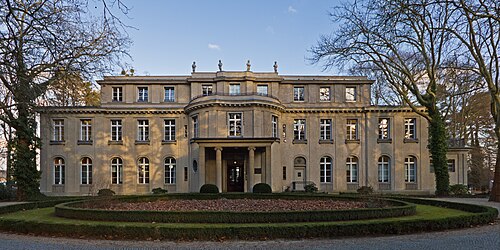
The purpose of the Wannsee Conference was not to decide on the murder of European Jewry — mass killings were already underway on the Eastern Front — but to coordinate the implementation of the "Final Solution" across all occupied territories and to establish the RSHA's authority over the process. The minutes (known as the "Wannsee Protocol") survive in a single copy, discovered in 1947 in the files of the German Foreign Ministry by Robert Kempner, a prosecutor at the Nuremberg Trials.
The protocol is chilling in its bureaucratic precision. It lists the Jewish populations of every European country targeted for destruction — including countries not yet conquered (England: 330,000; Ireland: 4,000; neutral Switzerland: 18,000; Turkey: 55,500) — for a total of eleven million Jews. It discusses the logistics of transportation, the treatment of mixed-marriage cases, and the use of forced labor as a form of killing ("a large number will undoubtedly drop out through natural decline"). The language is euphemistic — "evacuation" for deportation, "final solution" for murder — but its meaning is unmistakable.
The villa at Am Großen Wannsee 56–58 is now a memorial and museum. The original copy of the Wannsee Protocol is preserved at the Political Archive of the German Federal Foreign Office. Verified
The Camp System Verified
The Nazi camp system was vast and differentiated. The United States Holocaust Memorial Museum's Encyclopedia of Camps and Ghettos has documented over 44,000 sites, including concentration camps, forced labor camps, POW camps, transit camps, and killing centers. The major categories include:
Concentration camps (Konzentrationslager, or KZ): Established beginning in 1933, initially for political prisoners. Major camps included Dachau (established March 22, 1933), Sachsenhausen (1936), Buchenwald (1937), Ravensbrück (1939, primarily for women), and Mauthausen (1938). These camps were sites of forced labor, starvation, torture, medical experiments, and mass death, but they were distinct from the killing centers.
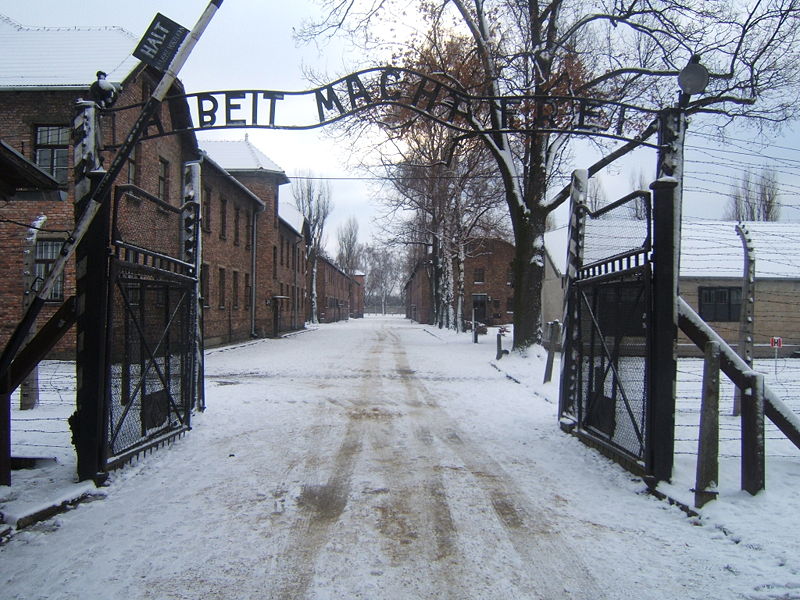
Killing centers (Vernichtungslager): Six camps were established in occupied Poland specifically for the mass murder of Jews using poison gas: Chelmno (operational December 1941, using gas vans), Belzec (operational March 1942), Sobibor (operational May 1942), Treblinka (operational July 1942), Auschwitz-Birkenau (the gas chambers began operation in early 1942), and Majdanek (operational September 1942, a dual-purpose concentration and killing center). The first five of these camps existed for one purpose: the industrial-scale murder of human beings.
Auschwitz-Birkenau was the largest and most complex of the killing centers. Located near the Polish city of Oświęcim in Upper Silesia, it consisted of three main camps: Auschwitz I (the administrative center), Auschwitz II-Birkenau (the killing center, containing four gas chamber-crematorium complexes), and Auschwitz III-Monowitz (a forced labor camp serving the IG Farben chemical company). Approximately 1.1 million people were murdered at Auschwitz, of whom approximately 1 million were Jews — a figure established through painstaking research by the Polish historian Franciszek Piper, based on transport records, registration documents, and demographic analysis. Verified
Treblinka, the second deadliest killing center, murdered approximately 870,000–925,000 people, nearly all of them Jews, between July 1942 and October 1943. Unlike Auschwitz, Treblinka was a pure death camp: most victims were killed within hours of arrival. The camp was dismantled by the Nazis in late 1943, and its site was plowed over and planted with crops in an attempt to conceal the crime. Archaeological surveys conducted by the Staffordshire University team led by Caroline Sturdy Colls (2010–2012), using non-invasive ground-penetrating radar and LiDAR, confirmed the locations of the gas chambers, burial pits, and other structures described by survivors. Verified
The Documentary Evidence Verified
The evidentiary base for the Holocaust is extraordinarily deep. Key categories of documentation include:
Nazi records: The Nazis produced vast quantities of records documenting their own crimes. Transport lists recording the names, ages, and destinations of deportees survive by the hundreds of thousands (the Arolsen Archives, formerly the International Tracing Service, hold approximately 30 million documents). Camp registration records, death books (Sterbebücher), construction plans for gas chambers and crematoria (including the detailed blueprints drawn by the firm of Topf und Söhne, the Erfurt-based company that designed and built the crematorium ovens), and administrative correspondence all survive. The Auschwitz construction office files, captured by the Soviet army in 1945, include blueprints labeled with the euphemistic terms Leichenkeller ("corpse cellar") for gas chambers and Sonderbehandlung ("special treatment") for murder.
The Einsatzgruppen reports: The mobile killing squads that followed the German army into the Soviet Union in 1941 submitted detailed operational reports (Ereignismeldungen) to Berlin, recording the number of Jews killed in each operation. These reports, captured intact, document mass shootings with chilling specificity. Einsatzgruppe A reported killing 229,052 Jews in the Baltic states by January 1942. A map attached to one report (the "Stahlecker Report," named after the Einsatzgruppe A commander) displays coffin symbols marking the number killed in each region. These documents were introduced as evidence at the Nuremberg Trials (Nuremberg Document L-180) and are held at the U.S. National Archives. Verified
The Jäger Report: SS-Standartenführer Karl Jäger, commander of Einsatzkommando 3 in Lithuania, compiled a nine-page document listing, date by date and location by location, the murder of 137,346 people (the vast majority Jews) between July and November 1941. The report, discovered in 1963, includes entries such as "4.10.41 — Vilna — 432 Jews, 1,115 Jewesses, 436 Jewish children — 1,983." Its specificity and its matter-of-fact tone make it one of the most disturbing documents in the historical record.
Photographs and film: Thousands of photographs document the Holocaust, taken by perpetrators, bystanders, and victims. The Auschwitz Album, discovered by survivor Lili Jacob in 1945, contains 193 photographs taken by SS photographers in May–June 1944 during the deportation and selection of Hungarian Jews at Birkenau — the only known photographic documentation of the arrival and selection process at a death camp. The album is now held at Yad Vashem. Film footage taken by Allied forces during the liberation of the camps — Bergen-Belsen (liberated April 15, 1945, footage shot by British Army Film Unit), Dachau (liberated April 29, 1945), and others — was presented at the Nuremberg Trials and remains in archives worldwide. Verified
IBM records: The researcher Edwin Black, in his book IBM and the Holocaust (2001), documented the role of IBM's German subsidiary, Dehomag, in providing Hollerith punch-card technology used for census operations, racial identification, and the logistics of deportation. While the extent of IBM's corporate knowledge and complicity remains debated among historians, the use of the technology itself is documented through surviving punch cards and machine records. Debated
Resistance Verified
The notion that Jews "went like sheep to the slaughter" — a phrase attributed to Abba Kovner's 1942 manifesto, though his actual intent was to call Jews to resistance — is a pernicious myth. Jewish resistance took many forms, from armed uprising to spiritual defiance, and it occurred under conditions of unimaginable deprivation, isolation, and terror.
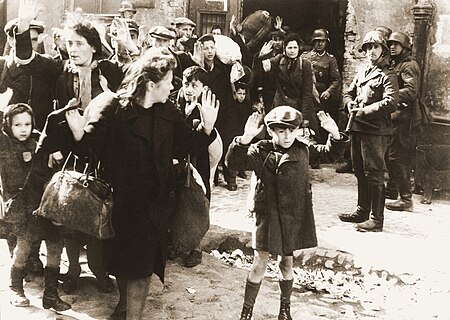
The Warsaw Ghetto Uprising (April 19 – May 16, 1943): The largest single act of Jewish armed resistance during the Holocaust. When SS forces entered the Warsaw Ghetto to carry out the final deportation of its remaining inhabitants (approximately 56,000–60,000 people), they were met by organized armed resistance from the Jewish Combat Organization (Żydowska Organizacja Bojowa, ZOB), led by Mordecai Anielewicz, and the Jewish Military Union (Żydowski Związek Wojskowy, ZZW). 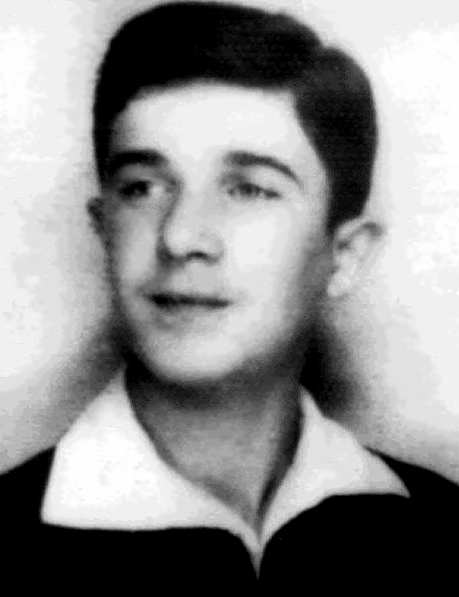
The fighters — poorly armed with pistols, a few rifles, homemade grenades, and Molotov cocktails — held off the German forces for nearly a month. SS-Brigadeführer Jürgen Stroop, who commanded the German operation, produced a detailed report (the "Stroop Report," captured intact and introduced at Nuremberg as Exhibit PS-1061) with photographs documenting the day-by-day destruction of the ghetto. The report's final entry, dated May 16, 1943, reads: "The former Jewish quarter of Warsaw is no longer in existence." Anielewicz died on May 8, 1943, in the ZOB's command bunker at 18 Mila Street. Verified
The Sobibor Revolt (October 14, 1943): Led by the Soviet-Jewish prisoner of war Alexander Pechersky and the Polish-Jewish prisoner Leon Feldhendler, approximately 300 prisoners escaped from the Sobibor killing center after killing eleven SS guards and several Ukrainian auxiliaries. Approximately 50–70 of the escapees survived the war. The revolt led to the closure and demolition of the camp. Recent archaeological excavations at the Sobibor site (2007–2018), directed by Yoram Haimi of the Israel Antiquities Authority and Wojciech Mazurek of the Foundation for Polish-German Reconciliation, uncovered the foundations of the gas chambers, personal belongings of victims, and other physical evidence confirming survivor testimony. Verified
The Treblinka Revolt (August 2, 1943): Prisoners who had managed to duplicate a key to the camp armory seized weapons and attacked the guards. Approximately 200 prisoners escaped; fewer than 100 survived the war. The revolt, like that at Sobibor, led to the dismantling of the camp.
The Auschwitz-Birkenau Sonderkommando Revolt (October 7, 1944): Members of the Sonderkommando (prisoners forced to work in the gas chambers and crematoria) attacked their SS guards using smuggled explosives — gunpowder obtained from four Jewish women working in the nearby Union munitions factory (Ester Wajcblum, Ala Gertner, Regina Safirsztain, and Roza Robota). Crematorium IV was partially destroyed. All four women were subsequently tortured and hanged; Roza Robota's last word, according to witnesses, was "nekama" — revenge.
Partisan warfare: Tens of thousands of Jews fought in partisan units across Eastern Europe. The Bielski partisans, led by the brothers Tuvia, Zus, and Asael Bielski in the forests of western Belarus, not only fought the Germans but maintained a community of over 1,200 Jewish civilians — the largest armed rescue of Jews by Jews during the Holocaust. Jewish partisans also fought in significant numbers in Soviet, Polish, French, Italian, Yugoslav, and Greek resistance movements.
Spiritual and cultural resistance: In ghettos across Europe, Jews maintained schools, organized concerts and theatrical performances, produced underground newspapers, documented conditions for posterity (the Oneg Shabbat archive in Warsaw, organized by the historian Emanuel Ringelblum and buried in metal containers and milk cans, was recovered in two parts in 1946 and 1950 and is now a UNESCO Memory of the World document), observed religious rituals at the risk of death, and preserved human dignity under inhuman conditions. Verified
Righteous Among the Nations Verified
The darkness was not total. Non-Jews across Europe risked their lives to rescue Jews, and their stories constitute one of the few sources of moral light in the Holocaust narrative. Yad Vashem, Israel's Holocaust memorial and research center, has recognized over 28,000 individuals as "Righteous Among the Nations" as of 2024.
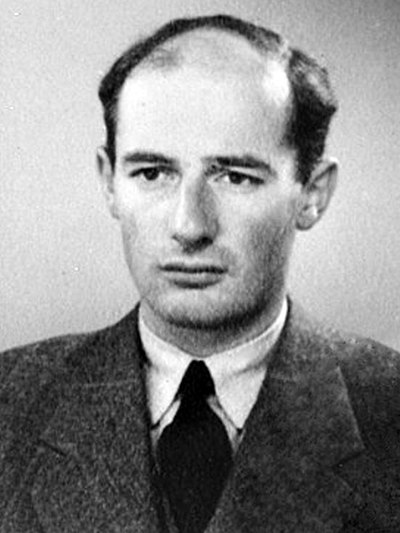
Among the most documented cases: Raoul Wallenberg, the Swedish diplomat who saved tens of thousands of Hungarian Jews in 1944 by issuing protective passports and establishing safe houses, before disappearing into Soviet custody in January 1945. 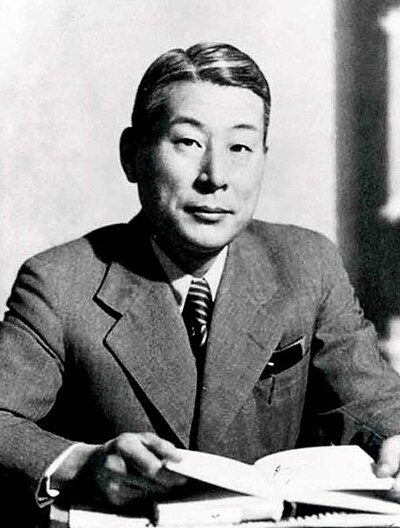
Chiune Sugihara, the Japanese consul in Kaunas, Lithuania, who in 1940 issued thousands of transit visas to Jewish refugees against his government's explicit orders — writing visas by hand, sometimes for eighteen hours a day. 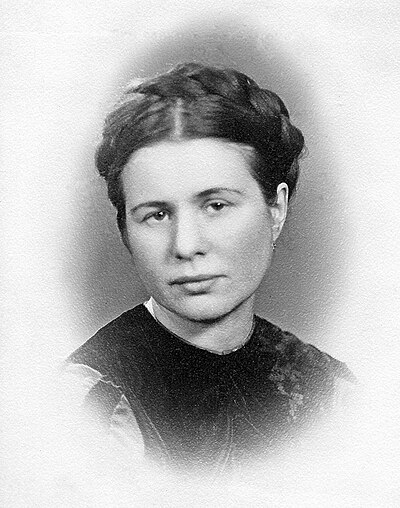
Irena Sendler, a Polish social worker who smuggled approximately 2,500 Jewish children out of the Warsaw Ghetto through the sewers, in toolboxes, in suitcases, and under stretchers, keeping a record of their real names in jars buried under an apple tree. The village of Le Chambon-sur-Lignon in southern France, led by Pastor André Trocmé and his wife Magda, sheltered an estimated 3,000–5,000 refugees, most of them Jewish.
Denmark occupies a unique position. In October 1943, when the Nazi occupation authorities ordered the deportation of Danish Jews, the Danish resistance — with the support of much of the Danish population — organized the rescue of approximately 7,200 of Denmark's 7,800 Jews by boat to neutral Sweden over a period of weeks.
Liberation and the Nuremberg Trials Verified
The camps were liberated by Allied forces in the final months of the war. Soviet forces liberated Majdanek (July 23, 1944) and Auschwitz (January 27, 1945); British forces liberated Bergen-Belsen (April 15, 1945); and American forces liberated Buchenwald (April 11, 1945), Dachau (April 29, 1945), and Mauthausen (May 5, 1945), among others.
The liberators documented what they found. General Dwight D. Eisenhower, who visited the Ohrdruf subcamp of Buchenwald on April 12, 1945, ordered every American soldier in the area who was not on the front lines to visit the camp, saying: "We are told that the American soldier does not know what he is fighting for. Now at least he will know what he is fighting against." He also cabled Washington requesting that members of Congress and journalists be brought to see the camps, "in order that there will be no room for cynical doubt." His foresight was prescient.
The International Military Tribunal at Nuremberg (November 20, 1945 – October 1, 1946) tried twenty-two major Nazi leaders for crimes against peace, war crimes, and crimes against humanity. The prosecution, led by U.S. Supreme Court Justice Robert H. Jackson, introduced thousands of captured Nazi documents into evidence. Twelve defendants were sentenced to death, seven received prison sentences, and three were acquitted. Subsequent Nuremberg trials (the "Subsequent Proceedings," 1946–1949) tried 185 additional defendants, including doctors, judges, industrialists, military commanders, and Einsatzgruppen leaders.
The Nuremberg proceedings established foundational principles of international law: that individuals — not only states — bear responsibility for crimes against humanity, and that "following orders" is not a defense.
The Scope: Six Million Verified
The figure of six million Jewish victims — approximately two-thirds of European Jewry and one-third of world Jewry — is not an estimate pulled from thin air. It is derived from multiple independent lines of evidence:
Census data: Pre-war and post-war census records and Jewish communal registration data allow demographic reconstruction of the Jewish population of each European country. The historian Raul Hilberg, in The Destruction of the European Jews (1961, revised edition 2003), calculated the total at approximately 5.1 million. The Israeli historian Yisrael Gutman and the statistician Robert Rozett calculated 5.59–5.86 million. The German-Jewish statistician Jacob Lestschinsky calculated 5.95 million. Wolfgang Benz's research team at the Technical University of Berlin calculated 5.29–6.2 million. The convergence of these independent calculations around the figure of six million is itself significant.
Transport records: The Deutsche Reichsbahn (German National Railway) kept meticulous records of deportation transports, including the number of deportees, origin, and destination. These records, along with the transport lists maintained by Jewish communities under Nazi compulsion, document the movement of millions of people to the killing centers.
Camp records: Although the Nazis attempted to destroy evidence as the war ended — burning documents and dynamiting crematoria — significant records survived. The Auschwitz death books (Sterbebücher), recording 68,864 registered prisoners who died (a fraction of the total killed, since most victims were gassed upon arrival without being registered), were captured by the Soviet army and eventually made available to researchers.
The Korherr Report: In early 1943, SS-Obersturmbannführer Richard Korherr, the SS's chief statistician, prepared a report for Heinrich Himmler documenting the "Final Solution of the European Jewish Question" through the end of 1942. The report, preserved in multiple copies, records the number of Jews subjected to "special treatment" (Sonderbehandlung) — the Nazi euphemism for murder — and provides detailed statistics on deportations from across Europe. Himmler's response to the report survives: he instructed Korherr to change the word "special treatment" to "transport to the Russian East." Verified
The Weight of Memory Tradition
The Holocaust shattered assumptions about human progress, the security of emancipation, and the future of Jewish life in Europe. It drove the creation of the State of Israel, transformed Jewish theology (the question of God's presence or absence during the Holocaust has produced a vast literature, from Eliezer Berkovits's Faith After the Holocaust to Emil Fackenheim's "614th commandment" — that Jews must survive as Jews, lest they grant Hitler a posthumous victory), and imposed on subsequent generations an obligation of memory that has no precedent in Jewish or human history.
The Hebrew term Shoah ("catastrophe" or "devastation") has largely replaced "Holocaust" (a word of Greek origin meaning "burnt offering," which many find theologically inappropriate) in Israeli and increasingly in international usage. Yom HaShoah (Holocaust Remembrance Day), established by the Israeli Knesset in 1951 and observed on the 27th of Nisan, is marked by a nationwide siren during which all activity in Israel ceases for two minutes of silence.
The obligation to bear witness — to preserve testimony, to document evidence, to educate future generations — is not merely a historical exercise. It is, in the most concrete sense, a defense against the recurrence of the unthinkable. The evidence is abundant, it is accessible, and it is irrefutable. The historical record speaks for the dead, who cannot speak for themselves.
The World's Response — and Failure Verified
The question of what the world knew, and when, has been extensively researched. By late 1942, detailed information about the mass murder of European Jews had reached Allied governments. In August 1942, Gerhart Riegner, the World Jewish Congress representative in Geneva, sent a telegram to London and Washington reporting that the Nazis were planning the systematic extermination of European Jewry. The "Riegner Telegram" was initially suppressed by the U.S. State Department, which questioned its credibility.
On December 17, 1942, the Allied governments issued a joint declaration condemning "in the strongest possible terms this bestial policy of cold-blooded extermination" and pledging to hold the perpetrators accountable. Yet no military action was taken to disrupt the killing — no bombing of the rail lines to Auschwitz (a proposal debated by the War Refugee Board and rejected by the War Department in 1944), no targeted raids on the gas chambers, no relaxation of immigration quotas to provide refuge.
The Bermuda Conference of April 1943, convened by the United States and Britain to address the refugee crisis, produced no concrete results — it has been called by historian David Wyman "one of the most cynical events of World War II." The War Refugee Board, established by President Franklin D. Roosevelt in January 1944 under pressure from Treasury Secretary Henry Morgenthau Jr., came too late to save most of the victims, though it is credited with contributing to the rescue of approximately 200,000 Jews, primarily in Hungary and Romania.
The failure of the democracies to act more decisively while the killing was underway remains one of the most painful and debated questions of the Holocaust period. It also became one of the most powerful arguments for the establishment of a sovereign Jewish state that would never depend on the goodwill of others for the physical safety of Jews. Debated
Memorialization and Education Verified
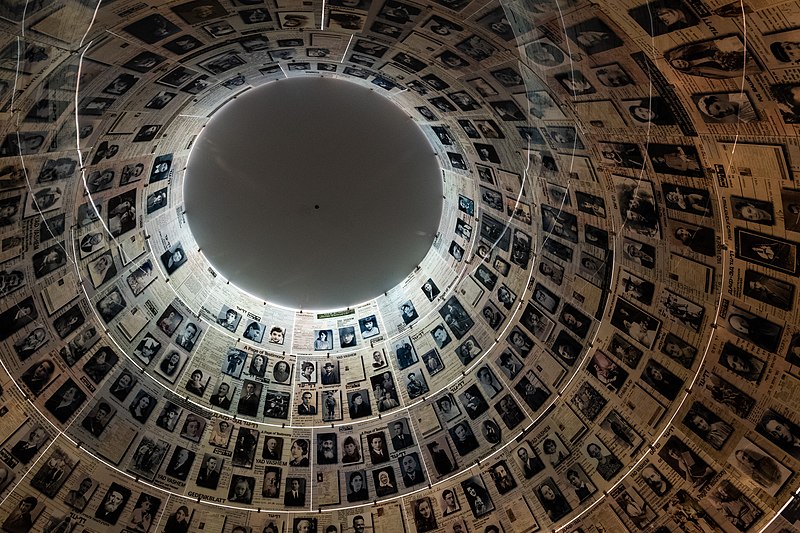
The memorialization of the Holocaust has become a global enterprise. Yad Vashem, established in 1953 on the Mount of Remembrance in Jerusalem, serves as Israel's official memorial, museum, and research center. Its archives contain over 210 million pages of documents, and its Central Database of Shoah Victims' Names has collected the names and biographical details of approximately 4.8 million of the six million victims.
The United States Holocaust Memorial Museum, opened in Washington, D.C., in 1993, has received over 40 million visitors. Holocaust memorials exist in Berlin (the Memorial to the Murdered Jews of Europe, designed by Peter Eisenman, opened 2005), Budapest, Paris, Amsterdam, and dozens of other cities. The International Holocaust Remembrance Alliance (IHRA), an intergovernmental body established in 1998, coordinates education, research, and commemoration among 35 member countries.
Holocaust education is mandated by law in many countries and states, though the quality and content of curricula vary widely. Surveys consistently reveal troubling gaps in public knowledge: a 2018 survey by the Claims Conference found that 41% of American adults and 66% of millennials could not identify Auschwitz. These findings underscore the continuing urgency of education and documentation — not as a ritual of commemoration but as a practical necessity for a world in which the last survivors are passing away and the living memory of the event is giving way to historical memory.
Locations in This Chapter
Loading map...