Part 7: Modern Era · 1948–present
27.State of Israel
1948, wars, archaeological renaissance
23 min read
A State Is Born Verified
At 4:00 p.m. on Friday, May 14, 1948, in the Tel Aviv Museum of Art on Rothschild Boulevard, David Ben-Gurion rose before an audience of approximately 250 invited guests and read aloud the Declaration of the Establishment of the State of Israel. The ceremony lasted thirty-two minutes. The Palestine Philharmonic Orchestra played "Hatikvah" ("The Hope"), which would become the national anthem. That evening, at midnight, the British Mandate formally expired, and the Union Jack was lowered for the last time at the port of Haifa.
The declaration, drafted primarily by Moshe Shertok (later Sharett), Pinchas Rosen, and Ben-Gurion himself — with significant input from the jurist Mordechai Beham and the American rabbi Judah Magnes, among others — situated the new state within the full sweep of Jewish history. It invoked the historical connection of the Jewish people to the Land of Israel, the Balfour Declaration, the UN Partition Plan, the Holocaust, and the natural right of the Jewish people to self-determination. It also pledged equality of social and political rights for all inhabitants "irrespective of religion, race, or sex" and guaranteed freedom of religion, conscience, language, education, and culture.
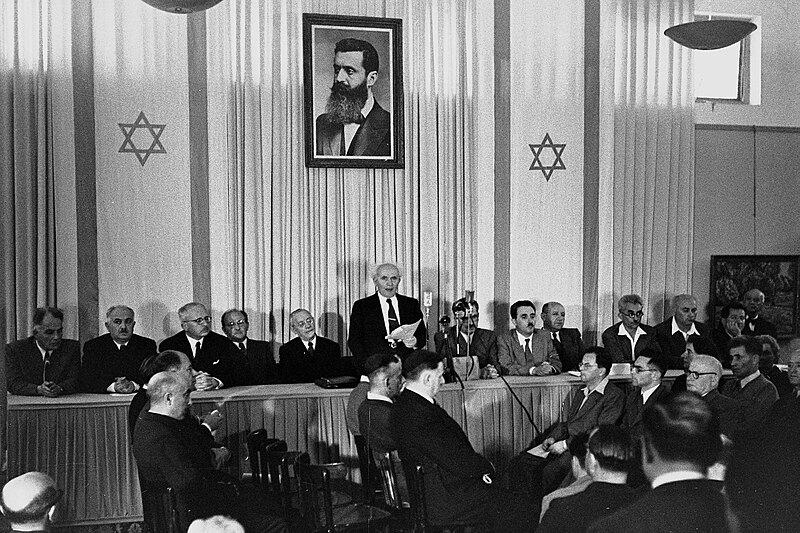
The United States recognized the new state eleven minutes after its declaration — the recognition was de facto, handwritten by President Harry S. Truman on a typed State Department draft, with "Jewish State" crossed out and "Israel" written in. The Soviet Union granted de jure recognition three days later. Verified
The 1948 War Verified
The day after the declaration, the armies of Egypt, Transjordan, Syria, Iraq, and Lebanon invaded the nascent state. The Arab League's Secretary-General, Abdul Rahman Azzam, had declared that the invasion would be "a war of extermination and momentous massacre." The Israeli forces — a hastily assembled army comprising the Haganah (reorganized as the Israel Defense Forces on May 26, 1948), the Irgun, and the Lehi — were outnumbered and outgunned.
The war lasted until early 1949 and was fought in several phases, punctuated by UN-brokered truces. Key turning points included:
The Battle of Latrun (May–July 1948): The Arab Legion of Transjordan, commanded by the British officer John Bagot Glubb ("Glubb Pasha"), held the strategic Latrun police station controlling the road from the coast to Jerusalem. After multiple failed Israeli assaults, engineers hastily constructed the "Burma Road," a bypass route through difficult terrain, breaking the siege of Jewish Jerusalem.
The fall of the Jewish Quarter of the Old City (May 28, 1948): After weeks of fierce fighting, the Jewish Quarter of Jerusalem's Old City fell to the Arab Legion. Approximately 1,300 Jewish residents and fighters were taken prisoner, and the quarter's synagogues — including the Hurva, originally built in 1701 — were demolished. Jews would not have access to the Western Wall or the Old City for the next nineteen years.
Operation Hiram (October 1948): Israeli forces captured the upper Galilee, securing the northern border.
The war ended with a series of armistice agreements signed in 1949 under UN mediation on the island of Rhodes: with Egypt (February 24), Lebanon (March 23), Transjordan (April 3), and Syria (July 20). Iraq, which had participated in the fighting, refused to sign an armistice. The armistice lines — the "Green Line" — gave Israel approximately 78% of Mandatory Palestine, significantly more than the 56% allocated by the UN Partition Plan. Transjordan controlled the West Bank and East Jerusalem; Egypt controlled the Gaza Strip. No Palestinian state was established.
The human cost was staggering. Approximately 6,373 Israelis were killed — roughly 1% of the Jewish population. Arab casualties are harder to estimate but were also heavy. Approximately 700,000 Palestinian Arabs fled or were expelled during the conflict — an event Palestinians call the Nakba ("catastrophe") — creating a refugee crisis that remains unresolved. The causes and circumstances of the Palestinian exodus remain intensely debated among historians. Debated
Mass Immigration: The Ingathering of Exiles Verified
In its first three years, Israel's population more than doubled — from approximately 806,000 at independence to over 1.4 million by the end of 1951. Two great waves of immigration converged:
European survivors: Approximately 300,000 Holocaust survivors, many from displaced persons camps in Germany, Austria, and Italy, arrived in the new state. The British internment camps on Cyprus, which held approximately 52,000 Jewish refugees at their peak, were emptied. The absorption of survivors — traumatized, often in poor health, arriving in a country at war — was one of the most difficult chapters of Israel's early history.
Mizrahi and Sephardic Jews from Arab lands: The creation of Israel and the 1948 war triggered a mass exodus of Jews from the Arab world. Between 1948 and the mid-1970s, approximately 850,000 Jews left or were expelled from Arab countries:
- Iraq: Approximately 120,000–130,000 Jews were airlifted to Israel in Operation Ezra and Nehemiah (1950–1951), leaving behind a community that had existed for over 2,500 years, since the Babylonian exile. The Iraqi government had frozen Jewish assets and revoked their citizenship.
- Yemen:
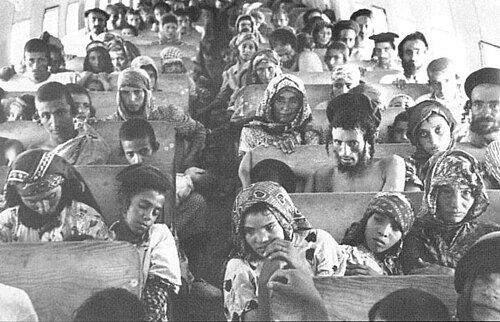
Yemenite Jews aboard an Operation Magic Carpet flight (1949-1950), airlifting 49,000 Jews to Israel · Source
Approximately 49,000 Yemenite Jews were airlifted in Operation Magic Carpet (1949–1950), a logistical feat that many of the immigrants — some of whom had never seen an airplane — experienced as a miraculous fulfillment of Isaiah 40:31 ("They shall mount up with wings as eagles").
- Morocco: Approximately 250,000 Jews emigrated between 1948 and 1967, most to Israel and France.
- Egypt: Approximately 75,000 Jews left between 1948 and 1967, with major waves following the 1956 Suez Crisis, when thousands were expelled with minimal possessions.
- Libya, Tunisia, Algeria, Syria, Lebanon: Smaller but significant communities were displaced. Verified
The absorption of Mizrahi immigrants was fraught with difficulties. Many were housed for years in ma'abarot (transit camps) under harsh conditions. Cultural friction between the predominantly Ashkenazi establishment and the Mizrahi newcomers — who were sometimes subjected to patronizing and discriminatory treatment — created social tensions that persist in Israeli society. The "Yemenite Children Affair" — allegations that hundreds of Yemenite babies were taken from their parents and given to Ashkenazi families in the early 1950s, investigated by three state commissions (1967, 1988, 2016) — remains a source of deep communal pain. Debated
The Six-Day War Verified
On June 5, 1967, after weeks of escalating tension — Egyptian President Gamal Abdel Nasser had ordered the withdrawal of the UN Emergency Force from Sinai, closed the Straits of Tiran to Israeli shipping (an act Israel considered a casus belli), and massed troops on the border — Israel launched a preemptive strike that destroyed the Egyptian Air Force on the ground within hours. In six days of fighting, Israel captured the Sinai Peninsula and Gaza Strip from Egypt, the West Bank and East Jerusalem from Jordan, and the Golan Heights from Syria.
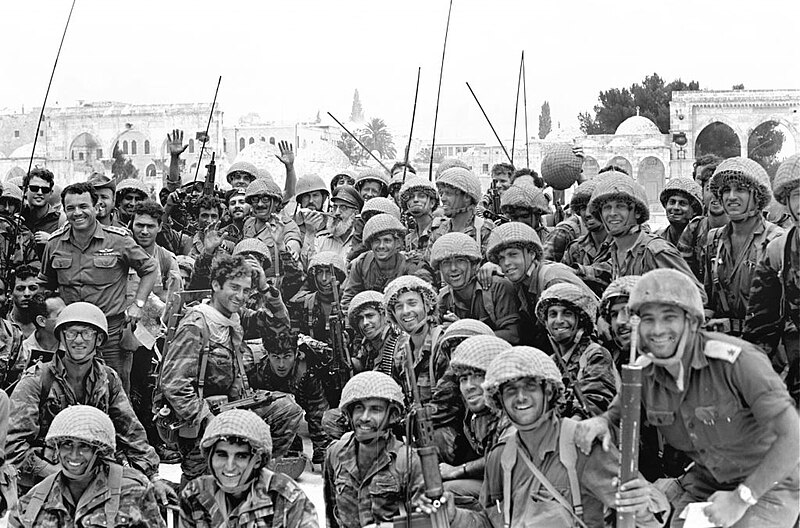
The most emotionally charged moment came on June 7, 1967, when Israeli paratroopers under Colonel Mordechai Gur reached the Western Wall — the remnant of the retaining wall of Herod's Temple Mount expansion, the holiest site in Judaism accessible to Jewish worshippers. Gur's radio transmission — "The Temple Mount is in our hands" (Har ha-Bayit be-yadeinu) — was broadcast live across Israel. The army chief chaplain, Rabbi Shlomo Goren, blew the shofar at the Wall. Soldiers wept. The photograph of three paratroopers gazing up at the Wall, taken by David Rubinger, became the iconic image of the war and of modern Israel.
The reunification of Jerusalem was celebrated across the Jewish world, but it also inaugurated a military occupation of the West Bank and Gaza Strip — with their approximately one million Palestinian inhabitants — that would become the central political and moral challenge of Israeli life. The settlement movement, which began almost immediately after the war (Kfar Etzion was reestablished in September 1967), has been a source of international controversy and internal Israeli debate ever since. Debated
The Yom Kippur War Verified
On October 6, 1973 — Yom Kippur, the holiest day of the Jewish calendar — Egypt and Syria launched a coordinated surprise attack. Egyptian forces crossed the Suez Canal and breached the Bar-Lev Line, a chain of Israeli fortifications along the eastern bank. Syrian forces simultaneously advanced into the Golan Heights, threatening to break through into the Galilee.
The initial days were catastrophic for Israel. Intelligence failures (the so-called mechdal, or blunder) had left the country unprepared despite warning signs. Casualties were severe: approximately 2,688 Israeli soldiers were killed and over 7,000 wounded in three weeks of fighting. Israel eventually counterattacked — General Ariel Sharon's crossing of the Suez Canal encircled the Egyptian Third Army, and Israeli forces pushed to within 40 kilometers of Damascus — but the war shattered the sense of invincibility that had followed 1967.
The Agranat Commission, established to investigate the intelligence failures, recommended the dismissal of several senior military officers, including Chief of Staff David Elazar. 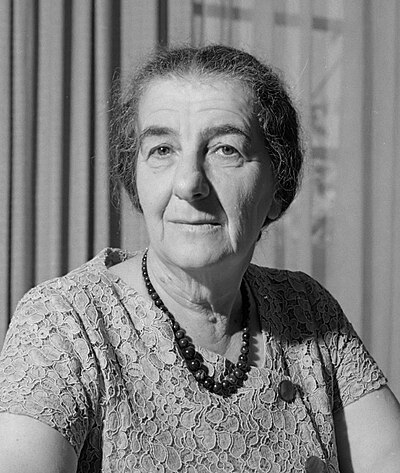
Prime Minister Golda Meir, though not formally censured, resigned in April 1974. 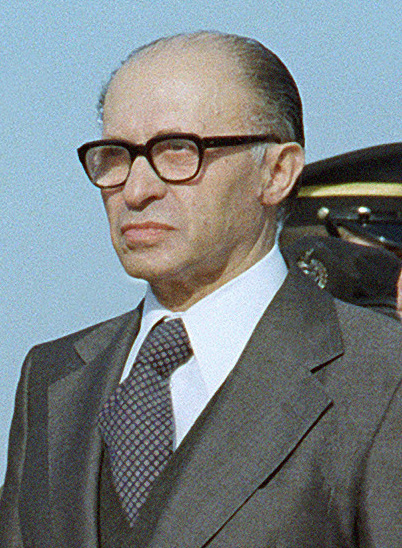
The war's trauma reshaped Israeli politics, contributing to the election of Menachem Begin and the Likud party in 1977, ending three decades of Labor dominance.
The Camp David Accords Verified
The Yom Kippur War's most consequential legacy was peace. Egyptian President Anwar Sadat's dramatic visit to Jerusalem in November 1977 — he addressed the Knesset on November 20, the first Arab leader to visit Israel officially — opened the door to negotiations that culminated in the Camp David Accords of September 17, 1978.
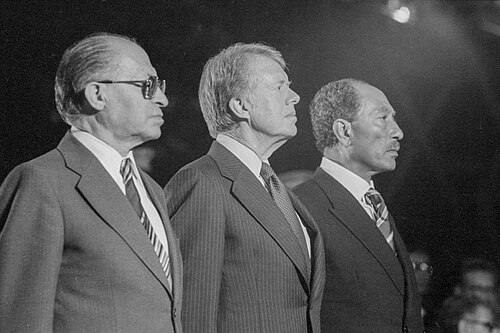
Brokered by President Jimmy Carter over thirteen days of intensive negotiations at the presidential retreat, the accords consisted of two frameworks: one for peace between Egypt and Israel, and one (never implemented) for Palestinian self-governance. The Egypt-Israel Peace Treaty was signed on March 26, 1979, on the White House lawn. Israel withdrew from the Sinai Peninsula (completed in 1982), returning every settlement and military installation, including the dismantlement of the town of Yamit. Egypt became the first Arab state to recognize Israel.
Sadat and Begin shared the 1978 Nobel Peace Prize. The cost of peace was high: Sadat was assassinated by Islamist extremists within the Egyptian military on October 6, 1981, during a parade commemorating the anniversary of the Yom Kippur War crossing.
The Archaeological Renaissance Verified
The establishment of Israel triggered an archaeological renaissance of extraordinary scope. For the new state, archaeology was not merely an academic pursuit but a form of national identity — the recovery of the physical evidence of Jewish civilization in the land.
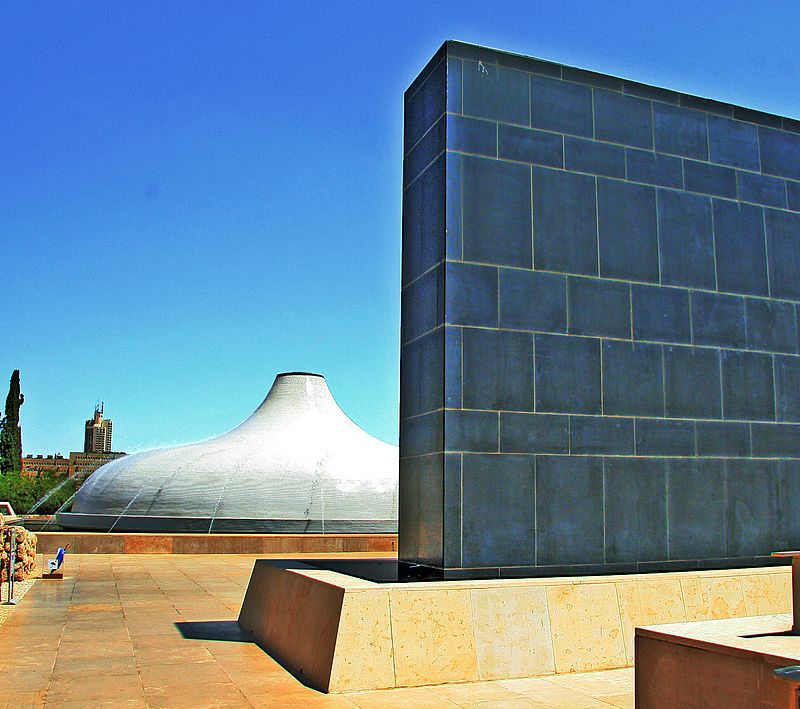
The Dead Sea Scrolls: Although the first scrolls were discovered in 1947 (by Bedouin shepherds in Cave 1 at Qumran, near the Dead Sea), the full publication of the scroll corpus was a decades-long process that accelerated after Israel gained access to the entire collection following the 1967 war. The scrolls — approximately 900 manuscripts dating from the third century BCE to the first century CE — include the oldest known copies of the Hebrew Bible, sectarian texts of the Qumran community (likely Essenes), and apocryphal and pseudepigraphal works. The publication of the full corpus by the early 2000s, under the editorial oversight of Emanuel Tov of the Hebrew University, revolutionized the study of Second Temple Judaism and early Christianity. The scrolls are housed in the Shrine of the Book at the Israel Museum in Jerusalem, designed by architects Armand Bartos and Frederick Kiesler and opened in 1965. Verified
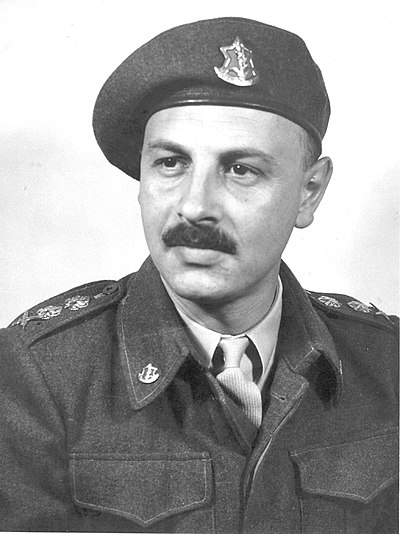
The Masada excavation (1963–1965): Yigael Yadin's excavation of the Herodian fortress atop Masada — where, according to Josephus, 960 Jewish rebels committed mass suicide rather than surrender to the Romans in 73 or 74 CE — became a national event. Thousands of volunteers participated. 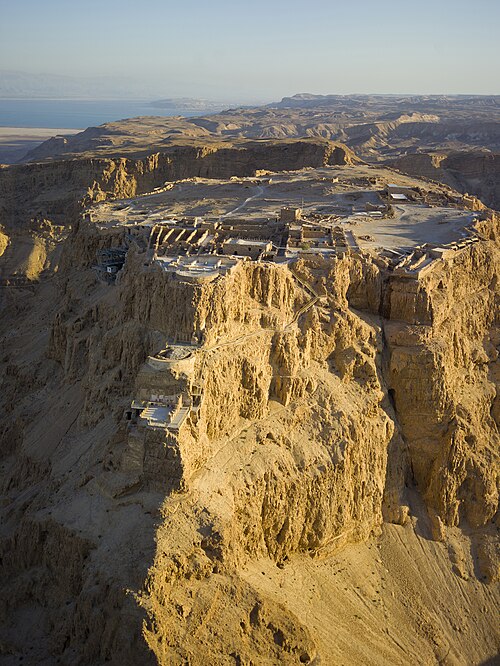
Yadin uncovered Herod's palaces, storerooms, a synagogue, a bathhouse, and fragments of biblical scrolls. Eleven pottery ostraca inscribed with names — possibly the lots cast by the defenders — were found and became objects of national fascination. Masada was designated a UNESCO World Heritage Site in 2001. Verified
The historical narrative of mass suicide at Masada, as related by Josephus, is accepted by some historians and questioned by others. Archaeological evidence confirms a violent end to the siege but cannot definitively confirm the suicide account. Shaye Cohen and other scholars have raised questions about the reliability of Josephus's narrative, noting its literary parallels with other ancient accounts. Debated
The City of David excavations: Archaeological work in the area south of the Temple Mount — identified as the original core of ancient Jerusalem — has been ongoing since the nineteenth century but intensified after 1967. Major finds include the Gihon Spring fortifications (dated to the Middle Bronze Age, c. 1800 BCE), Hezekiah's Tunnel (an engineering marvel cut through 533 meters of bedrock in the eighth century BCE, confirmed by the Siloam Inscription now in the Istanbul Archaeological Museum), Iron Age bullae (seal impressions) bearing the names of officials mentioned in the Bible — including a bulla reading "Belonging to Nathan-Melech, Servant of the King" (2 Kings 23:11), discovered in 2019 by the excavation team led by Yiftah Shalev and Yuval Gadot. Verified
The City of David excavations are also politically contentious, as the site is located in the predominantly Palestinian neighborhood of Silwan, and the excavation and tourism operations are partly managed by Elad, a settler organization. The intertwining of archaeology and politics in Jerusalem remains one of the most sensitive issues in Israeli-Palestinian relations. Debated
Ethiopian Jewish Immigration Verified
Among the most dramatic chapters of Israeli immigration is the story of Ethiopian Jews (Beta Israel), whose origins are debated by scholars — they may descend from an ancient Jewish community predating the destruction of the Second Temple, or they may have adopted Judaism through contact with Yemenite or Egyptian Jews, or through independent development. Their practice of Judaism, centered on the Torah and the apocryphal Book of Jubilees, was distinct from rabbinic Judaism, having developed in isolation from the Talmudic tradition. Debated
In 1973, Sephardic Chief Rabbi Ovadia Yosef ruled that the Beta Israel were Jews, paving the way for their immigration under the Law of Return. Two major airlifts followed:
Operation Moses (November 1984 – January 1985): Approximately 8,000 Ethiopian Jews were covertly airlifted from Sudan, where they had fled from famine and civil war. The operation was halted when it was leaked to the press, stranding thousands more in Sudan.
Operation Solomon (May 24–25, 1991): In a single thirty-six-hour period, 34 Israeli aircraft (including C-130 Hercules transports with their seats removed) flew 14,325 Ethiopian Jews from Addis Ababa to Israel, as the Ethiopian government collapsed around them. An El Al Boeing 747 carried 1,122 passengers on a single flight — a world record. Several babies were born during the airlift.
Today, approximately 160,000 Ethiopian-Israelis live in Israel. Their absorption has been accompanied by significant challenges, including racism, economic disadvantage, and disputes over religious status (the Israeli rabbinate initially required some Ethiopian immigrants to undergo symbolic conversion, a demand that was deeply offensive to a community that had maintained Jewish practice for centuries under extraordinarily difficult conditions).
The Oslo Accords and Their Aftermath Debated
The Oslo Accords, signed on the White House lawn on September 13, 1993 — the famous handshake between Israeli Prime Minister Yitzhak Rabin and PLO Chairman Yasser Arafat, with President Bill Clinton presiding — represented the first direct agreement between Israel and the Palestine Liberation Organization. The Declaration of Principles established a framework for Palestinian self-governance, created the Palestinian Authority, and envisioned a five-year interim period leading to a permanent settlement.
The accords were controversial from the start. Israeli opponents on the right viewed them as a dangerous concession to terrorism; Palestinian opponents viewed them as a capitulation that abandoned the goal of full statehood. The interim period was marked by escalating violence: Hamas and Islamic Jihad carried out devastating suicide bombings in Israeli cities (the Dizengoff bus bombing of October 1994, the Beit Lid massacre of January 1995, and others), while Israeli settler Baruch Goldstein massacred 29 Palestinian worshippers at the Cave of the Patriarchs in Hebron on February 25, 1994.
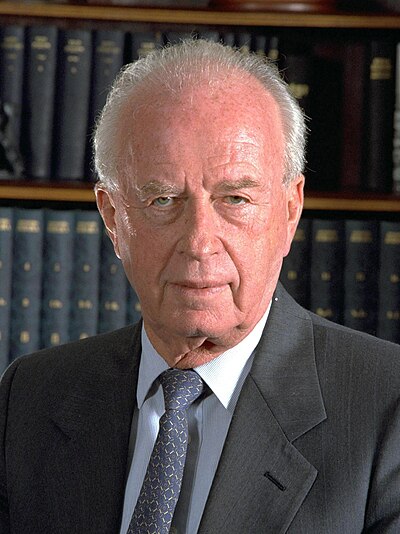
On November 4, 1995, Rabin was assassinated by Yigal Amir, a right-wing Israeli extremist, at a peace rally in Tel Aviv. Rabin's murder traumatized Israeli society and fundamentally altered the trajectory of the peace process. Subsequent negotiations — the Camp David Summit (2000), the Taba talks (2001), the Annapolis process (2007) — failed to produce a permanent agreement. The two-state solution remains, as of this writing, the stated policy of much of the international community but has not been realized on the ground.
Israeli Society and Culture Verified
Modern Israel is a society of remarkable complexity. Its population of approximately 9.8 million (as of 2024) includes approximately 7.2 million Jews, 2.1 million Arabs (predominantly Muslim, with significant Christian and Druze minorities), and smaller communities including Circassians, Samaritans, and foreign workers. The Jewish population itself is extraordinarily diverse: Ashkenazi, Sephardic, Mizrahi, Ethiopian, and immigrants from the former Soviet Union (approximately one million arrived between 1989 and 2000, transforming the country) each carry distinct cultural traditions.
Hebrew, revived from a liturgical language into a living vernacular, is the national language — a linguistic achievement unmatched in human history. The country's cultural output is prolific: Israeli literature, cinema, theater, and music command international attention disproportionate to the nation's size. The annual Hebrew Book Week attracts hundreds of thousands of visitors, and Israel publishes more books per capita than nearly any other country.
The economy has transformed from an agricultural and socialist base to a technology-driven powerhouse. Israel's "Startup Nation" reputation (the term was popularized by Dan Senor and Saul Singer's 2009 book) rests on a genuine concentration of innovation: the country has more startups per capita than any other nation, and its technology sector accounts for a significant portion of GDP. Companies including Waze, Mobileye, Check Point, and Wix were developed in Israel.
The mandatory military service (three years for men, two years for women, with exemptions for Arab citizens and most Haredi Jews) has been a defining institution of Israeli society, serving as both a rite of passage and a social equalizer — though the exemption of Haredi men from service has become an increasingly contentious political issue.
Ancient Heritage and Modern Identity Debated
Modern Israel's relationship to its ancient heritage is complex, layered, and politically charged. The state has invested enormously in archaeology, preservation, and the presentation of historical sites. The Israel Museum, the Israel Antiquities Authority, the national parks system, and the universities maintain one of the densest archaeological research programs in the world relative to the country's size.
Yet the use of archaeology in the service of national narrative has attracted scholarly criticism. The archaeologist Nadia Abu El-Haj, in Facts on the Ground: Archaeological Practice and Territorial Self-Fashioning in Israeli Society (2001), argued that Israeli archaeology has sometimes privileged certain periods (Iron Age Israelite, Second Temple) while marginalizing others (Byzantine, Islamic, Ottoman) in ways that serve political rather than scholarly ends. This critique has been both endorsed and challenged by other scholars.
What is not in dispute is the richness of the archaeological record itself. The land of Israel is one of the most intensively excavated places on earth, and its material culture — from the Chalcolithic Ghassulian culture to the Ottoman period — tells a story of extraordinary complexity and continuous human habitation. The challenge, for both scholars and citizens, is to read that record honestly — honoring what the stones reveal without forcing them to say more than they can.
The Ongoing Challenge of Peace Debated
The Israeli-Palestinian conflict remains the defining unresolved question of Israel's existence. The Second Intifada (2000–2005), Israel's unilateral withdrawal from the Gaza Strip (2005), the Hamas takeover of Gaza (2007), and recurring cycles of violence have deepened skepticism on both sides about the possibility of a negotiated peace.
The international community, led by the United States, the European Union, the United Nations, and Russia (the "Quartet"), has continued to promote the two-state solution as the framework for peace. The Arab Peace Initiative, proposed by Saudi Arabia's Crown Prince Abdullah at the Beirut Arab League Summit in 2002, offered full Arab recognition of Israel in exchange for Israeli withdrawal to the 1967 borders and a "just solution" to the Palestinian refugee issue. Israel's response to the initiative has been cautious and evolving.
The Abraham Accords of 2020, in which Israel normalized relations with the United Arab Emirates, Bahrain, Morocco, and Sudan — brokered by the United States — represented a significant shift in the regional dynamics, decoupling the broader Arab-Israeli relationship from the Palestinian question for the first time. Whether this shift will ultimately facilitate or complicate Israeli-Palestinian peacemaking remains to be seen.
The events of October 7, 2023, when Hamas launched a devastating attack on southern Israel, killing approximately 1,200 people and taking approximately 250 hostages, and the subsequent Israeli military operation in Gaza, have added new layers of tragedy and complexity to an already intractable conflict. The long-term political consequences of these events are, at the time of this writing, still unfolding.
A Living Enterprise Verified
The State of Israel, at over seven decades old, has defied many of the predictions made at its founding — both hopeful and dire. It has absorbed millions of immigrants, built a modern economy, developed a vibrant democracy (if one that is increasingly contested), revived an ancient language, and produced a culture of remarkable depth and diversity. It has also failed to resolve its foundational conflict with the Palestinian people, struggled with the tensions between its Jewish and democratic identities, and grappled with growing internal divisions between secular and religious, Ashkenazi and Mizrahi, left and right.
The relationship between the modern state and ancient heritage — between the stones uncovered by archaeologists and the scrolls preserved by scribes — is more than a metaphor. It is a lived reality for a nation that builds highways over Canaanite ruins, debates policy in a language revived from sacred texts, and celebrates holidays whose origins stretch back three millennia. The ongoing archaeological discoveries serve as a constant reminder that the land of Israel has been a crossroads of civilizations for thousands of years, and that the current chapter, however dramatic, is one in a very long story.
The Israeli experience has also reshaped Judaism itself. The creation of a Jewish majority culture — with Hebrew as the language of daily life, the Jewish calendar as the public calendar, and Jewish history as the national narrative — has produced a form of Jewish identity that is qualitatively different from diaspora Judaism. Israeli Jews, whether secular or religious, live in a Jewish civilization in a way that diaspora Jews, by definition, cannot. This difference — in language, in cultural reference, in the experience of majority versus minority — is one of the great dividing lines in contemporary Jewish life, and bridging it remains an unfinished task.
What the stones of Israel tell us, ultimately, is that this land has always been a place of convergence and contestation — of empires, peoples, religions, and ideas. The modern State of Israel is the latest chapter in a story that begins with Canaanite city-states, continues through Israelite kingdoms, Roman provinces, Byzantine churches, Islamic caliphates, Crusader fortresses, and Ottoman districts, and now encompasses a modern democracy struggling with the weight of its own history. The archaeological record does not resolve the conflicts of the present, but it provides an essential context — a reminder that the current moment, however urgent, is part of a much longer human story.
Israel and the Jewish Future Debated
The classical Zionist thinkers — Herzl, Ben-Gurion, Jabotinsky — imagined that the creation of a Jewish state would "normalize" the Jewish people, transforming them from a scattered minority into a nation like any other. In some respects this has happened: Israel has an army, a currency, a foreign policy, traffic jams, and political scandals, like any normal country. In other respects, normalization has proven elusive: Israel remains a country whose very legitimacy is challenged by some in the international community, whose citizens serve in one of the world's most active militaries, and whose relationship to Jewish communities worldwide is unlike that of any other nation-state to any other diaspora.
The question of what Israel means for Judaism — and what Judaism means for Israel — remains open. The secular founders imagined a "new Jew" liberated from the constraints of tradition; the religious Zionists saw the state as the beginning of messianic redemption; the ultra-Orthodox initially rejected the state and now constitute a growing portion of its population. These visions coexist in a single society, generating a creative tension that is simultaneously Israel's greatest strength and its most persistent source of internal conflict.
The story of the State of Israel, like the story of the Jewish people, is unfinished — a narrative still being written in the convergence of ancient heritage and modern aspiration, of scrolls and stones.
Locations in This Chapter
Loading map...