Part 7: Modern Era · present
28.Judaism Today
Demographics, denominations, contributions
23 min read
Counting the Jewish People Verified
As of the early 2020s, the global Jewish population stands at approximately 15.7 million — a figure that, remarkably, has still not recovered to its pre-Holocaust level of approximately 16.6 million in 1939. The world's Jewish population was nearly halved by the Shoah, reduced from approximately 16.6 million to 11 million by 1945, and the recovery has been slow, shaped by low birth rates in the diaspora, assimilation, and the demographic peculiarities of a small, widely dispersed people.
The most authoritative source for global Jewish demographic data is the annual report published by Sergio DellaPergola of the Hebrew University of Jerusalem in the American Jewish Year Book. His figures, widely cited by researchers and institutions, estimate the following distribution as of 2023–2024:
Israel: Approximately 7.2 million Jews (including approximately 480,000 settlers in the West Bank), constituting approximately 73% of Israel's population. Israel surpassed the United States as the world's largest Jewish community in approximately 2020–2022, depending on the definitions used — a historic milestone.
United States: Approximately 6.0–7.6 million, depending on how "Jewish" is defined. The lower figure reflects the "core Jewish population" (those who identify as Jewish by religion or parentage), while the higher figure includes those with partial Jewish ancestry or who identify as Jewish on some measures but not others. The Pew Research Center's 2020 survey estimated 7.5 million Jewish adults (by any definition) in the United States, of whom 5.8 million identified as Jewish by religion.
France: Approximately 440,000–450,000, the third-largest Jewish community and the largest in Europe. The community has declined from an estimated 530,000 in the early 2000s due to emigration (particularly to Israel, accelerated by antisemitic incidents including the Toulouse and Montauban shootings of 2012 and the Hypercacher kosher supermarket attack of 2015).
Canada: Approximately 395,000. United Kingdom: Approximately 292,000. Argentina: Approximately 175,000. Russia: Approximately 145,000 (dramatically reduced from the Soviet-era Jewish population of over 2 million). Germany: Approximately 118,000, a community largely rebuilt through immigration from the former Soviet Union after 1990. Australia: Approximately 118,000. Brazil: Approximately 91,000.
The Denominational Landscape Today Verified
The denominational structure described in the previous chapter continues to evolve. In the United States, the Pew Research Center's 2020 survey revealed a landscape in flux:
Among American Jews who identify with a denomination: Reform Judaism remains the largest movement at approximately 37% of denominationally affiliated Jews. Reform has approximately 850 congregations affiliated with the Union for Reform Judaism (URJ) and is served by rabbis ordained at Hebrew Union College-Jewish Institute of Religion (with campuses in Cincinnati, New York, Los Angeles, and Jerusalem).
Conservative Judaism has experienced the steepest decline, falling from approximately 43% of affiliated Jews in 1990 to 17% in 2020. The Conservative movement's United Synagogue of Conservative Judaism has seen its affiliated congregations decline from a peak of over 800 to approximately 530. The Jewish Theological Seminary, Ziegler School of Rabbinic Studies (in Los Angeles), and the Schechter Institutes in Jerusalem train Conservative rabbis.
Orthodox Judaism constitutes approximately 9% of American Jews overall but is growing rapidly due to high birth rates, particularly among the Haredi community. The Pew data show that among Jewish children under 18, Orthodox families are significantly overrepresented, suggesting a long-term demographic shift.
Reconstructionist/Renewal and other small movements together account for approximately 4%. The fastest-growing category remains "no denomination" — Jews who identify as Jewish by religion but reject denominational labels.
In Israel, the denominational landscape is fundamentally different. The state rabbinate operates under Orthodox authority (divided between Ashkenazi and Sephardic chief rabbinates), and non-Orthodox movements, while growing, lack official recognition for marriages, conversions, and other life-cycle events. The Masorti (Conservative) and Reform movements in Israel have made legal and social gains but remain minority voices in a religious establishment dominated by Orthodoxy and a secular majority that is largely indifferent to denominational distinctions. Debated
Jewish Contributions to Science and Civilization Verified
The contributions of Jews to science, arts, literature, and intellectual life are disproportionate by any statistical measure. Jews constitute approximately 0.2% of the world's population, yet:
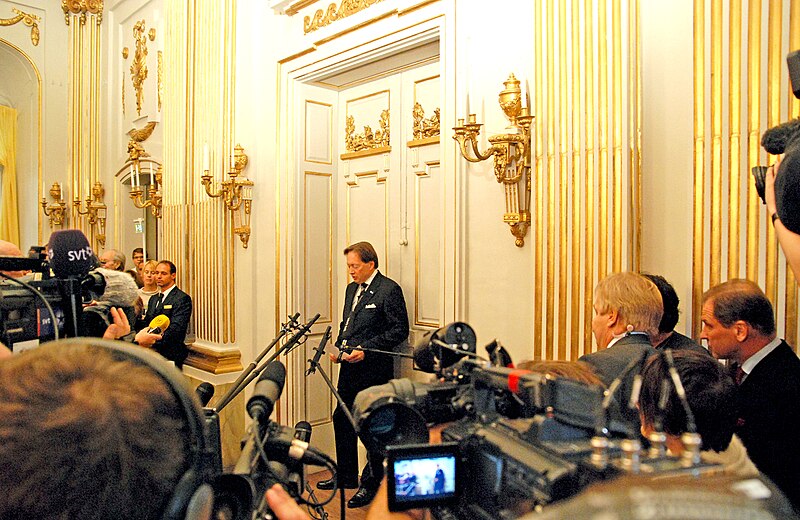
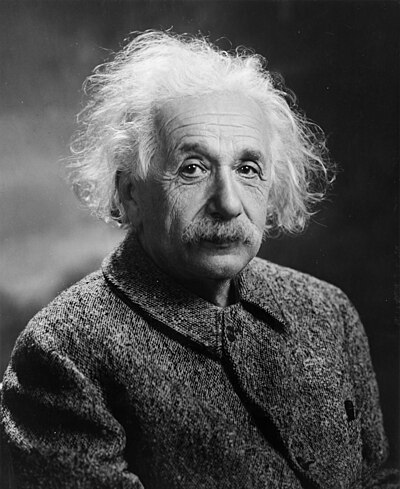
Nobel Prizes: As of 2024, at least 214 Nobel laureates have been Jewish or of Jewish descent, representing approximately 22% of all individual laureates. The distribution across fields is notable: approximately 26% of Nobel Prizes in Physics (including Albert Einstein, Niels Bohr, Richard Feynman, and many others), 27% in Medicine or Physiology, 19% in Chemistry, 37% in Economics (since the prize's establishment in 1969), and 12% in Literature (including S.Y. Agnon, Saul Bellow, Isaac Bashevis Singer, and Bob Dylan). These figures are approximate and depend on how Jewish identity is defined, but the pattern is robust across all reasonable definitions. Verified
The sociological and historical explanations for this overrepresentation are debated. Factors cited by scholars include: the traditional Jewish emphasis on literacy and textual study (a cultural inheritance from the rabbinic tradition, which mandated universal male education centuries before any other civilization); the selection effects of persecution (which, some argue, rewarded cognitive skills and professional mobility); the opportunities created by emancipation and urbanization in the nineteenth and twentieth centuries; and the values of questioning, argumentation, and intellectual engagement embedded in the Talmudic tradition. Debated
Literature: The Jewish literary tradition in the modern period encompasses works in Hebrew (S.Y. Agnon, Amos Oz, David Grossman, A.B. Yehoshua), Yiddish (Sholem Aleichem, I.L. Peretz, Isaac Bashevis Singer), English (Saul Bellow, Philip Roth, Cynthia Ozick, Nicole Krauss), German (Franz Kafka, Paul Celan, Nelly Sachs), Russian (Isaac Babel, Vasily Grossman), and many other languages. The Israeli literary scene — remarkably productive for a nation of nine million — has produced a series of internationally celebrated novelists and poets.
Music: From the classical tradition (Gustav Mahler, Arnold Schoenberg, Leonard Bernstein, Itzhak Perlman, Daniel Barenboim) to the American popular songbook (Irving Berlin, George and Ira Gershwin, Leonard Cohen, Bob Dylan, Barbra Streisand), Jewish musicians have profoundly shaped the soundscape of modernity.
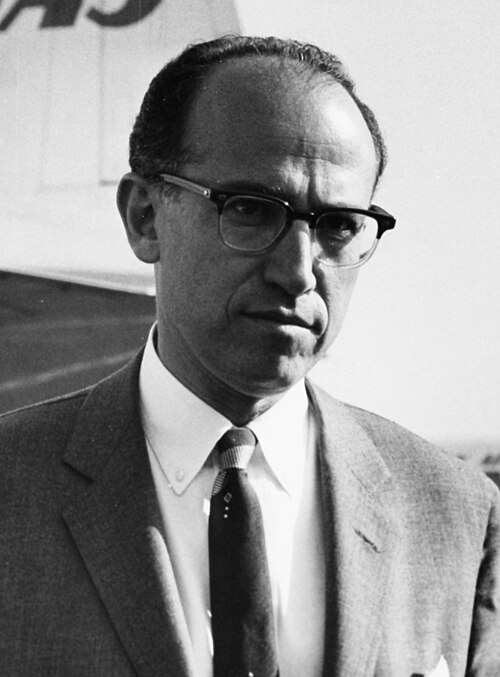
Science and technology: Beyond Nobel laureates, Jewish scientists and engineers have contributed fundamentally to nuclear physics (J. Robert Oppenheimer, Edward Teller, Lise Meitner), computer science (John von Neumann, who contributed foundational work in computing architecture), medicine (Jonas Salk, developer of the polio vaccine, who refused to patent it), and the technology industry (Google co-founders Sergey Brin and Larry Page, who is not Jewish but whose co-founder is; Facebook founder Mark Zuckerberg; Oracle founder Larry Ellison).
Contemporary Challenges Verified
Jewish communities worldwide face a constellation of challenges that are distinct in some respects but connected in others:
Assimilation and intermarriage: In the United States, the Pew 2020 survey found that among non-Orthodox Jews who married since 2010, 72% married non-Jewish partners. This rate has risen steadily from approximately 17% before 1970 to 72% in the most recent cohort. The implications are debated: pessimists see demographic erosion; optimists note that many intermarried families are raising Jewish children and that conversions to Judaism, while not numerically large, have increased.
Rising antisemitism: Antisemitic incidents have risen sharply across the Western world in recent years. The Anti-Defamation League (ADL) recorded 3,697 antisemitic incidents in the United States in 2022 — the highest number since the ADL began tracking in 1979 — and 8,873 in 2023, a dramatic spike driven in significant part by the aftermath of the October 7, 2023, Hamas attack on Israel. In Europe, the EU's Fundamental Rights Agency has documented persistent high levels of antisemitism across the continent. French Jews have experienced attacks on synagogues, schools, and individuals. The 2018 attack on the Tree of Life synagogue in Pittsburgh — in which eleven worshippers were murdered during Shabbat services — was the deadliest antisemitic attack in American history. Verified
The nature of contemporary antisemitism is debated. Some scholars see it as a resurgence of traditional Jew-hatred in new forms (including online conspiracy theories and white supremacist ideology). Others point to a "new antisemitism" that manifests through hostility to the State of Israel that crosses the line from legitimate political criticism into delegitimization of Jewish self-determination. The distinction between criticism of Israeli policy and antisemitism is itself contested and politically charged. Debated
The Israeli-diaspora relationship: The relationship between Israeli Jews and diaspora communities, particularly American Jews, has come under increasing strain. Disagreements over religious pluralism (the "Western Wall compromise," repeatedly promised and deferred, that would have created an egalitarian prayer space at the Kotel), the Israeli rabbinate's monopoly on personal status law (which does not recognize non-Orthodox conversions, marriages, or divorces), the Israeli-Palestinian conflict, and the nature of Israeli democracy have created tensions that some observers describe as a growing estrangement. Debated
Jewish Renewal and Innovation Verified
Alongside these challenges, Jewish life in the twenty-first century is characterized by remarkable creative energy:
The Jewish Renewal movement, associated with Rabbi Zalman Schachter-Shalomi (1924–2014) and more recently with ALEPH: Alliance for Jewish Renewal, draws on Hasidic spirituality, meditation, and ecstatic prayer to create a Judaism that emphasizes personal spiritual experience. While small in numbers, Renewal has influenced practice across the denominational spectrum.
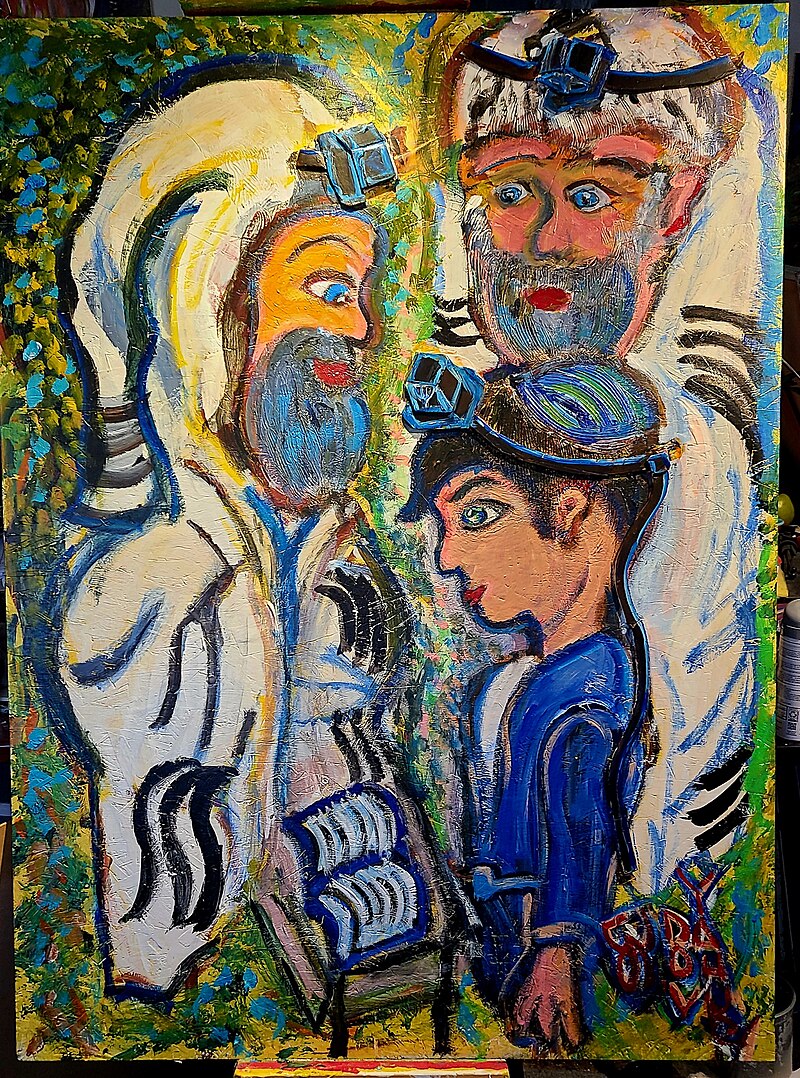
Independent minyanim and communities: Beginning in the early 2000s, a wave of independent prayer communities emerged, particularly in major American cities. Kehilat Hadar in New York (founded 2001), IKAR in Los Angeles (founded 2004 by Rabbi Sharon Brous), Mishkan Chicago, and others combine serious textual engagement with egalitarian practice and social justice commitments. These communities have attracted significant numbers of young Jews who feel alienated from established institutions.
The "Jew-ish" phenomenon: The Pew 2020 survey documented a growing number of Americans who describe themselves as "partly Jewish" or "Jewish and something else" — reflecting the increasing fluidity of identity categories in American life. Multiracial, multiethnic, and multifaith Jewish families are an increasingly visible part of the community, challenging traditional assumptions about what Jews "look like" and how Jewish identity is transmitted.
Digital Judaism: The COVID-19 pandemic of 2020–2021 accelerated trends toward digital Jewish life that were already underway. Synagogues adopted livestreaming and Zoom services; online learning platforms (such as My Jewish Learning, Sefaria — a free digital library of Jewish texts in Hebrew and English — and the Pardes Institute's online programs) expanded dramatically; and new models of virtual community emerged. The halakhic and communal implications of digital participation in religious life — can a Zoom minyan count? Can a person fulfill the obligation to hear the Megillah via livestream? — are actively debated across denominations. Debated
Sefaria deserves particular mention as a transformative project. Founded in 2011 by Brett Lockspeiser and Joshua Foer, this open-source platform has digitized and interconnected the vast corpus of Jewish texts — Torah, Talmud, Midrash, medieval commentaries, codes of law, Kabbalah, philosophy, and more — making them freely available with translations and commentary. As of 2024, the library contains over 350 million words of Jewish text. The democratization of access to Jewish learning that Sefaria represents is arguably the most significant development in Jewish education since the printing press. Verified
Ongoing Archaeological Discoveries Verified
The archaeological enterprise described in the previous chapter continues to produce remarkable finds:
The Lachish inscription (2022): Archaeologists from the Austrian Academy of Sciences and the Israel Antiquities Authority discovered an inscription at Tel Lachish dating to the fifteenth century BCE — predating the earliest known alphabetic inscriptions from the Levant — containing a word that some scholars read as a personal name. The inscription contributes to ongoing debates about the development of the alphabet in the ancient Near East.
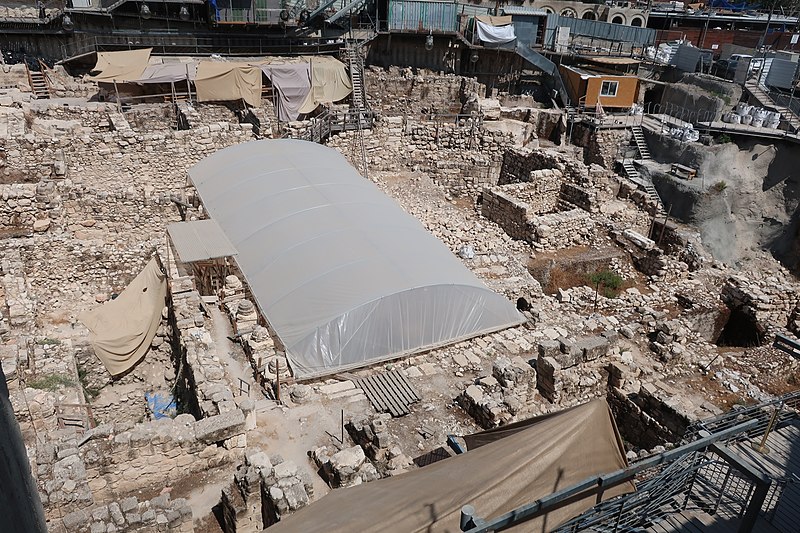
The Jerusalem Pilgrimage Road (2019–present): Excavations south of the Temple Mount have uncovered a monumental stepped street dating to the Second Temple period, identified by excavators as the "Pilgrimage Road" leading from the Siloam Pool to the Temple Mount. The road, approximately 600 meters long and 8 meters wide, was built during the governorship of Pontius Pilate (26–36 CE), based on coins found sealed beneath the paving stones. Verified
Dead Sea Scroll fragments from the Cave of Horror (2021): The Israel Antiquities Authority's "Operation Scroll" — a systematic survey of caves in the Judean Desert — discovered new fragments of a Greek translation of the books of Zechariah and Nahum in a cave in the Nahal Hever canyon, along with a 10,500-year-old woven basket (the oldest of its kind ever found) and a 6,000-year-old child's skeleton wrapped in cloth. The scroll fragments, dating to the late first or early second century CE, likely from the Bar Kokhba revolt period, were the first Dead Sea Scroll fragments found in a systematic archaeological excavation (as opposed to the Bedouin discoveries of the 1940s–1950s). Verified
DNA and population genetics: Genetic studies have provided new data on Jewish population history. Research published in journals including Nature, The American Journal of Human Genetics, and PLOS Genetics has demonstrated that Jewish populations from different diaspora communities (Ashkenazi, Sephardic, Mizrahi, Italian, and others) share significant genetic ancestry traceable to the ancient Near East, consistent with a common origin and subsequent divergence due to migration and genetic drift. At the same time, each community shows evidence of admixture with local populations, reflecting centuries of contact. The genetics broadly support (though do not prove) the traditional narrative of dispersal from the Land of Israel, while also demonstrating the complexity of any population's history. Debated
The Future of Jewish Identity Debated
What does it mean to be Jewish in the twenty-first century? The question has no single answer, and the multiplicity of answers is itself a defining feature of contemporary Jewish life.
For some, Jewishness is fundamentally a religious identity — defined by covenant, commandment, and community, anchored in Torah and Talmud, expressed through prayer, study, and the rhythms of the Jewish calendar. For others, it is a national or ethnic identity — expressed through connection to the State of Israel, the Hebrew language, and a shared historical experience. For still others, it is a cultural identity — a sensibility, a set of values, a tradition of humor and argument and intellectual restlessness that persists even in the absence of religious belief or national affiliation.
The sociologist Herbert Gans, in a widely cited 1979 essay, described "symbolic ethnicity" — the tendency of later-generation Americans to maintain ethnic identity through occasional symbolic acts (a Passover seder, a bar mitzvah) rather than through sustained practice or communal participation. Some scholars see this as a description of where American Judaism is headed — a "thin" Judaism of sporadic engagement and declining distinctiveness. Others, including the historian Jonathan Sarna, argue that American Jewish history has always been cyclical, characterized by alternating periods of decline and revival, and that predictions of imminent disappearance have been made — and proven wrong — in every generation.
In Israel, the question takes a different form. There, Jewish identity is the majority culture — expressed through the Hebrew language, the national calendar (Shabbat is the day of rest, the holidays are the school holidays, the historical narrative is a national narrative), and the institutions of statehood. But the nature of that identity — secular or religious, universalist or particularist, defined by law or by culture — is fiercely contested. The percentage of Israeli Jews who define themselves as hiloni (secular) has declined in recent surveys, while those identifying as dati (religious) or masorti (traditional) have grown, suggesting a complex and shifting landscape.
Food, Ritual, and Everyday Life Verified
Beyond demographics and denominations, Jewish life today is lived in the daily textures of practice, food, and communal gathering. The kosher food industry has grown into a multi-billion-dollar global market — not because the number of strictly kosher-observant Jews has grown proportionally, but because kosher certification (the "hechsher") has become a quality marker for health-conscious, halal-observant Muslim, lactose-intolerant, and vegetarian consumers. The Orthodox Union (OU), the largest kosher certification agency, supervises over 1.3 million products worldwide.
The Israeli culinary scene has undergone its own revolution. Chefs like Yotam Ottolenghi (London-based, Israeli-born), Michael Solomonov (Philadelphia), and Eyal Shani (Tel Aviv) have brought Israeli and Middle Eastern flavors to global audiences. This culinary phenomenon reflects broader cultural trends: the cross-pollination of Ashkenazi, Sephardic, Mizrahi, and Arab food traditions in Israel has created a cuisine that is itself a form of cultural synthesis.
Jewish holidays continue to structure the year for observant and secular Jews alike. The Passover seder remains the single most widely observed Jewish ritual in the diaspora — the Pew 2020 survey found that 62% of American Jews attended a seder in the previous year, far exceeding synagogue attendance rates. The seder's adaptability — there are now feminist seders, environmental seders, interfaith seders, and even "Seder on the Spectrum" guides for families with autistic children — speaks to its enduring power as a ritual of memory, identity, and communal bonding.
The Tikkun Olam Imperative Debated
The concept of tikkun olam ("repair of the world") has become perhaps the most widely invoked Jewish value in contemporary American Jewish life. Originally a kabbalistic concept referring to cosmic repair through the performance of mitzvot, it has been reinterpreted by many contemporary Jews — particularly in the Reform and Reconstructionist movements — as a mandate for social justice activism.
Jewish organizations have been disproportionately involved in American civil rights, environmental, and social justice movements. 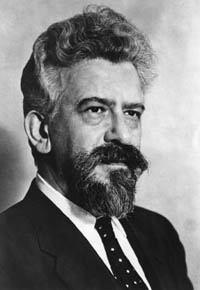
The image of Rabbi Abraham Joshua Heschel marching alongside Martin Luther King Jr. in Selma in 1965 (Heschel later said, "I felt my legs were praying") has become iconic. Organizations including the Religious Action Center of Reform Judaism, American Jewish World Service, and HIAS (originally the Hebrew Immigrant Aid Society, now serving refugees of all backgrounds) embody this ethic.
Critics within the Jewish community argue that tikkun olam has been diluted into a generic liberal humanitarianism that lacks specifically Jewish content, and that its elevation over other Jewish values (Torah study, prayer, Shabbat observance, kashrut) distorts the tradition. Defenders respond that the prophetic tradition of social justice — from Amos ("Let justice roll down like waters") to Isaiah ("Is this not the fast I desire? To share your bread with the hungry") — is as authentically Jewish as any other strand of the tradition.
Scrolls and Stones: Where the Evidence Leads Verified
This volume has traced Jewish history from its ancient Near Eastern origins to the present day, guided by the evidence: the scrolls of text and tradition, the stones of archaeological discovery. At every turn, we have tried to distinguish between what the evidence shows, what tradition teaches, and where scholars disagree.
The story of the Jewish people is, in one sense, improbable. A small people, originating in a narrow strip of land at the crossroads of empires, dispersed across the globe for two millennia, subjected to persecution without parallel, and yet surviving — preserving a language, a literature, a legal system, a liturgy, and a sense of collective identity that connects a worshipper at the Western Wall to a reader of Torah in Buenos Aires to a student of Talmud in Melbourne.
The evidence for this continuity is both textual and material. The Hebrew Bible, the Mishnah, the Talmud, the medieval commentaries, the modern literature — these are the scrolls. The archaeological sites of the Land of Israel, the synagogue remains of the diaspora, the genizah documents of Cairo, the manuscript collections of the great libraries — these are the stones. Together, they tell a story that is simultaneously particular and universal: the story of how one people has struggled, across thirty centuries, to make meaning out of existence, to build community in the face of dispersion, and to maintain hope in the face of catastrophe.
That story is not over. It is being written — in Hebrew and English and French and Arabic and Amharic and Russian — by the approximately 15.7 million people who, for whatever reason and by whatever definition, call themselves Jews. The scrolls continue to be read. The stones continue to be uncovered. And the conversation between past and present — the dialogue that began when the first scribe set the first words of Genesis onto parchment — shows no sign of ending.
Jews in the Global South Verified
While the major centers of Jewish life remain Israel and North America, smaller but significant communities thrive across the global South and in unexpected places. India is home to several distinct Jewish communities: the Bene Israel of Maharashtra (tracing their origins to the second century BCE), the Cochin Jews of Kerala (who maintained a community for nearly two millennia before most emigrated to Israel), and the Baghdadi Jews of Mumbai and Kolkata. The Paradesi Synagogue in Kochi, built in 1568, is the oldest functioning synagogue in the Commonwealth.
In sub-Saharan Africa, communities claiming Jewish descent or practicing Judaism include the Abayudaya of Uganda (who adopted Judaism in the early twentieth century under the leadership of Semei Kakungulu and have since been formally converted under Conservative auspices), the Lemba of southern Africa (whose oral traditions of Jewish origin have received partial support from Y-chromosome DNA studies showing a high frequency of the "Cohen modal haplotype"), and emerging communities in Nigeria, Ghana, and Madagascar. Debated
In Latin America, Jewish communities in Argentina (the largest in the region), Brazil, Mexico, Chile, and Uruguay maintain vibrant communal and cultural institutions. The Argentine Jewish community, concentrated in Buenos Aires, experienced devastating trauma with the bombing of the AMIA Jewish community center on July 18, 1994, killing 85 people — the deadliest antisemitic attack in the Western Hemisphere. The investigation into the bombing has been marked by corruption, obstruction, and controversy, and as of this writing, no one has been brought to justice.
China, Japan, and South Korea host small but growing Jewish communities, primarily composed of expatriates and business professionals. The historical Jewish community of Kaifeng, China — which existed from at least the twelfth century CE, as documented by Jesuit missionaries who encountered them in the seventeenth century — has largely assimilated, though descendants have shown renewed interest in their heritage.
The Enduring Question Debated
Perhaps the most remarkable thing about the Jewish people at this point in their history is not their survival but their vitality. A people nearly destroyed within living memory has rebuilt itself — creating a state, reviving a language, producing a disproportionate share of the world's science, literature, and art, and maintaining a sense of collective identity that spans continents and millennia.
The sociologist and demographer Calvin Goldscheider has argued that what looks like decline (falling numbers, intermarriage, secularization) is better understood as transformation — that Jewish identity is not disappearing but changing form, as it has done repeatedly throughout history. The Jews of the Second Temple period would not recognize the Judaism of the medieval shtetl; the Jews of the shtetl would not recognize the Judaism of a Silicon Valley startup or a Tel Aviv nightclub. Yet a thread of continuity — textual, ethical, communal, argumentative — connects them all.
That thread is what this volume has sought to trace: through the scrolls and stones, through the verified evidence and the living traditions, through the scholarly debates and the human stories. The Jewish future, like the Jewish past, will be shaped by the tension between preservation and adaptation, between memory and innovation, between the particular and the universal. If history offers any guide, it is that this small, stubborn, endlessly creative people will continue to surprise.
A Note on Numbers and Sources Verified
The demographic and statistical data cited in this chapter are drawn from the most authoritative available sources: Sergio DellaPergola's annual demographic reports in the American Jewish Year Book; the Pew Research Center's surveys of Jewish Americans (2013 and 2020); the Central Bureau of Statistics of the State of Israel; the Jewish People Policy Institute's annual assessments; and the Anti-Defamation League's annual audit of antisemitic incidents. Nobel Prize data is compiled from the Nobel Foundation's official records, cross-referenced with biographical sources. Denominational affiliation figures should be understood as approximate, as they depend on survey methodology and definitions that vary between studies.
The study of contemporary Jewish life is, by its nature, a moving target. The data presented here represent the best available snapshot as of the mid-2020s, but the landscape is evolving rapidly. New surveys, new demographic shifts, and new historical events will continue to reshape the picture. What remains constant is the underlying reality: a people of extraordinary resilience, creativity, and internal diversity, navigating the challenges of modernity while carrying the weight — and the gift — of a very long memory.
As the Talmud teaches in Pirkei Avot (2:16): "It is not your duty to finish the work, but neither are you at liberty to neglect it." The work of Jewish civilization — the study, the argument, the remembrance, the repair — continues. It has continued through exile and return, through destruction and renewal, through Babylon and Rome, through the ghettos of Europe and the kibbutzim of the Galilee, through the death camps and the rebirth of sovereignty. There is no reason to believe it will not continue still.
Locations in This Chapter
Loading map...