Part 6: Early Modern · 1500–1700
20.Ottoman Refuge & Safed Mysticism
Lurianic Kabbalah
21 min read
The Ottoman Empire Welcomes the Expelled Verified
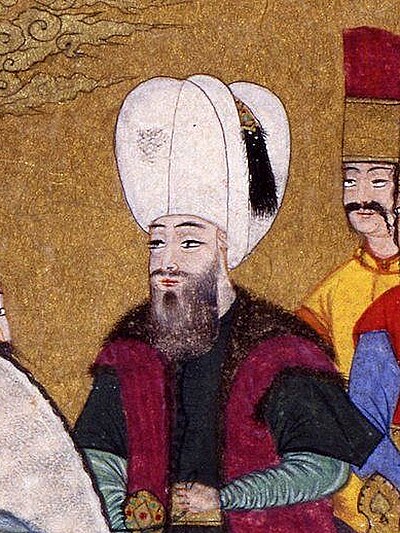
When Ferdinand and Isabella issued the Alhambra Decree in March 1492, expelling all Jews from Spain, the Ottoman Sultan Bayezid II (r. 1481–1512) reportedly remarked: "How can you call Ferdinand a wise king — he who impoverishes his own land and enriches ours?" Whether or not the quote is authentic (it appears in later Ottoman and Jewish sources rather than contemporary records), the sentiment accurately captures Ottoman policy. Bayezid actively welcomed Spanish Jewish refugees, dispatching Ottoman ships to Spanish ports and issuing firmans (decrees) granting them permission to settle throughout the empire.
The Ottoman Empire in 1492 was at the height of its expansion. Constantinople (Istanbul) had been conquered in 1453, and Ottoman territories stretched from the Balkans to Anatolia, with further conquests in the Levant, Egypt, and North Africa coming under Suleiman the Magnificent (r. 1520–1566). For the expelled Jews of Spain — and the subsequent waves of Portuguese Jews fleeing forced conversion after 1497, and Sicilian and Neapolitan Jews expelled in 1492–1541 — the Ottoman Empire offered something vanishingly rare in early modern Europe: a government that not only tolerated but actively sought Jewish settlement.
The Ottoman millet system organized non-Muslim communities into self-governing religious groups, each headed by its own religious leader and permitted to maintain its own courts, schools, and charitable institutions. Jews constituted a recognized millet with the Hakham Bashi (Chief Rabbi) as their communal leader. The system granted far more autonomy and security than Jews experienced in most of Christian Europe, though it also imposed the jizya (poll tax) and certain social restrictions.
Sephardic Communities Across the Empire Verified
The Sephardic refugees established vibrant communities across the Ottoman Empire, bringing with them their language (Judeo-Spanish, or Ladino), their liturgical traditions, their legal codes, and their cultural sophistication. They often displaced or absorbed the existing Romaniote (Greek-speaking) Jewish communities.
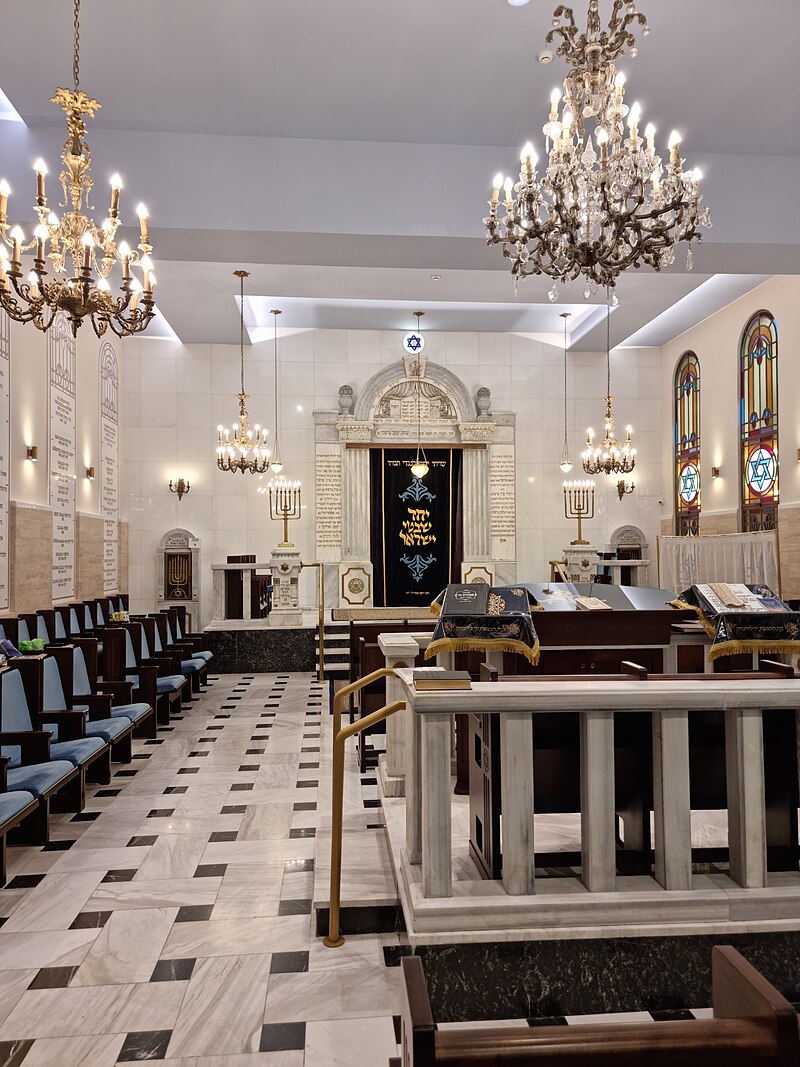
Salonika (Thessaloniki): The port city in northern Greece became the most important Sephardic center in the world. By the mid-16th century, Jews constituted a majority of Salonika's population — a distinction unique among major cities in the post-biblical period. The city's Jewish community maintained dozens of synagogues (organized by the cities of origin of the congregants — the "Castile" synagogue, the "Aragon" synagogue, the "Lisbon" synagogue, etc.), a flourishing textile industry, and one of the earliest Hebrew printing presses in the Ottoman Empire. Salonika's Jewish culture — its Ladino literature, its distinctive music, its cuisine — persisted for over four centuries until the community was virtually annihilated in the Holocaust. Of approximately 50,000 Jews deported to Auschwitz-Birkenau in 1943, fewer than 2,000 survived. The Jewish Museum of Thessaloniki, established in 2001, preserves the memory of this lost civilization.
Istanbul (Constantinople): The Ottoman capital housed a diverse Jewish population including Romaniotes, Ashkenazim, Sephardim, and Karaites. Jewish communities clustered in neighborhoods like Balat (on the Golden Horn) and Kuzguncuk (on the Asian shore of the Bosphorus). The Ahrida Synagogue in Balat, dating to the 15th century, is the oldest surviving synagogue in Istanbul, with a distinctive boat-shaped bimah (reading platform) — said by tradition to commemorate the ships that brought the Sephardic refugees to safety. Jews served as physicians, diplomats, and merchants at the Ottoman court, and a Hebrew printing press was established in Constantinople as early as 1493 — barely a year after the expulsion.
Izmir (Smyrna): This Aegean port city developed a major Sephardic community that became an important center of trade connecting the Ottoman Empire with Western Europe. Its Jewish quarter, the Juderia, was a dense, lively neighborhood of synagogues, schools, and markets. Izmir would later become the stage for the most dramatic and traumatic episode of false messianism in Jewish history — the career of Sabbatai Zevi.
Safed (Tzfat): A small hilltop town in the Upper Galilee, Safed became the most extraordinary center of Jewish mystical creativity in the post-Talmudic period. Its story merits extended treatment.
The Holy City of Safed Verified
Safed's transformation from a minor Galilean town into the spiritual capital of 16th-century Jewry was driven by several converging factors: the Ottoman conquest of Palestine from the Mamluks in 1516, which opened the land to immigration; the influx of Sephardic refugees seeking not just safety but spiritual meaning after the trauma of expulsion; and a mystical tradition that identified the Galilee — particularly the region around the tomb of Rabbi Shimon bar Yochai at Meron — as a place of special holiness.
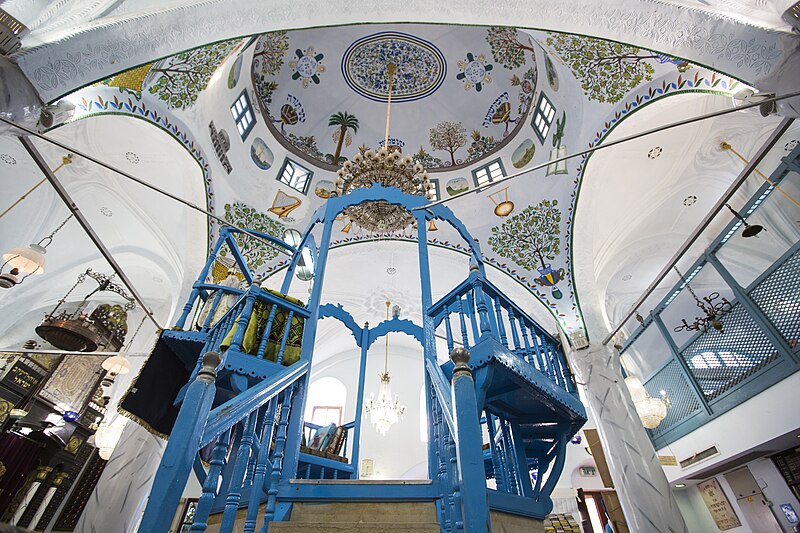
By the mid-16th century, Safed housed a remarkable concentration of rabbinic and kabbalistic talent. The town's population reached approximately 10,000 Jews (some estimates are higher), supported by a thriving textile industry and trade connections. The old synagogues of Safed — the Abuhav Synagogue, the Caro Synagogue, the Ari Synagogue — though reconstructed over the centuries, preserve the memory of this golden age. The artists' quarter of modern Safed occupies the old Jewish neighborhoods.
Archaeological and architectural evidence in Safed is modest compared to the literary record. The town was devastated by earthquakes in 1759 and 1837, and much of the 16th-century built environment was destroyed. However, the ancient cemetery of Safed, on the slopes overlooking the town, contains graves attributed to many of the great sages of the period, and it remains a site of pilgrimage.
Joseph Karo and the Shulchan Arukh Verified
Rabbi Joseph ben Ephraim Karo (1488–1575) was born in Toledo, Spain, just four years before the expulsion. His family wandered through Portugal, the Balkans, and Istanbul before settling in Safed around 1536. Karo combined rigorous legal scholarship with intense mystical experience — his diary, Maggid Mesharim ("Preacher of Righteousness"), records visitations by an angelic being (a maggid) who revealed kabbalistic secrets and urged him toward ascetic piety.
Karo's legal masterwork was the Shulchan Arukh ("Set Table"), published in 1565. It was a distillation of his massive earlier commentary, the Beit Yosef ("House of Joseph"), which systematically analyzed the legal rulings of the three great medieval codifiers: Maimonides (Mishneh Torah), Asher ben Yehiel (the Tur's primary authority), and Isaac Alfasi (Hilkhot Rav Alfas). Karo followed the majority view among these three authorities, producing a concise, accessible code of Jewish law organized into four sections:
- Orach Chayyim ("Way of Life") — daily conduct, prayer, Sabbath, holidays
- Yoreh De'ah ("Teacher of Knowledge") — dietary laws, ritual purity, mourning, vows
- Even Ha'Ezer ("Stone of Help") — marriage and divorce
- Choshen Mishpat ("Breastplate of Judgment") — civil and commercial law
Because Karo was Sephardic, his rulings reflected Sephardic custom. The Ashkenazi Rabbi Moses Isserles (the Rema, 1530–1572) of Cracow added glosses (mappot, "tablecloths" — an elegant pun on Karo's "Set Table") noting where Ashkenazi practice differed. The combined work — Karo's text with Isserles' glosses — became the universally accepted code of Jewish law, a status it retains to this day. Every subsequent legal authority (posek) has worked within the framework of the Shulchan Arukh, whether to follow, qualify, or occasionally dissent from its rulings.
The first edition of the Shulchan Arukh was printed in Venice by the press of Giovanni di Gara. Early printed editions are held by the Bodleian Library (Oxford), the British Library, and the Jewish Theological Seminary (New York).
Isaac Luria and the New Kabbalah Tradition
Rabbi Isaac ben Solomon Luria (1534–1572), known as Ha-Ari ("the Lion," an acronym of ha-Elohi Rabbi Yitzhak, "the divine Rabbi Isaac"), spent barely two years in Safed before his death at age 38, yet he revolutionized Jewish mysticism so profoundly that all subsequent Kabbalah is essentially Lurianic.
Luria was born in Jerusalem, raised in Egypt (where he studied Talmud and began his kabbalistic training while living in seclusion on an island in the Nile), and arrived in Safed around 1570. He wrote almost nothing — his teachings were transmitted orally and recorded by his disciples, primarily Hayyim Vital (1543–1620), whose massive compilation Etz Chayyim ("Tree of Life") became the standard presentation of Lurianic Kabbalah.
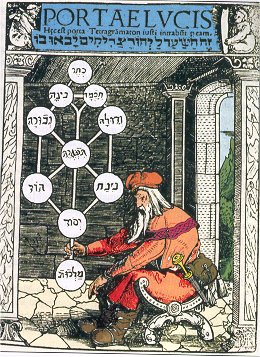
Luria's system addressed the fundamental theological question: if God is infinite and fills all reality, how can a finite world exist? His answer was a radical cosmological narrative:
Tzimtzum ("Contraction"): Before creation, God voluntarily contracted or withdrew the divine light, creating a primordial empty space (tehiru) within which the finite world could emerge. This act of divine self-limitation was the precondition for creation — God made room for the other by pulling back from infinity. The concept has profound philosophical implications: creation is an act of divine restraint, even of divine sacrifice.
Shevirat ha-Kelim ("Breaking of the Vessels"): Into the empty space, God emanated divine light in the form of vessels (kelim). But the vessels were too fragile to contain the light, and they shattered. Sparks of divine light (nitzotzot) fell into the realm of impurity (klippot, "husks" or "shells"), becoming trapped in the material world. This cosmic catastrophe — a kind of primordial Fall — explains the brokenness and imperfection of the world.
Tikkun ("Repair"): The purpose of human existence — and specifically of Jewish observance of the commandments — is to liberate the trapped sparks and restore them to their divine source, thereby healing the cosmos and reunifying God. Every mitzvah, every prayer, every act of holiness is a contribution to tikkun olam — the repair of the world. When the tikkun is complete, the Messiah will come and the world will be restored to its original perfection.
This cosmological drama gave extraordinary significance to every Jewish life and every Jewish action. The Lurianic system also introduced elaborate rituals of kavvanot (mystical intentions) to accompany prayers, the custom of welcoming the Sabbath as a bride (Kabbalat Shabbat — the Friday evening service still used in virtually all synagogues was created in Safed by the kabbalist Shlomo Alkabetz, whose hymn Lekha Dodi remains the centerpiece of the service), and the practice of tikkun chatzot — rising at midnight to mourn the destruction of the Temple and the exile of the Shekhinah.
Lurianic Kabbalah's Impact Debated
The influence of Lurianic Kabbalah on subsequent Judaism is difficult to overstate and impossible to fully measure. Within a generation of Luria's death, his teachings had spread from Safed to every major Jewish community. Hayyim Vital's writings were copied and recopied; unauthorized versions circulated despite the Lurianic circle's efforts to control dissemination.
Lurianic ideas penetrated the liturgy (the Kabbalat Shabbat service, the hymn Yedid Nefesh, various additions to the prayer book), legal practice (the spread of kabbalistic customs such as eating specific foods on Rosh Hashanah to correspond to mystical intentions), ethical literature (the mussar tradition increasingly incorporated kabbalistic ideas about the soul), and folk religion (amulets, incantations, and practices associated with the practical Kabbalah).
Scholars debate the extent to which Lurianic Kabbalah should be understood as a response to the Spanish expulsion. Gershom Scholem argued that the Lurianic myth of cosmic exile and repair was a direct mythologization of the Jewish experience of expulsion — the scattered sparks mirroring the scattered Jewish people, the cosmic tikkun corresponding to the messianic hope for return and restoration. This interpretation has been challenged by Moshe Idel and others, who emphasize the internal logic of kabbalistic development and the diversity of pre-Lurianic mystical traditions. But the chronological correlation — the most dramatic mystical system in Jewish history emerging in the generation after the most devastating expulsion — remains suggestive.
Sabbatai Zevi: The False Messiah Verified
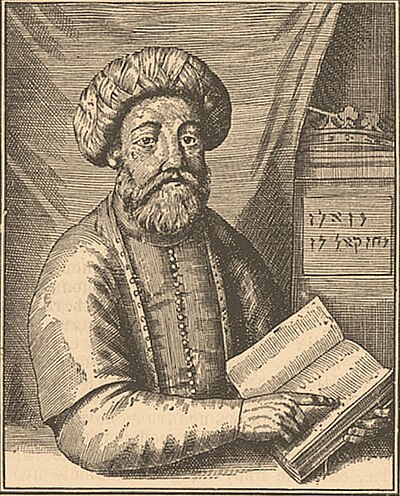
The most dramatic and traumatic episode of false messianism in Jewish history erupted in 1665–1666 around the figure of Sabbatai Zevi (1626–1676), an Ottoman Jew from Smyrna (Izmir) who declared himself the Messiah.
Sabbatai Zevi was a complex figure — charismatic, learned in Kabbalah, and subject to dramatic mood swings that modern scholars have tentatively identified as bipolar disorder. During his manic episodes, he performed deliberately provocative acts — pronouncing the forbidden name of God, eating forbidden foods, celebrating festivals on the wrong dates — which he and his followers interpreted as mystical "holy transgressions" that liberated trapped divine sparks from the realm of impurity.
The movement exploded when Nathan of Gaza (1643–1680), a brilliant young kabbalist, became convinced that Sabbatai was the Messiah and composed theological writings that provided an elaborate Lurianic framework for Sabbatai's antinomian behavior. Nathan's prophetic letters, circulated across the Jewish world with remarkable speed, ignited an unprecedented wave of messianic fervor. From Amsterdam to Aleppo, from Hamburg to Yemen, Jewish communities erupted in ecstatic expectation. Merchants abandoned their businesses. Communities began preparing for the ingathering of the exiles. The Hamburg Jewish community — one of the wealthiest in Europe — reportedly began packing for Jerusalem.
The movement reached its crisis in September 1666, when Sabbatai Zevi, imprisoned by the Ottoman authorities and given the choice of death or conversion to Islam, chose conversion. He adopted the Muslim name Aziz Mehmed Effendi and donned a turban. For the vast majority of his followers, the apostasy was devastating — an irreparable shattering of messianic hope. The emotional and psychological aftermath reverberated through Jewish communities for generations, producing a deep suspicion of messianic claims and charismatic leaders.
The Doenmeh and Sabbatean Afterlife Debated
Remarkably, Sabbatai's conversion did not entirely destroy the movement. A core group of followers interpreted his apostasy as the deepest mystery of the messianic mission — the Messiah had descended into the realm of impurity (Islam) to liberate the last trapped sparks from within. This theology of "descent for the sake of ascent" drew on Lurianic concepts and prefigured later antinomian movements.
The Doenmeh (Turkish donme, "converts") were followers of Sabbatai who followed their messiah into Islam while secretly maintaining their own syncretic religious practices. They formed a distinct community, primarily in Salonika, that persisted for centuries. The Doenmeh maintained endogamous marriage practices, held secret rituals, and developed their own theology blending Jewish, Islamic, and kabbalistic elements. They were divided into three main sects: the Yakubi, the Karakash, and the Kapanci.
After the population exchange between Greece and Turkey in 1923, the Doenmeh community relocated to Istanbul. Their descendants, numbering perhaps in the tens of thousands, have largely assimilated into Turkish society, though scholarly and journalistic interest in the Doenmeh has periodically surfaced. Marc David Baer's The Doenmeh: Jewish Converts, Muslim Revolutionaries, and Secular Turks (2010) provides the most comprehensive English-language study.
Within normative Judaism, the Sabbatean crisis produced lasting effects. Rabbinical authorities became intensely suspicious of kabbalistic speculation, messianic claims, and charismatic leadership. The herem (excommunication) was wielded aggressively against suspected Sabbatean sympathizers. Jacob Emden and Jonathan Eybeschutz's famous 18th-century controversy — in which Emden accused Eybeschutz of crypto-Sabbateanism based on the content of amulets Eybeschutz distributed — convulsed Ashkenazi communities for decades.
Jewish Printing and the Spread of Knowledge Verified
The invention of the printing press transformed Jewish intellectual life no less than it transformed Christian Europe. Hebrew printing began in Italy in the 1470s — the first dated Hebrew printed book is Rashi's commentary on the Torah, published in Reggio di Calabria in 1475. The Soncino family press in Italy produced a series of landmark editions, including the first complete printed Hebrew Bible (1488).
In the Ottoman Empire, Jewish printers established presses remarkably early. David and Samuel ibn Nahmias established a press in Constantinople in 1493, and Salonika had its own Hebrew press by 1515. These Ottoman presses produced editions of the Talmud, legal codes, kabbalistic texts, and liturgical works that circulated throughout the Jewish world.
The most important early printer of Hebrew books was Daniel Bomberg, a Christian from Antwerp who established a Hebrew press in Venice. Between 1516 and 1549, Bomberg's press produced the first complete printed edition of the Babylonian Talmud (1520–1523), the first Rabbinic Bible (Mikra'ot Gedolot, 1516–1517, with the text of the Hebrew Bible surrounded by classical commentaries), and hundreds of other titles. Bomberg's page layout for the Talmud — the Mishnah and Gemara text in the center, Rashi's commentary on the inner margin, Tosafot on the outer margin — became the standard that is reproduced identically in every printed edition to this day.
The spread of printed books democratized Jewish learning. Texts that had previously been available only in manuscript — expensive, rare, and accessible only to wealthy scholars — could now be produced in hundreds or thousands of copies. The Shulchan Arukh could not have achieved its universal authority without the printing press. The Zohar, previously circulated in manuscript among small kabbalistic circles, reached a mass audience through its first printing in Mantua and Cremona in 1558–1560.
Gracia Mendes Nasi: Matriarch of the Sephardic Diaspora Verified
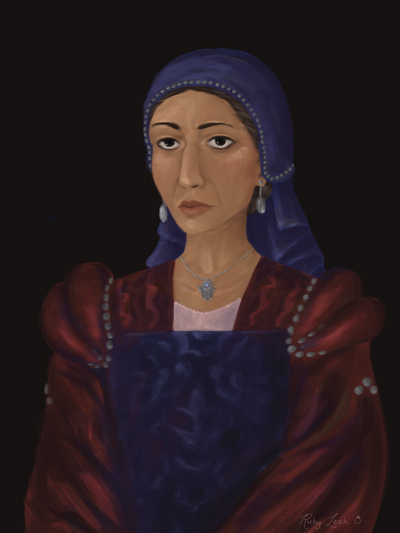
Among the most remarkable figures of the 16th-century Sephardic world was Dona Gracia Mendes Nasi (c. 1510–1569), a Portuguese conversa who became one of the wealthiest and most powerful women in Europe. Born Beatrice de Luna Mendes in Lisbon, she inherited her husband's banking fortune and used it to create an underground network — the "Mendes escape route" — that helped conversos flee the Inquisition and resettle in the Ottoman Empire, where they could openly practice Judaism.
Gracia moved from Portugal to Antwerp, then to Venice, Ferrara, and finally Istanbul, where she openly returned to Judaism. She patronized Jewish scholarship, supported the Jewish community of Tiberias (attempting to establish it as a Jewish autonomous zone with the support of her nephew Joseph Nasi and the Ottoman Sultan Suleiman), and organized a commercial boycott of the port of Ancona in 1556 after Pope Paul IV arrested and burned 25 conversos there.
Joseph Nasi (c. 1524–1579), Gracia's nephew and son-in-law, became one of the most powerful Jewish figures in Ottoman history. Created Duke of Naxos and the Cyclades by Sultan Selim II, he wielded significant diplomatic influence and pursued the Tiberias resettlement project, which — though ultimately unsuccessful — anticipated Zionist settlement efforts by three centuries. The remains of the wall he constructed around Tiberias are still partially visible.
The Legacy of the Ottoman Haven Tradition
The Ottoman period represents a chapter of Jewish history that complicates simple narratives of unrelieved persecution. For over four centuries, the Ottoman Empire provided Jews with a degree of security, autonomy, and prosperity that was exceptional in the early modern world. The Sephardic communities of the empire preserved and developed their linguistic heritage (Ladino), their distinctive liturgical traditions, their legal customs, and their rich oral and literary culture.
Yet the Ottoman haven was not paradise. Social restrictions under the dhimmi system were real. Periodic episodes of violence and extortion occurred. The blood libel appeared in the Ottoman Empire as well — the Damascus Affair of 1840, in which Jews were falsely accused of murdering a Franciscan friar, provoked an international crisis. And the long-term decline of the Ottoman economy in the 18th and 19th centuries affected Jewish communities along with everyone else.
The Ladino Language and Literary Tradition Verified
The Sephardic refugees who settled across the Ottoman Empire brought with them their language — Judeo-Spanish, known as Ladino (or Judezmo). This medieval Castilian dialect, preserved and evolved in exile, became the lingua franca of Sephardic communities from Salonika to Jerusalem, from Istanbul to Sarajevo.
Ladino preserved archaic features of 15th-century Castilian that disappeared from standard Spanish as it evolved on the Iberian Peninsula. At the same time, it absorbed vocabulary from Hebrew, Aramaic, Turkish, Greek, Arabic, and other languages of the host countries. Written in Hebrew script (Rashi script for everyday use, square Hebrew characters for liturgical and scholarly texts), Ladino developed a rich literary tradition:
- Rabbinic literature: Legal codes, responsa, and ethical treatises translated into or written in Ladino for popular consumption
- Romanceros: Ballads preserving medieval Spanish literary traditions, transmitted orally for centuries
- Coplas: Rhymed verse compositions for holidays and lifecycle events
- Journalism: Beginning in the 19th century, a vibrant Ladino press emerged in Salonika, Istanbul, Izmir, and other cities
The Me'am Lo'ez, begun by Rabbi Jacob Culi in Constantinople in 1730, was an encyclopedic commentary on the Bible written in Ladino for the Sephardic masses who could not access rabbinic literature in Hebrew or Aramaic. It became the most widely read book in the Sephardic world, with volumes produced by successive authors over more than a century.
Today, Ladino is classified as a severely endangered language by UNESCO, with fewer than 100,000 native speakers remaining, mostly elderly. Preservation efforts — including the Aki Yerushalayim journal, academic programs at universities in Israel and Turkey, and digital archives — seek to document and sustain this 500-year-old linguistic heritage.
The mystical creativity of Safed, the legal codification of the Shulchan Arukh, the commercial networks of the Sephardic diaspora, and the traumatic but theologically generative Sabbatean crisis all shaped the Judaism that entered the modern era. The liturgy recited in synagogues worldwide — the Kabbalat Shabbat service, the Lekha Dodi hymn, the kabbalistic additions to the prayer book — bears the imprint of 16th-century Safed. The legal framework governing observant Jewish life worldwide — the Shulchan Arukh with its Ashkenazi glosses — was produced in this period. And the tension between messianic hope and rabbinic caution, intensified by the Sabbatean debacle, would continue to shape Jewish responses to modernity, Zionism, and the State of Israel.
The Synagogues and Sacred Spaces of Safed Verified
Though earthquakes and centuries of reconstruction have altered the physical landscape of Safed, several synagogues associated with the golden age survive in modified form:
The Ari Ashkenazi Synagogue: Traditionally identified as the place where Isaac Luria prayed, this synagogue was rebuilt after the 1837 earthquake but preserves the community's devotion to the Ari's memory. A niche in the wall is said to mark the spot where Elijah the Prophet appeared to Luria.
The Joseph Caro Synagogue: Located in the old Jewish quarter, this synagogue marks the site where Karo is said to have received visitations from his angelic maggid. The current structure dates from post-earthquake reconstruction but contains an ancient Torah ark.
The Abuhav Synagogue: Named for the 15th-century Spanish rabbi Isaac Abuhav, this synagogue houses a Torah scroll traditionally attributed to Abuhav himself. The building's distinctive blue dome is one of Safed's most recognizable landmarks.
Beyond the synagogues, the ancient cemetery of Safed — descending the hillside toward the Galilee valley — contains graves attributed to the great kabbalists and legists of the 16th century. The tombs of Isaac Luria, Joseph Karo, Moses Cordovero, Shlomo Alkabetz, and other luminaries draw pilgrims from around the world. The blue-painted streets of the old Jewish quarter, the artists' galleries, and the annual klezmer festival make modern Safed a destination that blends historical memory with living culture.
The hilltop location of Safed, overlooking the Sea of Galilee and Mount Meron, contributes to its mystical reputation. The Zohar identifies the Galilee as the place where the Messiah will first appear, and the kabbalists who gathered there in the 16th century believed they were preparing the way for redemption.
Locations in This Chapter
Loading map...