Part 5: Diaspora & Rabbinic Judaism · 700–1200 CE
18.Jews in the Islamic World
Golden Age of Spain, Cairo Geniza
23 min read
The Rise of Islam and Jewish Life Verified
The Arab conquests of the 7th century CE transformed the political landscape of the Middle East and North Africa with extraordinary speed. Within a century of the Prophet Muhammad's death in 632 CE, Muslim armies had conquered the Persian Sassanid Empire, wrested Syria, Palestine, Egypt, and North Africa from the Byzantine Empire, and crossed into the Iberian Peninsula. For the Jewish communities living in these territories — many of which had been under Byzantine Christian rule marked by forced conversion edicts and theological hostility — the change was, in many cases, a dramatic improvement.
Under Islamic rule, Jews (along with Christians) were classified as ahl al-dhimma — "protected people" — a status rooted in the Quranic designation of Jews and Christians as "People of the Book" (ahl al-kitab). The dhimmi system guaranteed Jews the right to practice their religion, maintain communal institutions, and adjudicate internal disputes under their own law, in exchange for payment of a special tax (jizya) and acceptance of certain social restrictions.
The precise terms of the dhimmi system are debated among historians. The Pact of Umar, traditionally attributed to the second caliph Umar ibn al-Khattab (r. 634–644 CE) but likely compiled in later centuries, outlines a set of restrictions: dhimmis could not build new houses of worship taller than mosques, could not ride horses (only donkeys), could not ring bells loudly, and were required to wear distinguishing clothing. The degree to which these restrictions were enforced varied enormously by time, place, and ruler. In practice, Jewish life under Islam ranged from genuine prosperity and cultural flourishing to periodic persecution and humiliation — a spectrum that resists simple characterization.
The Conquest of Jerusalem and the Temple Mount Debated
The Arab conquest of Jerusalem in 637 CE by Caliph Umar ibn al-Khattab had particular significance for the Jewish community. According to several medieval sources — including the Geniza chronicle attributed to a contemporary observer — Umar permitted 70 Jewish families to return to Jerusalem, from which they had been barred under Byzantine Christian rule since the time of Emperor Hadrian (with brief exceptions).
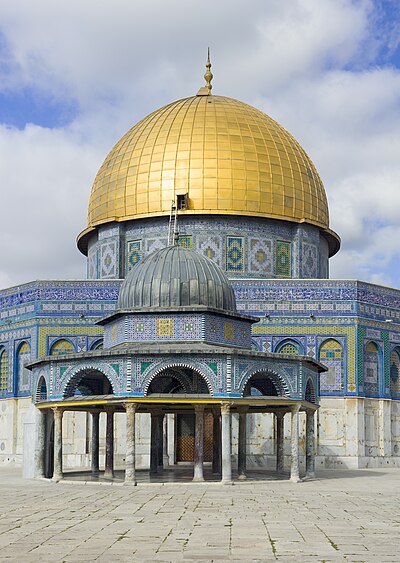
The status of the Temple Mount under early Islam is particularly interesting. Islamic tradition identifies the mount (Haram al-Sharif) as the site of Muhammad's Night Journey (Isra and Mi'raj). The Dome of the Rock, completed in 691 CE by the Umayyad Caliph Abd al-Malik, was built over the Foundation Stone (Even ha-Shetiya) — the same stone that Jewish tradition identifies as the foundation of the Holy of Holies.
Some scholars have argued that early Islamic veneration of the Temple Mount was influenced by Jewish traditions about the site. The 7th-century Armenian bishop Sebeos records that Jews initially hoped the Arab conquest would lead to the rebuilding of the Temple — a hope that was not fulfilled. The relationship between Jewish and Islamic sacred geography in Jerusalem remains a subject of scholarly inquiry and political sensitivity.
The Geonim and Babylonian Supremacy Verified
The transition from Persian to Arab rule did not disrupt the great Talmudic academies of Babylonia. The heads of the academies at Sura and Pumbedita — now titled geonim (singular gaon, "excellency") — became the supreme religious authorities of the Jewish world during the period known as the Geonic era (c. 589–1038 CE).
The geonim exercised authority through responsa (she'elot u-teshuvot) — formal written answers to legal questions sent from Jewish communities throughout the diaspora. These responsa, thousands of which survive, addressed every aspect of Jewish law and life: commerce, marriage, Sabbath observance, liturgical practice, and communal governance. The genre of responsa literature, pioneered by the geonim, continues to this day.
Saadia Gaon (882–942 CE): Born in Egypt, Saadia ben Joseph became the most important gaon of the era. Appointed head of the Sura academy in 928 CE, he was a towering intellectual figure whose contributions ranged across multiple fields. His Emunot ve-De'ot ("Beliefs and Opinions," 933 CE) was the first systematic philosophical defense of Judaism, engaging with Aristotelian philosophy, Islamic kalam (rational theology), and Karaite critiques. He produced an Arabic translation of the Hebrew Bible (Tafsir) that remained the standard biblical text for Arabic-speaking Jews for centuries. He compiled the first known comprehensive siddur (prayer book), standardizing Jewish liturgy. And he battled the Karaites — Jews who rejected rabbinic authority and the Oral Torah in favor of a strictly biblical Judaism — in a series of polemical works that helped define the boundaries of normative Rabbinic Judaism.
The Karaite challenge was serious. Founded (or systematized) by Anan ben David in the 8th century, Karaism attracted significant followings in Palestine, Egypt, and Persia. Karaites rejected the Talmud, interpreted biblical law independently (sometimes more strictly, sometimes more leniently than the rabbis), and developed their own liturgy and calendar. The debates between Rabbanites (followers of rabbinic tradition) and Karaites produced some of the sharpest theological and legal arguments in medieval Jewish literature.
The Golden Age of Jewish Culture in Al-Andalus Verified
The Iberian Peninsula under Muslim rule — known in Arabic as Al-Andalus — became the setting for one of the most remarkable periods of Jewish cultural achievement in history. From roughly the 10th to the 12th century, Jews in Muslim Spain produced poetry, philosophy, science, and biblical commentary of extraordinary sophistication, absorbing Arabic literary forms and philosophical traditions while developing a distinctively Jewish cultural synthesis.
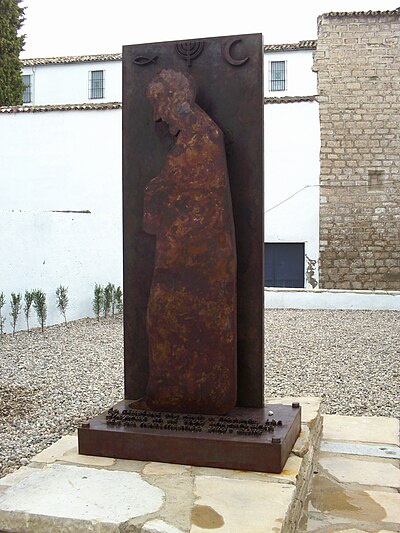
The catalyst was Hasdai ibn Shaprut (c. 915–970 CE), a Jewish physician and diplomat who served as the de facto foreign minister for the Umayyad Caliph Abd al-Rahman III in Cordoba. Hasdai used his wealth and influence to patronize Jewish scholarship, inviting scholars to Cordoba and supporting the establishment of Jewish academies in Spain that would eventually challenge the supremacy of the Babylonian geonim.
The Hebrew Poets: The Golden Age produced a constellation of poets who revolutionized Hebrew literature by adapting Arabic prosodic forms — quantitative meter, rhyme schemes, and thematic conventions — to the Hebrew language.
Samuel ha-Nagid (993–1056 CE): Born Samuel ibn Nagrela in Cordoba, he became the vizier (chief minister) and military commander for the Berber king of Granada — the only Jew in medieval history to lead a Muslim army. He was simultaneously a Talmudic scholar, a prolific poet, and a generous patron of Jewish learning. His war poems, written on the battlefield, are unique in Hebrew literature.
Solomon ibn Gabirol (c. 1021–1058 CE): A philosopher-poet from Malaga, ibn Gabirol wrote both secular and liturgical poetry of stunning beauty. His philosophical work Mekor Chayyim ("Fountain of Life"), written in Arabic, was so influential among Christian Scholastics — who knew it in Latin translation as Fons Vitae — that they assumed its author ("Avicebron") was a Muslim or Christian. His liturgical poem Keter Malkhut ("Royal Crown"), a meditation on divine attributes and human frailty, is recited in Sephardic synagogues on Yom Kippur night.
Judah Halevi (c. 1075–1141 CE): Perhaps the greatest of the medieval Hebrew poets, Halevi was born in Tudela (northern Spain) and practiced medicine in Cordoba and Toledo. His philosophical dialogue The Kuzari, structured as a conversation between the king of the Khazars and a Jewish sage, argued that Judaism was superior to Christianity, Islam, and Aristotelian philosophy because it was rooted in historical revelation experienced by an entire nation at Sinai, not in abstract reasoning. His poems express an aching love for the Land of Israel: "My heart is in the East, and I am at the uttermost West" (Libbi ba-Mizrach). According to tradition, Halevi finally set out for the Holy Land and was killed by a horseman upon reaching Jerusalem — though this dramatic ending is likely legendary.
Maimonides: The Great Eagle Verified
Moses ben Maimon (1138–1204 CE), known as Maimonides or by his Hebrew acronym Rambam, stands as arguably the most influential Jewish thinker since the Talmudic period. Born in Cordoba, his family fled the Almohad conquest of Al-Andalus (which gave Jews the choice of conversion to Islam, exile, or death) around 1148, eventually settling in Fustat (Old Cairo) in Egypt.
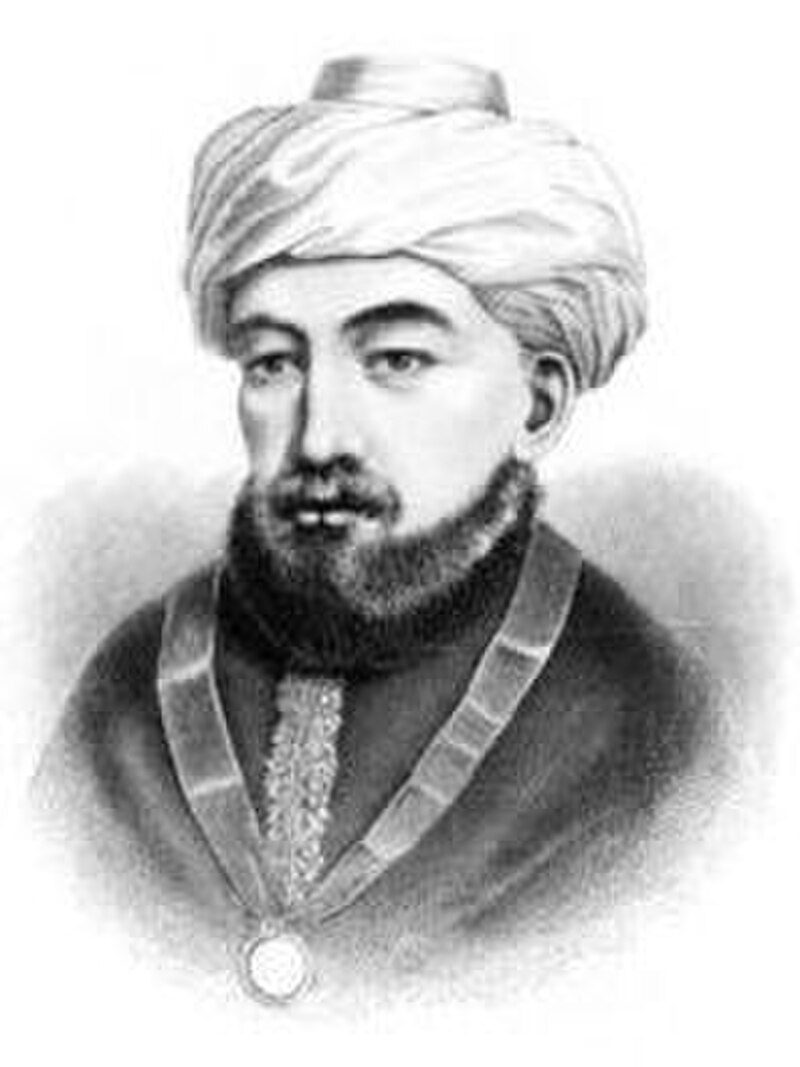
Maimonides' contributions spanned law, philosophy, and medicine:
The Mishneh Torah ("Repetition of the Torah"): Completed around 1180 CE, this massive legal code organized the entirety of Jewish law — derived from the Torah, Talmud, and geonic responsa — into 14 systematic books covering every area of halakhah, from the metaphysical foundations of faith to the laws of agricultural tithes in the Land of Israel. Written in clear, elegant Mishnaic Hebrew (rather than the Aramaic of the Talmud), it was designed to make Jewish law accessible without requiring mastery of the Talmud. This provoked criticism — some rabbis, notably Abraham ben David of Posquieres (the Rabad), accused Maimonides of arrogance and of undermining Talmud study by presenting conclusions without the underlying debates. Nonetheless, the Mishneh Torah became one of the pillars of Jewish legal literature. The earliest known manuscript fragments are preserved in the Bodleian Library at Oxford and the Jewish Theological Seminary in New York.
The Guide for the Perplexed (Moreh Nevukhim): Written in Judeo-Arabic around 1190 CE and addressed to his student Joseph ben Judah, the Guide attempted to reconcile Jewish revelation with Aristotelian philosophy. Maimonides argued for a rigorous negative theology (God can only be described by what God is not), interpreted biblical anthropomorphisms as metaphors, and proposed a naturalistic understanding of prophecy as the perfection of human intellect. The Guide generated fierce controversy: some communities burned copies, while others regarded it as the summit of Jewish thought. It profoundly influenced Thomas Aquinas, Spinoza, and modern Jewish philosophy.
The Thirteen Principles of Faith: In his commentary on the Mishnah (introduction to tractate Sanhedrin, chapter 10), Maimonides formulated thirteen articles of belief that he considered binding on all Jews, including the existence and unity of God, the authority of Moses's prophecy, the divine origin of the Torah, divine providence, resurrection of the dead, and the coming of the Messiah. These principles, later versified as Yigdal and Ani Ma'amin, became foundational statements of Jewish belief, though not all rabbis accepted that Judaism could or should be reduced to a creed.
Maimonides also served as the personal physician to the vizier of Egypt and wrote extensively on medicine, including treatises on asthma, poisons, and sexual health. His grave in Tiberias (by the Sea of Galilee) is a pilgrimage site to this day. A popular saying captures his stature: "From Moses [the prophet] to Moses [Maimonides], there was none like Moses."
The Cairo Geniza Verified
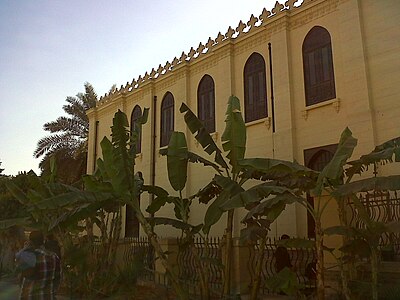
In 1896, two Scottish sisters, Agnes Lewis and Margaret Gibson, brought fragments of Hebrew manuscripts from Cairo to Solomon Schechter, a reader in Talmudic studies at Cambridge University. Schechter recognized a fragment of the Hebrew text of the Book of Ben Sira (Ecclesiasticus) — a text previously known only in Greek translation. Realizing the significance of the find, Schechter traveled to Cairo and persuaded the leaders of the Ben Ezra Synagogue in Fustat (Old Cairo) to allow him to remove the contents of the synagogue's geniza — a storeroom where worn-out documents containing God's name were deposited rather than destroyed.
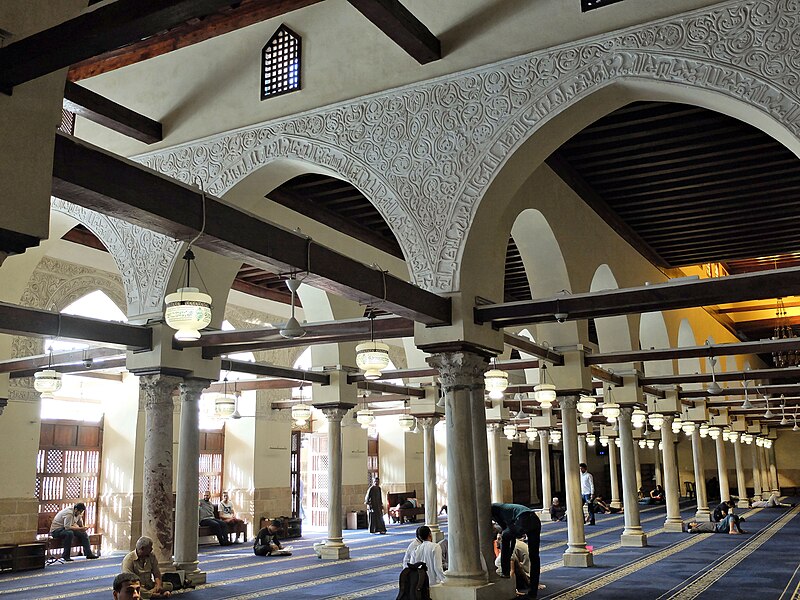
Schechter brought approximately 193,000 fragments to Cambridge, where they form the Taylor-Schechter Collection at Cambridge University Library — the single largest and most important collection of medieval Jewish manuscripts in the world. Additional fragments from the same geniza are held at the Bodleian Library (Oxford), the Jewish Theological Seminary (New York), the John Rylands Library (Manchester), the Alliance Israelite Universelle (Paris), the Russian National Library (St. Petersburg), and many other institutions. The total number of fragments is estimated at over 400,000.
The Cairo Geniza is not a "Dead Sea Scrolls of the medieval period" — it is, in many ways, even more remarkable. While the Dead Sea Scrolls preserve religious and literary texts from a narrow time period, the geniza contains everything: personal letters, business contracts, marriage documents, divorce decrees, court records, medical prescriptions, children's exercises, recipes, poetry, scientific treatises, biblical manuscripts, liturgical texts, and communal regulations. The documents span approximately a thousand years (c. 870–1880 CE) and illuminate every aspect of Jewish life in the medieval Islamic world.
The scholar who did the most to unlock the geniza's riches was Sheldon Goitein (1900–1985), who spent decades reading and cataloguing the documents, ultimately producing a monumental five-volume work, A Mediterranean Society (1967–1988), that reconstructed the social, economic, and cultural life of Jews in the medieval Islamic world in extraordinary detail. Goitein demonstrated that Jews, Muslims, and Christians in medieval Egypt engaged in extensive commercial partnerships, social interactions, and even shared cultural conventions — a picture of interfaith coexistence more nuanced than either idealized "convivencia" or unrelieved persecution.
The geniza documents reveal a society of remarkable mobility. Jewish merchants traveled from Egypt to India, from Tunisia to Yemen, from Spain to Iran. Letters describe the hazards of sea travel, the prices of goods, family quarrels, requests for books, and anxieties about children's education. The India trade documents, studied by Goitein and later by S.D. Goitein's student Mordechai Akiva Friedman, reveal a network of Jewish traders who dealt in pepper, textiles, and metals across the Indian Ocean centuries before the European "Age of Discovery."
The Radhanites: Medieval Jewish Merchants Debated
The 9th-century Persian geographer Ibn Khurradadhbih described a network of Jewish merchants he called the Radhanites (al-Radhaniyya) who traded across the known world, from France to China, speaking Arabic, Persian, Greek, Frankish, Spanish, and Slavonic. They carried goods including swords, furs, and slaves westward, and musk, aloes, camphor, cinnamon, and other spices eastward.
The historicity and significance of the Radhanites are debated. Ibn Khurradadhbih's account is the primary source, and some scholars question whether the Radhanites were an organized guild, a loose network, or a literary construct. The name itself is disputed — it may derive from the Persian region of Ray (near modern Tehran), from the Rhone River valley in France, or from the Persian rah-dan ("one who knows the way"). What is clear is that Jews occupied a unique niche in medieval trade: as a non-Muslim, non-Christian minority with communities spanning the Islamic and Christian worlds, they could function as intermediaries across political and religious boundaries that others could not easily cross.
The Khazar Conversion Debated
Among the most intriguing and contested episodes in Jewish history is the reported conversion of the Khazar elite to Judaism. The Khazars were a Turkic semi-nomadic people who established a powerful empire in the Pontic-Caspian steppe (modern southern Russia and Ukraine) from the 7th to the 10th centuries. Multiple sources — including Hasdai ibn Shaprut's letter to the Khazar king (c. 960 CE), the "Khazar Correspondence" preserved in the Cairo Geniza, Arab geographers, and Byzantine chroniclers — report that the Khazar ruling class converted to Judaism around 740 CE.
The extent of the conversion is debated. Did only the king and his court convert, or was it more widespread? Was it a sincere theological commitment or a political strategy to maintain independence between the Christian Byzantine Empire and the Muslim Abbasid Caliphate? The Khazar kingdom eventually fell to the Rus' in the late 10th century, and the fate of the Jewish Khazars remains unknown.
The Khazar hypothesis — that modern Ashkenazi Jews are primarily descended from converted Khazars rather than from ancient Israelites — was popularized by Arthur Koestler's The Thirteenth Tribe (1976). However, genetic studies published since 2000, including large-scale analyses by Doron Behar (2010) and others, have consistently shown that Ashkenazi Jews share significant genetic ancestry with other Jewish populations (Sephardic, Mizrachi) and with populations of the ancient Levant, contradicting the Khazar origin hypothesis. The scholarly consensus is that while some Khazar converts may have been absorbed into Eastern European Jewish communities, they did not constitute the primary ancestral population.
Life in Baghdad, Cairo, and Cordoba Verified
The major cities of the Islamic world hosted vibrant Jewish communities with distinct cultural characters:
Baghdad: As the capital of the Abbasid Caliphate (from 762 CE), Baghdad was home to the Exilarch and within reach of the great academies of Sura and Pumbedita (which had relocated to the capital by the 10th century). Jews participated in the city's intellectual and commercial life, contributing to the translation movement that rendered Greek philosophical and scientific works into Arabic. The 9th-century Jewish astronomer Masha'allah ibn Athari was among the astrologers consulted for the founding date of Baghdad itself.
Cairo (Fustat): The old city of Fustat, south of modern Cairo, housed the Ben Ezra Synagogue — home of the famous geniza — and a prosperous Jewish community that served as a commercial hub linking the Mediterranean with the Indian Ocean trade. Maimonides settled here in the 1160s, served as head of the Jewish community (nagid), and practiced medicine at the court of Saladin's vizier. His home in Fustat has not been archaeologically identified, but his influence on Egyptian Jewry was transformative and lasting.
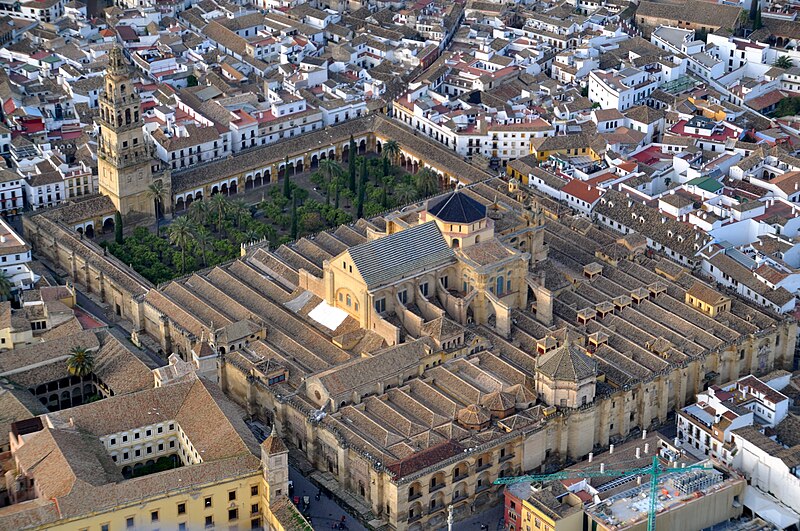
Cordoba: Under the Umayyad caliphs, Cordoba became one of the largest and most sophisticated cities in Europe, with a population that may have reached 500,000 in the 10th century. The city boasted hundreds of mosques, public baths, libraries, and a vibrant intellectual culture. Jews participated fully in this civilization, contributing to philosophy, medicine, poetry, and diplomacy. The Great Mosque of Cordoba (now the Mezquita-Cathedral), built beginning in 784 CE, stands as a monument to the culture in which the Jewish Golden Age flourished. No identifiable Jewish quarter from this period has been excavated, but the Juderia (Jewish quarter) of the later medieval period is still a neighborhood in modern Cordoba.
Jewish Education and Intellectual Method Tradition
The intellectual achievements of the Golden Age were not produced in a vacuum. They rested on a foundation of rigorous education and a culture that valued learning as both a religious obligation and a social ideal.
Jewish boys in the Islamic world typically began their education at age five or six in the kuttab (elementary school), learning to read Hebrew, recite prayers, and study the weekly Torah portion. Advanced students progressed to the study of Mishnah and Talmud under the guidance of local scholars or at one of the great academies.
What distinguished the intellectual culture of Jews in the Islamic world was its bilingualism and biculturalism. Jewish scholars wrote in both Hebrew and Judeo-Arabic (Arabic written in Hebrew characters), moving fluently between Jewish and Islamic intellectual traditions. They adopted Arabic literary forms — the maqama (rhymed prose narrative), the philosophical treatise, the scientific encyclopedia — and filled them with Jewish content. This cultural synthesis produced a body of literature that was simultaneously authentically Jewish and fully engaged with the broader civilization of the Islamic world.
The Judeo-Arabic literary tradition produced works of enduring importance beyond Maimonides and the poets. Bahya ibn Paquda's Chovot ha-Levavot ("Duties of the Heart," c. 1080), written in Judeo-Arabic, is a classic of Jewish ethical and devotional literature that drew on Sufi mystical concepts to articulate an interior spiritual life. Jonah ibn Janah (c. 990–1050) produced pioneering works of Hebrew grammar using Arabic linguistic methodology that fundamentally advanced the scientific study of the Hebrew language.
The great libraries of the Islamic world — at Cordoba, Baghdad, and Cairo — housed Jewish works alongside Islamic and Christian ones. The cross-pollination of ideas across religious boundaries was facilitated by shared languages, shared philosophical frameworks (particularly Aristotelianism and Neoplatonism), and the relative openness of Islamic intellectual culture to non-Muslim contributions during its classical period.
The Almohad Catastrophe and Its Aftermath Verified
The Golden Age of Spanish Jewry did not end gradually — it was shattered by the Almohad invasion. The Almohads (al-Muwahhidun, "the unitarians"), a puritanical Berber dynasty from the Atlas Mountains of North Africa, conquered Al-Andalus beginning in 1147, presenting Jews and Christians with the stark choice of conversion to Islam, exile, or death. This was a radical departure from the earlier dhimmi system that had protected Jewish communities.
The Almohad persecution dispersed the Jewish intellectual elite of Al-Andalus. Maimonides' family fled Cordoba. The poet Abraham ibn Ezra wandered through Italy, France, and England. Jewish communities across North Africa were devastated. The centers of Jewish cultural production shifted northward to the Christian kingdoms of Spain (Castile, Aragon, Catalonia), where Jews found temporary refuge and continued their literary and intellectual work — now increasingly in dialogue with Christian Scholasticism rather than Islamic philosophy.
The Almohad episode is a powerful reminder that the "Golden Age" was neither universal nor permanent. Jewish life under Islam, like Jewish life under Christianity, was always contingent on the goodwill of rulers and the tolerance of majorities. When that tolerance failed — as it did under the Almohads, and as it would under the Spanish Inquisition three centuries later — the consequences were catastrophic. Yet the cultural achievements of the Golden Age endured, transmitted through manuscripts, translations, and living traditions that continue to shape Jewish thought, prayer, and poetry to this day.
Jewish Women in the Islamic World Verified
The Cairo Geniza provides an unusually rich window into the lives of Jewish women in the medieval Islamic world — a population largely invisible in the male-authored rabbinic literature of the period.
Geniza documents reveal that Jewish women owned property, engaged in business transactions, appeared in court, and negotiated marriage contracts (ketubbot) that could include substantial protections: provisions for maintenance, restrictions on the husband's right to take a second wife, and guarantees of the wife's right to divorce under certain conditions. Some marriage contracts specified that the husband could not prevent his wife from visiting her parents, or that she was entitled to specific clothing and jewelry.
Women's economic activities included spinning and weaving (a major domestic industry), money lending, and trade. The geniza preserves letters from women managing family businesses during their husbands' absence on trading voyages — sometimes for years at a time. Wuhsha al-Dallala ("Wuhsha the Broker"), a Jewish businesswoman in 11th-century Fustat, is documented in multiple geniza fragments as a successful broker and property owner who lived independently and defied social conventions.
Education for women was limited but not entirely absent. The geniza contains references to women who could read and write, and a few exceptional cases of learned women. The overall picture is of a society in which women had more legal and economic agency than is commonly assumed, though still operating within a fundamentally patriarchal framework.
The Enduring Legacy of the Geniza Verified
The Cairo Geniza continues to yield new discoveries more than a century after Schechter's initial expedition. Digital imaging, conservation technology, and collaborative international projects — including the Friedberg Geniza Project, which has created a comprehensive database of all known geniza fragments — are making this vast archive increasingly accessible to scholars worldwide.
Recent discoveries include fragments of previously unknown works of medieval Hebrew poetry, legal documents illuminating the history of the Crusader period in the Levant, and personal letters that provide intimate glimpses into the emotional lives of medieval Jews. The geniza remains an inexhaustible source — scholars estimate that only a fraction of the fragments have been fully studied and published. It stands as the single most important documentary source for the social history of the medieval Mediterranean world.
Jewish Communities in Yemen and North Africa Verified
Beyond the celebrated centers of Spain, Egypt, and Iraq, Jewish communities across the Islamic world developed distinctive local traditions:
Yemen: The Jews of Yemen traced their presence to the era of King Solomon and the Queen of Sheba — a claim without archaeological verification but reflecting a deep sense of antiquity. Yemenite Jews preserved ancient liturgical traditions, a distinctive pronunciation of Hebrew, and unique Torah scrolls written on deer parchment in a beautiful calligraphic hand. The Taj (crown), the Yemenite Torah codex used alongside the scrolls, incorporated Saadia Gaon's Arabic translation and commentary. Maimonides's Iggeret Teiman ("Epistle to Yemen," c. 1172) was addressed to this community, counseling patience during a period of messianic fervor and persecution.
North Africa (the Maghreb): Jewish communities in Tunisia, Algeria, Morocco, and Libya developed their own distinctive traditions blending ancient local customs with later Sephardic influences after 1492. The mellah (Jewish quarter) of Fez, Morocco, established in 1438, was one of the first designated Jewish neighborhoods in the Islamic world. The island of Djerba, off the coast of Tunisia, houses the El Ghriba synagogue — one of the oldest continuously functioning synagogues in the world, which local tradition claims was founded by priests fleeing the destruction of the First Temple in 586 BCE. Annual pilgrimages to El Ghriba during the festival of Lag B'Omer continue to this day.
A Civilization of Translation Verified
One of the most consequential contributions of Jews in the Islamic world was their role as cultural translators — literally and figuratively — between civilizations.
During the 12th and 13th centuries, Jewish scholars played a crucial role in the great translation movement that brought Arabic-language philosophy, science, and medicine into Latin — and thus into the intellectual world of Christian Europe. The Tibbon family of translators, based in Provence, systematically translated the major works of Judeo-Arabic literature into Hebrew:
- Judah ibn Tibbon (c. 1120–1190): Translated Bahya ibn Paquda's Chovot ha-Levavot, Judah Halevi's Kuzari, Saadia Gaon's Emunot ve-De'ot, and Ibn Gabirol's ethical treatise Tikkun Middot ha-Nefesh
- Samuel ibn Tibbon (c. 1150–1230): Translated Maimonides' Guide for the Perplexed into Hebrew (with Maimonides' own input and corrections via correspondence)
- Moses ibn Tibbon (d. c. 1283): Translated scientific and medical works from Arabic
Simultaneously, in Toledo and other Spanish centers, Jewish scholars like Abraham bar Hiyya and Abraham ibn Ezra collaborated with Christian scholars to translate Arabic scientific texts into Latin — serving as intermediaries because they could read Arabic (or Judeo-Arabic) and communicate with Latin-literate Christians through the medium of Romance vernaculars. This translation chain — Arabic to Hebrew or vernacular to Latin — was one of the primary conduits through which ancient Greek philosophy (preserved and developed by Arab scholars) reached medieval Christian Europe, profoundly influencing the rise of Scholasticism.
Locations in This Chapter
Loading map...