Part 1: Origins & Patriarchs · c. 2000–1750 BCE
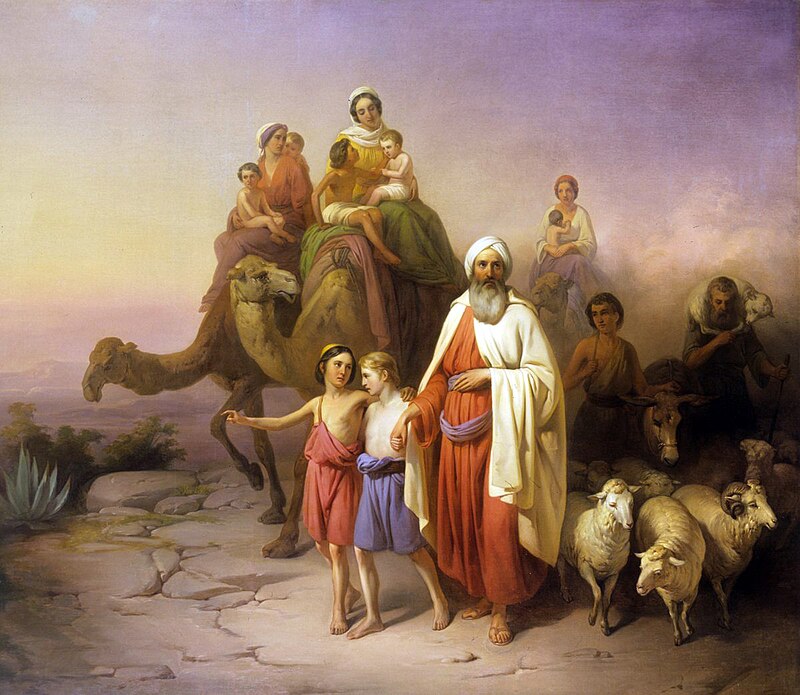
3.Abraham and the Covenant
Bronze Age Ur, patriarchal migration, Hittite treaties
18 min read
The Royal Tombs of Ur Verified
In the winter of 1927–28, British archaeologist Sir Leonard Woolley uncovered one of the most spectacular finds in the history of archaeology: the Royal Cemetery of Ur, in southern Iraq. Beneath layers of accumulated debris, Woolley's team found sixteen royal tombs dating to approximately 2600–2400 BCE — a thousand years before the traditional dating of Abraham. Inside were treasures that stunned the world: gold helmets, lapis lazuli jewelry, an exquisite gold and lapis ram caught in a thicket (now in the British Museum and the University of Pennsylvania Museum), elaborately inlaid lyres, and — most chillingly — the remains of dozens of servants who had been sacrificed to accompany their rulers into the afterlife.
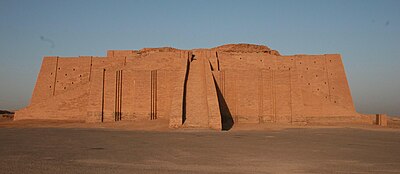
Ur (modern Tell el-Muqayyar, Iraq) was one of the great cities of the Sumerian world. At its height in the late third millennium BCE, during the Third Dynasty of Ur (2112–2004 BCE, also called "Ur III"), the city was the capital of an empire that stretched across much of Mesopotamia. Its population may have reached 65,000. The great ziggurat of Ur, built by King Ur-Nammu (r. 2112–2095 BCE) and dedicated to the moon god Nanna (Akkadian Sin), still stands partially restored at the site. It was reconstructed by Woolley's findings and later by Saddam Hussein's government in the 1980s.
This is the city that Genesis identifies as the starting point of Abraham's journey: "Terah took his son Abram, his grandson Lot son of Haran, and his daughter-in-law Sarai, the wife of his son Abram, and together they set out from Ur of the Chaldeans to go to Canaan" (Genesis 11:31).
"Ur of the Chaldeans": Historical Problems Debated
The identification of biblical "Ur of the Chaldeans" (Ur Kasdim) with the Sumerian city of Ur is widely accepted but not without difficulties.
The Chaldean anachronism: The Chaldeans (Kasdim) were a tribal group that settled in southern Mesopotamia in the early first millennium BCE, roughly a thousand years after the putative time of Abraham. Their most famous member was Nebuchadnezzar II of Babylon (r. 605–562 BCE). Calling Ur "of the Chaldeans" is an anachronism, like calling New York "in the United States" when describing a pre-Columbian landscape. This suggests either that the phrase was added by a later editor or that the text was composed long after the events it describes.
Alternative locations: Some scholars, including Cyrus Gordon, have argued that "Ur of the Chaldeans" refers not to the famous Sumerian city but to a northern Mesopotamian site — perhaps Ura near Harran, or Urfa (modern Sanliurfa in southeastern Turkey), which local Muslim and Christian traditions identify as Abraham's birthplace. The Septuagint (Greek translation, 3rd century BCE) renders the phrase as "the land of the Chaldeans," leaving the specific city ambiguous.
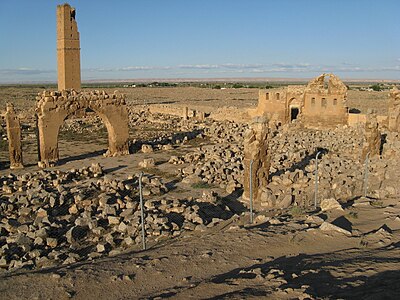
The Harran connection: The patriarchal narratives consistently associate Abraham's family with Harran (modern Harran, Turkey), a major city on the trade routes of northern Mesopotamia that was, like Ur, a center of moon-god worship. Abraham's father Terah dies there, and Abraham's servant later returns there to find a wife for Isaac. Some scholars argue that the patriarchal homeland was always in the Harran region, and that the "Ur" connection was added later.
The Patriarchal Migration Routes Verified
Regardless of which Ur is meant, the patriarchal migration described in Genesis — from Mesopotamia through Syria to Canaan — follows well-attested ancient trade and migration routes.
The major route from southern Mesopotamia to the Levant did not cross the Arabian desert directly. Instead, it followed the Fertile Crescent northward along the Euphrates to Harran, then turned southwest through Syria (passing through cities like Aleppo and Damascus) before descending into Canaan via the Jordan Valley or the coastal plain. This "crescent route" was used by merchants, armies, and migrants for millennia.
Archaeological evidence confirms extensive movement of peoples along these routes during the Middle Bronze Age (c. 2000–1550 BCE), the period most commonly associated with the patriarchs. Middle Bronze Age sites throughout Canaan show cultural influences from Mesopotamia and Syria, including pottery styles, burial practices, and architectural forms.
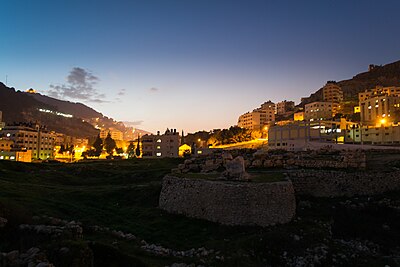
The city names mentioned in the patriarchal narratives — Shechem, Bethel, Hebron, Beer-sheba, Gerar — correspond to sites that were occupied during the Middle Bronze Age. Excavations at Tell Balata (Shechem), Beitin (Bethel), and Tell es-Seba (Beer-sheba) have revealed significant Middle Bronze Age levels, confirming that these were functioning settlements during the putative patriarchal period.
The Call of Abraham Tradition
Genesis 12 marks one of the pivotal moments in the biblical narrative — and in the history of Western religion. God speaks to Abram (his name before the covenant):
"Go from your country, your people and your father's household to the land I will show you. I will make you into a great nation, and I will bless you; I will make your name great, and you will be a blessing. I will bless those who bless you, and whoever curses you I will curse; and all peoples on earth will be blessed through you." (Genesis 12:1–3)
This passage establishes the three pillars of the Abrahamic covenant: land (the promise of Canaan), descendants (a great nation), and blessing (through Abraham, all nations will be blessed). These three themes run through the entire Hebrew Bible and, indeed, through the subsequent history of Judaism.
Jewish tradition emphasizes the radical nature of Abraham's response. The Midrash (Genesis Rabbah 39:1) compares Abraham to a person who sees a palace on fire and asks, "Is there no master of this palace?" — suggesting that Abraham discovered monotheism through rational observation of a world that seemed morally disordered. The philosopher Maimonides describes Abraham as a child who, through reason alone, rejected the idolatry of his father's household and recognized the one God.
The Talmud (Nedarim 32a) counts ten trials that Abraham endured, though different sources enumerate them differently. Among the most commonly cited: leaving his homeland, the famine in Canaan, the abduction of Sarah by Pharaoh, the war of the kings, circumcision in old age, the banishment of Ishmael, and the binding of Isaac.
The Covenant Ceremony Tradition
Genesis 15 describes one of the most mysterious and evocative scenes in the Bible: the brit bein ha-betarim, the "covenant between the pieces." God instructs Abraham to take a heifer, goat, ram, turtledove, and pigeon, cut the animals in half, and arrange the halves opposite each other. As darkness falls, Abraham enters a deep sleep, and "a smoking fire pot with a blazing torch" passes between the pieces.
This ceremony — dividing animals and passing between the halves — was a well-known ancient Near Eastern covenant-ratification ritual. The symbolic meaning was explicit: "May I become like these animals if I break this covenant." The practice is attested in texts from Mari (18th century BCE), Alalakh (15th century BCE), and in Jeremiah 34:18–19, which refers to the custom directly.
What makes the Genesis 15 ceremony remarkable is who passes between the pieces: not Abraham, but God alone (symbolized by the fire pot and torch). This is a unilateral, unconditional commitment — God binds Godself to the promise, regardless of human performance. This theological distinction between unconditional covenant (Genesis 15) and conditional covenant (Sinai, Exodus 19–24) would become a major theme in later Jewish and Christian theology.
Hittite Suzerainty Treaties and the Covenant Form Verified
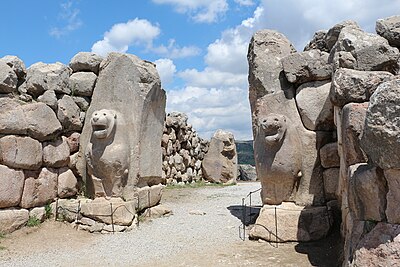
The discovery of Hittite treaty documents in the early 20th century revolutionized scholarly understanding of biblical covenants. Beginning with the excavation of the Hittite capital Hattusa (modern Bogazkoy, Turkey) by Hugo Winckler in 1906, thousands of cuneiform tablets were recovered, including treaties between the Hittite Great King and his vassals.
George Mendenhall, in a landmark 1954 article in The Biblical Archaeologist, identified a consistent structure in Hittite suzerainty treaties from the Late Bronze Age (c. 1400–1200 BCE):
- Preamble: Identification of the sovereign
- Historical prologue: Recounting of past benefits bestowed on the vassal
- Stipulations: The vassal's obligations
- Provision for deposit and public reading: The treaty document kept in the temple
- Divine witnesses: Gods of both parties invoked as witnesses
- Blessings and curses: Consequences of obedience or violation
Mendenhall and later Klaus Baltzer argued that this treaty form profoundly influenced the structure of biblical covenants, particularly the Sinai covenant in Exodus and Deuteronomy. The parallels are striking: God identifies Himself ("I am the LORD your God"), recounts past benefits ("who brought you out of Egypt"), lays down stipulations (the commandments), commands the deposit of the text in the ark, and pronounces blessings and curses.
The Abrahamic covenant, while less formally structured, shares the language and conceptual framework of ancient Near Eastern treaties. The Hebrew word brit ("covenant") itself appears in contexts that parallel treaty terminology across the ancient Near East.
The Nuzi Tablets and Patriarchal Customs Debated
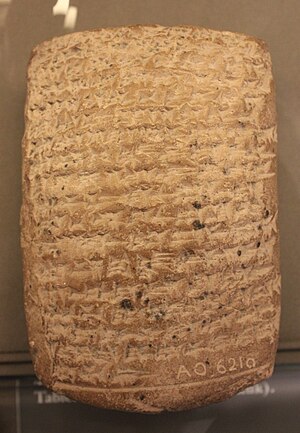
Between 1925 and 1931, excavations at the Hurrian city of Nuzi (modern Yorghan Tepe, near Kirkuk, Iraq) produced approximately 5,000 cuneiform tablets dating to the 15th–14th centuries BCE. These tablets, primarily private legal and economic records of Hurrian families, were immediately recognized as having potential bearing on the patriarchal narratives.
The American scholar Ephraim Avigdor Speiser, in his influential 1964 Anchor Bible commentary on Genesis, identified numerous parallels between Nuzi customs and patriarchal practices:
- Wife-sister marriages: At Nuzi, a man could adopt his wife as his "sister," elevating her legal status. This was invoked to explain the otherwise puzzling episodes where Abraham (Genesis 12, 20) and Isaac (Genesis 26) present their wives as their sisters.
- Surrogate motherhood: Nuzi marriage contracts stipulate that a barren wife must provide a slave woman to bear children for her husband — directly paralleling Sarah's provision of Hagar (Genesis 16) and Rachel's provision of Bilhah (Genesis 30).
- Household gods (teraphim): Nuzi texts indicate that possession of household gods could confer inheritance rights, potentially explaining Rachel's theft of Laban's teraphim (Genesis 31:19).
- Adoption and inheritance: Nuzi adoption contracts, where childless men adopted servants as heirs (revocable if a natural son was born), were compared to Abraham's designation of Eliezer as heir (Genesis 15:2–3).
However, these Nuzi parallels have been substantially challenged since the 1970s. Scholars including Thomas Thompson and John Van Seters argued that the customs described are not uniquely Middle Bronze Age but appear across many periods and cultures in the ancient Near East. The wife-sister interpretation has been largely abandoned, and the teraphim-inheritance connection has been questioned. The current scholarly consensus is more cautious: while the Nuzi texts illuminate ancient Near Eastern social customs generally, they do not prove a specific Middle Bronze Age date for the patriarchal narratives.
The Historicity Debate Debated
The question of whether Abraham was a historical individual — and whether the patriarchal narratives preserve genuine memories of the early second millennium BCE — is one of the most contentious issues in biblical scholarship. The debate has swung dramatically over the past century.
The Albright School (1940s–1960s): William Foxwell Albright of Johns Hopkins University and his students (John Bright, G. Ernest Wright, Nelson Glueck) argued vigorously that archaeological discoveries confirmed the essential historicity of the patriarchal narratives. The Nuzi parallels, the Mari texts, and the general cultural setting of the Middle Bronze Age all seemed to corroborate the biblical picture. Albright's 1940 book From the Stone Age to Christianity presented this case to a wide audience.
The Minimalist Challenge (1970s–present): Thomas Thompson's The Historicity of the Patriarchal Narratives (1974) and John Van Seters' Abraham in History and Tradition (1975) launched a devastating critique. They argued that none of the supposed archaeological parallels were uniquely Middle Bronze Age, that the patriarchal names appear across many periods, that the narratives reflect the concerns of later Israelite society, and that there is no direct archaeological evidence for any of the patriarchs. The Copenhagen School (Thompson, Niels Peter Lemche, Philip Davies) pushed further, arguing that most of the Hebrew Bible's "historical" narratives were composed in the Persian or Hellenistic period.
The Current State: Today, most scholars occupy a middle ground. Few would claim that Abraham is a historically verifiable individual. Equally, few would deny that the patriarchal narratives contain some genuine memories of the early second millennium BCE — personal names, social customs, migration patterns, and geographical settings that fit the Middle Bronze Age better than any later period. The narratives are best understood as literary works that weave together historical memories, etiological tales, and theological reflection.
Circumcision in Ancient Context Verified
Genesis 17 introduces circumcision (brit milah) as the physical sign of the covenant between God and Abraham: "Every male among you shall be circumcised. You are to undergo circumcision, and it will be the sign of the covenant between me and you" (Genesis 17:10–11).
Circumcision was not unique to ancient Israel. The practice is well attested in the ancient Near East:
Egypt: The oldest evidence of circumcision comes from Egypt. The tomb of Ankhmahor at Saqqara (6th Dynasty, c. 2345 BCE) contains a relief depicting the circumcision of two young men. Egyptian mummies from various periods show evidence of circumcision. Herodotus (5th century BCE) reported that the Egyptians practiced circumcision and that other peoples had learned it from them.
The Levant: Jeremiah 9:25–26 lists the Egyptians, Edomites, Ammonites, and Moabites as circumcised peoples, while the Philistines are consistently called "uncircumcised" (arelim) in the Hebrew Bible — suggesting that the practice distinguished Semitic and Egyptian peoples from Aegean/Indo-European groups.
Absence in Mesopotamia: Significantly, circumcision was not practiced in Mesopotamia — the very culture from which Abraham is said to have come. The adoption of circumcision as a covenantal sign thus marks a cultural break with the Mesopotamian world and an alignment with Levantine and Egyptian practice.
In Jewish tradition, circumcision is performed on the eighth day of life (Genesis 17:12), a timing that modern medicine notes coincides with the natural peak of vitamin K and prothrombin levels in newborns, reducing bleeding risk. The brit milah ceremony remains one of the most widely observed Jewish practices, connecting contemporary Jews to the Abrahamic covenant.
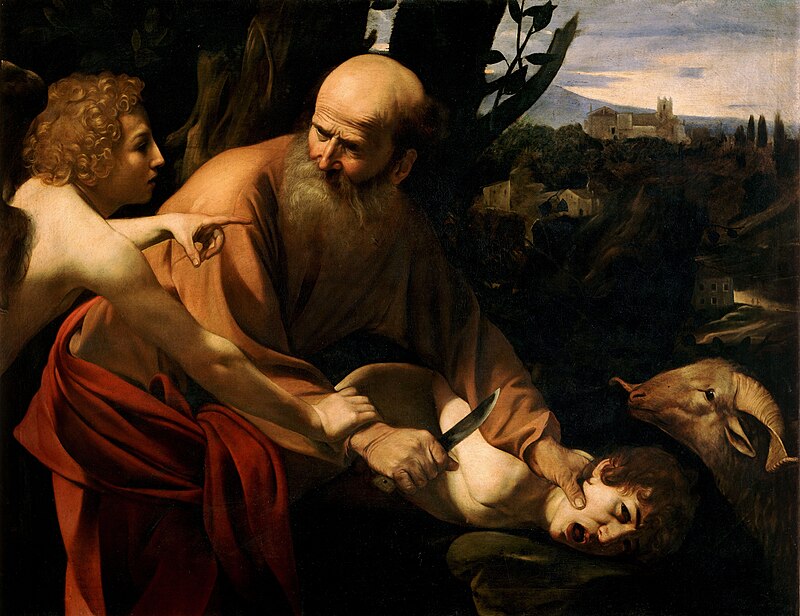
The Binding of Isaac (Akedah) Tradition
Genesis 22 — the Akedah, or "Binding" of Isaac — is arguably the most theologically profound and emotionally disturbing passage in the Hebrew Bible. God commands Abraham to offer his son Isaac as a burnt offering on "one of the mountains in the region of Moriah" (later identified with the Temple Mount in Jerusalem, per 2 Chronicles 3:1).
Abraham obeys without protest. He and Isaac journey for three days. Isaac, carrying the wood, asks, "Where is the lamb for the burnt offering?" Abraham responds, "God himself will provide the lamb." At the last moment, as Abraham raises the knife, an angel intervenes: "Do not lay a hand on the boy... Now I know that you fear God, because you have not withheld from me your son, your only son." A ram caught in a thicket is sacrificed instead.
Jewish interpretation of the Akedah is rich and diverse. The Midrash adds details: Satan tries to dissuade Abraham on the road; Isaac, far from being a passive child, is a grown man of 37 who willingly offers himself; Sarah dies upon hearing the news (Genesis 23:1 follows immediately). The Talmud (Rosh Hashanah 16a) connects the Akedah to the Rosh Hashanah liturgy — the shofar (ram's horn) recalls the ram substituted for Isaac, and the Akedah narrative is read on the second day of the holiday.
The Akedah raises profound theological questions about the nature of faith, divine testing, and human sacrifice. It is worth noting that the narrative explicitly rejects human sacrifice — God stops Abraham's hand. In a world where child sacrifice was practiced (the Canaanite cult of Molech, Phoenician tophet sacrifices), the Akedah's message is revolutionary: God demands total devotion but does not demand the death of the child.
Child Sacrifice in the Ancient World Verified
Archaeological evidence for child sacrifice in the ancient Near East provides sobering context for the Akedah:
The Carthaginian Tophet: Excavations at Carthage (Tunisia), Motya (Sicily), and other Phoenician/Punic sites have uncovered sacred precincts called tophets containing thousands of urns with the cremated remains of infants and young children, dating from the 8th to 2nd centuries BCE. While some scholars argue these were merely burial grounds for stillborn or naturally deceased infants, the majority view, supported by ancient literary testimony (Diodorus Siculus, Plutarch) and osteological analysis, is that at least some represent ritual sacrifice.
The Gezer Calendar region: Excavations in the Levant have found infant burials in foundations of buildings, possibly reflecting foundation sacrifice practices, though the evidence is debated.
Biblical condemnation: The Hebrew Bible repeatedly condemns child sacrifice, particularly the practice of "passing children through fire" associated with Molech (Leviticus 18:21, 20:2–5; 2 Kings 23:10; Jeremiah 32:35). The Tophet in the Valley of Hinnom (Gehenna) south of Jerusalem, where such practices allegedly occurred, became a symbol of divine judgment.
Against this backdrop, the Akedah can be read as a foundational narrative establishing that the God of Israel categorically rejects human sacrifice — replacing it with animal sacrifice and, ultimately, with prayer and repentance.
Abraham in the Archaeological Record Debated
No inscription, seal, or document from the ancient Near East mentions Abraham by name. This absence is not surprising — private individuals rarely appear in the surviving records of the Bronze Age, which are overwhelmingly concerned with kings, temples, and state administration. But it means that the historicity question must be addressed indirectly, through the plausibility of the cultural setting.
Several features of the Abraham narratives have been tested against the archaeological record:
Personal names: The name Abram (later Abraham) follows naming patterns attested in the early second millennium BCE. Amorite names of the form "Abi-ramu" ("the father is exalted") appear in texts from Mari and other sites. Similarly, Sarai/Sarah, Laban, Jacob, and Ishmael fit Middle Bronze Age Amorite naming conventions. However, as critics have noted, these name-types are not exclusively early — they appear across many periods.
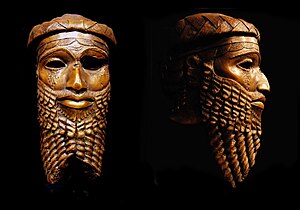
The Mari Texts (c. 1775–1761 BCE): The archives from the palace of Zimri-Lim at Mari (Tell Hariri, Syria), excavated by Andre Parrot beginning in 1933, describe a world of tribal politics, pastoral migration, and urban-nomadic interaction that closely parallels the patriarchal narratives. Tribal groups called the Banu-Yamina ("sons of the south") bear a name strikingly similar to Benjamin ("son of the right/south"). The Mari texts describe prophetic activity, covenant-making rituals, and the complex relationships between settled cities and mobile pastoral groups — all features of the patriarchal world.
The Treaty of Genesis 14: Genesis 14 describes Abraham's involvement in a war between coalitions of kings — an episode that reads differently from the rest of the patriarchal narrative and that some scholars consider an independent, possibly early tradition. The names of the kings (Amraphel, Arioch, Chedorlaomer, Tidal) have been tentatively identified with known rulers, though none of the identifications is secure.
Looking Forward Tradition
The Abraham cycle establishes the theological architecture that will shape the rest of the Hebrew Bible: covenant, land, descendants, and blessing. The figure of Abraham — whether historical individual, composite character, or literary creation — stands at the crossroads of ancient Near Eastern culture and biblical theology.
As we follow his descendants Isaac, Jacob, and the twelve sons who will become the tribes of Israel, we move from the story of one family to the story of a people. The promises made under the stars of Canaan will be tested in the fields of Paddan-Aram, the courts of Egypt, and the wilderness of Sinai. The covenant — sealed with blood, fire, and faith — will prove both unbreakable and endlessly demanding.
Locations in This Chapter
Loading map...