Part 1: Origins & Patriarchs · c. 3000+ BCE
2.The Flood and the Nations
Gilgamesh, flood geology, Table of Nations
18 min read
A Victorian Sensation: George Smith and the Flood Tablet Verified
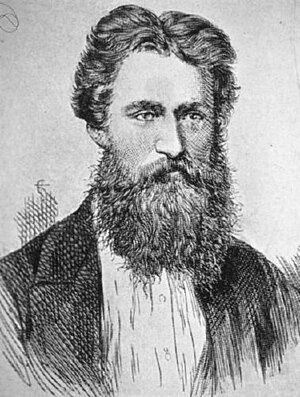
On December 3, 1872, a self-taught Assyriologist named George Smith stood before the Society of Biblical Archaeology in London and read aloud a cuneiform text that would shake the foundations of Victorian faith. The text, from Tablet XI of the Epic of Gilgamesh, described a Mesopotamian hero named Utnapishtim who was warned by a god to build a boat, load it with animals, and survive a devastating flood sent to destroy humanity. The parallels to the biblical Noah story were unmistakable.
The reaction was electric. Prime Minister William Gladstone attended Smith's lecture. The Daily Telegraph offered 1,000 guineas (equivalent to roughly $150,000 today) for Smith to travel to Nineveh and find the missing portions of the tablet. Remarkably, Smith did travel to the ruins of Nineveh (in modern Mosul, Iraq) and, against extraordinary odds, found a fragment that filled one of the gaps in the narrative. He died of dysentery in Aleppo in 1876 at age 36, having transformed our understanding of the Bible's ancient context.
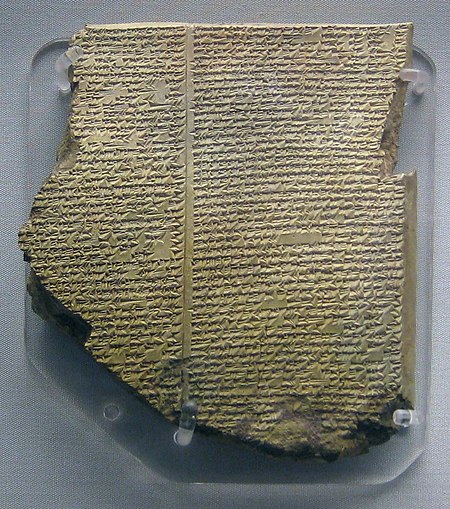
The tablet Smith read — now catalogued as K.3375 in the British Museum — had been excavated from the library of the Assyrian king Ashurbanipal (r. 668–627 BCE) at Nineveh by Austen Henry Layard and Hormuzd Rassam in the 1850s. It had sat unread in the Museum's storerooms for nearly two decades before Smith, working as a restorer, recognized its significance.
The Epic of Gilgamesh: The Flood in Full Verified
The Gilgamesh flood narrative, while the most famous, is actually the latest in a long line of Mesopotamian flood traditions. The story appears in three major versions:
The Sumerian Flood Story (c. 1600 BCE): The earliest version, featuring King Ziusudra of Shuruppak, survives in a fragmentary tablet from Nippur (now at the University of Pennsylvania Museum). Ziusudra is warned by the god Enki, builds a boat, and after the flood subsides, offers sacrifices. The gods grant him eternal life.
The Atrahasis Epic (c. 1700 BCE): This more complete Akkadian narrative (British Museum BM 78941 and related fragments) provides context absent from other versions. Humans were created to do the labor that junior gods had rebelled against. When humanity grew too numerous and noisy, the gods sent plague, drought, and famine before resorting to a flood. The hero Atrahasis ("Exceedingly Wise") is warned by Enki/Ea and survives.
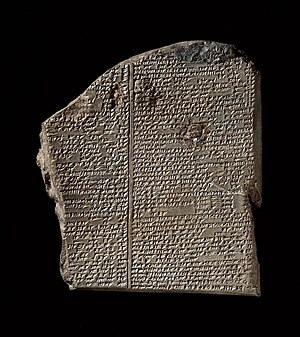
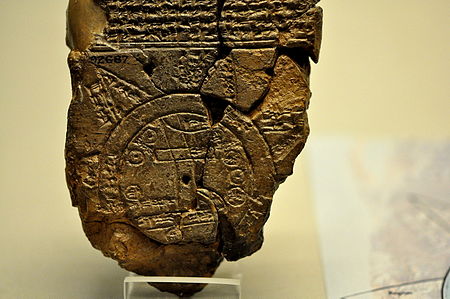
Gilgamesh Tablet XI (c. 1200 BCE, from 7th century copies): In the most literary version, the hero-king Gilgamesh, seeking immortality after the death of his friend Enkidu, travels to the edge of the world and meets Utnapishtim, the flood survivor. Utnapishtim recounts the flood story in detail: the gods' decision to destroy humanity, Ea's warning delivered through a reed wall, the construction of a cube-shaped boat, the loading of craftsmen and animals, seven days of devastating storm, the boat grounding on Mount Nimush, the sending of a dove, swallow, and raven, and finally the offering of sacrifice on the mountaintop.
The British Museum today displays the "Flood Tablet" (K.3375) as one of its most prized possessions, alongside related fragments that scholars have assembled over the past 150 years.
The Biblical Flood Narrative Tradition
The biblical account of Noah and the flood (Genesis 6–9) is one of the most powerful narratives in the Hebrew Bible, and one of the most widely known stories in world literature.
The narrative begins with a striking theological premise: God observes that human wickedness has become so pervasive that "every inclination of the thoughts of the human heart was only evil all the time" (Genesis 6:5). Grieving over creation, God resolves to destroy all life — but Noah, "a righteous man, blameless among the people of his time" (Genesis 6:9), finds favor.
God instructs Noah to build an tevah (ark) of gofer wood — a term that appears nowhere else in the Bible, and whose identification remains uncertain (cypress is the most common suggestion). The dimensions given are approximately 450 feet long, 75 feet wide, and 45 feet high, with three decks. Noah is to bring his family and pairs of every animal aboard.
The flood itself is described in terms that recall the undoing of creation: "the springs of the great deep burst forth, and the floodgates of the heavens were opened" (Genesis 7:11). The waters that God separated on the second and third days of creation (Genesis 1:6–10) now reunite, returning the world to its primordial watery chaos.
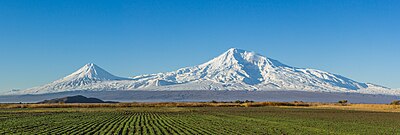
After 150 days, the waters recede. The ark comes to rest on "the mountains of Ararat" (not a specific peak but a region in eastern Turkey/Armenia). Noah sends out a raven and then a dove; when the dove returns with an olive branch, he knows dry land has appeared. Upon disembarking, Noah builds an altar and offers sacrifice. God responds with the Noahic covenant — a promise never again to destroy the earth by flood, sealed with the sign of the rainbow.
Jewish tradition elaborates extensively on the flood narrative. The Talmud (Sanhedrin 108a–b) discusses the sins of the flood generation, Noah's righteousness (or relative righteousness — Rashi notes the ambiguity of "righteous in his generation"), and the logistics of life aboard the ark. Midrash Genesis Rabbah describes Noah spending 120 years building the ark, during which passersby would ask what he was doing, giving him opportunity to warn them of the coming judgment.
The Noahic covenant is theologically foundational in Judaism. The seven "Noahide Laws" — prohibitions against idolatry, blasphemy, murder, sexual immorality, theft, eating flesh from a living animal, and the positive command to establish courts of justice — are understood as God's universal moral code for all humanity, distinct from the 613 commandments given specifically to Israel at Sinai.
Parallels and Differences: A Scholarly Comparison Debated
The similarities between the biblical and Mesopotamian flood accounts are too extensive to be coincidental. Both narratives feature:
- A divine decision to destroy humanity by flood
- One man warned to build a boat
- Animals brought aboard
- A catastrophic deluge destroying all other life
- The boat grounding on a mountain
- Birds sent out to test for dry land
- Sacrifice offered after disembarkation
- A divine promise or gift to the survivor
Yet the differences are equally significant and reveal the theological transformation at work:
Motivation for the flood: In Atrahasis, the gods send the flood because humanity is too noisy and keeps them from sleeping — a petty, almost comic reason. In Genesis, the flood is a response to moral corruption, introducing the concept of divine justice.
The hero's selection: Utnapishtim is warned through a trick — Ea technically tells the reed wall, not Utnapishtim directly, to circumvent his oath to the divine council. Noah is directly addressed by God due to his righteousness, introducing the concept of moral merit.
Number of gods: The Mesopotamian accounts involve a pantheon of squabbling deities who cower "like dogs" during the flood they themselves sent. Genesis presents a single, sovereign God who acts deliberately and with moral purpose.
After the flood: Utnapishtim receives personal immortality. Noah receives a universal covenant — a divine commitment to the ongoing relationship between God and all creation.
The boat: Utnapishtim's boat in Gilgamesh is a perfect cube (roughly 200 feet on each side) — hydrodynamically absurd. Noah's ark, while not realistic by modern naval engineering standards, at least has proportions (6:1 length-to-width ratio) that resemble actual seagoing vessels.
Scholars debate whether the biblical account depends directly on the Mesopotamian versions or whether both derive from a common tradition. The linguistic evidence — including the possible connection between Hebrew tevah and Akkadian tuppu — remains inconclusive. Most scholars recognize that the Israelites, many of whom lived in or near Mesopotamia during the Exile (6th century BCE), would have known these stories intimately.
The Search for the Flood: Archaeological Evidence Verified
The question of whether a historical flood lies behind these stories has occupied archaeologists for over a century.
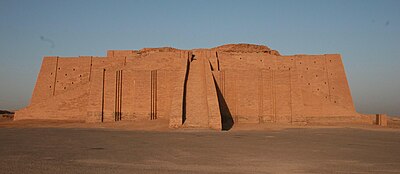
Woolley's "Flood Layer" at Ur (1929): Sir Leonard Woolley, excavating the Royal Cemetery of Ur in southern Iraq, discovered a thick layer of clean, water-deposited clay separating earlier and later occupation levels. He famously declared to his wife, "I've found the Flood!" The clay stratum, roughly 8–11 feet thick, suggested a catastrophic inundation. However, similar flood deposits at other Mesopotamian sites (Kish, Shuruppak, Nineveh) date to different periods, indicating multiple local floods rather than a single universal event.
The Black Sea Deluge Hypothesis (1997): Marine geologists William Ryan and Walter Pitman of Columbia University proposed that around 5600 BCE, the rising Mediterranean Sea burst through the Bosporus strait, catastrophically flooding the freshwater Black Sea basin. The event would have displaced thousands of farming communities around the Black Sea's shores and could have generated flood traditions that spread across the ancient Near East. Robert Ballard's underwater expeditions (1999–2000) found submerged shorelines and human structures beneath the Black Sea, lending partial support to the theory, though the catastrophic nature of the flooding remains debated.
The Persian Gulf Hypothesis: Some scholars, including Juris Zarins, have proposed that the post-Ice Age flooding of the Persian Gulf basin (c. 6000–5000 BCE), which transformed a fertile river valley into a shallow sea, could be the historical memory behind Mesopotamian flood traditions. The Sumerian paradise of Dilmun, sometimes equated with the Garden of Eden, may have been located in this now-submerged region.
Shuruppak (modern Tell Fara): The city identified in Mesopotamian tradition as the home of the flood hero shows evidence of a major flood deposit dating to approximately 2900 BCE. This local catastrophe may have contributed to the enduring flood tradition, particularly since Shuruppak was already ancient and revered by the time the earliest flood narratives were composed.
Flood Geology and Modern Science Debated
The question of a historical universal flood has been thoroughly addressed by modern geology. The scientific consensus is clear: there is no geological evidence for a global flood in human history. The geological column, radiometric dating, ice core records, and the fossil record are incompatible with a single worldwide deluge.
However, this scientific conclusion does not necessarily negate the historical kernel behind the flood traditions. Several facts are well established:
-
Mesopotamia was flood-prone: The Tigris-Euphrates river system, with its unpredictable flooding patterns, produced catastrophic inundations that could devastate entire regions. For people whose known world consisted of the alluvial plain, such floods would have seemed to cover "the whole earth."
-
Multiple flood events: Archaeological evidence confirms numerous devastating floods in Mesopotamia between roughly 4000 and 2000 BCE. Any one of these — or a cumulative memory of many — could have generated the tradition.
-
Post-glacial sea level rise: Between roughly 15,000 and 5,000 BCE, sea levels rose approximately 120 meters (400 feet) as Ice Age glaciers melted. Vast coastal areas were submerged, and communities living on now-drowned continental shelves would have experienced gradual but relentless flooding over generations.
The relationship between these real events and the literary flood traditions remains a matter of scholarly interpretation rather than empirical proof.
The Table of Nations: An Ancient Ethnography Tradition
Genesis 10, known as the Table of Nations (Toledot B'nei Noach), presents a genealogical map of the post-flood world, tracing all peoples back to Noah's three sons: Shem, Ham, and Japheth. This remarkable text is, in effect, the first attempt at a comprehensive ethnography — a mapping of the known world's peoples, organized by kinship.
The three sons correspond roughly to three geographical zones:
Japheth (Genesis 10:2–5): Peoples to the north and west — including Gomer (Cimmerians), Magog (possibly Scythians), Madai (Medes), Javan (Ionians/Greeks), Tubal and Meshech (Anatolian peoples), and Tiras (possibly Thracians or Etruscans).
Ham (Genesis 10:6–20): Peoples to the south — including Cush (Nubia/Ethiopia), Mizraim (Egypt), Put (Libya), and Canaan. The Hamitic line also includes Nimrod, the mighty hunter and builder of Babel, Erech (Uruk), Akkad, Nineveh, and other Mesopotamian cities — a curious placement of Mesopotamian peoples under Ham rather than Shem.
Shem (Genesis 10:21–31): Peoples of the central region — including Elam, Asshur (Assyria), Arpachshad (ancestor of Abraham), Lud (Lydia), and Aram (Syria). The term "Semitic" derives from Shem.
The Table of Nations encompasses approximately 70 peoples, a number laden with symbolic significance in biblical numerology (7 x 10, representing completeness and totality).
The Table of Nations as Historical Document Debated
Scholars have long debated the historical value of Genesis 10. Several observations emerge:
Remarkable accuracy in many identifications: Many of the names in the Table correspond to historically attested peoples and places. Mizraim is the standard Hebrew term for Egypt (cognate with Akkadian Misru). Asshur is Assyria. Javan is the Ionian Greeks (Hebrew Yavan, cognate with Greek Iaones). Cush corresponds to Nubia/Kush, well known from Egyptian records. The Hittites (B'nei Het, "sons of Heth") appear under Canaan.
Political geography, not biology: The Table of Nations reflects political and cultural relationships as much as ethnic ones. The placement of Canaan under Ham, for example, likely reflects Israel's political and cultural opposition to Canaanite religion rather than any linguistic or ethnic reality (Canaanite languages are Semitic, not Hamitic). Similarly, some "genealogical" relationships reflect treaty alliances or vassal status.
Approximate date of composition: The peoples mentioned suggest the Table was composed or finalized during the first millennium BCE, likely between the 10th and 6th centuries. The mention of Ionian Greeks points to a period of increased contact between the Near East and the Aegean world, while the absence of Persians suggests a date before the rise of the Achaemenid Empire (550 BCE).
Comparison with other ancient lists: The Table of Nations is unique in the ancient Near East in its comprehensive scope and its insistence on the common origin of all peoples. No comparable text from Egypt, Mesopotamia, or Greece attempts to account for all known humanity within a single genealogical framework. This universalism — the idea that all humans are related — is a distinctive biblical contribution.
The Tower of Babel Tradition
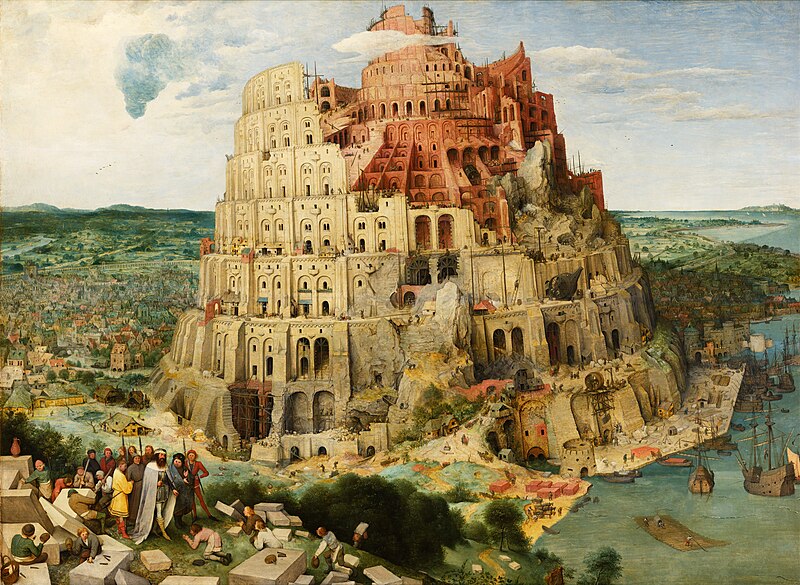
Immediately following the Table of Nations, Genesis 11:1–9 presents the story of the Tower of Babel — humanity's attempt to build "a city, with a tower that reaches to the heavens" and God's response of confusing their language and scattering them across the earth.
Jewish tradition identifies the tower with Mesopotamian ziggurats, stepped temple-towers that dominated Babylonian cities. The name "Babel" is given a Hebrew folk etymology — from balal, "to confuse" — though historically Babylon (Bab-ili) means "Gate of God" in Akkadian.
The Midrash (Genesis Rabbah 38:6) elaborates on the builders' motives: some wanted to dwell in heaven, some to wage war against God, and some to worship idols there. Rabbi Yochanan said that the generation of the flood sinned against one another (violence and corruption), while the generation of the tower sinned against God (hubris) — yet the latter received a lighter punishment because they lived in unity, demonstrating that peace, even in pursuit of a wrong goal, has value.
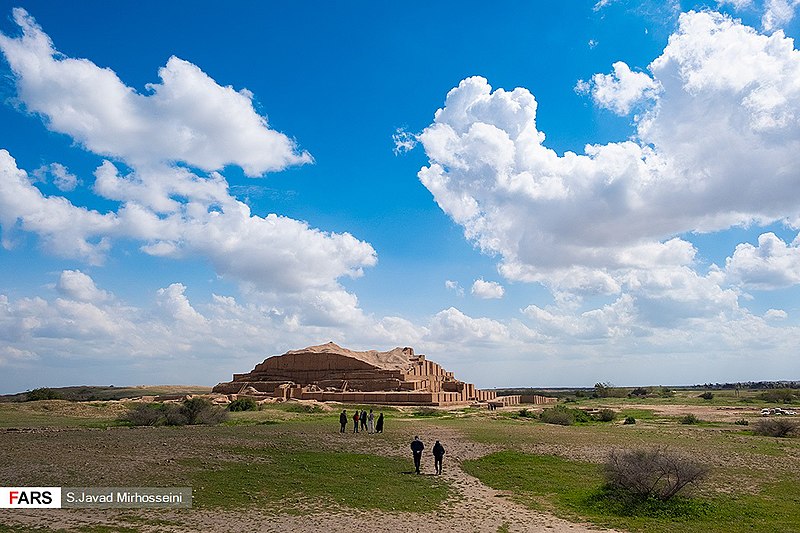
The Tower and the Ziggurat Verified
The archaeological context for the Tower of Babel story is well established. Mesopotamian ziggurats — massive stepped platforms topped by temples — were built from the late 4th millennium BCE through the 6th century BCE. The most famous is Etemenanki ("Foundation of Heaven and Earth"), the great ziggurat of Babylon dedicated to the god Marduk.
Etemenanki was described in detail on the Esagila Tablet (Louvre AO 6555), which records its dimensions: a square base approximately 91 meters (300 feet) on each side, rising in seven stages to a height of roughly 91 meters. Nebuchadnezzar II (r. 605–562 BCE) restored and enlarged the structure, and it was this building that the Judean exiles in Babylon would have seen — an overwhelming symbol of Babylonian power and religious ambition.
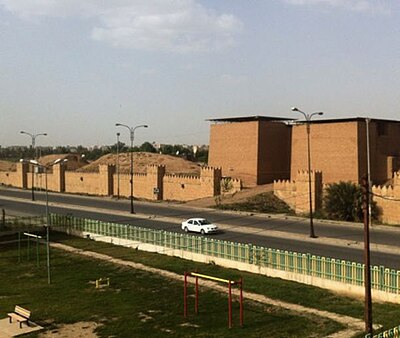
The remains of Etemenanki were identified by Robert Koldewey during his excavations of Babylon (1899–1917). Only the ground plan survives, a massive square depression now partly filled with water. The site is near the modern town of Hillah in central Iraq.
The connection between the Babel story and Mesopotamian ziggurats has been reinforced by a remarkable artifact: a 6th-century BCE stele discovered at Babylon (now in the Schoyen Collection, MS 2063) that depicts Nebuchadnezzar II standing beside a ziggurat with a plan of the building — quite possibly Etemenanki itself. The inscription describes the tower reaching to the heavens, using language strikingly similar to Genesis 11:4.
From Flood to Abraham Tradition
The genealogy of Genesis 11:10–32 bridges the gap between the flood narrative and the call of Abraham. The ten generations from Shem to Abraham mirror the ten generations from Adam to Noah (Genesis 5), creating a literary symmetry. The gradually decreasing lifespans — from Shem's 600 years to Terah's 205 — suggest a theological narrative of declining vitality as humanity moves further from the primordial world.
The genealogy converges on "Ur of the Chaldeans," where Terah lives with his sons Abraham, Nahor, and Haran. With this geographical anchor, the narrative shifts from primordial history to the story of a particular family — a family through whom, according to the biblical promise, "all the families of the earth will be blessed" (Genesis 12:3).
The transition from universal history (Genesis 1–11) to particular history (Genesis 12 onward) is one of the most significant structural features of the Hebrew Bible. The flood narrative, the Table of Nations, and the Tower of Babel together establish the biblical worldview: humanity is one family, scattered and divided, in need of reunion and redemption. That project, the Bible suggests, begins with a single man walking out of Mesopotamia toward an unknown land.
Summary: What the Evidence Tells Us Debated
The flood narrative in Genesis stands at the intersection of mythology, memory, and theology. The archaeological and textual evidence demonstrates conclusively that the biblical account belongs to a long tradition of Mesopotamian flood stories, stretching back at least to the early second millennium BCE. The biblical authors knew these traditions and deliberately transformed them.
Whether a single catastrophic event lies behind all these traditions — or whether they reflect a cumulative cultural memory of many floods in flood-prone Mesopotamia — remains uncertain. What is clear is that the biblical writers used the shared cultural material to articulate a distinctive theological vision: a God who judges evil, who preserves the righteous, and who commits to the ongoing life of creation through covenant.
The Table of Nations, meanwhile, represents one of the ancient world's most ambitious intellectual achievements — an attempt to map all known humanity within a single genealogical framework. Its combination of genuine ethnographic knowledge, political ideology, and theological conviction makes it a uniquely valuable document for understanding how ancient Israel understood its place in the world.
As we move from these universal narratives to the particular story of Abraham in the next chapter, we carry forward the Bible's fundamental claim: that the God who created the world and preserved it through the flood now chooses a single family to be the vehicle of blessing for all nations.
Locations in This Chapter
Loading map...