Part 1: Origins & Patriarchs · c. 1750–1600 BCE
4.Isaac, Jacob, and the Twelve
Pastoral Canaan, tribal models, Egyptian references
20 min read
Canaan in the Middle Bronze Age Verified
The land of Canaan — the narrow strip between the Mediterranean Sea and the Jordan Rift Valley, stretching from the Sinai desert to the foothills of Lebanon — was one of the most strategically important and culturally diverse regions in the ancient world. Situated at the crossroads of three continents, Canaan served as the land bridge between the great civilizations of Egypt and Mesopotamia, and every army, merchant caravan, and migration that connected those empires passed through it.
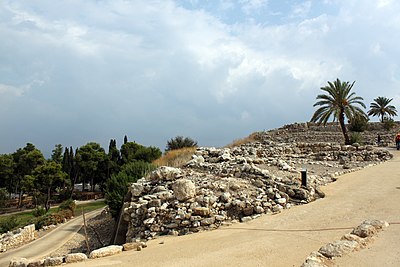
During the Middle Bronze Age (c. 2000–1550 BCE), the period traditionally associated with the patriarchs, Canaan experienced a remarkable urban florescence. Major city-states — Hazor, Megiddo, Shechem, Gezer, Lachish, and Jericho — were fortified with massive earthen ramparts (glacis) and stone walls, some with monumental gate complexes. Hazor, in the Upper Galilee, was the largest Canaanite city, covering approximately 200 acres — comparable to major Mesopotamian cities.
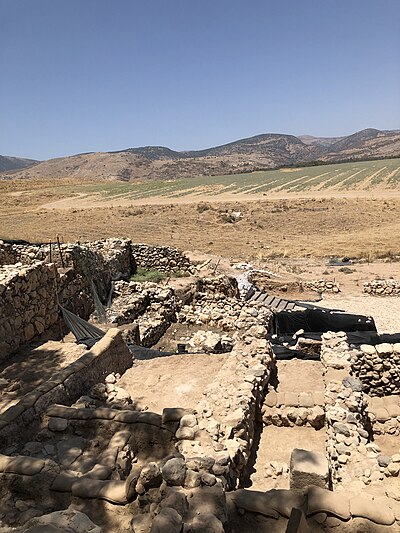
Excavations at these sites, conducted by archaeologists including Yigael Yadin at Hazor (1955–58, 1968–69), Israel Finkelstein at Megiddo (1994–present), and Kathleen Kenyon at Jericho (1952–58), have revealed a sophisticated material culture. Middle Bronze Age Canaanites produced fine pottery, worked bronze and gold, traded with Egypt and the Aegean, and built elaborate temples.
The social structure of Middle Bronze Canaan was predominantly urban, organized around fortified city-states ruled by local kings. The agricultural hinterland supported the cities with grain, olive oil, and wine. Alongside the settled urban population, pastoral groups — semi-nomadic herders of sheep and goats — moved through the hill country and marginal zones, a pattern well attested in ancient Near Eastern texts and in the archaeological record.
It is this pastoral world that the patriarchal narratives most closely reflect: Abraham, Isaac, and Jacob are depicted as semi-nomadic herders who move between established cities (Shechem, Hebron, Beer-sheba, Gerar) without controlling them, digging wells, building altars, and negotiating with local rulers.
Isaac: The Quiet Patriarch Tradition
Isaac is the least developed of the three patriarchs in Genesis. His narrative is brief and largely defined by his relationships with others: he is the child of promise (Genesis 21), the near-sacrifice of the Akedah (Genesis 22), the husband chosen by his father's servant (Genesis 24), and the father who is deceived by his wife and younger son (Genesis 27).
Yet Isaac is not without significance. The Genesis 26 narrative, set in the Philistine city of Gerar, recapitulates several Abrahamic themes: Isaac passes off his wife Rebekah as his sister (as Abraham had done with Sarah), he prospers among the Philistines, and he re-digs the wells his father had dug. The well disputes with the herdsmen of Gerar — over wells named Esek ("dispute"), Sitnah ("opposition"), and Rehoboth ("open spaces") — reflect real conflicts over water rights in the arid Negev, conflicts that continue to shape the region's politics today.
Jewish tradition gives Isaac a more prominent role than the biblical text alone suggests. The Midrash (Genesis Rabbah 64:3) states that Isaac's eyes were weakened (Genesis 27:1) because he saw the Shekhinah (divine presence) during the Akedah. The Zohar describes Isaac as the embodiment of gevurah (divine strength/judgment), complementing Abraham's chesed (lovingkindness). In Kabbalistic thought, the binding of Isaac represents the necessary restraint and discipline that balances unbounded love.
The Jacob Cycle: A Literary Masterpiece Tradition
The Jacob narrative (Genesis 25–35) is one of the great literary achievements of the ancient world — a complex, psychologically rich story of rivalry, deception, exile, transformation, and reconciliation. It divides naturally into three acts:
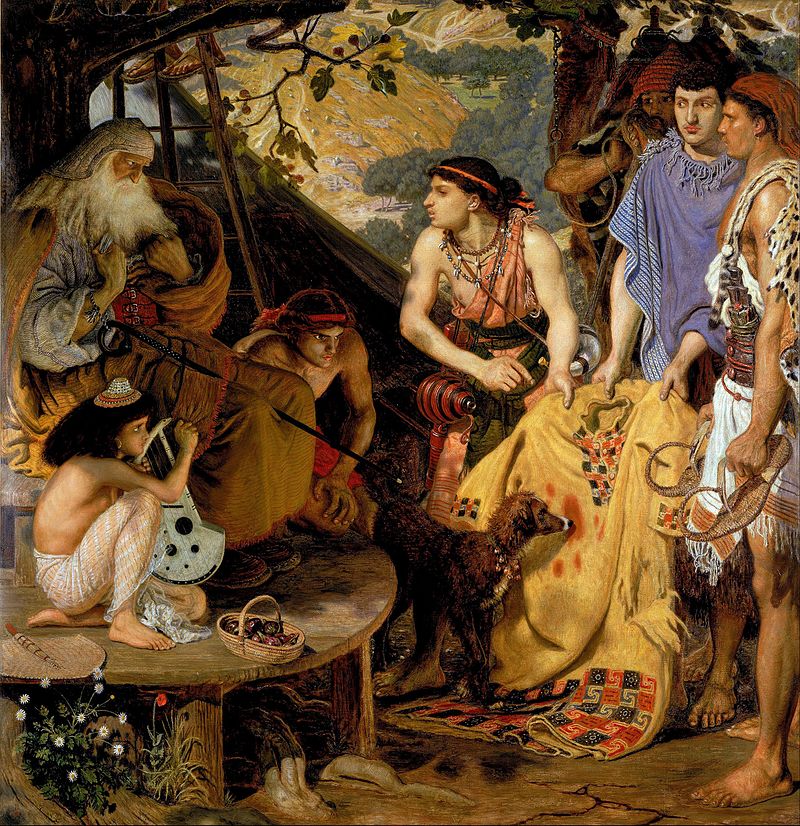
Act One — Birth and Blessing (Genesis 25–28): Jacob and Esau struggle in the womb, and God tells Rebekah, "Two nations are in your womb... the older will serve the younger" (Genesis 25:23). Esau emerges first, red and hairy; Jacob follows, grasping his brother's heel (akev, a wordplay on his name Ya'akov). Esau sells his birthright for a bowl of red lentil stew — an act of contempt for his heritage that Jewish tradition regards as paradigmatic. Later, with Rebekah's assistance, Jacob disguises himself as Esau and steals the firstborn blessing from the blind Isaac.
The moral complexity of this episode has troubled readers for millennia. Jacob is, by any reading, a deceiver. Yet the narrative does not simply condemn him — he is also the chosen one, the bearer of the covenant promise. The rabbis debated this tension extensively. Some (Rashi, following the Midrash) argue that Esau was wicked and Jacob's deception was justified. Others acknowledge the moral ambiguity: Jacob will spend twenty years in exile being deceived by others, reaping what he sowed.
Act Two — Exile with Laban (Genesis 29–31): Fleeing Esau's wrath, Jacob travels to Harran and enters the household of his uncle Laban. In one of literature's great reversals, the deceiver is deceived: Jacob works seven years for Rachel, "and they seemed to him but a few days because of his love for her" (Genesis 29:20) — one of the most romantic lines in the Bible — only to discover on the wedding morning that Laban has substituted the elder daughter Leah. Jacob, who deceived his father by pretending to be the elder son, is now deceived by his father-in-law substituting the elder daughter.
The twenty years in Harran produce the twelve sons who will become the tribes of Israel: Leah bears Reuben, Simeon, Levi, Judah, Issachar, and Zebulun (and a daughter, Dinah); Rachel's maid Bilhah bears Dan and Naphtali; Leah's maid Zilpah bears Gad and Asher; and Rachel, long barren, finally bears Joseph and later Benjamin.
The rivalry between the wives — Leah the unloved but fertile, Rachel the beloved but barren — drives much of the narrative tension. Each son's name is given an etymology reflecting his mother's emotional state: Reuben ("see, a son"), because "the LORD has seen my misery"; Simeon ("hearing"), "because the LORD heard that I am not loved"; Judah ("praise"), "this time I will praise the LORD." These folk etymologies, while not linguistically precise, reveal the narrative art of the biblical author, who weaves personal suffering and divine response into the very names of the future tribes.
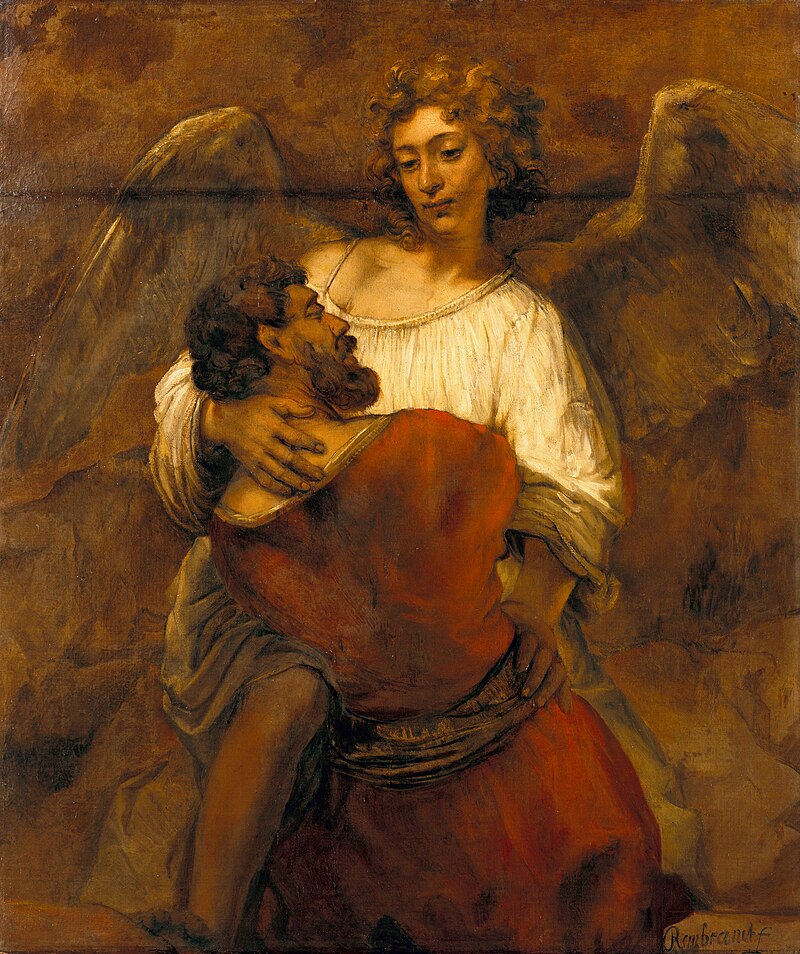
Act Three — Return and Transformation (Genesis 32–35): Returning to Canaan, Jacob faces the prospect of meeting Esau. The night before the encounter, alone at the Jabbok River, Jacob wrestles with a mysterious figure until dawn. The figure cannot prevail and touches Jacob's hip socket, dislocating it. Jacob demands a blessing and receives a new name: "Your name will no longer be Jacob, but Israel (Yisra'el), because you have struggled with God and with humans and have overcome" (Genesis 32:28).
The name "Israel" — Yisra'el — contains the Hebrew root sarah ("to struggle" or "to prevail") and El ("God"). The nation that will bear this name is thus defined by its relationship to God not as passive submission but as active struggle. This is a profoundly Jewish theological concept: faith as engagement, argument, and wrestling rather than mere acquiescence.
The Twelve Tribes: Tribal Organization Tradition
The twelve sons of Jacob become the eponymous ancestors of the twelve tribes of Israel — the foundational social and political structure of ancient Israelite society. The tribal system, as described in the Hebrew Bible, functions on multiple levels:
Genealogical: Each tribe traces its ancestry to one of Jacob's sons, creating a kinship network that binds the entire nation.
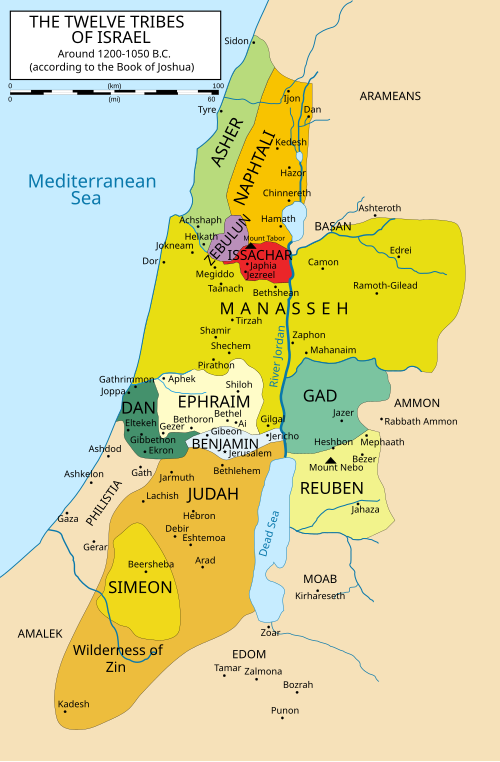
Territorial: After the conquest of Canaan (Joshua 13–21), each tribe receives a designated territorial allotment, with the exception of Levi, the priestly tribe, which receives cities scattered among the other tribes.
Military: In the period before the monarchy, tribal militias provided Israel's fighting force. The Song of Deborah (Judges 5), one of the oldest texts in the Bible, praises and rebukes specific tribes for their participation or absence in battle.
Religious: The tribes gathered at central shrines — Shiloh, Shechem, Gilgal — for religious festivals and covenant ceremonies. The Tabernacle was entrusted to the Levites, and the High Priesthood to the line of Aaron.
The number twelve itself carries symbolic weight. Twelve-tribe or twelve-unit systems are attested in other ancient cultures — the Greek amphictyonies (religious leagues) of twelve states around a central shrine, for example. Martin Noth, in his influential 1930 study Das System der zwolf Stamme Israels, argued that Israel was originally organized as an amphictyony modeled on Greek parallels, though this thesis has been largely abandoned.
The Debate Over Tribal Origins Debated
The origin and nature of the Israelite tribal system is one of the most debated topics in biblical studies. Several models have been proposed:
The Traditional Model: The twelve tribes descended from the twelve sons of Jacob, entered Egypt as a single family, and emerged as a unified people during the Exodus and Conquest. This is the biblical narrative's own account.
The Gradual Settlement Model (Albrecht Alt, Martin Noth): Alt proposed in the 1920s–30s that the Israelite tribes were originally independent pastoral groups who settled gradually in the hill country of Canaan during the Late Bronze–Iron Age transition (c. 1200–1000 BCE). Their genealogical connection to a common ancestor was a secondary, legitimating fiction. Noth added the amphictyonic model, suggesting the tribes confederated around a central shrine.
The Peasant Revolt Model (George Mendenhall, Norman Gottwald): Mendenhall (1962) and Gottwald (1979, The Tribes of Yahweh) proposed that the Israelites were not outsiders who entered Canaan but indigenous Canaanite peasants who revolted against the oppressive city-state system. The tribal structure represented an egalitarian alternative to Canaanite feudalism.
The Mixed-Origin Model (current consensus): Most scholars today recognize that "Israel" likely emerged from multiple sources: some pastoral groups from the hill country, some refugees from declining Canaanite city-states, possibly some migrants from Egypt, and perhaps elements from the Transjordanian steppe. The tribal system was an organizational framework that unified these diverse groups under a shared identity, genealogy, and religious tradition.
The archaeological evidence supports a complex picture. Survey data from the central hill country of Canaan (Israel Finkelstein, 1988) shows a dramatic increase in small, unwalled settlements during Iron Age I (c. 1200–1000 BCE) — from roughly 30 sites in the Late Bronze Age to over 300 in Iron I. These villages had distinctive features: pillared houses, collared-rim storage jars, terraced agriculture, and no pig bones (in contrast to Philistine sites). Whether these settlers were "Israelites" in any meaningful sense is debated, but they represent the demographic and cultural substrate from which biblical Israel emerged.
The Amarna Letters and the 'Apiru Verified
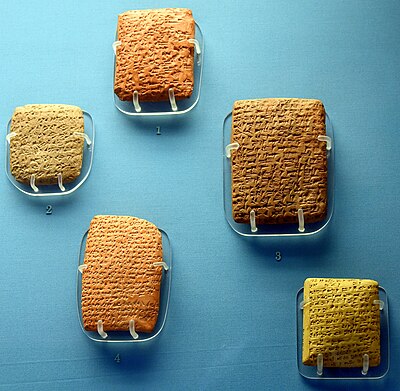
One of the most tantalizing connections between the archaeological record and the patriarchal/pre-monarchic period comes from the Amarna Letters — a cache of approximately 382 cuneiform tablets discovered in 1887 at Tell el-Amarna, the site of Pharaoh Akhenaten's short-lived capital in Middle Egypt.
The Amarna Letters, dating to roughly 1350–1330 BCE, are diplomatic correspondence between the Egyptian pharaoh and Canaanite vassal kings. They provide an extraordinary window into the political chaos of Late Bronze Age Canaan: local rulers desperately plead for Egyptian military assistance against rivals, rebels, and a group repeatedly called the 'Apiru (also written Habiru or SA.GAZ).
The 'Apiru appear throughout the letters as a disruptive social element. Rib-Hadda of Byblos complains about them incessantly. Abdi-Heba of Jerusalem (EA 286–290) warns the pharaoh: "The 'Apiru have plundered all the lands of the king. If there are archers this year, the lands of the king, my lord, will remain. But if there are no archers, the lands of the king, my lord, will be lost."
The possible connection between 'Apiru and 'Ivri (Hebrew) has been debated since the letters were first deciphered. The phonetic similarity is striking, and the 'Apiru are described in terms that recall the Bible's depiction of early Israelites: displaced people operating outside the established social order, sometimes serving as mercenaries, sometimes as bandits, sometimes as settled communities.
However, most scholars today recognize that the 'Apiru were not an ethnic group but a social class — displaced, stateless people who existed across the ancient Near East from the 18th to 12th centuries BCE. The term appears in texts from Mesopotamia, Anatolia, Syria, Canaan, and Egypt, always referring to marginalized populations. The Israelites may have been 'Apiru, but not all 'Apiru were Israelites.
The Amarna Letters also provide the earliest known reference to Jerusalem (Urusalim) and document the political fragmentation of Canaan that the Bible attributes to the pre-Israelite period. The letters from Abdi-Heba of Jerusalem (EA 285–290, now in the British Museum, the Vorderasiatisches Museum in Berlin, and the Egyptian Museum in Cairo) describe a city-state struggling to maintain Egyptian loyalty while surrounded by hostile neighbors — a situation that resonates with the biblical picture of Canaan as a land of competing small kingdoms.
Egyptian References to Semitic Peoples Verified
Egyptian records from the Middle and Late Bronze Ages provide valuable evidence for the presence of Semitic peoples in the Levant:
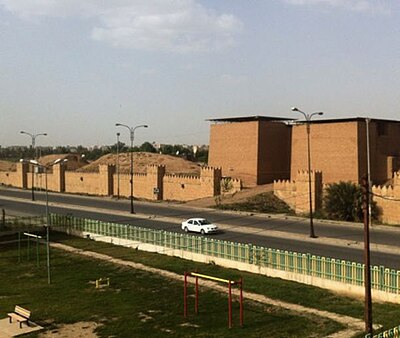
The Execration Texts (c. 1950–1850 BCE): These Egyptian texts, inscribed on pottery bowls or clay figurines that were then ritually smashed, list the enemies of Egypt, including numerous Canaanite cities and their rulers. The names of the rulers are overwhelmingly Semitic (Amorite), confirming the presence of a Semitic-speaking population in Canaan during the period traditionally associated with the patriarchs. Two groups of these texts survive: the Berlin bowls (c. 1950 BCE) and the Brussels figurines (c. 1850 BCE).
The Beni Hasan Tomb Painting (c. 1890 BCE): A wall painting in the tomb of Khnumhotep II at Beni Hasan in Middle Egypt depicts a group of 37 Asiatic (Semitic) men, women, and children arriving in Egypt, led by a chieftain named Abisha (a Semitic name). They are described as 'Aamu (Asiatics/Semites) from Shut (a region east of Egypt) and are shown with distinctive multicolored garments, donkeys laden with trade goods, and weapons. This painting is often cited as a visual parallel to the patriarchal migrations described in Genesis, though it depicts a specific trade delegation rather than the biblical story.
The Brooklyn Papyrus (c. 1740 BCE): Brooklyn Museum Papyrus 35.1446, dating to the late Middle Kingdom, contains a list of 95 household servants in an Egyptian estate, of whom approximately 40 bear Semitic names — including names cognate with biblical names like Issachar, Asher, and Shiphrah (the midwife of Exodus 1:15). This document demonstrates the presence of significant numbers of Semitic workers in Egypt during the period corresponding to the patriarchal narratives.
Pastoral Nomadism in the Archaeological Record Verified
Understanding the patriarchal narratives requires understanding pastoral nomadism — the way of life attributed to Abraham, Isaac, and Jacob. This is challenging because pastoral nomads, by definition, leave minimal archaeological traces: they carry their possessions, live in tents, and move regularly.
However, the archaeology of pastoral nomadism has advanced significantly in recent decades:
The Negev Highlands: Survey and excavation in the Negev (southern Israel) have revealed patterns of seasonal occupation consistent with pastoral nomadism during the Middle Bronze Age. Sites like Tel Masos, Arad, and Beer-sheba show evidence of semi-sedentary populations who practiced both herding and agriculture — precisely the mixed economy described in the patriarchal narratives.
The Mari Archives (c. 1775–1761 BCE): Over 20,000 cuneiform tablets from the palace of King Zimri-Lim at Mari (modern Tell Hariri, Syria) describe in detail the relationships between urban authorities and pastoral tribal groups. The Banu-Yamina ("sons of the south/right") and Banu-Sim'al ("sons of the north/left") were large tribal confederations whose leaders negotiated with, fought against, and occasionally intermarried with the urban elite. These texts provide the best ancient Near Eastern analogy for the patriarchal way of life.
The Dimorphic Society Model: Anthropologist Michael Rowton coined the term "dimorphic society" to describe the characteristic ancient Near Eastern pattern in which urban and pastoral populations coexisted in a symbiotic relationship — trading, intermarrying, and occasionally coming into conflict. The patriarchal narratives, with their depiction of semi-nomadic herders interacting with settled city-dwellers, fit this model precisely.
Jacob at Shechem and Bethel Debated
Two locations in the Jacob narrative have received particular archaeological attention:
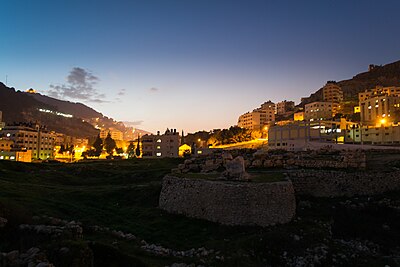
Shechem (Tell Balata): Jacob's purchase of land at Shechem (Genesis 33:18–19) and the establishment of an altar there (El-Elohe-Israel, "God, the God of Israel") are among the most geographically specific claims in the patriarchal narratives. Excavations at Tell Balata, conducted by Ernst Sellin (1913–14, 1926–34), G. Ernest Wright (1956–73), and others, have revealed a major Middle Bronze Age city with a massive temple (the "Fortress Temple" or Migdal temple, measuring roughly 26 x 21 meters with walls 5 meters thick). This temple may be the "temple of El-Berith" (the God of the Covenant) mentioned in Judges 9:46. Shechem's importance as a covenant-making site — used by both the patriarchs and later Israel (Joshua 24) — suggests deep roots in Israelite tradition.
Bethel (Beitin or el-Bireh): Jacob's dream of the ladder at Bethel (Genesis 28:10–22) — "a stairway resting on the earth, with its top reaching to heaven, and the angels of God ascending and descending on it" — is one of the Bible's most evocative scenes. The "ladder" (sulam, appearing only here in the Bible) has been compared to Mesopotamian ziggurats, which were understood as staircases connecting heaven and earth. Jacob names the place Bethel (Beit-El, "House of God") and anoints a standing stone (matzevah). The identification of Bethel with the modern site of Beitin has been challenged by some scholars (David Livingston proposed el-Bireh), but Beitin remains the majority view. Excavations show occupation from the Middle Bronze Age through the Iron Age.
The Name "Israel" Debated
The name Yisra'el — given to Jacob after his wrestling match at the Jabbok (Genesis 32:28) — first appears outside the Bible on the Merneptah Stele (c. 1208 BCE), which we will examine in detail in Chapter 6. The approximately 600-year gap between the putative patriarchal period and this first external attestation is one of the central challenges in reconstructing early Israelite history.
The etymology of the name is itself debated. The biblical text explains it as "he who struggles with God" (sarah + El), but linguistically it more likely means "God struggles/rules" (yisra + El) or "El perseveres." Some scholars have noted that the name's theophoric element is El — the chief god of the Canaanite pantheon — rather than YHWH, the distinctive Israelite deity. This may preserve a memory of a pre-Yahwistic stage of Israelite religion, when the ancestors worshipped El under various titles: El Elyon ("God Most High," Genesis 14:18), El Shaddai ("God Almighty," Genesis 17:1), El Olam ("Everlasting God," Genesis 21:33), and El Roi ("God Who Sees," Genesis 16:13).
The Canaanite god El is well known from the Ugaritic texts (discovered at Ras Shamra, Syria, from 1929 onward). In the Ugaritic pantheon, El is the father of the gods, depicted as an elderly, wise, and benevolent deity. The relationship between Canaanite El and the God of Israel remains one of the most fascinating questions in the study of Israelite religion. Were they originally the same deity? Did Israel adopt El and later identify him with YHWH? The convergence of El and YHWH in Israelite religion — reflected in passages like Psalm 82, where God (Elohim) stands in the assembly of El — suggests a complex process of religious development that the patriarchal narratives may dimly reflect.
The Dinah Episode and Shechem Tradition
Genesis 34 recounts one of the most disturbing episodes in the patriarchal narrative: the rape of Dinah, Jacob's daughter, by Shechem son of Hamor, the local Hivite ruler. Shechem then asks to marry Dinah, and Hamor proposes a broader alliance between his people and Jacob's family, including intermarriage and shared territory. Jacob's sons agree — on the condition that all the men of Shechem be circumcised. On the third day after the circumcision, when the men are in pain, Simeon and Levi attack the city, kill all the males, and plunder it.
Jacob rebukes his sons: "You have brought trouble on me by making me obnoxious to the Canaanites and Perizzites" (Genesis 34:30). But Simeon and Levi respond: "Should he have treated our sister like a prostitute?" The narrative offers no simple moral resolution — a characteristic of the best biblical storytelling.
This episode has consequences that echo through the tribal history. In Jacob's deathbed blessings (Genesis 49), Simeon and Levi are cursed for their violence: "I will scatter them in Jacob and disperse them in Israel" (49:7). Historically, neither tribe received a contiguous territorial allotment — Simeon was absorbed into Judah, and Levi was dispersed as a priestly tribe across all territories. The narrative thus functions as an etiology for the later tribal geography.
The Esau Traditions and Edom Verified
Esau, Jacob's twin, is identified with Edom (Genesis 36:1), the region south of the Dead Sea. The Genesis narrative presents Esau as the ancestor of the Edomites, and the rivalry between Jacob and Esau is understood as prefiguring the historical tensions between Israel and Edom.
Archaeological work in the region of ancient Edom (modern southern Jordan) has revealed a complex settlement history. Thomas Levy's excavations at Khirbat en-Nahas, a massive copper-smelting site in the Faynan district, have produced evidence of large-scale copper production dating to the 10th–9th centuries BCE — potentially the "Mines of Solomon" mentioned by some scholars, though that identification remains debated. Egyptian texts from the New Kingdom mention the Shasu of Edom (Shasu Seir), Semitic pastoralists in the region, as early as the reign of Amenhotep III (14th century BCE).
The relationship between the Jacob-Esau narrative and the historical Israel-Edom relationship illustrates a broader pattern in Genesis: family stories serve as templates for international relations. The birth-order disputes, stolen blessings, and eventual reconciliation between the twins encode centuries of political history in the language of kinship.
From Family to Nation Tradition
The Jacob cycle ends with the patriarch settled in Canaan, reconciled with Esau, mourning the death of Rachel near Bethlehem (Genesis 35:19), and blessed with twelve sons who represent the future tribes. The family saga is about to become a national epic.
But before that transformation, one of Jacob's sons will take center stage in a story that carries the family from Canaan to Egypt — setting the stage for slavery, liberation, and the defining experience of the Israelite nation. The story of Joseph, which occupies the final quarter of Genesis, is both a literary masterpiece and a bridge between the patriarchal period and the Exodus. It is to this story that we now turn.
Locations in This Chapter
Loading map...