Part 1: Origins & Patriarchs · c. 1700–1550 BCE
5.Joseph and Egypt
Hyksos parallels, Semitic administrators
20 min read
The Hyksos: Semitic Rulers in Egypt Verified
Around 1650 BCE, something extraordinary happened in the ancient world: a dynasty of foreign rulers — Semitic-speaking people from the Levant — seized control of the Nile Delta and established themselves as pharaohs of Egypt. The Egyptians called them Heka-khasut, "rulers of foreign lands," which the 3rd-century BCE historian Manetho (quoted by Josephus) rendered as "Hyksos." For approximately a century, these Asiatic kings ruled from the Delta city of Avaris, governing Lower Egypt as the 15th Dynasty while native Egyptian rulers maintained a diminished kingdom at Thebes in Upper Egypt.
The Hyksos period (c. 1650–1550 BCE) represents the most significant foreign intrusion into Egypt before the Assyrian and Persian conquests of the first millennium BCE. Egyptian sources, written after the Hyksos were expelled, depict them as barbarous invaders who desecrated temples and oppressed the population. The reality, revealed by archaeology, was more nuanced: the Hyksos adopted Egyptian royal titles and conventions, patronized Egyptian scribal traditions, and governed through a hybrid Egypto-Levantine culture.
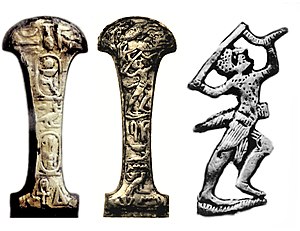
The Hyksos dynasty included rulers with recognizably Semitic names: Salitis, Khyan, and Apepi (Apophis). Their seals and scarabs have been found across the eastern Mediterranean, from Crete to Baghdad, suggesting extensive trade networks. Khyan's name appears on objects found as far afield as Knossos and Hattusa, indicating the international reach of the Hyksos court.

The Hyksos were expelled from Egypt around 1550 BCE by Ahmose I, founder of the 18th Dynasty and the New Kingdom. The "Wars of Liberation" against the Hyksos — recorded in the autobiographies of soldiers like Ahmose son of Ebana (tomb at el-Kab) and in the Carnarvon Tablet — became a foundational narrative of Egyptian identity, coloring Egyptian attitudes toward Asiatics for centuries.
Avaris: The Hyksos Capital Verified
The archaeological key to understanding the Hyksos — and potentially the Joseph narrative — is the site of Tell el-Dab'a in the northeastern Nile Delta, identified as ancient Avaris. Since 1966, Austrian archaeologist Manfred Bietak and his team have conducted systematic excavations that have transformed our understanding of the Hyksos period and Semitic presence in Egypt.
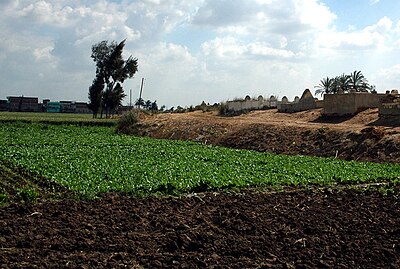
Bietak's excavations revealed a remarkable sequence:
Phase d/2–d/1 (c. 1800–1750 BCE): A settlement of Asiatic (Levantine) people, initially living alongside Egyptians. The material culture includes Canaanite-style pottery, Levantine burial customs (including burials with weapons and donkeys — unknown in Egyptian practice but well attested in the Middle Bronze Age Levant), and Syro-Palestinian temple architecture.
Phase E/1–D/3 (c. 1750–1650 BCE): The Asiatic population grew substantially. A large palace complex was uncovered, and the settlement expanded. Notably, one tomb from this period contained the remains of a high-status individual buried in a manner combining Egyptian and Levantine customs — leading Bietak to speculate (controversially) about possible connections to the Joseph narrative.
Phase D/2–D/1 (c. 1650–1550 BCE): The full Hyksos period. Avaris became a major city, covering approximately 250 hectares (over 600 acres) and housing perhaps 25,000–40,000 people. The population was predominantly Asiatic, with material culture reflecting strong Levantine connections. A massive palace complex and a harbor on the Pelusiac branch of the Nile have been excavated.
Phase C (c. 1550–1500 BCE): After the Hyksos expulsion, the 18th Dynasty pharaohs built over the Hyksos city. Ahmose I constructed a palace complex, and the site was later redeveloped by Horemheb and the Ramesside pharaohs as the city of Pi-Ramesse.
The Avaris excavations demonstrate beyond doubt that large numbers of Semitic people lived in the eastern Nile Delta for centuries, rising from humble immigrants to rulers of Egypt. This archaeological fact forms the essential backdrop for any historical evaluation of the Joseph narrative.
Semitic Administrators in Egyptian Records Verified
The idea of a Semitic individual rising to high office in Egypt — the core claim of the Joseph story — is well supported by Egyptian evidence, not only during the Hyksos period but across Egyptian history.
The Brooklyn Papyrus (c. 1740 BCE): As noted in the previous chapter, this document (Brooklyn Museum 35.1446) lists 95 household servants, approximately 40 of whom bear Semitic names. These include names cognate with Issachar, Asher, Menahem, and the female name Shiphrah. The document demonstrates that Semitic workers were integrated into Egyptian households at the highest levels of society during the Middle Kingdom.
The Vizier Aper-El (c. 1350 BCE): The tomb of Aper-El, discovered at Saqqara in 1987, belonged to a vizier (the highest administrative office in Egypt) during the reigns of Amenhotep III and Akhenaten. His name is Semitic ('Aper-El, "servant of El"), demonstrating that a person of Levantine origin could attain the very highest position in the Egyptian government — precisely the scenario described in the Joseph narrative.
Hur and Irsu: Egyptian texts from the New Kingdom period mention Semitic individuals in positions of authority. The Papyrus Harris I (c. 1150 BCE) describes a Syrian named Irsu (Bay) who wielded immense power during the late 19th Dynasty.
Ben-Ozen of Megiddo: The Amarna Letters mention Semitic officials serving in Egyptian provincial administration in Canaan, demonstrating the fluidity of ethnic boundaries in the Egyptian imperial system.
Semitic loan words in Egyptian: The Egyptian language absorbed numerous Semitic words during and after the Hyksos period, including administrative and agricultural terms — evidence of deep cultural integration.
The Biblical Joseph Narrative Tradition
The Joseph story (Genesis 37–50) is one of the Bible's greatest literary achievements — a tightly plotted, psychologically sophisticated novella that has been compared to a modern novel. Unlike the episodic patriarchal narratives, Joseph's story unfolds as a continuous drama in four acts:
Act One — The Favored Son and the Pit (Genesis 37): Joseph, Jacob's favorite son (born to his beloved Rachel), receives an ornamental coat (ketonet passim — traditionally "coat of many colors," though the Hebrew may mean "long-sleeved robe" or "ornamental tunic"). His brothers' jealousy is inflamed by Joseph's dreams, in which their sheaves of grain and later the sun, moon, and eleven stars bow down to him. The brothers sell Joseph to a caravan of Ishmaelite/Midianite traders heading to Egypt and present his blood-stained coat to Jacob, who mourns him as dead.
Act Two — Rise and Fall in Egypt (Genesis 39–40): Sold to Potiphar, an officer of Pharaoh, Joseph prospers until Potiphar's wife attempts to seduce him. When he refuses, she accuses him of assault, and he is imprisoned. In prison, Joseph interprets the dreams of Pharaoh's cupbearer and baker — the cupbearer will be restored, the baker executed — and both predictions come true. But the cupbearer forgets Joseph.
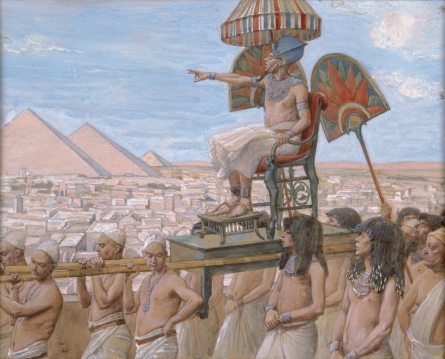
Act Three — From Prison to Power (Genesis 41): Two years later, Pharaoh himself has disturbing dreams: seven fat cows devoured by seven lean cows, seven healthy ears of grain swallowed by seven thin ears. When no Egyptian sage can interpret them, the cupbearer remembers Joseph. Brought before Pharaoh, Joseph interprets the dreams as predicting seven years of plenty followed by seven years of famine, and recommends a plan of grain storage. Pharaoh appoints Joseph as vizier — second only to Pharaoh himself — and gives him the Egyptian name Zaphenath-paneah and an Egyptian wife, Asenath, daughter of the priest of On (Heliopolis).
Act Four — Reconciliation (Genesis 42–50): The famine drives Joseph's brothers to Egypt to buy grain. Joseph recognizes them, tests them through a series of elaborate stratagems (the silver cup in Benjamin's sack, the accusation of spying), and finally reveals himself in one of the most emotional scenes in the Bible: "I am Joseph! Is my father still living?" (Genesis 45:3). The entire family relocates to Egypt, settling in the land of Goshen in the eastern Delta. Jacob blesses his sons and grandsons, and Joseph dies at 110 — the ideal Egyptian lifespan — having extracted a promise that his bones will be carried back to Canaan.
Jewish tradition finds deep moral and theological significance in the Joseph story. The Midrash (Genesis Rabbah 84–100) elaborates extensively: Joseph is called ha-tzaddik ("the righteous one") for resisting Potiphar's wife; his descent into the pit and rise to power prefigure Israel's own trajectory of exile and redemption. The Talmud (Sotah 36b) says that at the moment of temptation, Joseph saw the image of his father's face, which gave him the strength to resist.
Egyptian Coloring in the Joseph Narrative Debated
The Joseph story contains numerous details that reflect genuine knowledge of Egyptian culture, customs, and terminology. These have been analyzed by Egyptologists and biblical scholars extensively:
Egyptian names and titles: Joseph's Egyptian name, Zaphenath-paneah (Genesis 41:45), has been variously explained. The most widely accepted derivation is from Egyptian Djed-pa-netjer-iw.f-ankh ("the god speaks and he lives"), though alternative etymologies exist. His wife Asenath (As-Neith, "belonging to Neith") and father-in-law Potiphera (Pa-di-Pa-Re, "gift of Ra") bear authentically Egyptian names.
The investiture ceremony: Pharaoh's installation of Joseph — giving him the signet ring, fine linen garments, and gold chain (Genesis 41:42) — closely parallels Egyptian investiture ceremonies depicted in tomb paintings and described in texts from the New Kingdom period.
Embalming: The embalming of Jacob (Genesis 50:2–3, described as taking 40 days) and Joseph (Genesis 50:26) reflects Egyptian mummification practices, though the 40-day period does not precisely match the 70-day mummification process described by Herodotus. The 70-day mourning period for Jacob (Genesis 50:3) does correspond to the Egyptian mourning period.
Shaving before Pharaoh: "Joseph shaved and changed his clothes and came before Pharaoh" (Genesis 41:14) — Egyptians were characteristically clean-shaven, in contrast to Semitic peoples, who typically wore beards. This detail reflects genuine cultural knowledge.
Dining separation: "Egyptians could not eat with Hebrews, for that is detestable to Egyptians" (Genesis 43:32) — Egyptian aversion to eating with foreigners is attested in Egyptian sources and confirmed by the general Egyptian attitude of cultural superiority toward Asiatics.
The seven-year famine: Famines are well documented in Egyptian history. An inscription on the island of Sehel near Aswan (the "Famine Stele," dating to the Ptolemaic period but claiming to describe events under the 3rd Dynasty pharaoh Djoser) describes a seven-year famine caused by inadequate Nile flooding. While the stele itself is late, the concept of severe multi-year famines caused by Nile failures is historically realistic.
However, scholars debate the significance of these Egyptian details. Some argue they demonstrate that the Joseph story preserves genuine memories of the Hyksos period or the New Kingdom. Others note that an author living in the first millennium BCE — when Egypt and Israel were in constant contact — could have acquired such knowledge without any historical kernel behind the narrative. The Egyptian details are consistent with an early date but do not require one.
The Tale of Two Brothers: An Egyptian Parallel Verified
One of the most striking parallels to the Joseph story comes from Egyptian literature itself. The "Tale of Two Brothers" (Papyrus d'Orbiney, British Museum EA 10183), dating to the reign of Seti II (c. 1200 BCE), tells the story of two brothers, Anubis and Bata. The wife of the elder brother, Anubis, attempts to seduce the younger brother, Bata. When he refuses, she falsely accuses him to her husband. Bata is forced to flee and eventually undergoes a series of transformations before being vindicated.
The parallels with the Potiphar's wife episode (Genesis 39) are obvious: a married woman's failed seduction of a younger man, followed by a false accusation. This "Potiphar's Wife motif" appears in literatures around the world — in Greek mythology (Hippolytus and Phaedra), in Egyptian Demotic literature (the Setne Khamwas cycle), and in the Quran (Surah Yusuf, Chapter 12). Whether the Joseph story borrowed directly from the Tale of Two Brothers, or both drew on a common storytelling tradition, remains debated.
The papyrus itself, purchased by the British Museum in the 19th century, is one of the finest examples of Ramesside literary composition. It was likely composed for entertainment and moral instruction, and its survival reminds us that the ancient Egyptians had a rich narrative literary tradition that could have influenced — or been influenced by — Israelite storytelling.
The Joseph Story and Historical Context Debated
The historicity of Joseph is debated along the same lines as the other patriarchs, but with additional complications and possibilities.
The Hyksos hypothesis: Many scholars have proposed that the Joseph story best fits the Hyksos period (c. 1650–1550 BCE), when Semitic rulers controlled Lower Egypt and a Semitic administrator rising to power would be most plausible. The Hyksos capital at Avaris was in the eastern Delta, close to the biblical land of Goshen. Under Hyksos rule, a Semitic vizier would face no ethnic barrier to advancement. This hypothesis also explains the transition to oppression in Exodus 1: the "new king who did not know Joseph" could be the native Egyptian pharaoh who expelled the Hyksos and initiated anti-Semitic policies.
The New Kingdom hypothesis: Others argue that the story's details better fit the New Kingdom (18th–19th Dynasties, c. 1550–1200 BCE), when Egypt's empire extended into Canaan and Semitic workers and administrators are well attested. The Egyptian names in the Joseph story (Zaphenath-paneah, Asenath, Potiphera) appear to fit New Kingdom naming conventions better than Hyksos-period ones. The title "overseer of the granaries" and the centralization of land ownership described in Genesis 47 have parallels in New Kingdom administration.
The literary hypothesis: Some scholars, particularly those of the Copenhagen School, argue that the Joseph story is a novella composed in the Persian or Hellenistic period, drawing on Egyptian local color available to any educated Near Eastern author of the first millennium BCE. They point to the story's literary sophistication, its distance from the more archaic patriarchal narratives, and its thematic concerns (diaspora success, identity maintenance in a foreign land) as fitting a post-exilic audience of Jews living under foreign rule.
The current state of the question: No extrabiblical evidence directly confirms or refutes the existence of a historical Joseph. The Avaris excavations demonstrate that the social scenario described in Genesis — Semitic people living in the eastern Delta, some rising to positions of power — is historically plausible. But plausibility is not proof.
The Land of Goshen Verified
Genesis places Jacob's family in the "land of Goshen" (Eretz Goshen), described as located in the eastern Nile Delta and characterized as prime pastureland (Genesis 47:6: "the best part of the land"). Joseph tells his brothers to settle there because "every shepherd is detestable to the Egyptians" (Genesis 46:34) — another detail reflecting genuine Egyptian cultural attitudes.
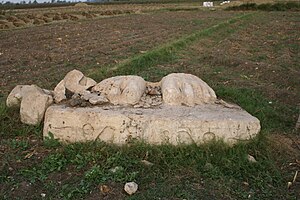
The identification of Goshen has been debated, but most scholars locate it in the Wadi Tumilat, a natural valley connecting the eastern Delta to the Bitter Lakes and ultimately the Sinai. This region — watered by a branch of the Nile and with rich pastureland — fits the biblical description. Archaeological surveys of the Wadi Tumilat, including work by John Holladay at Tell el-Maskhuta (1978–85) and Carol Redmount at Tell el-Retaba, have revealed significant settlement in various periods, though continuous occupation from the Hyksos through the Ramesside period is not firmly established at any single site.
The eastern Delta was historically a zone of contact between Egypt and Asia. It was the natural entry point for migrants from the Levant, and Egyptian records consistently describe Asiatic pastoralists entering the region to water their flocks. A famous passage from the border official's journal (Papyrus Anastasi VI, c. 1200 BCE, now in the British Museum) reports:
"We have finished letting the Shasu tribes of Edom pass the Fortress of Merneptah... to the pools of Per-Atum [Pithom] in the Wadi Tumilat, to keep them and their cattle alive."
This text demonstrates that the entry of Semitic pastoralists into the eastern Delta was a routine, documented phenomenon — exactly the scenario described in Genesis.
The Grain Administration of Egypt Verified
The Joseph narrative's centerpiece — the systematic storage of grain during seven years of plenty to survive seven years of famine — reflects a reality of Egyptian life. Egypt's prosperity depended entirely on the annual Nile flood, and grain storage was a central function of the state.
Granaries: Egyptian granaries are depicted in tomb paintings throughout Egyptian history, and their remains have been excavated at numerous sites. The 18th Dynasty tomb of Rekhmire, vizier under Thutmose III and Amenhotep II (Theban Tomb 100), contains detailed paintings of granary operations — measuring, storing, and distributing grain — that provide a visual parallel to the Joseph story's administrative scenario.
The vizier's role: In Egyptian government, the vizier (tjaty) was the highest official below the pharaoh, responsible for judicial administration, taxation, and the supervision of granaries. The "Installation of the Vizier" text (preserved in several New Kingdom tombs) describes the vizier's duties in terms remarkably similar to Joseph's role: overseeing all aspects of administration, reporting directly to the pharaoh, and managing the country's resources.
Land centralization: Genesis 47:13–26 describes Joseph acquiring all the land of Egypt for Pharaoh during the famine, transforming the population into tenant farmers who owe one-fifth of their harvest to the crown. While this narrative serves as an etiology for Egyptian land-tenure practices, the concentration of land ownership under the pharaoh is consistent with what we know of Egyptian political economy — though the specific mechanism described in Genesis is not attested in Egyptian sources.
Joseph's Bones and the Promise Tradition
The Joseph narrative ends with a death and a promise. Joseph, dying at the ideal Egyptian age of 110, makes the sons of Israel swear an oath: "God will surely come to your aid, and then you must carry my bones up from this place" (Genesis 50:25). This oath — fulfilled centuries later when Moses takes Joseph's bones during the Exodus (Exodus 13:19) and they are finally buried at Shechem after the conquest (Joshua 24:32) — creates a narrative thread connecting the patriarchal stories to the Exodus and beyond.
The embalming and coffin burial described for Joseph (Genesis 50:26) is Egyptian in character, appropriate for a man who lived and died as an Egyptian official. Yet his final wish is to be returned to Canaan — a powerful symbol of the tension between diaspora success and ancestral homeland that would characterize Jewish experience for millennia.
Jewish tradition considers Joseph the prototype of the successful diaspora Jew: maintaining identity and faith while rising to prominence in a foreign culture. The Talmud (Berakhot 20a) compares Joseph's beauty to that of a spring of water, and his title ha-tzaddik ("the righteous") reflects his role as a moral exemplar. In Kabbalistic thought, Joseph represents the sefirah of Yesod (Foundation), the channel through which divine blessing flows into the world.
From Goshen to Bondage Debated
The transition from the Joseph story to the Exodus narrative is one of the most consequential — and historically obscure — passages in the Bible. Exodus 1:8 states simply: "Then a new king, to whom Joseph meant nothing, came to power in Egypt." This new pharaoh, alarmed by the growth of the Israelite population, subjects them to forced labor and, ultimately, to a policy of infanticide.
What historical reality, if any, lies behind this transition? If the Joseph story is set during the Hyksos period, the "new king" could be Ahmose I or one of his 18th Dynasty successors, whose anti-Hyksos ideology would naturally extend to all Semitic populations in the Delta. If the Joseph story is set in the New Kingdom, the transition might reflect a change in Egyptian policy toward Asiatic workers during the Ramesside period.
The archaeological record at Avaris supports some version of this transition. After the Hyksos expulsion (c. 1550 BCE), the Semitic population at Tell el-Dab'a diminished dramatically — though it did not disappear entirely. The site was later rebuilt by the Ramesside pharaohs as the city of Pi-Ramesse, where, according to Exodus 1:11, the enslaved Israelites built "supply cities, Pithom and Rameses."
Whether the transition from favor to oppression happened to a specific group called "Israel" or represents a more general shift in Egyptian policy toward Semitic minorities, the narrative pattern — welcome, prosperity, demographic growth, fear, persecution — has repeated itself with haunting regularity throughout Jewish history. The Joseph story is not merely an ancient tale. It is a template.
Dreams and Divination in the Ancient World Verified
The Joseph narrative is built around the interpretation of dreams — Joseph's own dreams, the dreams of the cupbearer and baker, and Pharaoh's dreams. This emphasis on dreams reflects a genuine feature of ancient Near Eastern culture, where dream interpretation was a recognized professional discipline.
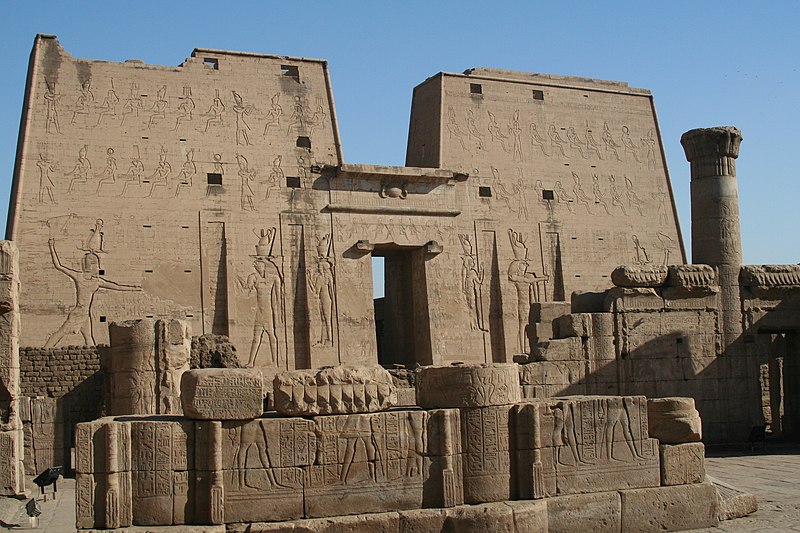
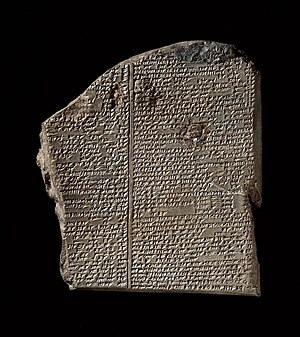
The Egyptian Dream Book: Papyrus Chester Beatty III (British Museum EA 10683), dating to the early Ramesside period (c. 1275 BCE), is the oldest known dream interpretation manual. It lists dream scenarios and their meanings in a format remarkably similar to modern dream dictionaries: "If a man sees himself in a dream eating crocodile flesh — good; it means he will become an official among his people." The existence of such manuals confirms that dream interpretation was taken seriously at the highest levels of Egyptian society.
Mesopotamian omens: The Babylonians developed an elaborate omen literature, including dream interpretation texts collected in series such as the Zaqiqu ("Dream-God") tablets. Professional interpreters (sha'ilu) served at royal courts, and important dreams were recorded in palace archives. The Assyrian king Ashurbanipal boasted of his ability to interpret dreams, and dream oracles played a role in military and political decision-making.
The Joseph innovation: What distinguishes Joseph's dream interpretation from the professional interpreters of Egypt and Mesopotamia is its theological grounding. Joseph repeatedly insists that interpretation belongs to God alone: "Do not interpretations belong to God?" (Genesis 40:8) and "I cannot do it, but God will give Pharaoh the answer he desires" (Genesis 41:16). This transforms dream interpretation from a human skill to a divine gift — consistent with the broader biblical theology that all wisdom ultimately derives from God.
The combination of Egyptian cultural authenticity and Israelite theological distinctiveness in the dream episodes exemplifies how the Joseph narrative operates throughout: deeply embedded in its Egyptian setting, yet advancing a uniquely Israelite understanding of God's action in history.
Locations in This Chapter
Loading map...