Part 1: Origins & Patriarchs · c. 3761+ BCE
1.Before the Beginning
Ancient Near East context, Genesis vs cosmology, Sumerian parallels
18 min read
The Ancient Near East Before Genesis Verified
The world into which the Hebrew Bible was born was already ancient. By the time the earliest biblical texts were composed — most scholars date this to the 10th–6th centuries BCE — Mesopotamian civilizations had been flourishing for over two millennia. The Sumerians, Akkadians, Babylonians, and Egyptians had already developed writing, complex legal systems, monumental architecture, and elaborate mythological traditions.
The archaeological record reveals a rich tapestry of creation myths across the ancient Near East. The Sumerian "Eridu Genesis" (c. 1600 BCE), the Akkadian "Atrahasis" (c. 1700 BCE), and the Babylonian "Enuma Elish" (c. 1100 BCE) all present accounts of cosmic origins that share striking parallels with — and significant differences from — the opening chapters of Genesis.
Understanding this context is not a matter of undermining the biblical text. Rather, it allows us to read Genesis with the eyes of its original audience — people who lived in a world saturated with creation stories, and who would have recognized what was familiar and what was revolutionary in the Israelite account.
The Cradle of Civilization Verified
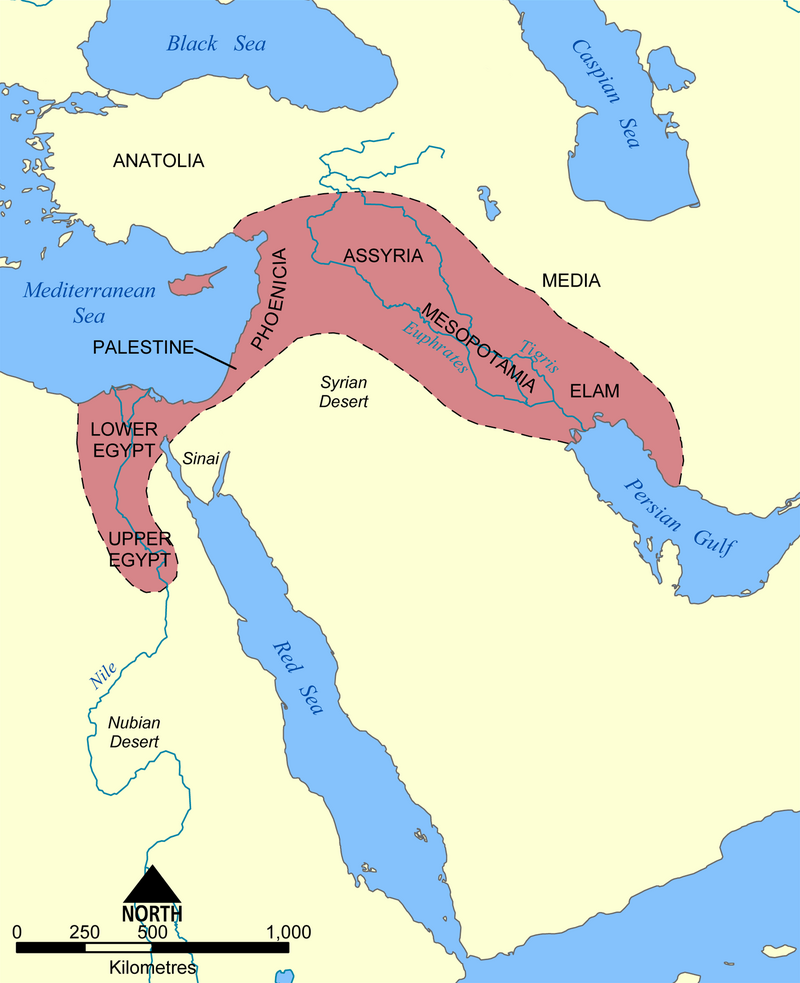
Modern archaeology has painted an extraordinarily detailed picture of the ancient Near East in the millennia before the biblical period. The key civilizations include:
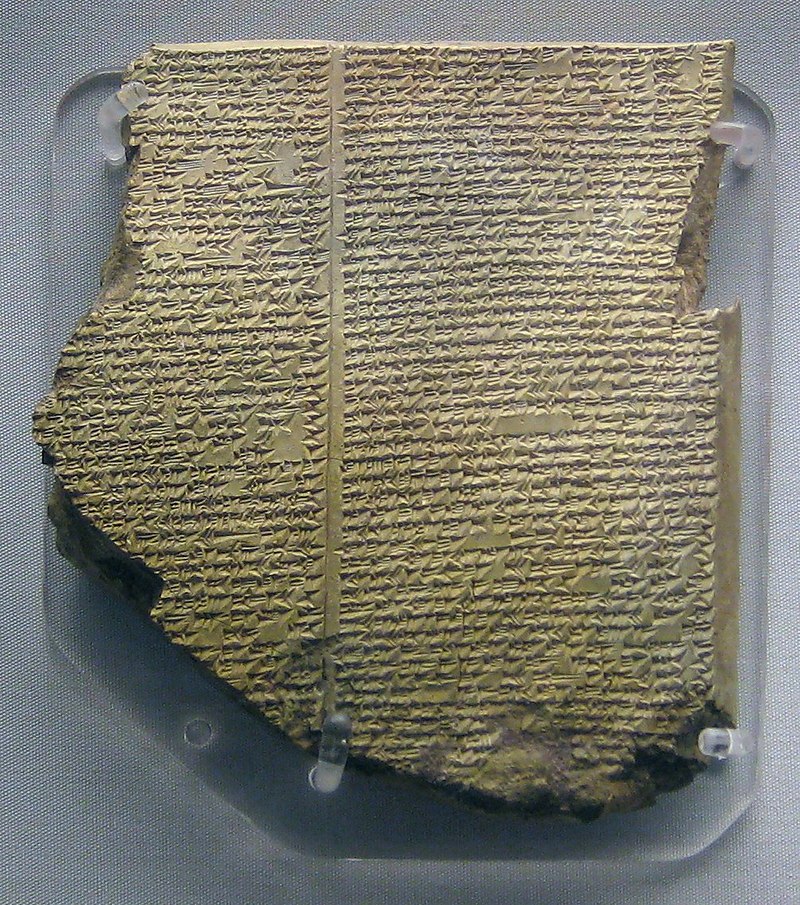
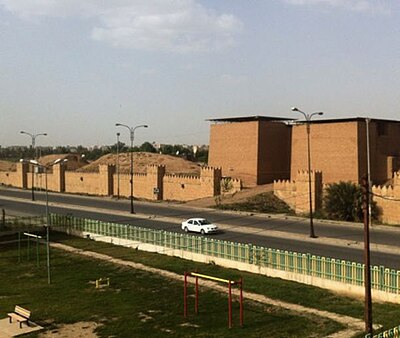
Sumer (c. 4500–1900 BCE): Located in southern Mesopotamia (modern Iraq), the Sumerians invented cuneiform writing around 3400 BCE. Their city-states — Ur, Uruk, Eridu, Nippur, and Lagash — developed the first known legal codes, schools, and literary traditions. The University of Pennsylvania Museum holds some of the most important Sumerian literary tablets, excavated from Nippur between 1889 and 1900.
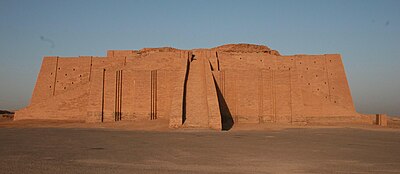
Akkad (c. 2334–2154 BCE): Sargon of Akkad united Mesopotamia under the first known empire. Akkadian became the lingua franca of the ancient Near East, and its literary traditions — including the Epic of Gilgamesh — profoundly influenced later cultures, including Israel.
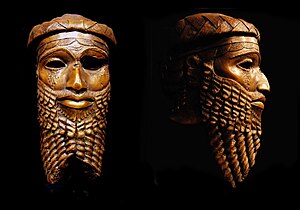
Babylon (c. 1894–539 BCE): The Babylonians inherited and developed Sumerian and Akkadian traditions. Under Hammurabi (r. 1792–1750 BCE), Babylon produced its famous law code — the stele now housed in the Louvre — and later, under Nebuchadnezzar II, would destroy the Jerusalem Temple in 586 BCE.
Egypt (c. 3100–30 BCE): Egyptian civilization developed independently along the Nile, producing its own creation myths centered on the gods Atum, Ptah, and Amun. The Egyptian cosmogonic traditions from Heliopolis, Memphis, and Hermopolis each offered distinct accounts of how the world came into being from the primordial waters of Nun.
The Genesis Creation Accounts Tradition
The Book of Genesis actually contains two distinct creation narratives, a fact recognized by Jewish commentators as early as the rabbinic period and highlighted in modern critical scholarship.
Genesis 1:1–2:3 (the "Priestly" account) presents a systematic, seven-day creation sequence: light on day one, the firmament (raqia) separating upper and lower waters on day two, dry land and vegetation on day three, celestial bodies on day four, sea creatures and birds on day five, land animals and humans on day six, and divine rest on day seven. This account is characterized by its liturgical cadence, its emphasis on order emerging from chaos, and its climactic statement that humanity — male and female together — is created b'tselem Elohim, "in the image of God."
Genesis 2:4–25 (the "Yahwist" account) offers a different order and tone. Here the man (adam) is formed first from the dust of the ground (adamah) — a Hebrew wordplay — and God breathes life into his nostrils. The garden is planted, animals are created as potential companions, and finally the woman is fashioned from the man's rib (or "side," as some scholars translate tsela).
Jewish tradition holds that the Torah, including Genesis, was revealed by God to Moses at Sinai. The creation account is understood not merely as history but as theological truth about God's relationship to the cosmos and humanity's unique role within it. The Talmud (Chagigah 12a) records extensive rabbinic speculation about the nature of creation, while cautioning that such matters should be taught only to the wise.
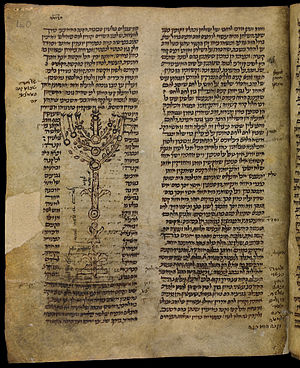
The medieval commentator Rashi (1040–1105 CE) opens his Torah commentary by asking why the Torah begins with creation rather than with the first commandment given to Israel. His answer — that God wished to establish divine ownership of the earth — reveals how Jewish tradition reads Genesis as theology, not merely cosmology.
Mesopotamian Creation Myths in Detail Verified
To appreciate the biblical creation accounts, we must examine their Mesopotamian predecessors in some detail.
The Eridu Genesis (c. 1600 BCE): Discovered at Nippur and now housed in the University of Pennsylvania Museum, this fragmentary Sumerian text is the oldest known creation-flood narrative. It describes the creation of humans, the founding of five antediluvian cities, and a devastating flood. The god Enki warns the pious king Ziusudra, who builds a boat and survives. After the flood, Ziusudra offers sacrifices and receives eternal life.
The Atrahasis Epic (c. 1700 BCE): This Akkadian text, known from several copies including a well-preserved Old Babylonian version in the British Museum (BM 78941), presents a coherent narrative arc from creation through flood. The gods create humans from clay mixed with the blood of a slain deity to relieve the gods of manual labor. When humanity becomes too noisy, the gods send plague, famine, and finally a flood. Atrahasis ("exceedingly wise") is warned by Enki/Ea and builds a boat.
The Enuma Elish (c. 1100 BCE): Discovered by Austen Henry Layard and Hormuzd Rassam at Nineveh in Ashurbanipal's library (7th century BCE copies of an older text), these seven tablets describe the Babylonian creation epic.
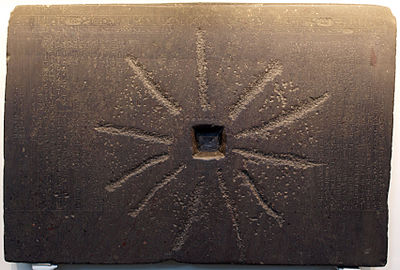
The Memphis Theology (Egypt, c. 710 BCE copy of an older text): Preserved on the Shabaka Stone (British Museum EA 498), this Egyptian text describes the god Ptah creating the world through thought and speech — a striking parallel to the divine speech-acts of Genesis 1.
Where Scrolls Meet Stones Debated
The parallels between Genesis and earlier Mesopotamian texts have been debated by scholars since George Smith first translated the Babylonian flood narrative in 1872 at the British Museum, causing a sensation in Victorian England. The Daily Telegraph funded an expedition to Nineveh to find more tablets. Several key areas of comparison emerge:
Creation from primordial waters: Both Enuma Elish and Genesis 1 describe creation emerging from watery chaos. The Hebrew tehom ("deep") in Genesis 1:2 appears linguistically related to the Babylonian Tiamat, the primordial sea goddess — though some scholars, including the Assyriologist W.G. Lambert, have disputed this etymological connection, arguing the similarity may be coincidental.
Creation by divine speech: Genesis uniquely emphasizes creation through spoken word ("And God said, let there be light..."), a feature less prominent in Mesopotamian parallels, where creation often involves physical combat between deities. The Memphis Theology's creation-by-speech offers the closest parallel outside the Bible.
The seven-day structure: The creation week in Genesis 1 may reflect ancient Near Eastern temple dedication ceremonies, which typically lasted seven days. Scholar John Walton of Wheaton College has argued in The Lost World of Genesis One (2009) that Genesis 1 describes a "cosmic temple inauguration" rather than material origins — the cosmos being organized as God's dwelling place.
Humanity from clay: Both Genesis 2 and Mesopotamian texts (Atrahasis, Enuma Elish) describe humans formed from earthly material — clay or dust — often mixed with a divine element. In Genesis, God breathes life into the dust; in Atrahasis, clay is mixed with the blood and spirit of a slain god.
The crucial difference: Where Mesopotamian myths depict humans as servants created to relieve the gods of labor, Genesis elevates humanity to the status of divine image-bearers — a theological revolution whose implications echoed through Western civilization.
The Jewish Calendar and Creation Tradition
According to rabbinic tradition, the Jewish calendar counts from the creation of the world. The year 5786 in the Jewish calendar corresponds to 2025–2026 CE, placing creation at 3761 BCE. This date was calculated by the 2nd-century CE sage Rabbi Yose ben Halafta based on biblical chronology in the Seder Olam Rabbah ("The Great Order of the World"), a chronological work that harmonizes biblical genealogies and narratives into a continuous timeline.
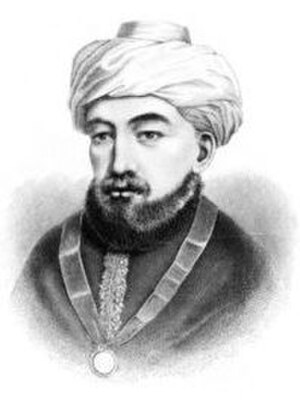
It is important to note that many Jewish thinkers, both medieval and modern, have understood this dating symbolically rather than literally. Maimonides (1138–1204 CE), the preeminent Jewish philosopher, suggested in The Guide of the Perplexed that the creation narrative contains deep philosophical truths expressed in allegorical language. He wrote that the "Account of the Beginning" (Ma'aseh Bereshit) corresponds to natural science and should be understood accordingly.
The Kabbalistic tradition adds yet another layer of interpretation. The Zohar (13th century) speaks of God creating and destroying multiple worlds before the present one, a concept (shvirat ha-kelim, "breaking of the vessels") that some modern Jewish thinkers have playfully compared to cosmological theories of a multiverse.
Nachmanides (1194–1270 CE), in his Torah commentary, described the first moment of creation as containing all matter in a single point of infinitesimal size — a description that modern readers have noted bears a remarkable resemblance to the singularity described in Big Bang cosmology.
Key Archaeological Evidence Verified
The physical evidence for the ancient Near Eastern context of Genesis is housed in museums around the world. Key artifacts include:
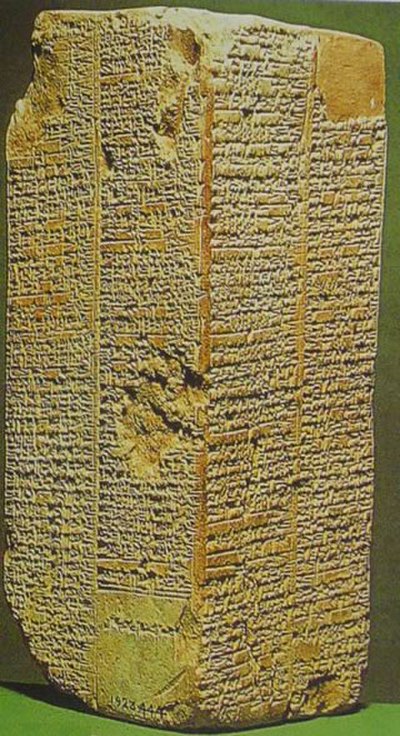
The Sumerian King List (c. 2100 BCE): This cuneiform document, with the best-preserved copy (the Weld-Blundell Prism) held in the Ashmolean Museum, Oxford, lists kings who ruled "before the flood" with impossibly long reigns of tens of thousands of years. After the flood, reigns become more realistic. This suggests a shared cultural memory of a great deluge across Mesopotamian civilization.
The Eridu Genesis tablet (c. 1600 BCE): Found at Nippur during University of Pennsylvania excavations, this fragmentary Sumerian text describes the creation of humans, the establishment of cities, and a devastating flood — predating the biblical account by centuries.
Enuma Elish tablets (c. 1100 BCE): Discovered at Nineveh in Ashurbanipal's library, these seven tablets in the British Museum describe the Babylonian creation epic, with Marduk creating the world from the body of the slain chaos-dragon Tiamat.
The Atrahasis tablets (c. 1700 BCE): Multiple copies exist, with the most complete Old Babylonian version in the British Museum, describing creation, the troublesome noise of humanity, and the flood.
The Shabaka Stone (c. 710 BCE): British Museum EA 498, containing the Memphis Theology with its creation-by-divine-speech motif.
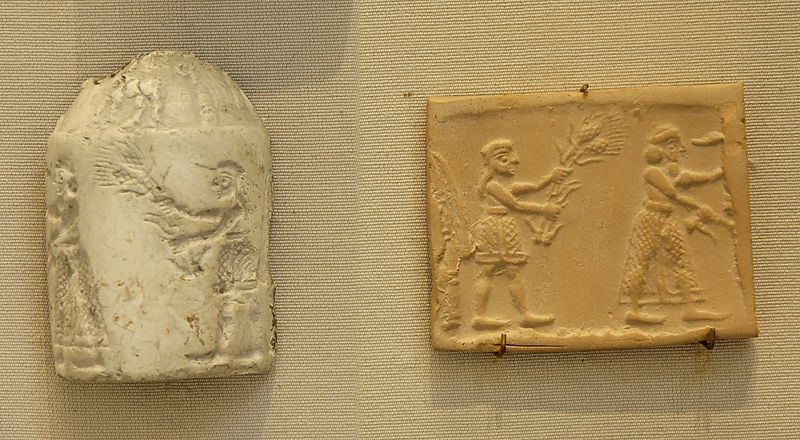
Cylinder seals: Thousands of Mesopotamian cylinder seals, dating from the 4th to 1st millennia BCE, depict scenes of divine figures, sacred trees, and cosmic imagery that illuminate the visual world behind ancient Near Eastern mythology. The "Temptation Seal" (British Museum BM 89326), once thought to depict Adam and Eve, is now understood as a typical Mesopotamian banquet scene — a cautionary tale about reading biblical narratives into ancient artifacts.
The Ebla Tablets (c. 2400 BCE): Discovered at Tell Mardikh in Syria beginning in 1974, the approximately 20,000 cuneiform tablets from Ebla include administrative, economic, and literary texts. Early claims that the tablets mentioned biblical place names and personal names (including a supposed reference to Ya as a divine name) generated enormous excitement but have been substantially revised. The Ebla archive nonetheless confirms the richness and complexity of Syro-Mesopotamian literary culture in the third millennium BCE — centuries before the biblical period.
The Ugaritic Texts (c. 1400–1200 BCE): Discovered at Ras Shamra, Syria, beginning in 1929, these tablets in the Ugaritic language (closely related to Hebrew) provide the most important comparative material for understanding Israelite religion and poetry. The Baal Cycle, the Legend of Keret, and the Tale of Aqhat contain mythological themes, divine epithets, and poetic structures that appear throughout the Hebrew Bible, transformed and reinterpreted within an Israelite theological framework.
The Documentary Hypothesis and Genesis 1–2 Debated
The existence of two distinct creation accounts in Genesis 1–2 was one of the key observations that led to the Documentary Hypothesis, the theory that the Torah was composed from multiple source documents. First articulated in its classic form by Julius Wellhausen in 1878, the hypothesis identifies four main sources:
- J (Yahwist): Uses the divine name YHWH, anthropomorphic descriptions of God, associated with Genesis 2
- E (Elohist): Uses Elohim for God, associated with Northern Israel
- P (Priestly): Systematic, liturgical style, associated with Genesis 1
- D (Deuteronomist): Primarily the book of Deuteronomy
While the classic Documentary Hypothesis has been significantly modified and challenged in recent decades — scholars like John Van Seters, Rolf Rendtorff, and Erhard Blum have proposed alternative models — the recognition that Genesis contains multiple literary layers remains a consensus position in critical scholarship.
Jewish tradition has its own way of addressing the two creation accounts. The Talmud (Berakhot 61a) and Midrash (Genesis Rabbah 8:1) explore the relationship between the accounts, with some rabbis suggesting that the first human was created androgynous (du-partzufin, "two-faced") and later separated into male and female.
What This Means Debated
The relationship between Genesis and its ancient Near Eastern context remains one of the most actively debated topics in biblical scholarship. Three main positions exist:
-
Dependence: Genesis directly borrowed from and adapted Mesopotamian myths. This was the dominant view in the late 19th and early 20th centuries, associated with the "Pan-Babylonian" school of Friedrich Delitzsch, whose 1902 lectures "Babel und Bibel" ("Babylon and Bible") caused a public controversy by suggesting the Bible was derivative of Babylonian literature.
-
Common tradition: Both the Bible and Mesopotamian texts drew from a shared pool of ancient Near Eastern oral traditions. This is the most widely held view today, recognizing that similar environments, experiences (floods, agriculture, urban life), and cultural exchanges naturally produce overlapping narratives.
-
Polemical theology: Genesis deliberately countered polytheistic myths with monotheistic alternatives. In this reading, the biblical authors knew the Mesopotamian stories and intentionally subverted them — demoting the sun, moon, and stars from deities to mere "lights" in Genesis 1:14–18, for example, or replacing divine combat with sovereign divine speech.
Most scholars today favor some combination of positions 2 and 3, recognizing that the biblical authors were deeply embedded in their cultural context while crafting a distinctive theological vision. The Genesis creation accounts are neither naive mythology nor modern science — they are sophisticated theological literature, shaped by their ancient context but offering a vision of God, humanity, and the cosmos that proved enduringly powerful.
The Garden of Eden: Myth and Geography Debated
The Garden of Eden narrative (Genesis 2–3) has captivated readers for millennia, and its geographical details have prompted endless speculation. Genesis 2:10–14 describes a river flowing from Eden that divides into four branches: the Pishon (associated with the land of Havilah, known for gold), the Gihon (encircling the land of Cush), the Tigris, and the Euphrates.
The identification of the Tigris and Euphrates with the well-known Mesopotamian rivers is straightforward. The Pishon and Gihon remain mysterious. Juris Zarins of Southwest Missouri State University proposed that the Pishon corresponds to a now-dry river channel (the Kuwait River or Wadi Batin) visible in satellite imagery, which once flowed through the Arabian Peninsula toward the Persian Gulf. David Rohl has suggested the Gihon is the Aras River in the Armenian highlands, placing Eden in the region of ancient Urartu — close to the "mountains of Ararat" where Noah's ark is said to have come to rest.
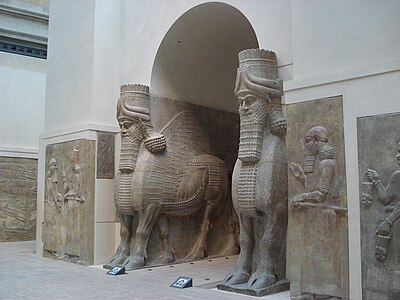
The cherubim (keruvim) posted at Eden's entrance to guard the Tree of Life (Genesis 3:24) find parallels in Mesopotamian art. The lamassu and shedu — winged, human-headed bulls and lions that guarded the entrances to Assyrian palaces — served a similar protective function. Colossal examples from Dur-Sharrukin (Khorsabad) and Nineveh are now displayed in the Louvre, the British Museum, and the Oriental Institute in Chicago.
The narrative of the fall — the serpent's temptation, the forbidden fruit, the expulsion — has generated an immense interpretive tradition in Judaism. Unlike Christian theology, which developed the doctrine of "original sin" from this passage, Jewish tradition generally reads the Eden story as an account of human moral development rather than cosmic catastrophe. The Talmud (Sanhedrin 38b) presents a detailed timeline of Adam's first day, including his creation, naming of the animals, the creation of Eve, the sin, the judgment, and the expulsion — all before nightfall.
Maimonides interpreted the Eden narrative philosophically: the Tree of Knowledge represents the transition from pure intellectual contemplation to sensory awareness and moral ambiguity. Before eating the fruit, the human operated on the level of truth and falsehood; after eating, on the level of good and evil — a descent from intellectual to moral knowledge that mirrors the human condition.
The Genealogies: Adam to Noah Tradition
Genesis 5 presents the genealogy from Adam to Noah — ten generations with extraordinarily long lifespans: Adam lives 930 years, Methuselah 969 (the longest recorded), and Noah 950. These antediluvian ages have been compared to the Sumerian King List, where pre-flood kings reign for tens of thousands of years.
Several explanations have been proposed for these numbers. Some scholars suggest they reflect an ancient Near Eastern literary convention of attributing great ages to primordial figures. Others note that the numbers appear to follow mathematical patterns: many are multiples of 5 or end in 0, 2, 5, 7, or 9, and some scholars have identified symbolic relationships between the figures. The Septuagint and Samaritan Pentateuch preserve different numbers from the Masoretic Text, suggesting the figures were not considered fixed even in antiquity.
One figure in the genealogy stands out: Enoch, who "walked with God; then he was no more, because God took him" (Genesis 5:24). Enoch is the only figure in the genealogy who does not "die" — he is taken by God at the comparatively young age of 365 (a number corresponding to the days of the solar year). This enigmatic reference spawned an enormous body of literature in the Second Temple period, including 1 Enoch, 2 Enoch, and 3 Enoch, which describe Enoch's heavenly journeys, visions of cosmic judgment, and transformation into the angel Metatron.
As we turn to the flood narrative in the next chapter, we will see these same dynamics at play — ancient parallels, theological transformation, and the ongoing conversation between scrolls and stones.
Locations in This Chapter
Loading map...