Part 2: Exodus & Formation · c. 1250 BCE
6.Slavery and Liberation
Merneptah Stele, exodus theories
18 min read
The Merneptah Stele: Israel in Stone Verified
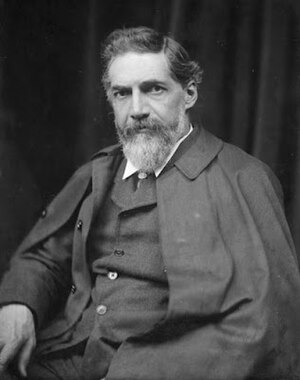
In 1896, the great British Egyptologist Sir William Matthew Flinders Petrie discovered a large granite stele in the mortuary temple of Pharaoh Merneptah at Thebes (modern Luxor). Dating to approximately 1208 BCE, the stele — now in the Egyptian Museum in Cairo (JE 31408), with a copy in the British Museum — is primarily a victory hymn celebrating Merneptah's military campaigns in Libya and Canaan. But near the end, in a brief poetic passage, appears a line that electrified the scholarly world:
"Israel (Ysriar) is laid waste; his seed is no more."
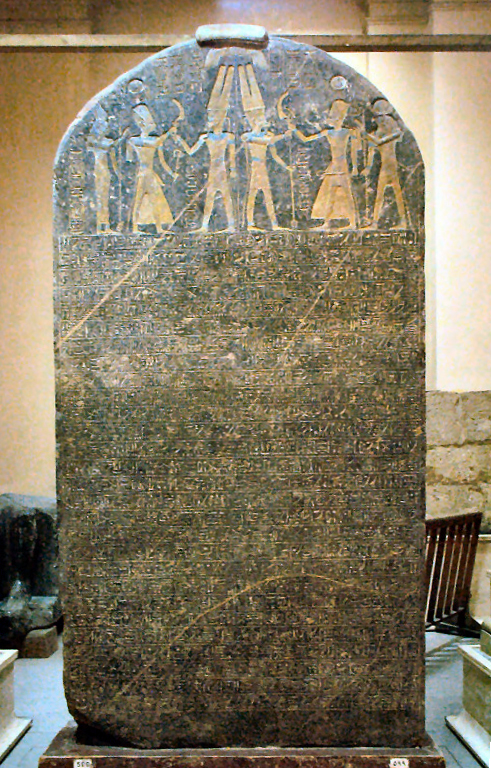
This is the earliest known extrabiblical reference to Israel. The hieroglyphic text uses a determinative sign indicating a people group rather than a geographic territory or city-state — suggesting that at this date (c. 1208 BCE), "Israel" was understood as an ethnic or tribal entity rather than a settled nation with defined borders.
The implications are profound. By the late 13th century BCE, a group called Israel existed in or near Canaan and was significant enough for an Egyptian pharaoh to boast about defeating them. This provides an absolute chronological anchor: whatever the origins of Israel, the group was recognized as a distinct entity in the land of Canaan by 1208 BCE.
The Merneptah Stele does not tell us where Israel came from, how long they had been in Canaan, or whether they had experienced anything like the biblical Exodus. It simply confirms existence. But in a field where extrabiblical evidence for early Israel is vanishingly scarce, this single inscription carries enormous weight.
Recent studies of the stele, including work by Egyptologist Frank Yurco, have attempted to identify the visual depictions on the stele's carved scenes with the textual references, potentially showing the Israelites depicted as Canaanite in appearance — without the distinctive markers (clothing, hairstyles, weapons) of other groups mentioned in the text.
Ramesses II and the Building Projects Verified
If any pharaoh fits the biblical description of the oppressor who enslaved the Israelites, the leading candidate is Ramesses II (r. 1279–1213 BCE), one of the longest-reigning and most prolific builders in Egyptian history.
Ramesses II — Ramesses-Meryamun, "Ra bore him, beloved of Amun" — ruled for 66 years and left his mark across Egypt and Nubia. His building projects were staggering in scale:
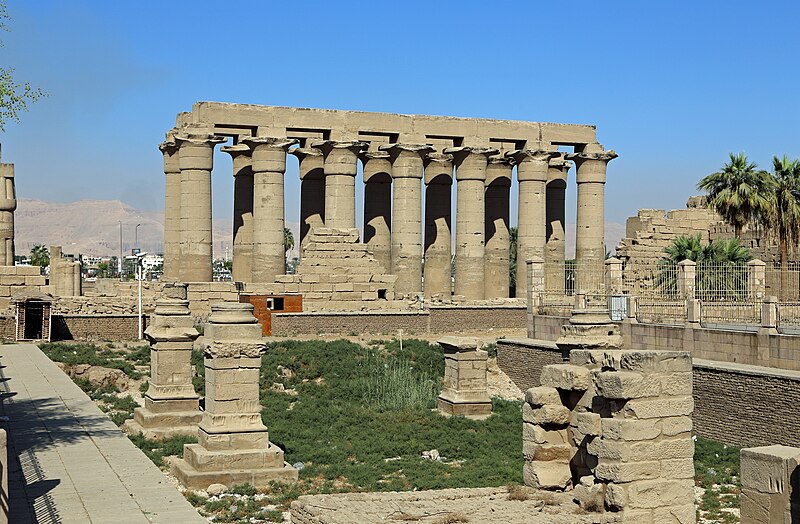
Pi-Ramesse: Ramesses relocated the royal capital to the eastern Delta, building the city of Pi-Ramesse ("House of Ramesses") on the site of the old Hyksos capital Avaris. Excavations by Manfred Bietak, Edgar Pusch, and others have revealed a massive city covering over 30 square kilometers, with palaces, temples, military installations, and workshops. The city required an enormous labor force. Exodus 1:11 states that the Israelites "built Pithom and Rameses as store cities for Pharaoh" — the name "Rameses" pointing directly to Pi-Ramesse.
Pithom (Per-Atum): Identified with either Tell el-Maskhuta or Tell el-Retaba in the Wadi Tumilat, Pithom was a supply depot on the route from Egypt to the Sinai and Canaan. Excavations at Tell el-Retaba have revealed Ramesside-period construction including mudbrick buildings and fortifications.
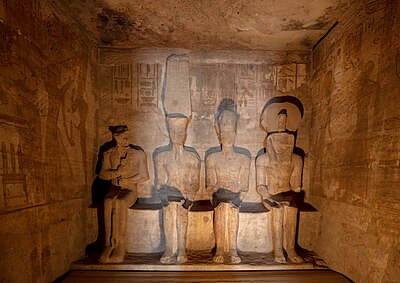
Abu Simbel: Ramesses' colossal rock-cut temple in Nubia, with its four seated statues of the pharaoh each standing 66 feet tall, demonstrates the scale of labor mobilization available to the Egyptian state.
The Ramesseum: Ramesses' mortuary temple at Thebes, now partially ruined, included massive storerooms — rows of mudbrick vaulted magazines that may provide a visual parallel to the "store cities" of Exodus 1:11.
Egyptian records from the Ramesside period document the use of conscripted and forced labor for these projects. Papyrus Leiden 348 (now in the Rijksmuseum van Oudheden, Leiden) contains an order from an official to "distribute grain rations to the soldiers and to the 'Apiru who transport stones to the great pylon of Ramesses." This text directly attests the use of 'Apiru laborers — a term potentially related to "Hebrew" — in Ramesside building projects.
Evidence for Semitic Forced Labor Verified
Multiple Egyptian documents attest to the use of Semitic workers, including forced laborers, in Egyptian construction projects during the New Kingdom:
Papyrus Leiden 348 (reign of Ramesses II): As noted above, this document records the distribution of grain to 'Apiru workers transporting stones for a building project of Ramesses II.
Papyrus Anastasi III and IV (c. 1220 BCE): These administrative papyri, now in the British Museum, contain records of labor allocation for Ramesside building projects. Papyrus Anastasi IV lists foreign workers — including Shasu (Bedouin) and other Asiatic groups — employed in construction.
Papyrus Anastasi V (c. 1200 BCE): This text describes the pursuit of two runaway slaves who had fled from the royal residence at Pi-Ramesse into the Sinai — a scenario strikingly parallel to the Exodus narrative. The official reports that they "passed the Fortress of Seti-Merneptah" (a border post) and were last seen heading toward the wilderness.
Papyrus Anastasi VI (c. 1200 BCE): This border journal records Shasu (Semitic Bedouin) from Edom being allowed to pass Egyptian border fortifications to water their flocks in the Wadi Tumilat — demonstrating that movement between Canaan and the eastern Delta was routine and monitored.
The Louvre Leather Roll (reign of Ramesses II): This document records provisions for various workers, including Asiatics, employed at a royal project.
Taken together, these documents establish beyond doubt that Semitic laborers — including forced laborers — were employed in Egyptian building projects during the Ramesside period, that some of these laborers attempted to flee, and that Egyptian authorities pursued them. This provides a historically plausible context for the Exodus narrative, even if it does not confirm the specific biblical account.
The Biblical Exodus Narrative Tradition
The Exodus story is the foundational narrative of Judaism — the event through which God is most frequently identified in the Hebrew Bible ("I am the LORD your God, who brought you out of Egypt, out of the land of slavery," Exodus 20:2). Its theological centrality cannot be overstated: the Passover Seder, the most widely observed Jewish ritual, reenacts the Exodus annually; the Sabbath is linked to both creation and the Exodus; the prophets invoke the Exodus as the paradigm of divine redemption.
The narrative unfolds in several stages:
Oppression (Exodus 1): A new pharaoh, fearful of the growing Israelite population, subjects them to forced labor and orders the midwives Shiphrah and Puah to kill newborn Hebrew boys. The midwives defy the order — the first recorded act of civil disobedience in literature.
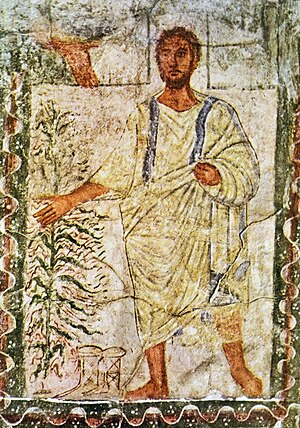
Moses' calling (Exodus 2–4): Moses, rescued from the Nile as an infant, grows up in Pharaoh's court, kills an Egyptian overseer, flees to Midian, and encounters God at the burning bush on "the mountain of God" (Horeb/Sinai). God reveals the divine name YHWH and commissions Moses to demand the Israelites' release.
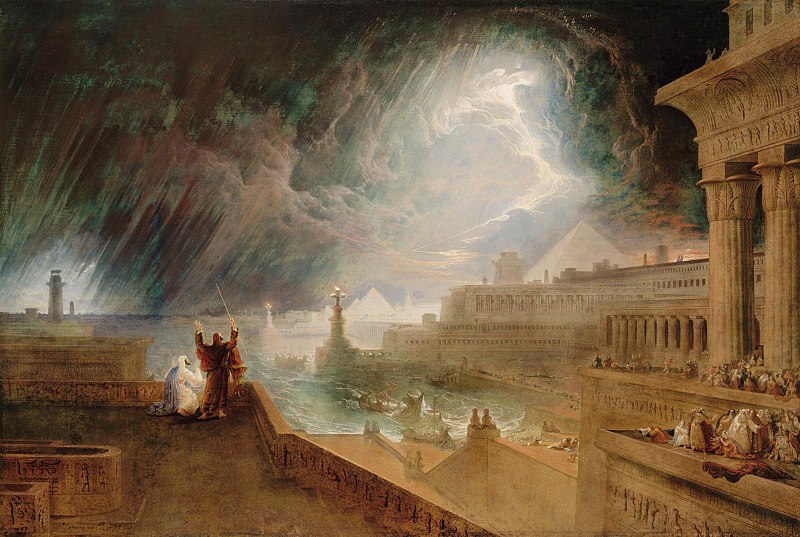
The Ten Plagues (Exodus 7–12): When Pharaoh refuses to release the Israelites, God sends ten plagues: blood, frogs, gnats, flies, livestock disease, boils, hail, locusts, darkness, and the death of the firstborn. The plagues escalate in severity and increasingly distinguish between Egyptians and Israelites. The final plague — the death of the firstborn — is accompanied by the institution of Passover (Pesach): each Israelite household slaughters a lamb, marks its doorposts with blood, and the destroyer "passes over" the marked houses.
The Exodus and the Sea (Exodus 13–15): The Israelites depart Egypt "with a high hand" (Exodus 14:8), taking with them the bones of Joseph (Exodus 13:19). Pharaoh pursues with his chariot force. At the Yam Suf (traditionally "Red Sea," more likely "Sea of Reeds"), God parts the waters through a strong east wind (Exodus 14:21), the Israelites cross on dry ground, and the waters return to drown the Egyptian army. The Song of the Sea (Exodus 15:1–18) — one of the oldest passages in the Bible, dated by many scholars to the 12th–11th centuries BCE on linguistic grounds — celebrates the victory.
Jewish tradition elaborates these events extensively. The Passover Haggadah retells the story with commentary, expanding on the plagues, the Israelites' suffering, and God's intervention. The Talmud (Megillah 10b) records that when the angels sought to sing in celebration as the Egyptians drowned, God rebuked them: "My creatures are drowning in the sea, and you would sing?" — a remarkable expression of divine compassion even for the oppressor.
The Ipuwer Papyrus: A Parallel? Debated
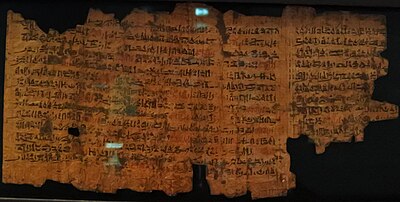
The Papyrus Ipuwer (Leiden Papyrus I 344, now in the Rijksmuseum van Oudheden, Leiden) has been cited by some scholars and many popular writers as an Egyptian account of the plagues of Exodus. The text, known as "The Admonitions of Ipuwer," describes a period of catastrophic social upheaval:
"The river is blood... Plague is throughout the land... The children of princes are dashed against walls... Grain has perished on every side... Indeed, gates, columns and walls are consumed by fire."
The parallels with the Exodus plagues are superficially striking: blood in the river, plague, the death of children, the destruction of crops, fire. Some popular writers have argued that Ipuwer is an Egyptian eyewitness account of the biblical plagues.
However, mainstream Egyptology rejects this identification for several reasons:
-
Dating: The papyrus copy dates to the 13th century BCE, but the composition is generally dated to the Middle Kingdom (c. 2000–1700 BCE) — long before any proposed date for the Exodus.
-
Genre: The Admonitions belong to a recognized Egyptian literary genre: the "lament" or "prophecy of doom," which describes social chaos as a literary-philosophical exercise. Similar texts include the "Prophecy of Neferti" and the "Dialogue of a Man with His Ba."
-
Content: Many of the "parallels" are generic descriptions of societal collapse (famine, plague, social inversion) that appear in catastrophe literature worldwide and do not require a specific historical event.
-
No mention of Israelites: Ipuwer mentions no Hebrews, no Moses, no deity acting on behalf of a specific people.
The Ipuwer Papyrus is a valuable literary text that illuminates Egyptian attitudes toward social disorder, but it should not be read as confirmation of the Exodus narrative.
The Exodus Date Debate Debated
One of the most contested questions in biblical studies is when the Exodus occurred — or, more precisely, when the events it describes (if historical) took place. Two main dates have been proposed:
The Early Date (c. 1446 BCE): Based on 1 Kings 6:1, which states that Solomon began building the Temple "in the four hundred and eightieth year after the Israelites came out of Egypt." Since Solomon's Temple construction is dated to approximately 966 BCE, subtracting 480 years yields an Exodus date of c. 1446 BCE — during the reign of Thutmose III or Amenhotep II of the 18th Dynasty. Supporters of this date also cite Judges 11:26, where Jephthah claims Israel has occupied the Transjordan for 300 years. Archaeological evidence cited includes the destruction of Jericho's walls (Kathleen Kenyon dated the final destruction of Middle Bronze Age Jericho to c. 1550 BCE, but John Garstang had earlier proposed c. 1400 BCE, and Bryant Wood has argued for a similar date based on pottery analysis).
The Late Date (c. 1260–1250 BCE): Most scholars favor a date during the reign of Ramesses II, based on several arguments: (1) Exodus 1:11 names "Rameses" as one of the store cities, pointing to Pi-Ramesse, built by Ramesses II; (2) the Merneptah Stele (1208 BCE) shows Israel in Canaan by that date, leaving time for a wilderness period and initial settlement; (3) archaeological evidence for destruction of Canaanite cities in the late 13th century BCE (Hazor, Lachish, Bethel) fits a late 13th-century conquest; (4) the 480 years of 1 Kings 6:1 may be schematic (12 generations x 40 years) rather than literal.
No Exodus at all?: Some scholars, particularly those associated with the Copenhagen School, argue that the Exodus never happened as described — that it is a founding myth created during the monarchy or post-exilic period to give Israel a national origin story. They point to the absence of any Egyptian text mentioning the Israelites' departure, the lack of archaeological evidence in the Sinai for a large-scale migration, and the literary and theological character of the narrative.
The Archaeological Challenge Debated
The most significant challenge to the historicity of the Exodus is the lack of direct archaeological evidence. Several points are commonly raised:
No Egyptian records of the Exodus: Egypt kept extensive administrative records, yet no text mentions the departure of a large Israelite population, the destruction of an Egyptian army, or the plagues. Defenders of historicity note that Egyptian records were propaganda, not history, and that embarrassing defeats were routinely omitted (the Battle of Kadesh, where Ramesses II failed to defeat the Hittites, is portrayed as a great victory).
No evidence in the Sinai: Extensive surveys of the Sinai Peninsula have found no archaeological trace of a large population (the Bible numbers the Israelites at 600,000 men, implying a total population of 2–3 million) camping in the wilderness for 40 years. However, pastoral nomads leave minimal archaeological traces, and the Sinai's harsh environment would have destroyed most organic remains.
The number problem: The biblical figure of 600,000 fighting men (Exodus 12:37) implies a total population larger than that of most ancient Near Eastern cities. Such a group would have been larger than the entire Egyptian army. Many scholars, including those who accept a historical kernel, believe the numbers are either symbolic, exaggerated, or based on a mistranslation of the Hebrew word 'eleph, which can mean "thousand" but also "clan" or "military unit." Reading 'eleph as "clan" reduces the total to a few thousand — a historically plausible migration.
The route: The traditional "southern route" through the Sinai to Mount Sinai (Jebel Musa) is unsupported by archaeological evidence. Alternative routes through the northern Sinai (the "Way of Horus," the main Egyptian military road) or along the western coast of the Arabian Peninsula (the "Midianite hypothesis") have been proposed but remain speculative.
What Did Happen? Scholarly Models Debated
Given the evidence — or lack thereof — how do scholars reconstruct the origins of Israel? Several models compete:
The Exodus-Conquest Model (traditional): Israel originated as slaves in Egypt, departed in a mass exodus, received the Torah at Sinai, and conquered Canaan militarily. This follows the biblical narrative closely but faces the archaeological challenges described above.
The Gradual Infiltration Model (Alt/Noth): Israelite tribes gradually settled in Canaan's largely unoccupied hill country during the Late Bronze–Iron Age transition, with no single dramatic exodus or conquest. The Exodus story was originally the experience of one group (perhaps the "Joseph tribes" — Ephraim and Manasseh) that was later adopted as the national narrative of all Israel.
The Peasant Revolt Model (Mendenhall/Gottwald): Israel emerged from within Canaan as disaffected peasants, pastoralists, and marginal groups who rebelled against the Canaanite city-state system. The Exodus story was a legitimating myth for this social revolution.
The Mixed-Origin Model (current mainstream): Israel emerged from multiple sources during the 13th–11th centuries BCE. Some groups may have had genuine Egyptian experience — escaped slaves, deportees, or migrant workers who carried memories of servitude and liberation. These memories became the core of the Exodus narrative, which was gradually elaborated and universalized to become the founding story of the entire Israelite confederation. The theological power of the Exodus — a God who liberates the oppressed — ensured its centrality regardless of its precise historical basis.
Most scholars today accept that the Exodus narrative contains a historical kernel — some Israelites did have experience of Egyptian bondage and liberation — while acknowledging that the narrative as we have it is a theological and literary composition that cannot be taken as a straightforward historical account.
Papyrus Anastasi and the Border Verified
The Papyrus Anastasi documents, dating to the late 19th and 20th Dynasties (c. 1220–1150 BCE), provide invaluable evidence for conditions along the Egypt-Sinai border during the period most often associated with the Exodus.
Papyrus Anastasi I (British Museum EA 10247): A satirical letter between scribes that describes the geography of Canaan in detail, naming cities, geographical features, and dangers along the military road through the northern Sinai ("the Way of Horus"). The text reveals intimate Egyptian knowledge of Canaan and the route connecting Egypt to the Levant.
Papyrus Anastasi V (British Museum EA 10244): Contains the report of an official pursuing two runaway servants who fled from Pi-Ramesse into the desert. The text records the pursuit passing through the border fortress system — a chain of forts and water stations along the northern Sinai route that Egyptian authorities maintained to control movement between Egypt and Canaan. This system, known from both texts and archaeology (excavations at Deir el-Balah, Tell el-Borg, and other sites have revealed Ramesside fortresses), would have been a formidable obstacle to any group attempting to leave Egypt without authorization.
Papyrus Anastasi VI (British Museum EA 10245): The border journal permitting Shasu from Edom to enter Egypt, demonstrating that the border was monitored in both directions and that Semitic pastoralists regularly moved between Egypt and the Sinai/Negev.
These documents confirm that the Egyptian border system was real, that unauthorized departures were pursued, and that the social dynamics described in the Exodus narrative — enslaved workers seeking to flee, a fortified border, pursuit by Egyptian authorities — are historically grounded even if the specific biblical events cannot be confirmed.
The Exodus as Founding Narrative Tradition
Regardless of its precise historical basis, the Exodus has functioned as the founding narrative of Jewish identity for over three millennia. Its power lies not in archaeological verification but in theological claim: God is the liberator of the oppressed.
The Passover Haggadah instructs each participant to consider themselves as having personally left Egypt: "In every generation, one is obligated to see oneself as though one personally came out of Egypt." This is not merely a commemorative exercise but a theological commitment — the Exodus is understood as an ongoing reality, not a completed past event.
The prophets return to the Exodus constantly. Hosea (11:1): "When Israel was a child, I loved him, and out of Egypt I called my son." Amos (3:1–2): "Hear this word the LORD has spoken against you, people of Israel — against the whole family I brought up out of Egypt." Micah (6:4): "I brought you up out of Egypt and redeemed you from the land of slavery."
The Exodus narrative has also served as a template for liberation movements throughout history: the abolitionist movement in America drew extensively on Exodus imagery, as did the Civil Rights movement (Martin Luther King Jr.'s final speech, "I've Been to the Mountaintop," explicitly invoked Moses on Mount Nebo). South American liberation theology, the anti-apartheid movement, and countless other struggles for justice have found in the Exodus a paradigm and an inspiration.
Whether the Exodus happened as described — or happened at all — it has shaped history in ways that few other stories have matched. As we turn to the revelation at Sinai, we encounter the next great act of the biblical drama: the liberated slaves receive a law, a covenant, and a mission. The God who brought them out of Egypt now tells them what freedom is for.
Locations in This Chapter
Loading map...