Part 2: Exodus & Formation · c. 1200–1020 BCE
8.Wandering and Conquest
Jericho archaeology, conquest models
16 min read
Wandering and Conquest
The Problem of Jericho
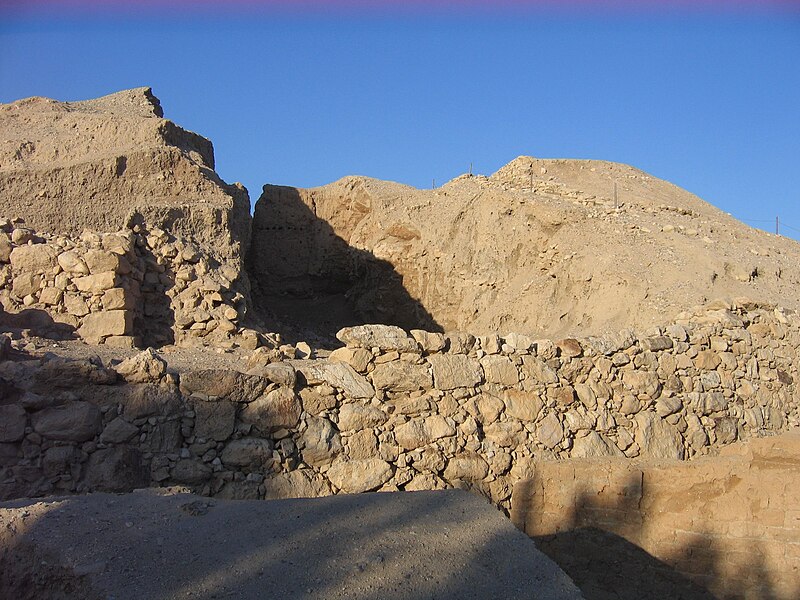
VerifiedFew archaeological sites have generated as much controversy as Tell es-Sultan, the ancient mound of Jericho. The story of Joshua's conquest --- trumpets blaring, walls collapsing, a city devoted to destruction --- is among the most dramatic episodes in the Hebrew Bible. But when the spade meets the earth, the story grows far more complicated.
The modern excavation of Jericho began with Ernst Sellin and Carl Watzinger between 1907 and 1909, followed by John Garstang's campaigns from 1930 to 1936. Garstang believed he had found the very walls that Joshua toppled, dating their destruction to around 1400 BCE --- a date that aligned neatly with a literal reading of biblical chronology. His announcement made international headlines.
Then came Kathleen Kenyon.
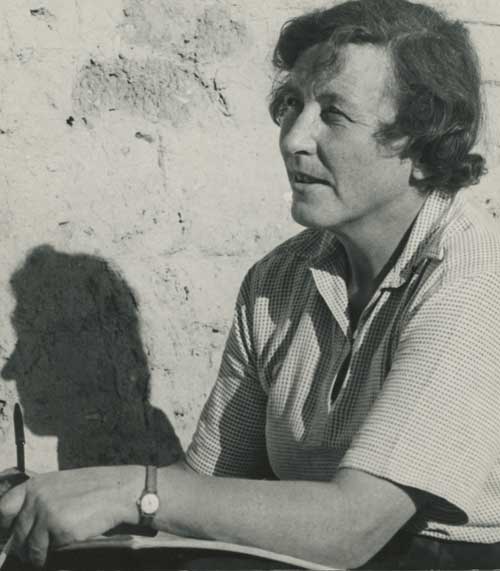
Between 1952 and 1958, the British archaeologist conducted the most rigorous excavation Jericho had ever seen, employing the Wheeler-Kenyon method of stratigraphic analysis. Her findings were devastating to the conquest narrative. The walls Garstang had identified as Joshua's were, in fact, far older --- dating to the Early Bronze Age, roughly a millennium too early. More critically, Kenyon determined that the destruction layer at Jericho dated to approximately 1550 BCE, corresponding to the end of the Middle Bronze Age. By the Late Bronze Age --- the period when any Israelite conquest would have occurred, whether dated to 1400 or 1200 BCE --- Jericho was either unoccupied or, at best, a small, unwalled settlement.
VerifiedKenyon's ceramic analysis and stratigraphic work have been largely confirmed by subsequent studies. Carbon-14 dating of burned grain samples from the destruction layer, conducted by Hendrik Bruins and Johannes van der Plicht in 1995, yielded dates centering around 1550 BCE, plus or minus several decades. The destruction of Late Bronze Age Jericho aligns not with an Israelite invasion but with the expulsion of the Hyksos from Egypt and the military campaigns of Pharaoh Ahmose I, the founder of the Egyptian Eighteenth Dynasty.
This does not mean everyone agrees. Bryant Wood of Associates for Biblical Research published a detailed reanalysis in 1990 arguing that Kenyon had misidentified the pottery and that a destruction around 1400 BCE was plausible. His arguments, published in the Biblical Archaeology Review, sparked intense debate but have not won wide acceptance among mainstream archaeologists.
The Biblical Narrative
TraditionThe Book of Joshua presents the conquest of Canaan as a swift, divinely orchestrated military campaign. After Moses' death and forty years of wilderness wandering, Joshua ben Nun leads the Israelites across the Jordan River. Spies are sent to Jericho, where Rahab the prostitute shelters them. The Ark of the Covenant parts the Jordan, echoing the crossing of the Red Sea, and the people enter the Promised Land.
At Jericho, the Israelites march around the city once daily for six days, with seven priests blowing rams' horns before the Ark. On the seventh day, they march seven times, the trumpets sound, the people shout, and the walls fall flat. The city is put under the herem --- the ban of total destruction --- with only Rahab and her family spared. The fall of Jericho is followed by the destruction of Ai (after an initial failure due to Achan's sin), the covenant ceremony at Mount Ebal, the Gibeonite deception, and two major military campaigns: one to the south against a coalition of five kings (the battle where the sun stands still at Gibeon), and one to the north against Jabin of Hazor and his allies.
TraditionThe narrative in Joshua 10--12 presents a comprehensive list of defeated kings --- thirty-one in all. The land is then divided by lot among the twelve tribes, with the Levites receiving cities rather than territory. The picture is one of total conquest and systematic settlement.
Yet even within the biblical text itself, tensions emerge. Judges 1 presents a strikingly different account, one of gradual, incomplete, and often unsuccessful attempts at settlement. "Judah could not drive out the inhabitants of the valley, because they had chariots of iron" (Judges 1:19). The Jebusites remained in Jerusalem. The Canaanites persisted in Gezer, Beth-shean, Taanach, Dor, Megiddo, and many other places. The Book of Judges as a whole presupposes a landscape of continued coexistence and conflict, not a clean military victory.
Three Models of the Conquest
DebatedThe tension between the archaeological record and the biblical narrative has produced three major scholarly models for understanding how Israel emerged in the land of Canaan. Each has its strengths and weaknesses, and the debate remains unresolved.
The Military Conquest Model (Albright School)
William Foxwell Albright, the towering figure of mid-twentieth-century biblical archaeology, championed the view that the conquest described in Joshua was essentially historical. Working from the 1920s through the 1960s, Albright pointed to destruction layers at sites such as Lachish (Tell ed-Duweir), Bethel (Beitin), Debir (Tell Beit Mirsim), and Hazor (Tell el-Qedah), dating to the late thirteenth century BCE, as evidence of a coordinated military invasion. His students, including G. Ernest Wright and Yigael Yadin, continued this approach.
The model's strength was its alignment with the biblical text. Its weakness was that many of the destruction layers could be attributed to other causes --- Egyptian campaigns, inter-Canaanite warfare, the broader Late Bronze Age collapse --- and several key conquest sites, including Jericho and Ai, showed no evidence of destruction at the relevant period. Ai (et-Tell), in fact, had been unoccupied for roughly a thousand years before the supposed conquest.
The Peaceful Infiltration Model (Alt-Noth School)
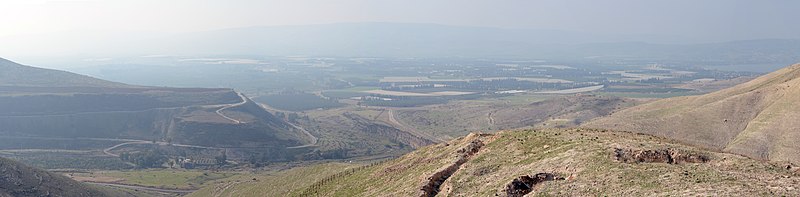
DebatedGerman scholars Albrecht Alt (1925) and Martin Noth (1930s) proposed a very different scenario. In their view, the Israelites were originally pastoral nomads who gradually infiltrated the sparsely populated hill country of Canaan, settling in areas that the Canaanite city-states had not controlled. There was no dramatic conquest; the process was slow, peaceful, and largely invisible archaeologically. The conquest narratives in Joshua were later theological compositions --- etiological stories explaining the ruins of ancient cities and justifying Israelite claims to the land.
Alt based his model partly on Egyptian administrative texts and partly on analogies with modern Bedouin patterns of seasonal migration and gradual sedentarization. The model elegantly explained why so many conquest sites lacked destruction layers but struggled to account for the destructions that did occur and for the rapid cultural changes visible in the archaeological record.
The Social Revolution Model (Mendenhall-Gottwald)
DebatedIn 1962, George Mendenhall proposed a radical alternative: the Israelites were not invaders from outside Canaan but rather Canaanite peasants who revolted against their overlords. Drawing on the Amarna Letters --- fourteenth-century correspondence between Canaanite vassal kings and the Egyptian pharaoh, in which rulers repeatedly complain about Habiru (socially displaced people) threatening the established order --- Mendenhall argued that Israel emerged from an internal social upheaval.
Norman Gottwald expanded this into a full Marxist analysis in The Tribes of Yahweh (1979), arguing that early Israel represented a peasant revolt against the feudal Canaanite city-state system. The worship of YHWH served as the ideological glue for this egalitarian counter-society. The model explained cultural continuity between Canaanites and early Israelites but was criticized for importing modern political theory onto ancient societies and for lacking direct archaeological evidence of a peasant revolt.
The Merneptah Stele: Israel in Canaan by 1208 BCE
VerifiedWhatever model one prefers, one piece of evidence anchors the discussion in firm chronological ground. 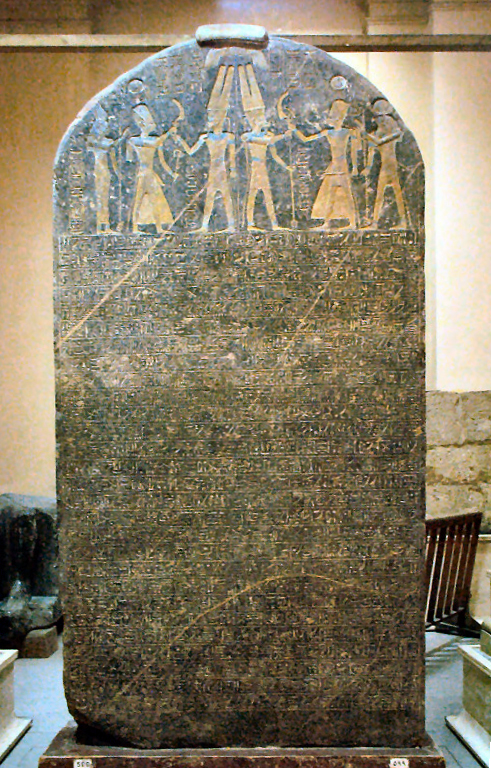
The Merneptah Stele, discovered by Flinders Petrie in 1896 at the mortuary temple of Pharaoh Merneptah in Thebes (now in the Egyptian Museum, Cairo), contains the earliest known reference to "Israel" outside the Bible.
The stele, a large granite slab standing over seven feet tall, celebrates Merneptah's military victories around 1208 BCE. Among a list of defeated peoples and places in Canaan, one line reads: "Israel is laid waste; its seed is no more." The determinative hieroglyph used for "Israel" indicates a people, not a place or city-state --- suggesting that at this date, Israel was recognized as a distinct ethnic or tribal group residing in Canaan but not yet associated with a specific territory or settled polity.
This is an enormously important datum. It means that by the late thirteenth century BCE, an entity called "Israel" already existed in the land of Canaan. Any theory of Israelite origins must account for this fact. The stele does not tell us how Israel got there --- by conquest, infiltration, or internal emergence --- but it tells us they were there.
The Highland Settlements: Archaeology of Early Israel
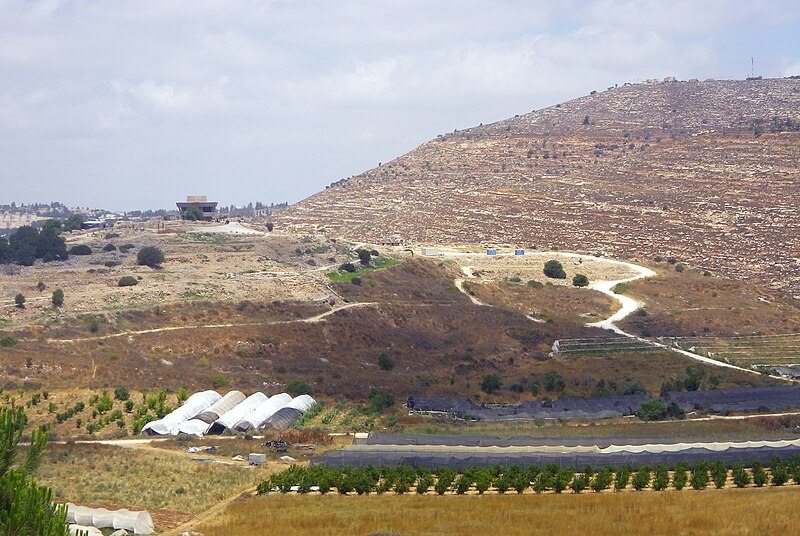
VerifiedBeginning in the 1970s, intensive archaeological surveys of the central hill country of Canaan --- conducted by Israel Finkelstein, Adam Zertal, and others --- revealed a dramatic phenomenon. In the transition from the Late Bronze Age (ending c. 1200 BCE) to Iron Age I (c. 1200--1000 BCE), hundreds of small, new settlements appeared in the previously sparsely populated highlands of Samaria, Judah, Benjamin, and the Galilee.
The numbers are striking. In the Late Bronze Age, the central highlands contained approximately 25 settlements. By the end of Iron Age I, there were roughly 300, with a combined population estimated at 40,000 to 55,000. These villages were small --- typically housing 50 to 300 people --- and clustered on hilltops and ridges, avoiding the fertile valleys still controlled by Canaanite city-states.
VerifiedThe material culture of these highland settlements exhibits several distinctive features:
Four-room houses: A characteristic house plan found almost exclusively in these settlements, consisting of a broad room at the back and three long rooms extending forward, divided by rows of pillars. This plan is well-suited to a mixed agro-pastoral economy, with space for both human habitation and animal stalling.
Collar-rim storage jars: Large pithoi (storage jars) with a distinctive ridge or "collar" below the rim, used for storing grain and water. While not exclusively Israelite, these jars are overwhelmingly concentrated in the highland settlement zone.
Terracing: Extensive agricultural terraces carved into the hillsides, enabling cultivation of the rocky terrain. This labor-intensive technology made highland farming viable and suggests a communal effort to establish permanent settlements.
Absence of pig bones: Faunal analysis of these highland sites reveals a near-total absence of pig bones, in contrast to lowland Canaanite and later Philistine sites where pig remains are common. While the pig taboo may have ecological as well as cultural explanations, it serves as a useful ethnic marker.
DebatedIsrael Finkelstein has argued that these settlers were largely indigenous Canaanites who moved into the highlands during the Late Bronze Age collapse, perhaps former pastoral nomads sedentarizing in response to changing economic conditions. Others, including Adam Zertal, have pointed to the directional pattern of settlement --- spreading from east to west, from the Jordan Valley into the highlands --- as evidence consistent with an entry from Transjordan, loosely matching the biblical narrative.
Hazor: The Smoking Gun?
Verified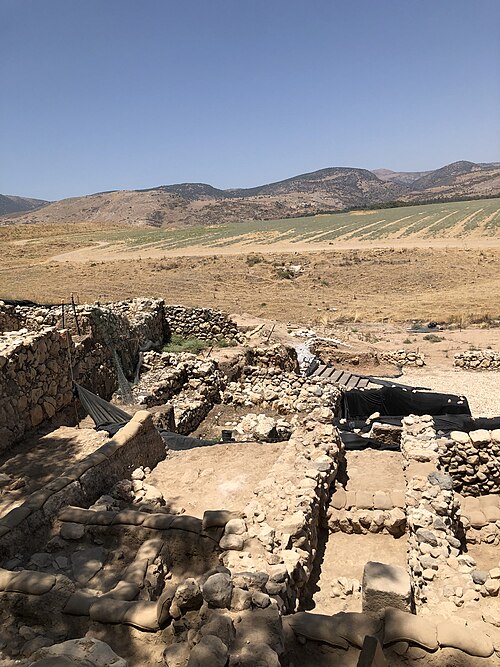
Of all the conquest sites, Hazor (Tell el-Qedah) in the upper Galilee provides the most intriguing evidence. The largest Canaanite city in the southern Levant --- covering approximately 200 acres in its heyday --- Hazor was destroyed by fire in the mid-to-late thirteenth century BCE. The destruction was violent and thorough. Statues of deities were deliberately mutilated, their heads and hands broken off. The Canaanite palace was burned so intensely that the mud-brick walls were vitrified.
Yigael Yadin, who excavated Hazor in the 1950s, attributed this destruction to the Israelites, citing Joshua 11:10-11: "Joshua turned back at that time, and took Hazor, and struck its king with the sword; for Hazor formerly was the head of all those kingdoms. And they struck all the persons who were in it with the edge of the sword, utterly destroying them."
DebatedThe current excavator, Amnon Ben-Tor of the Hebrew University of Jerusalem, who has directed excavations at Hazor since 1990, agrees that the Israelites are the most likely candidates for the destruction but acknowledges other possibilities. The destruction could theoretically be attributed to the Sea Peoples, rival Canaanite city-states, or the Egyptians. However, the deliberate desecration of religious statues is unusual and suggests an ideological motivation --- precisely the sort of iconoclasm one might expect from early Yahwists.
Sharon Zuckerman, Ben-Tor's co-director until her death in 2014, proposed an alternative: that Hazor was destroyed by an internal uprising of the city's own lower classes against the ruling elite, a scenario more compatible with the Mendenhall-Gottwald social revolution model.
The Late Bronze Age Collapse
VerifiedThe emergence of Israel in Canaan cannot be understood in isolation. It occurred during one of history's great civilizational collapses. Around 1200 BCE, the interconnected palace economies of the eastern Mediterranean --- Egypt, Hatti (the Hittites), Mycenaean Greece, Ugarit, and the Canaanite city-states --- collapsed in rapid succession. The causes were multiple and compounding: climate change (evidenced by pollen cores and tree rings), famine, plague, disruption of international trade routes, and the migrations of the so-called Sea Peoples.
The Hittite Empire fell. Ugarit was destroyed and never reoccupied. Mycenaean civilization collapsed into a Greek Dark Age. Egypt survived but as a diminished power, losing control of its Canaanite provinces. The Canaanite city-states --- Megiddo, Lachish, Beth-shean, Hazor --- were destroyed or severely weakened.
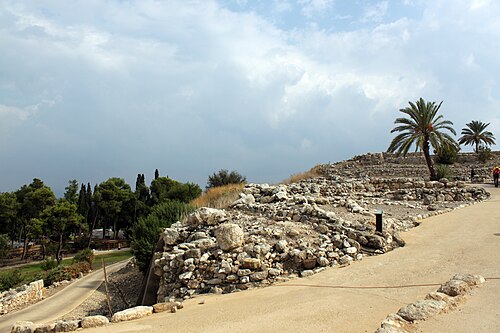
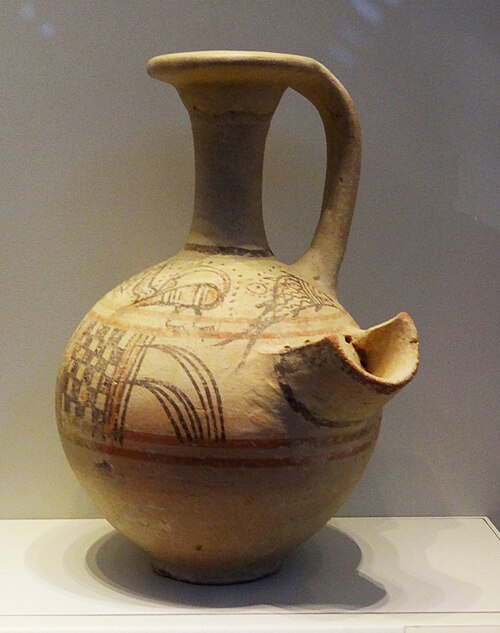
Into this vacuum moved new peoples. The Philistines settled the southern coastal plain, bringing distinctive Aegean-style pottery (Mycenaean IIIC:1b).
Whether the Israelites were the cause of destruction, a consequence of the collapse, or merely bystanders who filled the resulting power vacuum remains one of the central debates in the field. What is clear is that the emergence of Israel as an identifiable group in Canaan was intimately connected to the broader transformation of the ancient Near East at the end of the Bronze Age.
From Tribes to Territory
TraditionThe Book of Judges describes the period between the conquest and the monarchy as an era of tribal autonomy, charismatic military leaders ("judges"), and cyclical patterns of apostasy, oppression, crying out to God, and deliverance. The judges --- Othniel, Ehud, Deborah, Gideon, Jephthah, Samson, and others --- were not judicial figures but military saviors raised up in times of crisis.
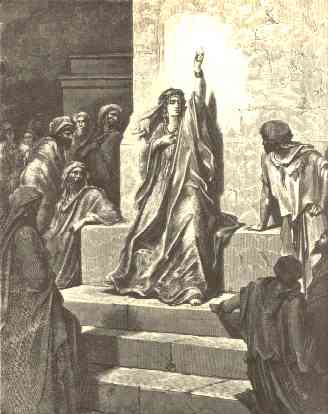
The Song of Deborah (Judges 5), widely considered one of the oldest passages in the Hebrew Bible on linguistic grounds, describes a coalition of Israelite tribes fighting against the Canaanite general Sisera near the Wadi Kishon. Notably, the poem names only ten tribes and criticizes several for failing to answer the call --- a picture of loose tribal affiliation, not centralized authority.
DebatedThe "twelve-tribe" system itself is debated. Was it an actual sociopolitical structure, an idealized literary construction, or perhaps an amphictyony --- a sacred league organized around a central shrine, analogous to Greek models? Martin Noth famously proposed the amphictyony model in 1930, suggesting the tribes rotated responsibility for maintaining a central sanctuary. This theory has largely fallen out of favor, as the Greek parallel is considered too distant and the evidence too thin, but the underlying question of how these highland communities organized themselves remains open.
What archaeology does show is a decentralized society. There are no monumental buildings, no palaces, no evidence of social stratification in early Iron Age I highland villages. The material culture is remarkably egalitarian. If there was hierarchy, it was based on kinship and age, not on wealth or military power. This would change dramatically in the centuries to come.
Conclusion
The question "Did the Israelite conquest happen?" has no simple answer. The walls of Jericho did fall --- but a thousand years too early. Hazor was indeed destroyed in a conflagration --- but by whom? Israel existed in Canaan by 1208 BCE --- but how it got there remains elusive. Hundreds of highland villages sprang up in a generation --- but their inhabitants may have come from just over the hill, not from across the Sinai.
What we can say with confidence is this: something happened in the central highlands of Canaan around 1200 BCE. A new society emerged, one that would eventually call itself Israel, one that would tell stories about its origins that became some of the most influential narratives in human history. The relationship between those stories and the archaeological record is complex, contested, and endlessly fascinating. The stones do not confirm the scrolls --- but neither do they simply contradict them. They tell a different story, one that invites us to hold multiple truths in tension.
Locations in This Chapter
Loading map...