Part 3: Kingdoms · c. 930–722 BCE
10.Divided Kingdom
Omri, Mesha Stele, prophets, Siloam Tunnel
18 min read
The Divided Kingdom
Two Kingdoms, One Story
TraditionAccording to 1 Kings 12, the United Monarchy shattered at the moment of its first succession crisis. 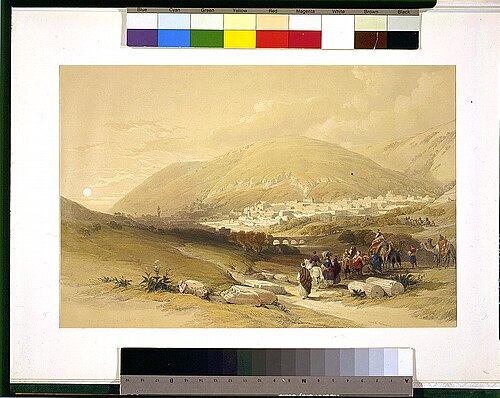
When Solomon's son Rehoboam traveled to Shechem to be acclaimed king by the northern tribes, the people asked him to lighten the heavy labor and taxation his father had imposed. Rehoboam consulted with the elders, who advised conciliation. He then consulted with the young men who had grown up with him, who advised severity. Rehoboam chose the young men's counsel: "My father made your yoke heavy, but I will add to your yoke. My father disciplined you with whips, but I will discipline you with scorpions" (1 Kings 12:14).
The northern tribes revolted. "What share do we have in David?" they cried, echoing an earlier rebellion under Sheba ben Bichri (2 Samuel 20). Ten tribes broke away under Jeroboam son of Nebat, a former official of Solomon who had fled to Egypt. Only Judah and Benjamin remained loyal to the Davidic dynasty.
The result was two kingdoms: Israel in the north (larger, wealthier, more fertile, more cosmopolitan) and Judah in the south (smaller, poorer, more mountainous, but possessing Jerusalem and the temple). This division would last for two centuries, until the Assyrian destruction of Israel in 722 BCE.
DebatedWas there ever a truly united kingdom that then divided? Or were Israel and Judah always separate entities --- perhaps briefly linked under David --- that the biblical authors retrospectively unified into a single narrative? This is a live scholarly question. The northern and southern regions had distinct ecologies, economies, settlement patterns, and arguably even dialects. Some scholars, including Israel Finkelstein, argue that Israel was always the primary state and that Judah was a small, peripheral entity that only became significant after Israel's fall.
Jeroboam's Apostasy and the Sin of the North
TraditionThe biblical account is written from a decidedly Judahite perspective. Jeroboam is presented as the arch-sinner of northern Israel. Fearing that his subjects' pilgrimages to Jerusalem would undermine his authority, he established two rival sanctuaries --- at Bethel in the south of his kingdom and Dan in the far north --- and placed golden calves in them, declaring: "Here are your gods, O Israel, who brought you up out of the land of Egypt" (1 Kings 12:28).
The phrase "the sins of Jeroboam son of Nebat, who caused Israel to sin" becomes a refrain throughout the Books of Kings, applied to every subsequent northern king regardless of his other qualities. The Deuteronomistic History judges all northern kings negatively --- not one receives an unqualified approval --- while several southern kings, notably Hezekiah and Josiah, are praised for their fidelity to YHWH and to Jerusalem.
DebatedModern scholars note that the bull imagery at Bethel and Dan need not have been understood as idolatry in its original context. In Canaanite and Israelite religion, the bull was a symbol of El, the supreme deity, and could serve as a pedestal for the invisible YHWH --- much as the cherubim served as a divine throne in the Jerusalem temple. The condemnation of Jeroboam likely reflects the later theology of the Deuteronomistic editors, writing after 622 BCE to justify the centralization of worship in Jerusalem.
The Omride Dynasty: Israel's Greatest Kings (That the Bible Downplays)
VerifiedIf the biblical text devotes enormous space to David and Solomon while grudgingly acknowledging their northern rivals, the archaeological record tells a very different story. The Omride dynasty --- Omri, Ahab, and their successors --- left a far more impressive material footprint than anything attributed to the United Monarchy.
Omri, who seized power in a military coup around 885 BCE, is dismissed in 1 Kings 16:23-28 in just six verses. Yet he founded Samaria as the new northern capital, and his dynasty was so significant that Assyrian inscriptions continued to refer to Israel as "the House of Omri" (Bit Humria) long after the dynasty had ended.
Verified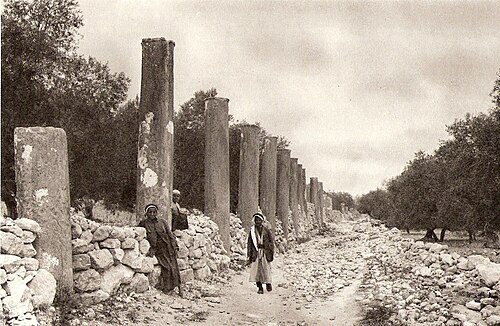
Archaeological excavations at Samaria, conducted by George Reisner and Clarence Fisher (1908-1910) and later by Kathleen Kenyon (1931-1935), revealed an impressive royal acropolis. The "Samaria Ivories" --- hundreds of carved ivory pieces that once decorated palace furniture --- attest to extraordinary wealth and international artistic connections. The Samaria Ostraca, a collection of administrative documents written on pottery sherds found in the palace storerooms, record deliveries of wine and oil from various estates, providing a glimpse into the tax system of the northern kingdom.
Ahab, Omri's son, is presented in the Bible primarily as the wicked husband of the even more wicked Jezebel, a Phoenician princess who promoted the worship of Baal. Yet the Kurkh Monolith, an Assyrian inscription of Shalmaneser III describing the Battle of Qarqar in 853 BCE, lists "Ahab the Israelite" as contributing 2,000 chariots and 10,000 soldiers to the anti-Assyrian coalition --- the largest chariot force of any single participant, suggesting that Israel under Ahab was a significant regional military power.
VerifiedThe monumental architecture attributed to the Omride period is genuinely impressive. At Megiddo, the massive six-chambered gate and adjoining palace complex --- whether Solomonic or Omride in date (this is the chronological dispute) --- represent a major investment of resources. At Jezreel, David Ussishkin and John Woodhead excavated a large royal enclosure surrounded by a moat, matching the biblical description of the Omride residence. At Hazor, the monumental water system --- a shaft cut 30 meters deep through rock to reach the water table --- is among the most impressive engineering achievements of Iron Age Israel.
The Mesha Stele: Moab's Rebellion
VerifiedIn 1868, Frederick Augustus Klein, an Anglican missionary, was shown a large basalt stone at Dhiban in modern Jordan by local Bedouin. The stone, measuring roughly 3.5 feet tall and 2 feet wide, bore a lengthy inscription in Moabite --- a language closely related to Hebrew. Before it could be properly studied, the stone was broken into pieces by local inhabitants (various accounts blame rivalry between antiquities dealers, French diplomats, and Ottoman authorities). Charles Clermont-Ganneau managed to recover the fragments and had previously made a squeeze (paper impression) of the intact stone. The reassembled stele is now in the Louvre in Paris.
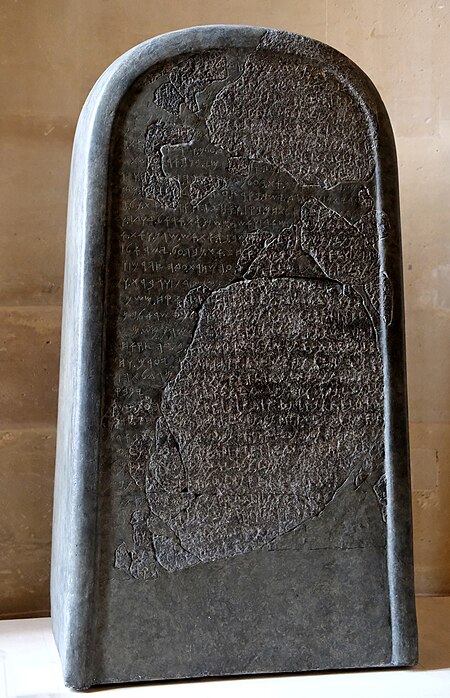
The Mesha Stele, also known as the Moabite Stone, was erected by King Mesha of Moab around 840 BCE to commemorate his rebellion against Israel. The inscription provides extraordinary confirmation and supplementation of the biblical narrative in 2 Kings 3. Key points include:
- Mesha describes Omri, king of Israel, as having oppressed Moab "for many days" because Chemosh (Moab's god) was angry with his people
- He names the "House of David" (this reading, in line 31, was strengthened by new imaging in 2019, though it remains debated)
- He describes capturing Israelite towns and slaughtering their populations
- He uses language strikingly parallel to the Hebrew Bible's herem (ban): "I devoted them to destruction for Ashtar-Chemosh"
- He mentions the name YHWH, describing the capture of vessels of YHWH from the Israelite sanctuary at Nebo
The Mesha Stele is invaluable for several reasons. It confirms the historicity of Omri and the Israelite domination of Moab. It provides a non-Israelite perspective on events described in the Bible. It demonstrates that the practice of herem --- devoting conquered peoples and cities to destruction as a religious act --- was not unique to Israel but was shared across Canaanite culture. And the language, grammar, and vocabulary are so close to biblical Hebrew that the inscription reads almost like a passage from the Book of Kings.
The Black Obelisk: Jehu at Shalmaneser's Feet
VerifiedDiscovered by Austen Henry Layard in 1846 at Nimrud (ancient Calah) in Iraq, the Black Obelisk of Shalmaneser III (now in the British Museum, Room 6) is a six-and-a-half-foot-tall black limestone monument covered in relief panels and cuneiform inscriptions. One panel depicts a figure prostrating himself before the Assyrian king. The inscription identifies him: "Tribute of Jehu, son of Omri: silver, gold, a golden bowl, a golden goblet, golden cups, golden buckets, tin, a staff of the king's hand, javelins."
This is the only known contemporary depiction of an Israelite king. Jehu is described as "son of Omri" despite having violently overthrown the Omride dynasty --- the Assyrians continued to use "Omri" as shorthand for Israel. The date is approximately 841 BCE, shortly after Jehu's bloody coup described in 2 Kings 9--10.
The panel shows Jehu (or his emissary) in a posture of complete submission, forehead to the ground, before the enthroned Shalmaneser. Behind him, servants carry the tribute items. The scene is a powerful reminder that the biblical narrative's focus on internal Israelite affairs omits the larger geopolitical reality: Israel existed in the shadow of Assyria, and survival required submission.
The Prophetic Movement
TraditionThe period of the Divided Kingdom is also the age of the classical prophets --- figures who stand among the most influential voices in human religious and moral history. The biblical prophetic movement is traditionally understood as beginning with figures like Elijah and Elisha in the ninth century and flowering in the eighth century with the so-called "writing prophets."
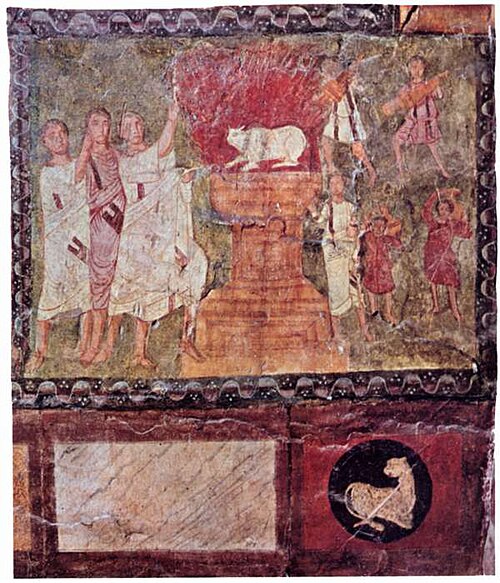
Elijah (c. 870s--850s BCE) confronts Ahab and Jezebel, challenges the prophets of Baal to a contest on Mount Carmel (1 Kings 18), flees to Horeb/Sinai where God speaks in a "still small voice," and is taken to heaven in a chariot of fire. No archaeological evidence confirms his existence, but his impact on Jewish, Christian, and Islamic tradition is immense.
Amos (c. 760s BCE), a shepherd from Tekoa in Judah, travels to Bethel in Israel to deliver a message of social justice: "Let justice roll down like waters, and righteousness like an ever-flowing stream" (Amos 5:24). He condemns the wealthy who "sell the righteous for silver, and the needy for a pair of sandals" and predicts the destruction of Israel.
TraditionHosea (c. 750s--720s BCE), a northern prophet, uses the metaphor of a faithless wife to describe Israel's relationship with God. His marriage to Gomer, a "wife of whoredom," becomes a living parable of divine love for an unfaithful people.
Isaiah of Jerusalem (c. 740s--700s BCE) ministers during the Assyrian crisis, counseling kings Ahaz and Hezekiah. His visions of universal peace --- "they shall beat their swords into plowshares" (Isaiah 2:4) --- and his messianic oracles ("For unto us a child is born," Isaiah 9:6) would become foundational texts for both Judaism and Christianity.
Micah of Moresheth (c. 730s--700s BCE), a rural prophet from the Judean lowlands, combines social critique with eschatological hope. His summary of divine requirements --- "to do justice, and to love kindness, and to walk humbly with your God" (Micah 6:8) --- is often cited as the ethical distillation of the prophetic message.
DebatedThe dating and composition of the prophetic books is complex. Most scholars believe the books bearing these names contain a core of authentic oracles but were edited, expanded, and supplemented by later disciples and editors. Isaiah, for example, is widely divided into at least three sections: chapters 1--39 (First Isaiah, eighth century), 40--55 (Second Isaiah or Deutero-Isaiah, exilic period), and 56--66 (Third Isaiah, post-exilic). The process of transmission and editing makes it difficult to identify with certainty which words are the prophet's own and which are later additions.
The Siloam Tunnel Inscription
Verified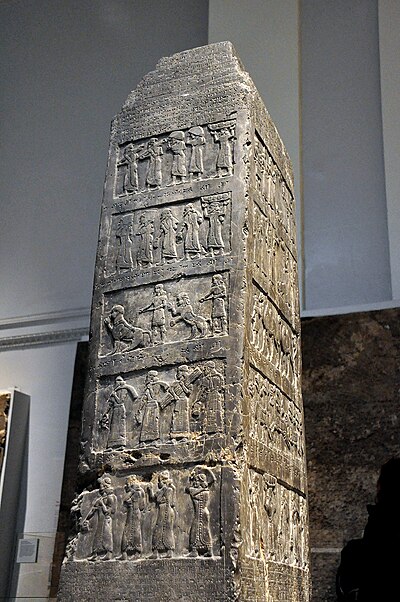
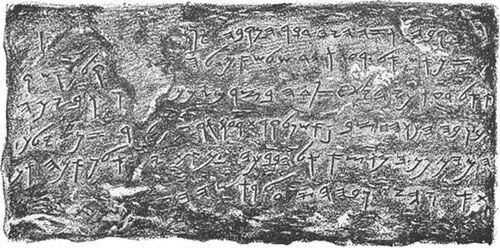
In 1880, a young student (reportedly swimming in the Pool of Siloam) discovered an inscription carved into the wall of an underground water tunnel in Jerusalem. The Siloam Inscription, now in the Istanbul Archaeological Museum (removed from Jerusalem during Ottoman rule, which remains a source of diplomatic tension), describes the moment when two teams of miners, tunneling from opposite ends, met in the middle:
"...the tunneling through. And this is the story of the tunneling through: while [the miners swung] their axes, each toward his fellow, and while there were still three cubits to tunnel through, there was heard the voice of a man calling to his fellow, for there was a fissure in the rock on the right... And on the day of the tunneling through, the miners struck, each to meet his fellow, axe against axe. And the water flowed from the spring to the pool, 1,200 cubits. And the height of the rock above the head of the miners was 100 cubits."
The tunnel, running approximately 533 meters (1,750 feet) through solid rock beneath the City of David, is almost universally attributed to King Hezekiah's preparations for the Assyrian siege of 701 BCE, matching the account in 2 Kings 20:20 and 2 Chronicles 32:30: "This same Hezekiah closed the upper outlet of the waters of Gihon and directed them down to the west side of the city of David."
The inscription is remarkable for its non-royal, non-religious character --- it celebrates the engineering achievement of the workers, not the glory of the king. The Hebrew script dates it to the late eighth century BCE, consistent with Hezekiah's reign.
The LMLK Seal Impressions
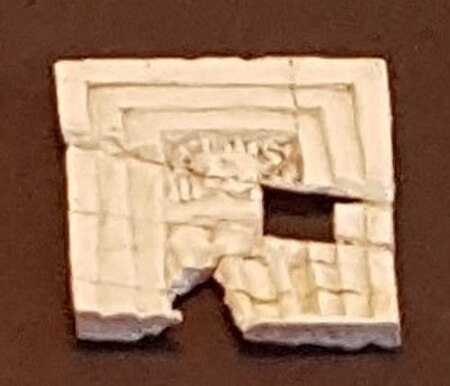
VerifiedOver 2,000 stamped jar handles bearing the inscription LMLK (Hebrew: lamelekh, "belonging to the king") have been found at sites throughout Judah. These royal storage jar stamps, dating primarily to the late eighth century BCE, bear the word LMLK above a winged sun disk or a winged scarab, and below it one of four place names: Hebron, Ziph, Socoh, or MMST (possibly Mamshit or an abbreviation for "government").
The LMLK stamps are interpreted as evidence of a centralized Judahite administrative system for collecting, storing, and distributing provisions --- most likely in preparation for the Assyrian invasion of 701 BCE. Their distribution provides a map of the Judahite state under Hezekiah and demonstrates a level of bureaucratic organization consistent with a mature, centralized kingdom.
Kuntillet Ajrud: "YHWH and His Asherah"
VerifiedIn 1975-1976, Ze'ev Meshel of Tel Aviv University excavated Kuntillet Ajrud, a remote site in the northeastern Sinai desert, dating to approximately 800 BCE. The site, probably a waystation or religious center on the road between Judah and the Red Sea, yielded large storage jars (pithoi) with painted images and Hebrew/Phoenician inscriptions.
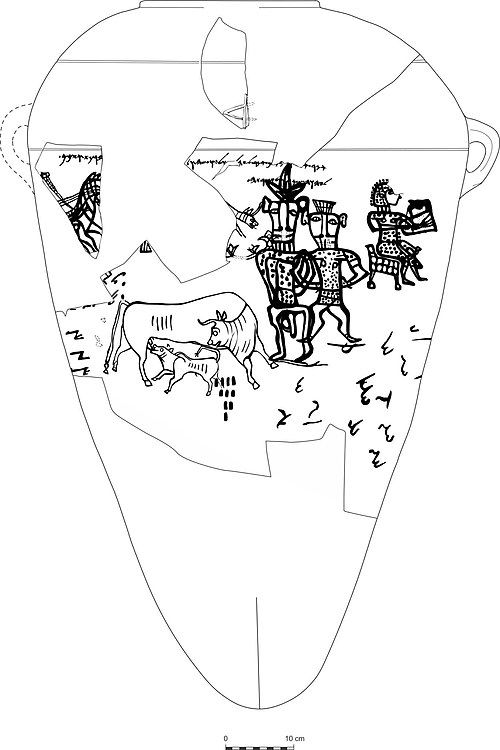
The inscriptions include blessings that read: "I bless you by YHWH of Samaria and his Asherah" and "I bless you by YHWH of Teman and his Asherah." Accompanying one inscription is a drawing of two figures --- a larger and smaller deity or a deity with a consort --- and a seated female figure playing a lyre.
DebatedThese inscriptions provoked intense scholarly debate. Does "his Asherah" refer to the Canaanite goddess Asherah as YHWH's consort, suggesting that popular Israelite religion was not monotheistic but included a divine couple? Or does asherah here refer to a sacred pole or tree (an asherah), a cultic object associated with YHWH's worship? The majority of scholars now accept that the inscriptions reflect a form of Israelite religion in which YHWH was worshipped alongside a consort figure, whether understood as the goddess Asherah or as a hypostasis of divine presence.
This evidence aligns with the biblical prophets' repeated condemnations of Asherah worship (e.g., 1 Kings 15:13, 2 Kings 21:7, 2 Kings 23:6) and with the Deuteronomistic History's insistence that Israel constantly "went after other gods." What the prophets condemned was, apparently, standard Israelite religious practice for centuries. Monotheism --- the exclusive worship of YHWH alone --- was not the starting point of Israelite religion but its end point, achieved only after a long and contested process of religious reform.
Israelite Religion: The Long Road to Monotheism
DebatedThe Kuntillet Ajrud inscriptions are part of a larger body of evidence that has transformed scholarly understanding of Israelite religion. The picture that emerges is far more complex than the biblical narrative of monotheism repeatedly corrupted by idolatry.
The evidence suggests a trajectory roughly as follows: In the earliest period, YHWH was one god among many in the Canaanite pantheon, perhaps associated with the southern desert regions (Midian, Edom, Teman). The worship of YHWH was combined with the worship of El, Baal, Asherah, and other deities. Over time, YHWH absorbed the characteristics and epithets of El (the supreme god) and displaced Baal (the storm god), a process reflected in personal names (many Israelite names contain "El" or "Baal" elements) and in biblical passages where YHWH takes over El's role as head of the divine council (Psalm 82).
The move from this polytheistic or henotheistic context to strict monotheism was driven by the prophetic movement, the Deuteronomistic reform under Josiah (622 BCE), and the theological crisis of the Babylonian exile. The statement "YHWH is God; there is no other" (Deuteronomy 4:35) represents the culmination of centuries of religious evolution, not the original Israelite position.
VerifiedArchaeological evidence supports this trajectory. Female figurines, known as "Judean pillar figurines," are found by the hundreds at Judahite sites from the eighth and seventh centuries --- likely representations of Asherah or fertility figures used in domestic religion. Cult stands from Taanach depict multiple divine figures. Inscriptions from Khirbet el-Qom (near Hebron) also mention "YHWH and his Asherah." The iconographic record, studied extensively by Othmar Keel and Christoph Uehlinger in Gods, Goddesses, and Images of God in Ancient Israel (1998), reveals a rich visual culture of divine imagery that the biblical text suppresses.
The Samaria Ostraca
VerifiedDiscovered during the Harvard excavations of Samaria in 1910, the Samaria Ostraca are a collection of approximately 100 inscribed pottery sherds dating to the first half of the eighth century BCE, probably during the reign of Jeroboam II (c. 786--746 BCE). They record shipments of aged wine and fine oil from various estates to the royal palace.
The ostraca are significant for several reasons. The personal names mentioned include both Yahwistic names (containing the element yahu or yo) and Baal names (containing the element baal), confirming that worship of both YHWH and Baal was common in northern Israel. The place names correlate with tribal and clan designations known from the biblical text, and the administrative system they reveal --- with its districts, officials, and standardized record-keeping --- demonstrates the bureaucratic sophistication of the northern kingdom.
Conclusion
The Divided Kingdom era is where biblical narrative and archaeological evidence most productively converge. The Mesha Stele, the Black Obelisk, the Kurkh Monolith, the Siloam Tunnel inscription, the LMLK stamps, and the Kuntillet Ajrud inscriptions provide a rich extrabiblical context for the events described in Kings and Chronicles. The prophetic voices of Amos, Hosea, Isaiah, and Micah articulate a moral and theological vision that would outlast both kingdoms. And the evidence for Israelite religious diversity --- YHWH and his Asherah, Baal names alongside Yahwistic names, female figurines in Judahite homes --- challenges simplistic narratives of monotheism versus paganism.
The stones confirm that the Divided Kingdom was real, that its kings and wars were historical, and that its society was more complex than any single source --- biblical or archaeological --- can capture alone.
Locations in This Chapter
Loading map...