Part 3: Kingdoms · 722 BCE
11.Fall of Israel
Assyrian conquest, Ten Lost Tribes
17 min read
The Fall of Israel
The Assyrian Shadow
VerifiedFor much of the ninth century BCE, the kingdom of Israel had managed the Assyrian threat through a combination of tribute, diplomacy, and coalition warfare. The Battle of Qarqar in 853 BCE, where Ahab's chariot force helped halt Shalmaneser III's westward advance, demonstrated that the small states of the Levant could resist Assyria when united. But unity was rare, and Assyria's patience was long.
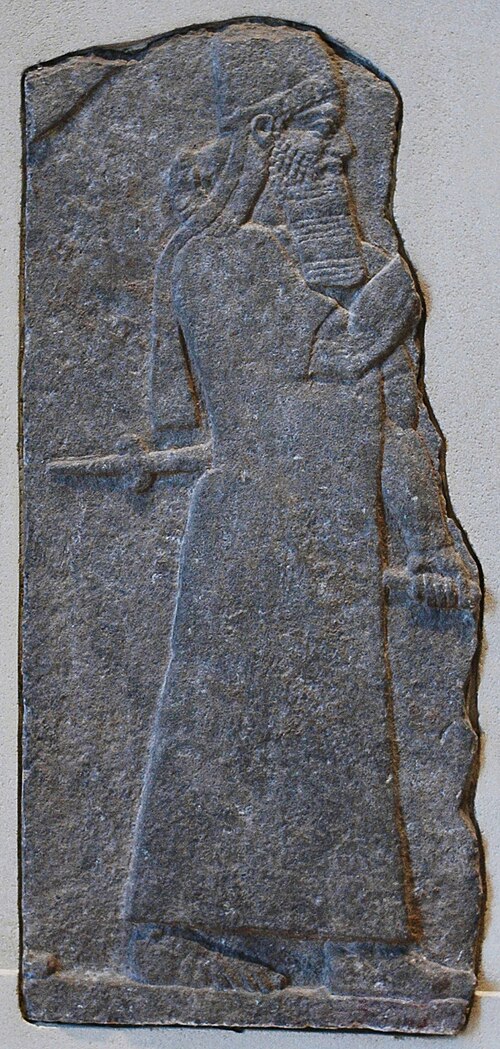
The turning point came with the accession of Tiglath-Pileser III (reigned 745--727 BCE), who transformed Assyria from a predatory but inconsistent empire into a systematic machine of conquest and administration. His innovations were devastating in their efficiency: conquered territories were no longer merely raided and left to pay tribute but were converted into Assyrian provinces, governed by Assyrian officials, and integrated into the imperial economy. Populations that resisted were deported and replaced with settlers from other conquered regions --- a policy designed to shatter local identities, prevent rebellion, and create a docile, mixed population dependent on Assyrian authority.
Verified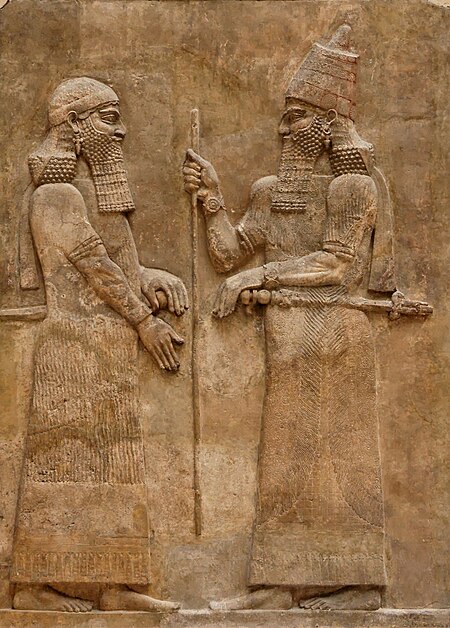
The Assyrian records, preserved on clay tablets and stone reliefs now housed primarily in the British Museum and the Iraq Museum in Baghdad, provide detailed accounts of these campaigns. Tiglath-Pileser III's own annals, inscribed on stone slabs from his palace at Nimrud (Calah), describe his campaigns in the Levant with bureaucratic precision: cities conquered, tribute received, populations counted and relocated.
The Syro-Ephraimite War and the Beginning of the End
TraditionThe biblical account in 2 Kings 15--16 and Isaiah 7 describes the chain of events that led to Israel's destruction. Around 735 BCE, King Pekah of Israel and King Rezin of Aram-Damascus formed an anti-Assyrian coalition and pressured King Ahaz of Judah to join. When Ahaz refused, the coalition attacked Judah, intending to depose the Davidic king and install a puppet ("the son of Tabeel") on the throne.
The prophet Isaiah urged Ahaz to trust in God rather than seek foreign alliances: "If you do not stand firm in faith, you will not stand at all" (Isaiah 7:9). He offered the famous sign: "The young woman is with child and shall bear a son, and shall name him Immanuel" --- a passage that would later become central to Christian theology but in its original context was a time-bound prophecy about the imminent deliverance of Judah.
VerifiedAhaz ignored the prophet and instead sent tribute to Tiglath-Pileser III, requesting Assyrian intervention: "I am your servant and your son. Come up and save me from the hand of the king of Aram and from the hand of the king of Israel, who are attacking me" (2 Kings 16:7). The Assyrian annals confirm this sequence. Tiglath-Pileser's inscriptions record his campaign against Damascus and Israel in 734--732 BCE. Damascus fell in 732 BCE; Rezin was killed. The northern and eastern territories of Israel --- Galilee, Gilead, the Jezreel Valley --- were annexed as Assyrian provinces. The population was deported. Israel was reduced to a rump state centered on the hill country of Samaria, a vassal kingdom surviving on Assyrian sufferance.
VerifiedTiglath-Pileser's own inscriptions describe the deportation: "The land of Bit-Humria [House of Omri, i.e., Israel]... all its people together with their possessions I led to Assyria." An inscription from Nimrud records the specific territories taken and the installation of an Assyrian governor. The Bible confirms: "In the days of King Pekah of Israel, Tiglath-pileser of Assyria came and captured Ijon, Abel-beth-maacah, Janoah, Kedesh, Hazor, Gilead, and Galilee, all the land of Naphtali; and he carried the people captive to Assyria" (2 Kings 15:29).
The Siege and Fall of Samaria
VerifiedThe end came swiftly. Hoshea, the last king of Israel, had come to power as an Assyrian vassal, placed on the throne by Tiglath-Pileser III after assassinating Pekah. But when Tiglath-Pileser died in 727 BCE, Hoshea saw an opportunity. He stopped paying tribute and sent envoys to "So, king of Egypt" (2 Kings 17:4) --- probably Osorkon IV or possibly the Egyptian commander Tefnakht --- seeking an alliance against Assyria.
It was a fatal miscalculation. Shalmaneser V (reigned 727--722 BCE) responded by invading Israel and besieging Samaria. The siege lasted three years. The city fell in 722 or 721 BCE --- the exact year is debated because Shalmaneser V died during or shortly after the campaign, and his successor Sargon II claimed credit for the final conquest.
VerifiedSargon II's inscriptions, found at his palace at Khorsabad (Dur-Sharrukin) and now partly in the British Museum and the Iraq Museum, provide specific numbers: "I besieged and captured Samaria. I took as booty 27,290 people who lived there." Other inscriptions detail the aftermath: "I settled in them people from lands I had conquered. I placed my official over them and imposed upon them the tribute of the former king."
The Assyrian records are remarkably consistent with the biblical account in 2 Kings 17:5-6: "Then the king of Assyria invaded all the land and came to Samaria; for three years he besieged it. In the ninth year of Hoshea, the king of Assyria captured Samaria; he carried the Israelites away to Assyria. He placed them in Halah, on the Habor, the river of Gozan, and in the cities of the Medes."
DebatedThe question of which Assyrian king deserves credit for Samaria's fall --- Shalmaneser V or Sargon II --- remains a minor scholarly dispute. The Bible attributes the siege to Shalmaneser but does not name the king who completed the conquest. Sargon II, a usurper who may have overthrown Shalmaneser, had political motivation to claim the victory. The Babylonian Chronicle, a third source, attributes the fall of Samaria to Shalmaneser. Most scholars now believe that Shalmaneser V began and largely completed the siege, but that Sargon II may have overseen the final deportations and administrative reorganization.
Assyrian Deportation Policy
VerifiedThe deportation of the Israelite population was not a random act of cruelty but a calculated imperial strategy. Assyrian records from multiple campaigns detail the mechanics of mass deportation: conquered populations were marched to distant parts of the empire, where they were resettled in agricultural communities, military colonies, or labor gangs. Simultaneously, populations from other conquered regions were brought in to replace them.
The specific destinations mentioned for the Israelite deportees --- Halah, the Habor River region (in modern northeastern Syria), and the "cities of the Medes" (in modern western Iran) --- represent a deliberate scattering across the breadth of the Assyrian Empire. Assyrian administrative texts from Nimrud include references to Israelite deportees integrated into the imperial workforce.
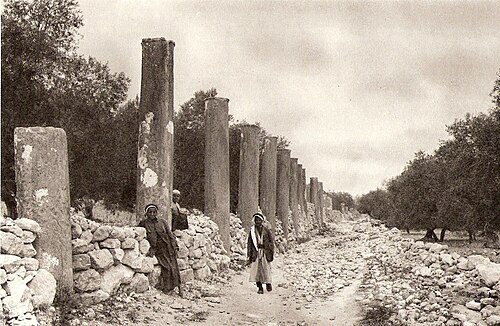
VerifiedThe archaeological evidence for the fall of Samaria is less dramatic than one might expect. Excavations at Samaria by the Harvard and later the Joint Expeditions revealed destruction layers consistent with the Assyrian conquest, but the site was rebuilt and continued to function as an Assyrian provincial capital. Assyrian-style pottery and building techniques appear in the post-conquest layers, alongside local traditions, reflecting the mixed population that now inhabited the region.
At other Israelite sites, the evidence is clearer. Hazor shows a destruction layer from the Assyrian campaigns of the 730s BCE. The site of Dan was destroyed and its cult installation dismantled. Megiddo was rebuilt in an Assyrian architectural style, with a characteristic open-court building plan used for Assyrian administrative centers.
The Biblical Theology of Destruction
TraditionThe Deuteronomistic historian who composed the account in 2 Kings 17 uses the fall of Israel as a theological set piece --- a sermon on the consequences of disobedience. The chapter is one of the most important in the entire Deuteronomistic History, providing an extended explanation of why God allowed the destruction of the northern kingdom:
"This occurred because the people of Israel had sinned against the Lord their God, who had brought them up out of the land of Egypt from under the hand of Pharaoh king of Egypt. They had worshipped other gods and walked in the customs of the nations whom the Lord drove out before the people of Israel... They set up for themselves pillars and sacred poles on every high hill and under every green tree; there they made offerings on all the high places... They served idols, of which the Lord had said to them, 'You shall not do this.'" (2 Kings 17:7-12)
The passage continues with a catalog of sins: divination, child sacrifice, rejection of the prophets, and violation of the covenant. The message is clear: the fall of Israel was not an accident of geopolitics but a divine judgment. The implicit warning to Judah --- the surviving kingdom, the audience of the Deuteronomistic History --- is unmistakable: reform or face the same fate.
The Samaritans: Origin of a Community
VerifiedThe Assyrian resettlement policy had lasting consequences. According to 2 Kings 17:24, "The king of Assyria brought people from Babylon, Cuthah, Avva, Hamath, and Sepharvaim, and placed them in the cities of Samaria in place of the people of Israel." These foreign settlers, encountering difficulties in the land (including lion attacks, which they attributed to the displeasure of the local god), requested and received Israelite priests to teach them "the law of the god of the land."
DebatedThe result, according to the biblical account, was a syncretic religion: "They worshiped the Lord but also served their own gods" (2 Kings 17:33). This passage is the origin of the centuries-long Jewish-Samaritan rift. 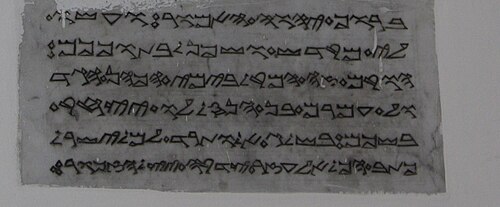
The Samaritans, who survive today as a small community (approximately 800 people) centered on Mount Gerizim near Nablus, reject this characterization entirely. They claim descent from the original Israelite population that was never deported --- the tribes of Ephraim, Manasseh, and Levi --- and regard themselves as the true preservers of Israelite religion.
Modern genetic studies have shed some light on this question. Research published by Peidong Shen and others in 2004 found that Samaritan Y-chromosomes cluster closely with Jewish Cohenim (priestly lineage), supporting their claim of Israelite descent. The Samaritans' Torah (the Samaritan Pentateuch) differs from the Jewish Masoretic Text in approximately 6,000 places, many of them minor, but including the significant substitution of Mount Gerizim for Mount Ebal/Jerusalem as the chosen place of worship.
The historical reality was likely more complex than either the Jewish or Samaritan narrative suggests: some Israelites were deported, some remained, foreign settlers were brought in, and the resulting population was a mixture --- as populations usually are after imperial upheaval.
The "Ten Lost Tribes"
TraditionThe deportation of the northern Israelites gave rise to one of history's most enduring and fanciful legends: the Ten Lost Tribes. If twelve tribes constituted Israel, and only Judah and Benjamin survived in the south, what happened to the other ten?
The idea that the ten tribes survived somewhere, maintaining their identity in some remote corner of the earth, has generated centuries of speculation and no small amount of pseudohistory. In the second century BCE, the apocryphal 2 Esdras (4 Ezra) 13:39-47 claimed the tribes traveled to a distant land called "Arzareth" (possibly from the Hebrew erets aheret, "another land"). This notion spawned an extraordinary series of identifications:
- The ninth-century traveler Eldad ha-Dani claimed to be from the tribe of Dan and described the ten tribes living beyond the legendary river Sambatyon, which rested on the Sabbath
- In the seventeenth century, Rabbi Menasseh ben Israel argued that the indigenous peoples of the Americas were the lost tribes, a theory that influenced Oliver Cromwell's readmission of Jews to England
- The British Israelism movement of the nineteenth century claimed that the Anglo-Saxon peoples were the lost tribes
- Various communities --- the Beta Israel of Ethiopia, the Bnei Menashe of northeast India, the Pashtuns of Afghanistan, the Lemba of southern Africa --- have been identified (by themselves or others) as descendants of the lost tribes
What actually happened to the deportees is more prosaic. Assyrian records and subsequent evidence suggest that the deported Israelites were absorbed into the general population of the Assyrian Empire and its successor states. Some maintained a distinct identity for a time --- Israelite-style names appear in Assyrian administrative documents from the seventh century --- but over generations, assimilation was the norm. There is no credible evidence that any population maintained a continuous, identifiable northern Israelite identity from 722 BCE to the modern period.
That said, the genetic and cultural connections claimed by groups like the Beta Israel, the Bnei Menashe, and the Lemba are not entirely without foundation --- they may reflect ancient Jewish diaspora communities established through trade, migration, or proselytism, even if not directly descended from the northern deportees.
The Impact on Judah: Refugee Crisis and Urban Expansion
VerifiedThe fall of Israel in 722 BCE had profound consequences for the surviving kingdom of Judah. Archaeological evidence reveals that Jerusalem expanded dramatically in the late eighth century --- growing from a modest hill town of perhaps 10--12 acres to a major city of 150 acres or more, incorporating the entire Western Hill (the area of today's Jewish and Armenian Quarters of the Old City).
Excavations by Nahman Avigad in the Jewish Quarter (1969--1982) uncovered a massive wall, approximately 7 meters (23 feet) thick, dating to the late eighth century BCE --- likely Hezekiah's "Broad Wall" mentioned in Nehemiah 3:8. The wall enclosed a dramatically expanded city, consistent with a major population influx.
DebatedThe most likely explanation for this sudden growth is a massive influx of refugees from the destroyed northern kingdom. Fleeing the Assyrian onslaught, Israelites from the north streamed into Judah, swelling Jerusalem's population and transforming it from a secondary hill town into a genuine urban center. This refugee crisis may have had profound cultural consequences: northern literary traditions (including early versions of texts that would become part of the Torah), prophetic oracles, and religious practices were brought south, where they merged with Judahite traditions.
Some scholars, including Israel Finkelstein and Neil Asher Silberman, argue that this influx was the catalyst for the composition of much of the Hebrew Bible. The merging of northern and southern traditions --- E (Elohist) and J (Yahwist) sources, in the vocabulary of the Documentary Hypothesis --- may have occurred precisely in this period, as Judahite scribes incorporated the literary heritage of the destroyed northern kingdom.
Sennacherib's Campaign of 701 BCE
VerifiedThe fall of Israel was not the end of the Assyrian threat to Judah. In 701 BCE, King Sennacherib of Assyria launched a massive campaign against the rebellious states of the Levant, including Judah under King Hezekiah. The campaign is one of the best-documented events of the ancient Near East, attested by Assyrian inscriptions, Judahite archaeology, and the biblical text.
The Sennacherib Prism (also known as the Taylor Prism), a hexagonal clay cylinder now in the British Museum, records the campaign in Sennacherib's own words. Regarding Hezekiah, he boasts: "As for Hezekiah the Judahite, who did not submit to my yoke, 46 of his strong, walled cities, as well as the small towns in their area, which were without number... I besieged and took... Himself, like a caged bird, I shut up in Jerusalem, his royal city."
Verified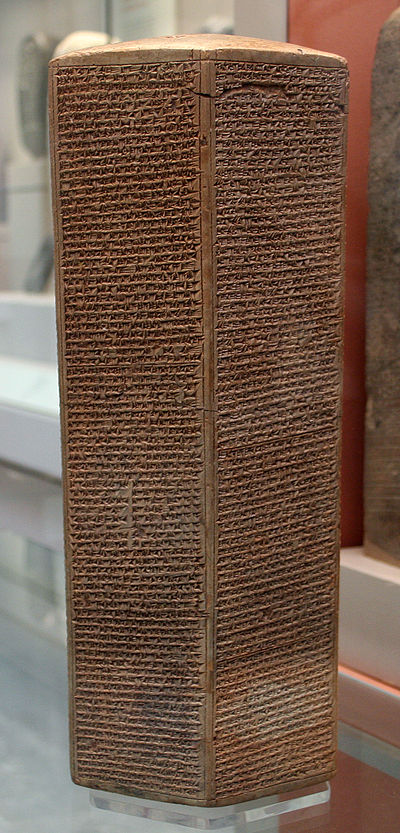
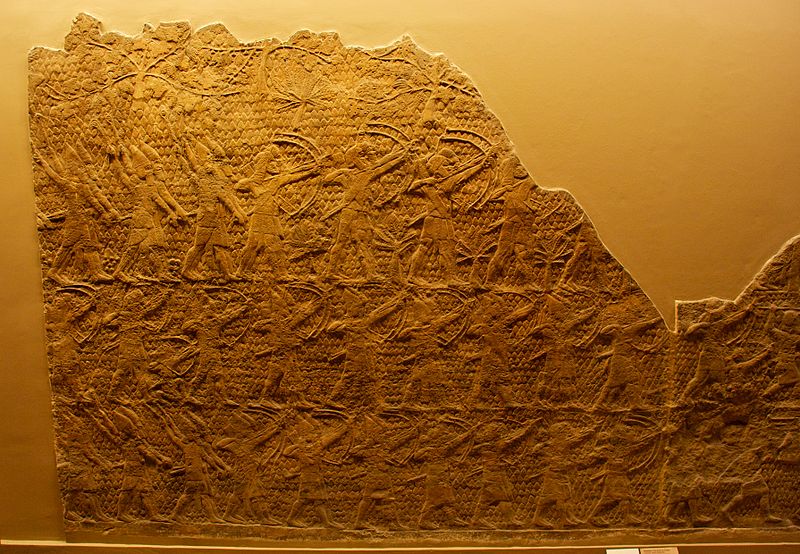
The siege and destruction of Lachish, Judah's second most important city, is depicted in extraordinary detail in a series of stone reliefs from Sennacherib's palace at Nineveh, now displayed in the British Museum (Room 10b). The reliefs show the Assyrian siege ramp, battering rams attacking the walls, defenders fighting back with arrows and burning torches, and the grim aftermath: prisoners being led away, some impaled on stakes, women and children marching into exile.
Archaeological excavation of Lachish (Tell ed-Duweir) by David Ussishkin from 1973 to 1994 confirmed the Assyrian account in remarkable detail. The siege ramp, the counter-ramp built by the defenders, arrowheads, sling stones, a chain used by defenders to catch battering rams, and the remains of hundreds of individuals in a mass tomb all testified to a fierce and devastating battle.
DebatedWhat happened at Jerusalem is more mysterious. The Bible presents two accounts (2 Kings 18--19, Isaiah 36--37) in which an angel of the Lord strikes down 185,000 Assyrian soldiers in a single night, forcing Sennacherib to withdraw. Herodotus preserves a similar tradition of a miraculous deliverance, attributing it to a plague of mice (possibly representing bubonic plague) that gnawed through the Assyrian bowstrings. Sennacherib's own inscription, notably, does not claim to have conquered Jerusalem --- a striking omission for an Assyrian king. He claims to have shut Hezekiah up "like a caged bird" and extracted enormous tribute, but the city itself apparently survived.
The most widely accepted scholarly reconstruction is that Hezekiah submitted, paid an enormous tribute (confirmed by both Assyrian and biblical sources), and Jerusalem was spared --- whether by plague, divine intervention, or simply because the tribute was sufficient. The city's survival, while the rest of Judah lay devastated, would have been experienced as miraculous by its inhabitants and shaped the theology of Zion's inviolability that would persist until the Babylonian destruction of 586 BCE.
Conclusion
The fall of the northern kingdom of Israel in 722 BCE was a catastrophe whose reverberations extended far beyond the immediate victims. It eliminated one of two Israelite states, scattered its population across the Assyrian Empire, gave rise to the Samaritan community and the legend of the Ten Lost Tribes, triggered a refugee crisis that transformed Jerusalem, and set the stage for the religious and literary developments that would produce much of the Hebrew Bible.
The stones bear witness: Assyrian reliefs depict the siege, prisms record the booty, deportation lists count the exiles. The scrolls interpret: the Deuteronomistic historian explains the destruction as divine judgment, the prophets frame it as the consequence of injustice and idolatry. Together, they tell the story of how a nation was destroyed and how its survivors made meaning from the ruins.
Locations in This Chapter
Loading map...