Part 3: Kingdoms · 586 BCE
12.Fall of Judah
Lachish Letters, Babylonian exile
19 min read
The Fall of Judah
A Kingdom's Final Days
The northern kingdom had fallen to Assyria in 722 BCE. For another 136 years, the smaller, poorer kingdom of Judah survived --- sometimes as a vassal, sometimes in rebellion, always in the shadow of empires. Its end, when it came, was no less devastating than Israel's, and its consequences would prove even more transformative. The destruction of Jerusalem and the Babylonian exile reshaped Judaism forever, producing the theological crisis and creative response that forged the religion as we know it.
The Ketef Hinnom Silver Scrolls: The Oldest Biblical Text
VerifiedBefore we turn to the destruction, we begin with a discovery that speaks to what existed before the catastrophe. In 1979, Gabriel Barkay of Tel Aviv University, excavating burial caves at Ketef Hinnom, a ridge overlooking the Hinnom Valley just southwest of the Old City of Jerusalem, discovered two tiny silver scrolls in a repository within Cave 24.
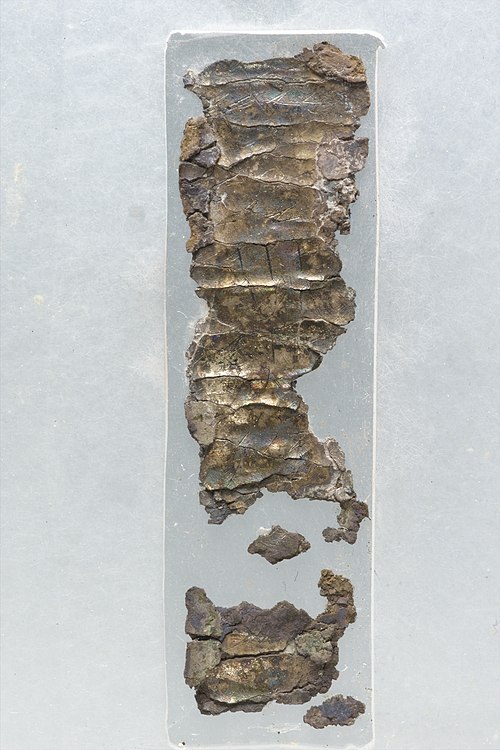
The scrolls, measuring only 97mm and 39mm in length when unrolled (an extraordinarily delicate process that took three years), bore inscriptions in paleo-Hebrew script. When deciphered, they were found to contain a version of the Priestly Blessing from Numbers 6:24-26:
Verified"May YHWH bless you and keep you; May YHWH make his face shine upon you and be gracious to you; May YHWH lift up his countenance upon you and give you peace."
These scrolls, now displayed at the Israel Museum in Jerusalem, date to the late seventh or early sixth century BCE --- before the Babylonian destruction of 586 BCE. They are the oldest surviving texts containing a passage from the Hebrew Bible, predating the Dead Sea Scrolls by approximately 400 years. They demonstrate that at least portions of the biblical text existed in written form before the exile, challenging theories that place the composition of the entire Pentateuch in the post-exilic period.
The scrolls were likely worn as amulets, placed with the dead as protective charms. Their discovery in a pre-exilic tomb confirms that the Priestly Blessing was not merely a post-exilic priestly invention but was known and cherished in late monarchic Judah.
The Rise of Babylon
VerifiedThe Assyrian Empire, which had dominated the Near East for over two centuries, collapsed with stunning rapidity between 626 and 609 BCE. The catalyst was a revolt by Nabopolassar, a Chaldean leader who seized Babylon in 626 BCE and founded the Neo-Babylonian (Chaldean) dynasty. Allied with the Medes under Cyaxares, Nabopolassar systematically dismantled Assyrian power.
The great Assyrian cities fell one by one: Ashur in 614 BCE, Nineveh in 612 BCE (the fall celebrated in the biblical book of Nahum: "Nineveh is devastated; who will mourn for her?"), and Harran in 610 BCE. 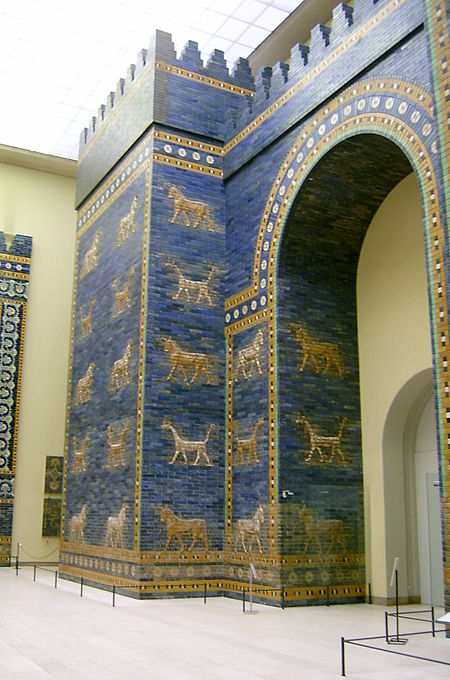
The Babylonian Chronicles, a series of cuneiform tablets now in the British Museum, provide a year-by-year account of these campaigns with remarkable precision.
TraditionJudah, under the reforming King Josiah, appears to have taken advantage of Assyria's collapse to expand its territory and influence. Josiah's religious reform of 622 BCE --- the discovery of the "Book of the Law" in the temple (widely identified with an early form of Deuteronomy) and the subsequent centralization of worship in Jerusalem --- represented both a theological revolution and a political assertion of independence. But Josiah's death at Megiddo in 609 BCE, killed while trying to intercept the Egyptian Pharaoh Necho II (who was marching north to aid the last Assyrian remnant), ended Judah's brief moment of autonomy.
VerifiedAfter Josiah's death, Judah became a pawn in the struggle between Egypt and Babylon. Necho II installed Josiah's son Jehoiakim on the throne as an Egyptian vassal. But in 605 BCE, the Babylonian crown prince Nebuchadnezzar defeated the Egyptians decisively at the Battle of Carchemish --- an event recorded in both the Babylonian Chronicles and the Bible (Jeremiah 46:2). Babylon was now the dominant power, and Judah's fate was sealed.
Nebuchadnezzar and the First Siege (597 BCE)
VerifiedJehoiakim transferred his loyalty to Babylon but then rebelled, likely encouraged by Egyptian promises of support that never materialized. He died in late 598 BCE, possibly assassinated, and was succeeded by his eighteen-year-old son Jehoiachin.
The Babylonian Chronicles provide a precise date for what happened next. A tablet now in the British Museum (BM 21946) records: "In the seventh year [of Nebuchadnezzar], in the month of Kislev, the king of Akkad [Babylon] mustered his troops, marched to the Hatti-land, and encamped against the city of Judah [Jerusalem], and on the second day of the month of Adar he seized the city and captured the king. He appointed a king of his choice there. He took its heavy tribute and brought it to Babylon."
VerifiedThis corresponds to March 16, 597 BCE --- one of the most precisely dated events in ancient Near Eastern history. Jehoiachin surrendered after a brief siege. The Babylonians deported the king, the queen mother, court officials, military officers, and craftsmen --- the elite of Judahite society. The Bible numbers the deportees at 10,000 (2 Kings 24:14) or 8,000 (2 Kings 24:16) or 3,023 (Jeremiah 52:28, perhaps counting only adult males).
Jehoiachin's captivity in Babylon is confirmed by the remarkable discovery of administrative tablets at Babylon itself. The so-called Jehoiachin's Rations Tablets, found by Robert Koldewey during his excavation of Babylon (1899--1917) and now in the Pergamon Museum in Berlin, record oil rations issued to "Yaukin, king of the land of Yahudu [Judah]" and his five sons. The exiled king was being maintained at Babylonian court expense --- a detail that matches the notice in 2 Kings 25:27-30 that Jehoiachin was eventually released from prison and given a regular allowance.
Zedekiah, Jeremiah, and the Final Catastrophe
TraditionNebuchadnezzar placed Jehoiachin's uncle, Mattaniah, on the throne, renaming him Zedekiah. The new king was a vassal from the start, and the prophet Jeremiah repeatedly warned him against rebellion. Jeremiah's message was profoundly unpopular: submit to Babylon, for God himself has given Nebuchadnezzar dominion over the nations. Those who prophesy deliverance are lying. The exile will last seventy years.
Jeremiah wore a yoke around his neck as a symbolic act, urging submission. The prophet Hananiah broke the yoke, prophesying that Babylon's power would be broken within two years. Jeremiah responded that Hananiah would die that year --- and according to the text, he did (Jeremiah 28). Jeremiah wrote a letter to the exiles in Babylon with the extraordinary counsel: "Build houses and live in them; plant gardens and eat their produce. Take wives and have sons and daughters... seek the welfare of the city where I have sent you into exile, and pray to the Lord on its behalf, for in its welfare you will find your welfare" (Jeremiah 29:5-7).
TraditionDespite Jeremiah's warnings, Zedekiah rebelled against Babylon around 589 BCE, likely encouraged by promises of Egyptian support. 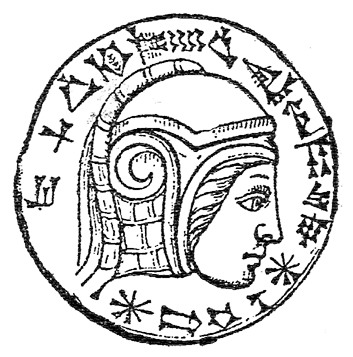
Nebuchadnezzar responded with overwhelming force. The Babylonian army besieged Jerusalem, and this time there would be no mercy.
The siege lasted approximately eighteen months, from January 588 to July 586 BCE. Conditions within the city were appalling. Lamentations, traditionally attributed to Jeremiah, describes the horror: "The hands of compassionate women have boiled their own children; they became their food in the destruction of my people" (Lamentations 4:10). Jeremiah was imprisoned for his defeatist preaching, thrown into a muddy cistern, and rescued by an Ethiopian eunuch named Ebed-melech.
The Lachish Letters: Voices from the Frontline
VerifiedIn 1935, during J.L. Starkey's excavation of Lachish (Tell ed-Duweir), a cache of twenty-one inscribed pottery sherds --- ostraca --- was discovered in the guard room of the city gate, with additional pieces found in 1938. These are the Lachish Letters, dating to the final months before the Babylonian destruction, approximately 588--586 BCE. They are now in the British Museum and the Rockefeller Museum in Jerusalem.
The letters are military correspondence, apparently from a subordinate officer named Hoshaiah at an outpost to his superior, Yaush, the military commander at Lachish. They provide a harrowing window into the last days of Judah. Letter IV is the most famous:
"And let my lord know that we are watching for the signals of Lachish, according to all the signs which my lord has given, for we cannot see Azekah."
The implication is devastating: Azekah, another fortified city, has already fallen. Its signal fires are no longer visible. Lachish is next. This matches Jeremiah 34:7: "The army of the king of Babylon was fighting against Jerusalem and against all the cities of Judah that were left, Lachish and Azekah; for these were the only fortified cities of Judah that remained."
VerifiedOther letters reveal the political tensions within Judah during the crisis. Letter III mentions "the prophet" --- possibly Jeremiah himself --- and refers to a royal letter that "weakens the hands" of the people, echoing the accusation against Jeremiah in Jeremiah 38:4: "He is weakening the hands of the soldiers who are left in this city." Letter VI mentions officials traveling to Egypt, possibly seeking the military aid that never came.
The Lachish Letters are among the most moving documents to survive from the ancient world. They are not royal propaganda or theological reflection but the desperate, practical communications of men facing imminent destruction. The handwriting varies between letters, suggesting multiple authors. The language is biblical Hebrew in its purest form, confirming that the language of the Bible was the living language of late monarchic Judah.
The Destruction of Jerusalem (586 BCE)
TraditionIn the eleventh year of Zedekiah, on the ninth day of the fourth month (Tammuz), the Babylonians breached Jerusalem's walls. Zedekiah and his soldiers fled by night through a gate near the king's garden, heading toward the Jordan Valley. The Babylonian army pursued and captured Zedekiah in the plains of Jericho. His soldiers scattered.
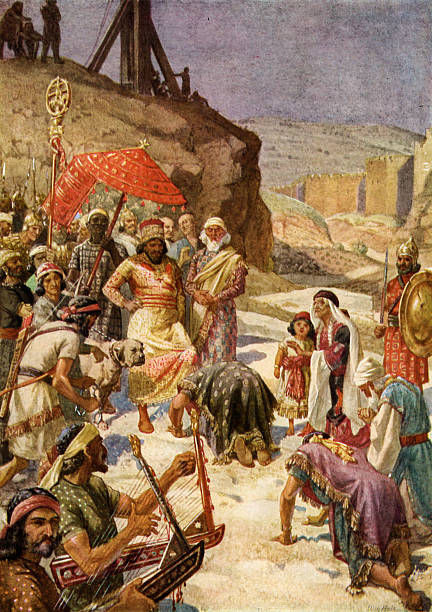
Zedekiah was brought before Nebuchadnezzar at Riblah in Syria. His sons were slaughtered before his eyes --- the last thing he would ever see, for his eyes were then put out. He was bound in bronze fetters and taken to Babylon, where he died in prison.
TraditionOne month later, Nebuzaradan, the captain of the Babylonian guard, entered Jerusalem and systematically destroyed it. The temple was burned, the palace was burned, and "all the houses of Jerusalem, every great house, he burned down" (2 Kings 25:9). The bronze pillars Jachin and Boaz, the bronze sea, and the bronze stands were broken up and carried to Babylon. The gold and silver vessels of the temple were taken as plunder. The walls of Jerusalem were demolished.
A second deportation followed. The chief priest Seraiah, the second priest Zephaniah, three guardians of the threshold, and other officials were executed at Riblah. The remaining population --- except for "some of the poorest people of the land" left to tend the vineyards and fields --- was carried into exile.
The Book of Lamentations captures the theological and emotional devastation:
Verified"How lonely sits the city that once was full of people! How like a widow she has become, she that was great among the nations! She that was a princess among the provinces has become a vassal." (Lamentations 1:1)
Archaeological evidence for the destruction of Jerusalem in 586 BCE is limited but real. Excavations in the City of David, the Jewish Quarter, and other areas of ancient Jerusalem have revealed burned layers, arrowheads (both Judahite and Babylonian types), and collapsed structures consistent with a violent destruction. Yigal Shiloh's excavations in the City of David (1978--1985) uncovered the "Burnt Room" --- a domestic structure containing charred wooden beams, smashed pottery, and a collection of bullae (clay seal impressions) that had been preserved by the fire. Among these were bullae bearing the names of officials mentioned in the Book of Jeremiah, including "Gemariah son of Shaphan" (cf. Jeremiah 36:10) and "Azariah son of Hilkiah" (cf. 1 Chronicles 6:13).
The Babylonian Exile
VerifiedThe Babylonian exile (586--539 BCE) was not a wholesale deportation of the entire Judahite population. Archaeological surveys suggest that the Babylonians devastated the urban centers and the Shephelah (lowlands) but that rural areas of Judah, particularly the region around Mizpah (Tell en-Nasbeh) north of Jerusalem, continued to be inhabited. The Babylonians appointed Gedaliah son of Ahikam as governor of the remaining population, establishing his seat at Mizpah rather than the destroyed Jerusalem. When Gedaliah was assassinated by Ishmael son of Nethaniah, a member of the royal family, the remaining Judahites fled to Egypt, taking Jeremiah with them against his will (Jeremiah 41--43).
VerifiedThe experience of the exiles in Babylon is illuminated by a remarkable collection of cuneiform tablets known as the Al-Yahudu ("Judahtown") archive. These tablets, which surfaced on the antiquities market in the 1990s and have been studied by Laurie Pearce, Cornelia Wunsch, and others, document a community of Judahite exiles living in a settlement called Al-Yahudu in the Babylonian countryside, near Nippur.
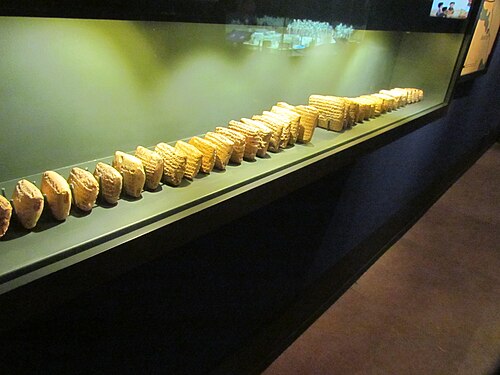
The tablets, dating from the late sixth to the fifth century BCE, record mundane transactions: land leases, tax payments, business contracts. The names are a mixture of Babylonian and Yahwistic forms (Neriglissar alongside Neriah-yama, for example), reflecting a community that maintained its identity while engaging with Babylonian economic life. The tablets confirm Jeremiah's advice: the exiles built houses, planted gardens, and sought the welfare of the city.
DebatedThe size of the exile community is debated. Jeremiah 52:28-30 gives a total of 4,600 deportees across three deportations (597, 586, and 582 BCE), a surprisingly low number that may count only adult males or heads of households. The actual number of exiles, including women and children, may have been 15,000 to 20,000 --- a significant portion of Judah's elite but a minority of the total population, which may have been 100,000 to 150,000 before the Babylonian campaigns.
Psalm 137: Memory and Grief
Tradition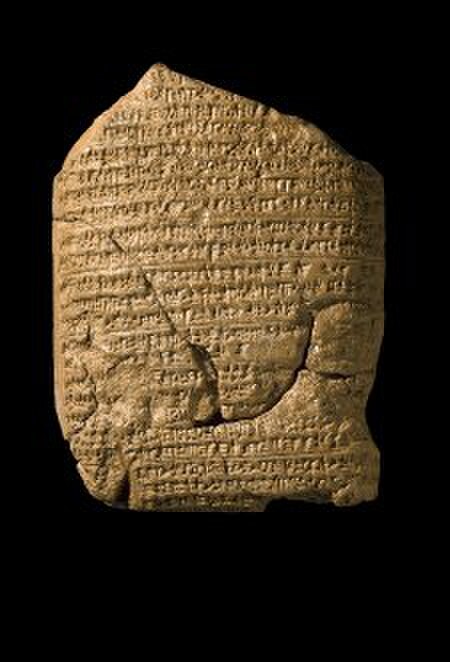
No text captures the emotional reality of exile more powerfully than Psalm 137:
"By the rivers of Babylon --- there we sat down and there we wept when we remembered Zion. On the willows there we hung up our harps. For there our captors asked us for songs, and our tormentors asked for mirth, saying, 'Sing us one of the songs of Zion!' How could we sing the Lord's song in a foreign land? If I forget you, O Jerusalem, let my right hand wither! Let my tongue cling to the roof of my mouth, if I do not remember you, if I do not set Jerusalem above my highest joy."
The psalm's final verses --- the wish for Babylon's destruction and the horrifying blessing on those who would dash Babylonian infants against rocks --- shock modern readers but express the raw rage and grief of a displaced people. The "rivers of Babylon" are the canals of the Mesopotamian irrigation system, along whose banks the exiles settled.
The Theological Crisis and Creative Response
DebatedThe destruction of Jerusalem and the temple created a profound theological crisis. The covenant theology of Deuteronomy promised that obedience would bring blessing and disobedience would bring curse --- but the destruction seemed disproportionate, especially for those who had been faithful. The Davidic covenant promised an eternal dynasty --- but the king was in chains in Babylon. The temple theology of Zion's inviolability --- reinforced by the miraculous deliverance from Sennacherib in 701 BCE --- was shattered.
The exile forced a radical theological rethinking. Several responses emerged:
The Deuteronomistic explanation: Israel sinned; the destruction was deserved. This is the theology of the Books of Kings, which present the entire history of the monarchy as a long decline into idolatry, punctuated by occasional reforms that came too late. The lesson: obey the covenant or perish.
The prophetic response: Second Isaiah (Isaiah 40--55), writing during the exile, proclaimed that the suffering was not permanent, that God was about to do a "new thing," that the exile itself had been a purification, and that Israel's God was not a local deity defeated by Marduk but the creator of the universe, the only God. "Comfort, O comfort my people, says your God. Speak tenderly to Jerusalem, and cry to her that she has served her term, that her penalty is paid" (Isaiah 40:1-2).
The priestly response: The detailed ritual legislation of the Priestly source (P) --- Leviticus, the tabernacle instructions in Exodus --- may have been composed or finalized during the exile as a blueprint for the restored temple. Ezekiel, a priest among the exiles, had visions of a new, idealized temple (Ezekiel 40--48) that would serve as God's eternal dwelling.
The development of synagogue worship: Without the temple, new forms of worship emerged. The gathering for prayer, scripture reading, and instruction that would become the synagogue may have originated in the exile, though the earliest archaeological evidence for synagogue buildings dates to much later (the third century BCE at the earliest).
DebatedMany scholars believe the exile was the crucible in which Judaism as a distinct religion was forged. The compilation and editing of the Torah, the Deuteronomistic History (Joshua through Kings), and much of the prophetic literature likely occurred during or shortly after the exile. Practices that distinguished Jews from their neighbors --- Sabbath observance, circumcision, dietary laws --- took on heightened significance as identity markers in a diaspora context. The shift from a religion centered on temple sacrifice and territorial sovereignty to one centered on Torah study, prayer, and ethical behavior began in Babylon.
The Elephantine Papyri: Jews in Egypt
VerifiedNot all Judahites went to Babylon. A significant community fled to Egypt, and some may have been there even before the destruction. 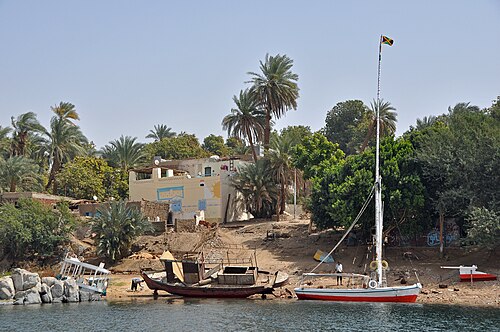
The Elephantine Papyri, discovered on Elephantine Island in the Nile near Aswan beginning in 1893, document a Jewish military garrison serving the Persian authorities in the fifth century BCE (after the Persian conquest of Egypt in 525 BCE).
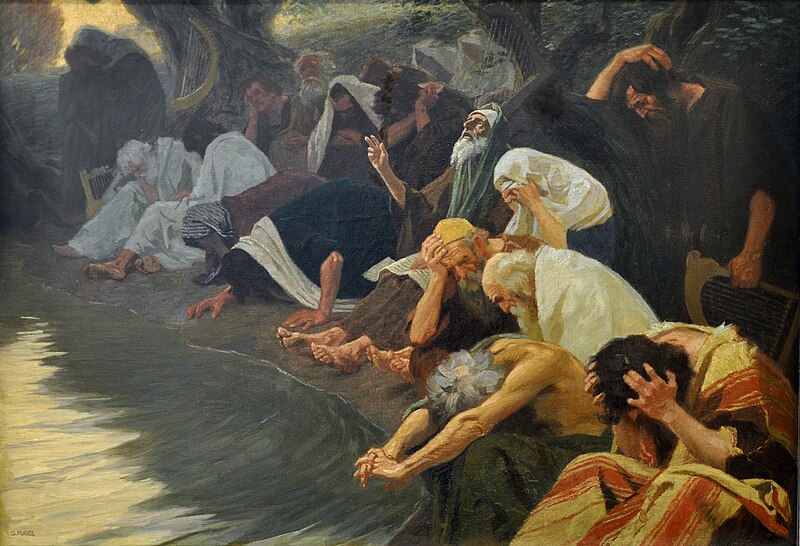
These Aramaic documents reveal a Jewish community that maintained a temple to YHW (a shortened form of YHWH) on the island --- a temple that apparently predated the Persian period and may have been established as early as the seventh or sixth century BCE. The community celebrated Passover, kept the Sabbath, but also invoked other deities alongside YHWH, including Anat-Yahu and Anat-Bethel.
VerifiedA famous letter (the "Passover Papyrus," Cowley 21) from 419 BCE relays instructions about proper Passover observance from the Persian authorities, suggesting that the Persian government actively supported Jewish religious practice. Another series of letters describes the destruction of the Elephantine temple by Egyptian priests of Khnum in 410 BCE and the community's appeals to both Jerusalem and Samaria for permission and support to rebuild it.
The Elephantine community provides a window into a form of Judaism that existed outside the developing orthodoxy of Jerusalem: a diaspora Judaism that was comfortable with its own temple, its own priesthood, and its own theological compromises. Its eventual disappearance --- the community is not attested after the late fifth century --- may reflect the growing authority of Jerusalem-centered Judaism.
Conclusion
The fall of Judah in 586 BCE was both an ending and a beginning. The Davidic monarchy ended. The First Temple was destroyed. The land was devastated, its elite exiled to Babylon, its remaining population scattered. The Lachish Letters preserve the last desperate communications of a doomed kingdom. The Babylonian Chronicles record the conqueror's matter-of-fact account of Jerusalem's fall.
But the exile also produced an extraordinary creative flowering. The theological crisis forced Israelite thinkers to reimagine their relationship with God, their understanding of history, and their identity as a people. The result was the compilation of the Torah, the articulation of universal monotheism, the development of new forms of worship, and the birth of a diaspora consciousness that would sustain Jewish life for the next 2,600 years.
The stones record destruction: burned buildings, arrowheads, shattered pottery, desperate letters on clay. The scrolls record survival: "By the rivers of Babylon, there we sat down and wept --- but we did not forget Jerusalem."
Locations in This Chapter
Loading map...