Part 4: Second Temple · 63 BCE – 66 CE
15.Roman Judea
Herod, Jewish sects, Jesus as historical figure
22 min read
Pompey's Conquest and the End of Independence Verified
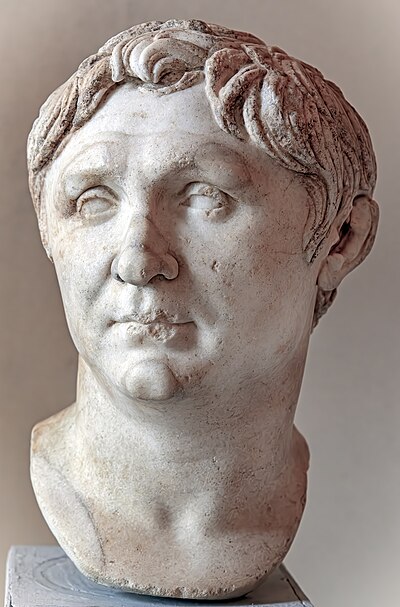
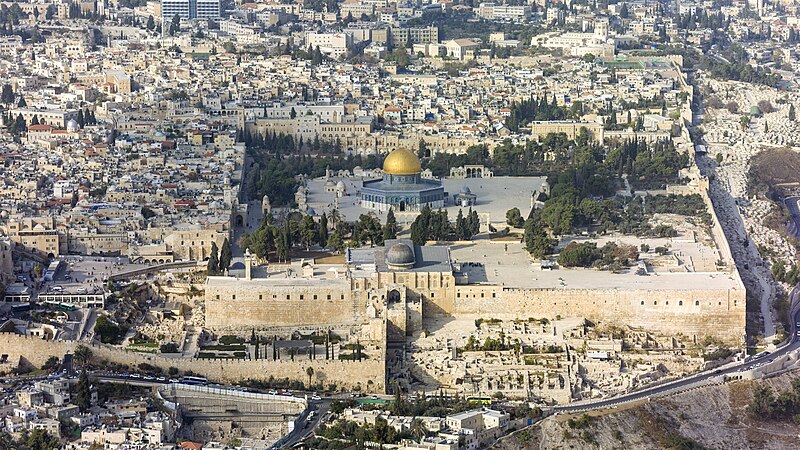
In the autumn of 63 BCE, the Roman general Gnaeus Pompeius Magnus — Pompey — marched his legions into Jerusalem, exploiting a civil war between the Hasmonean brothers Hyrcanus II and Aristobulus II. After a three-month siege, his soldiers breached the Temple Mount from the north, slaughtering the priests who continued offering sacrifices even as Roman swords cut them down. Josephus records that 12,000 Jews perished in the assault.
What Pompey did next shocked the Jewish world. He entered the Holy of Holies — the innermost chamber of the Temple that only the High Priest could enter once per year on Yom Kippur. Remarkably, Pompey touched nothing inside, leaving the Temple treasury and sacred vessels intact. But the damage was done. Judean independence, won by the Maccabees barely a century before, was over. The land became a Roman client state, and Hyrcanus II was installed as a puppet ruler stripped of the title "king," permitted only the lesser designation of ethnarch.
Archaeological evidence from this period confirms the Roman military presence. Sling bullets and arrowheads from the siege have been excavated on the Temple Mount, and the stratigraphic record shows destruction layers consistent with Josephus's account. The Roman historian Cassius Dio also records Pompey's conquest, providing independent corroboration.
Herod the Great: Builder and Tyrant Verified
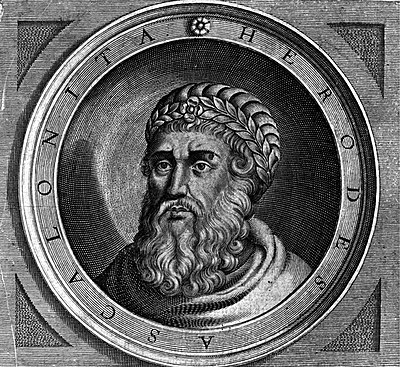
No figure looms larger over Roman Judea than Herod the Great (r. 37–4 BCE). An Idumean whose family had converted to Judaism under the Hasmoneans, Herod was appointed King of Judea by the Roman Senate in 40 BCE and spent three years fighting to secure his throne. He was a masterful politician, a paranoid despot, and arguably the greatest builder in the ancient Near East.
Herod's building program has left an archaeological legacy of staggering proportions, providing some of the most impressive physical evidence for any ancient ruler:
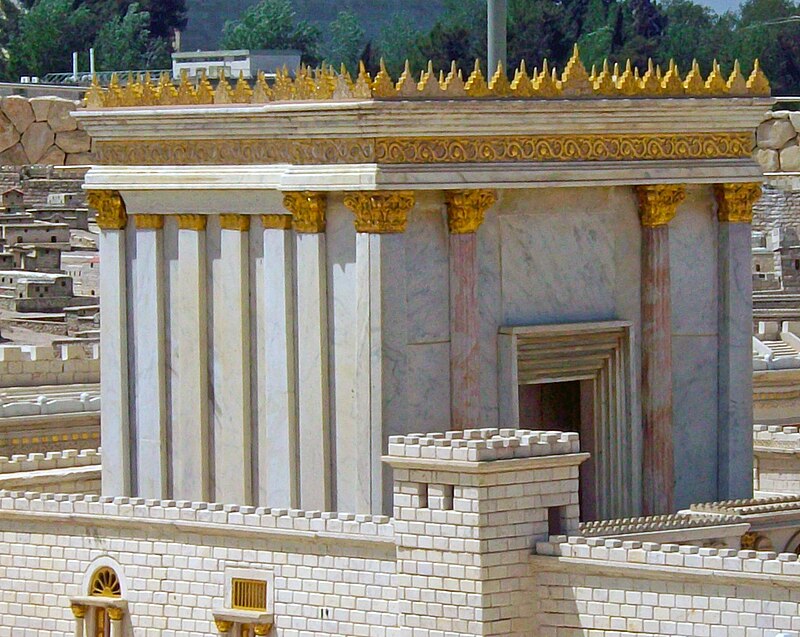
The Temple Expansion: Herod's most ambitious project was the enlargement of the Second Temple. He doubled the size of the Temple Mount by constructing enormous retaining walls and filling the gaps with earth and rubble. The platform he created — approximately 36 acres — remains the largest artificial platform in the ancient world. The Western Wall (Kotel), revered as the holiest site in Judaism where Jews may pray, is actually a retaining wall of Herod's expanded platform, not part of the Temple itself. Excavations by Benjamin Mazar beginning in 1968 uncovered the monumental staircase on the southern wall, the massive Herodian ashlars (some weighing over 500 tons), Robinson's Arch (the remnant of a grand staircase), and a paved Herodian street along the western wall's base. A 2011 excavation by Eli Shukron of the Israel Antiquities Authority discovered a drainage channel beneath this street where Jewish refugees hid during the Roman siege of 70 CE.
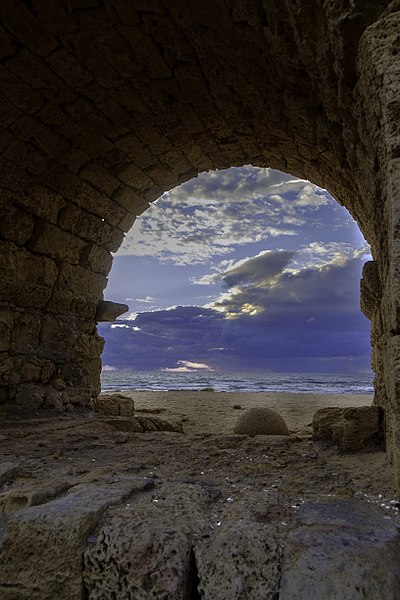
Caesarea Maritima: Herod constructed an entirely new city on the Mediterranean coast, complete with an artificial deep-water harbor — Sebastos — built using hydraulic concrete, a Roman engineering technique. Underwater archaeology by the Combined Caesarea Expeditions, beginning in 1980, has mapped the harbor's massive breakwaters, which used wooden forms filled with pozzolana (volcanic ash cement) lowered into the sea. The city included a Roman theater, a hippodrome, a palace complex built on a promontory extending into the sea, an aqueduct, and a temple dedicated to Roma and Augustus. These remains are visible today in Caesarea National Park.
Masada: Perched atop a sheer-sided mesa overlooking the Dead Sea, Herod transformed this natural fortress into a spectacular palace complex. His Northern Palace, clinging to the cliff face in three terraces, featured elaborate frescoes, a bathhouse with a hypocaust heating system, and colonnaded halls. Ehud Netzer's excavations (1963–1965, continuing Yigael Yadin's work) revealed storerooms capable of holding enough food and water for years — 29 large storerooms and 12 cisterns carved into the rock, holding an estimated 40,000 cubic meters of water.
Herodium: Located 12 kilometers south of Jerusalem, this volcano-shaped artificial mountain served as both a fortified palace and, according to Josephus, Herod's burial place. Ehud Netzer identified the royal tomb in 2007, though its sarcophagus was found smashed — perhaps by Jewish rebels during the Great Revolt. The site is now an Israeli national park.
Jericho Winter Palaces: Herod built three successive palaces near Jericho, exploiting the warm winter climate. Excavations by Netzer revealed opus reticulatum masonry, swimming pools, formal gardens, and a reception hall that spanned a wadi on an arched bridge — showing direct Roman architectural influence.
The Jewish Sects of the Second Temple Period Verified
Our primary source for the Jewish sects of this period is Josephus, who describes them in both The Jewish War (2.119–166) and Jewish Antiquities (18.11–25). Writing for a Roman audience, Josephus compared them to Greek philosophical schools — a comparison that obscures as much as it reveals but provides invaluable information.
The Pharisees: Josephus identifies the Pharisees as the most popular sect, numbering about 6,000 in Herod's time. They believed in the Oral Torah — authoritative traditions handed down alongside the Written Torah — and held doctrines including the immortality of the soul, resurrection of the dead, divine providence balanced with human free will, and the authority of non-priestly scholars to interpret the law. After the destruction of the Temple in 70 CE, Pharisaic Judaism became the foundation for Rabbinic Judaism, which remains the dominant form of Jewish practice today.
The Sadducees: Drawn primarily from the priestly and aristocratic classes, the Sadducees accepted only the Written Torah as authoritative, rejected belief in resurrection and angels, and emphasized Temple ritual. Their name may derive from Zadok, the High Priest under Solomon. Because their religious life centered on the Temple, they effectively ceased to exist after its destruction. We have no Sadducean writings; everything we know about them comes from their opponents — Josephus, the New Testament, and later rabbinic literature — making a fully balanced portrait impossible.
The Essenes: Josephus describes a sect of about 4,000 members who lived communally, practiced ritual immersion, shared meals, studied scripture, and observed an exceptionally strict interpretation of Jewish law. Since the discovery of the Dead Sea Scrolls in 1947, most scholars have identified the community at Qumran with the Essenes — though this identification remains contested. Roland de Vaux's excavations at Qumran (1951–1956) revealed communal dining rooms, ritual baths (mikva'ot), a scriptorium (a room possibly used for copying scrolls, identified by plaster writing tables), and a cemetery of over 1,000 graves. The scrolls themselves, found in 11 caves near Qumran, include the Community Rule (1QS), which describes an organization strikingly similar to Josephus's account of the Essenes.
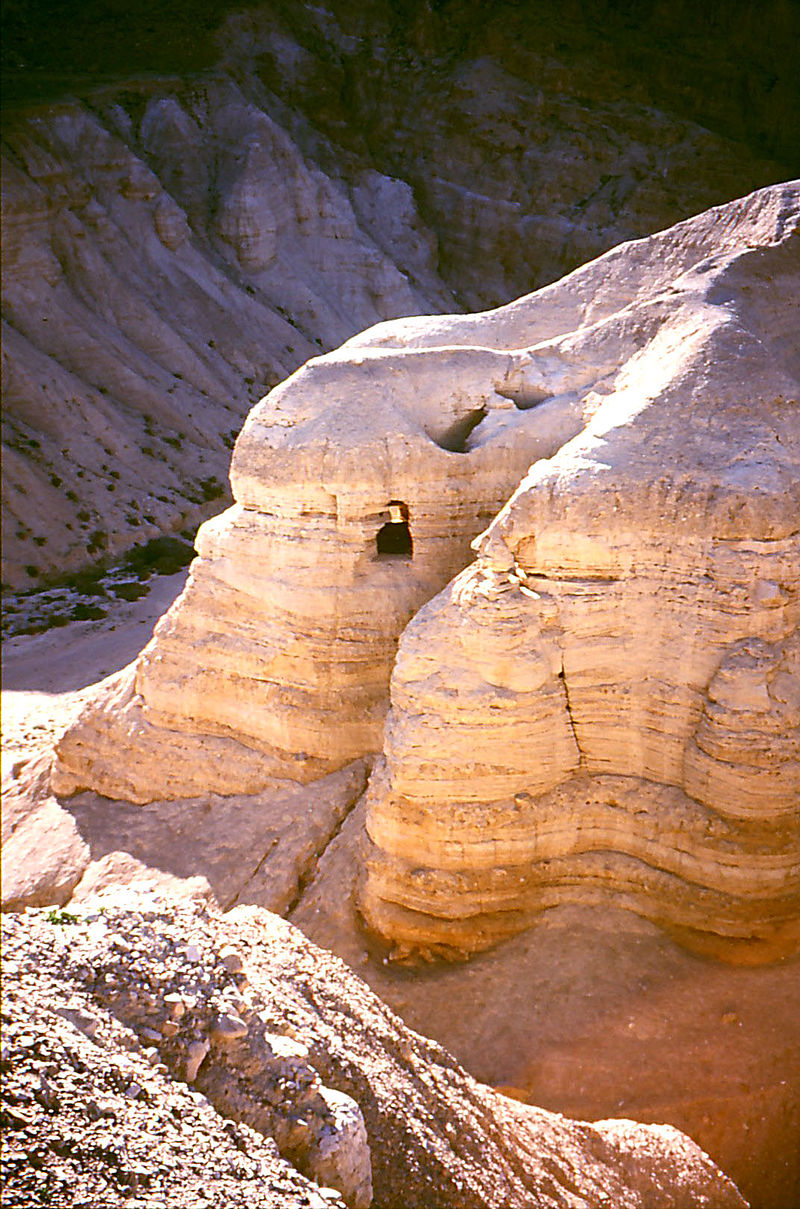
The Zealots: Josephus attributes the founding of the "Fourth Philosophy" to Judas the Galilean, who led a revolt against the Roman census of 6 CE, arguing that paying tribute to Rome was tantamount to idolatry. The term "Zealot" (kanna'i) is used loosely by Josephus and may refer to several distinct groups unified by their militant opposition to Roman rule. The Sicarii (dagger-men) were a radical faction who assassinated Jewish collaborators in crowded public places.
Jesus of Nazareth as Historical Figure Debated
The historical existence of Jesus of Nazareth is attested by several non-Christian sources, though the extent and interpretation of these attestations remain subjects of intense scholarly debate.
Josephus's Testimonium Flavianum (Antiquities 18.63–64): This passage, as it exists in all surviving manuscripts, describes Jesus as "a wise man, if indeed one ought to call him a man," who "was the Christ" and who appeared alive to his followers three days after his crucifixion. The majority of scholars regard this text as containing an authentic Josephan core that was later embellished by Christian copyists. The original passage likely acknowledged Jesus as a teacher who attracted followers and was crucified under Pontius Pilate — without the Christological claims. An Arabic version preserved by the 10th-century Christian historian Agapius of Hierapolis offers what some scholars consider closer to Josephus's original wording, describing Jesus as a "wise man" without calling him the Messiah.
A second, less contested reference in Josephus (Antiquities 20.200) mentions "the brother of Jesus, who was called Christ, whose name was James" — describing the execution of James in 62 CE. Most scholars accept this passage as authentic because the casual reference to Jesus serves only to identify James and lacks any theological agenda.
Tacitus (Annals 15.44): Writing around 116 CE, the Roman historian Tacitus mentions "Christus" as the founder of the Christian movement, noting that he "suffered the extreme penalty during the reign of Tiberius at the hands of one of our procurators, Pontius Pilatus." This passage is generally considered authentic because Tacitus displays clear hostility toward Christianity, calling it a "mischievous superstition."
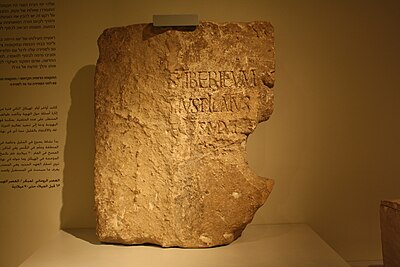
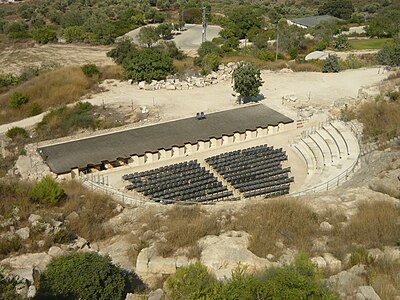
The Pontius Pilate Inscription: In 1961, Italian archaeologists led by Antonio Frova excavating the Roman theater at Caesarea Maritima discovered a limestone block bearing a partial Latin inscription mentioning "[Pont]ius Pilatus, [Praef]ectus Iuda[eae]" — "Pontius Pilate, Prefect of Judea." This is the only archaeological evidence directly naming Pilate, and it clarified his title: prefect, not procurator as Tacitus later called him. The stone, now in the Israel Museum in Jerusalem, confirms the historicity of the Roman official under whom Jesus was executed according to all four Gospels and Tacitus.
The Caiaphas Ossuary and Burial Practices Verified
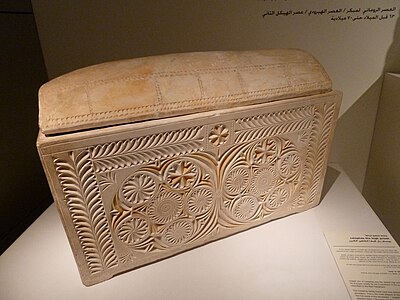
In November 1990, construction workers in Jerusalem's Peace Forest accidentally broke into a burial cave from the Second Temple period. Inside, archaeologists from the Israel Antiquities Authority discovered 12 ossuaries — limestone bone boxes used in the Jewish burial practice of ossilegium (secondary burial). This practice involved placing the deceased in a burial niche for about a year until the flesh decomposed, then collecting the bones and placing them in a stone box.
The most ornate ossuary in the cave bore the Aramaic inscription Yehosef bar Qayafa — "Joseph son of Caiaphas." Most scholars identify this as the family ossuary of the High Priest Caiaphas, who according to the Gospels presided over the trial of Jesus. The ossuary contained the bones of six individuals, including a man approximately 60 years old. It is now displayed in the Israel Museum.
The ossuary tradition itself is well documented in the archaeological record. Thousands of ossuaries from the late Second Temple period (c. 30 BCE–70 CE) have been found in and around Jerusalem. They often bear inscriptions in Hebrew, Aramaic, or Greek, providing a remarkable database of Jewish names from this period. Scholars Rachel Hachlili and Tal Ilan have catalogued these inscriptions extensively, revealing naming patterns that correlate closely with those found in the New Testament and rabbinic literature.
Daily Life in Roman Judea Verified
Archaeological excavations across Israel have revealed extensive evidence of daily life during the Roman period. The picture that emerges is of a society thoroughly Jewish in its observances while increasingly influenced by Greco-Roman material culture.
Ritual Purity: Hundreds of mikva'ot (stepped ritual baths) have been excavated throughout Judea, Galilee, and even at Masada and Qumran. Their ubiquity confirms that ritual immersion was practiced by ordinary Jews, not just priestly elites. Archaeologist Ronny Reich has catalogued over 850 mikva'ot from the Second Temple period, making them one of the most diagnostic archaeological markers of Jewish settlement.
Stone Vessels: Jewish purity laws held that stone, unlike pottery, could not become ritually impure. Excavations in Jerusalem's Jewish Quarter, led by Nahman Avigad in the 1970s, uncovered workshops producing stone vessels — cups, bowls, and large storage jars carved from soft limestone. These "measuring cups" (kalal) are found almost exclusively in Jewish contexts, serving as another reliable indicator of Jewish habitation.
The Jerusalem Mansions: Avigad's excavations in the Jewish Quarter also revealed the palatial homes of the priestly aristocracy. The so-called "Burnt House," destroyed in the Roman sacking of 70 CE, preserved a complete domestic assemblage: stone tables, ceramic and glass vessels, a stone weight inscribed with the name "Bar Kathros" — a priestly family mentioned critically in the Talmud (Pesachim 57a) — and evidence of violent destruction including a burned wooden beam and the skeletal arm of a young woman.
Coinage: Judean coins provide both chronological markers and ideological evidence. Herod's coins carefully avoided human or animal images, respecting Jewish aniconism — a policy his successors did not always maintain. The coins of the Roman procurators sometimes featured pagan symbols that provoked Jewish protest, as when Pontius Pilate issued coins bearing the lituus (augur's wand), a Roman religious implement.
Growing Tensions with Rome Verified
The period between Herod's death in 4 BCE and the outbreak of the Great Revolt in 66 CE was marked by escalating friction between the Jewish population and their Roman rulers. Josephus, our primary source, records a cascade of provocations and responses.
After Herod's death, his kingdom was divided among three sons — Archelaus (Judea and Samaria), Antipas (Galilee and Perea), and Philip (territories northeast of the Sea of Galilee). Archelaus proved so incompetent that Rome deposed him in 6 CE and placed Judea under direct Roman rule through a series of prefects (later procurators).
The census of 6 CE, conducted by the Syrian legate Quirinius to assess the new province for taxation, provoked the revolt of Judas the Galilean. Though the revolt was crushed, it planted the seed of militant resistance that would grow over the next six decades.
Subsequent provocations included Pilate's introduction of Roman military standards bearing the emperor's image into Jerusalem (Josephus, Antiquities 18.55–59), Caligula's attempt in 40 CE to erect a statue of himself in the Temple (averted only by the emperor's assassination), and a series of corrupt and brutal procurators in the 50s and 60s CE — Ventidius Cumanus, Antonius Felix, and Gessius Florus.
The social tensions were not merely political. Economic inequality, drought, banditry, and messianic fervor all contributed to the volatile atmosphere. Josephus describes a succession of messianic pretenders and prophetic figures — Theudas, the "Egyptian," and others — who attracted large followings and were suppressed by Rome.
The James Ossuary Controversy Debated
In 2002, the Israeli collector Oded Golan announced the discovery of an ossuary bearing the Aramaic inscription "Ya'akov bar Yosef akhui di Yeshua" — "James son of Joseph, brother of Jesus." If authentic, this would be the earliest archaeological reference to Jesus of Nazareth and a direct connection to the family described in the New Testament.
The announcement set off one of the most contentious debates in modern archaeology. The Israel Antiquities Authority convened a committee of experts who concluded in 2003 that while the ossuary itself was genuine (1st century CE), the second half of the inscription ("brother of Jesus") was a modern forgery, added to an authentic but unremarkable ossuary to increase its value. Golan was charged with forgery and fraud.
However, the subsequent trial — one of the longest in Israeli legal history, lasting from 2004 to 2012 — ended in Golan's acquittal. The judge ruled that the prosecution had not proven beyond reasonable doubt that the inscription was forged, though he explicitly stated that the acquittal did not constitute a finding of authenticity. The inscription's status remains unresolved: some epigraphers (notably Andre Lemaire of the Sorbonne, who first published the inscription) continue to argue for its authenticity, while others remain convinced it is a forgery. The ossuary is now on display at the Israel Museum.
The controversy illustrates the high stakes and fierce passions that surround archaeological finds touching on biblical history, and the difficulty of distinguishing authentic ancient artifacts from modern forgeries in the antiquities market.
The Stage is Set Tradition
Jewish tradition remembers this period through the lens of the destruction that followed. The Talmud (Yoma 9b) attributes the fall of the Second Temple to sinat chinam — "baseless hatred" among Jews — a theological explanation for the internecine conflicts that Josephus describes in vivid and heartbreaking detail. The rabbis taught that Jerusalem was destroyed because its inhabitants insisted on the strict letter of the law without practicing compassion beyond its requirements (Bava Metzia 30b).
The Pharisaic sage Hillel the Elder, active in the generation before Jesus, is remembered for his emphasis on interpersonal ethics. His famous summary of the Torah — "What is hateful to you, do not do to your fellow. That is the whole Torah; the rest is commentary. Go and study" (Shabbat 31a) — became a cornerstone of Rabbinic Judaism. His disputes with the stricter Shammai generated a body of legal debate (machloket) that the Mishnah preserves in meticulous detail, recording both majority and minority opinions in a tradition of constructive disagreement that contrasts sharply with the violent factionalism that would soon tear Jerusalem apart.
The stage was set for catastrophe. Within a generation, the Temple would be destroyed, Jerusalem would burn, and Judaism would face the greatest crisis in its history — a crisis from which it would emerge transformed, but only through extraordinary acts of theological creativity and communal resilience.
Taxation, Tribute, and Economic Pressure Verified
The Roman system of taxation in Judea was a constant source of grievance and a major driver of the discontent that led to revolt. Multiple layers of taxation burdened the population:
- Tributum soli: A land tax based on agricultural yield
- Tributum capitis: A head tax on every adult
- Customs duties: Taxes on goods transported between regions, collected at toll stations
- Temple tax: The half-shekel contribution to the Temple, distinct from Roman taxes
- Priestly tithes: Agricultural tithes owed to the priestly and Levitical classes
Tax collection was farmed out to publicani (tax collectors), who bid for the right to collect taxes and kept whatever they collected above the contracted amount — creating a system rife with extortion. The Gospels' depiction of tax collectors (mokhsin in rabbinic literature) as social pariahs reflects the genuine hostility these figures provoked.
Archaeological evidence of the tax burden includes ostraca (inscribed pottery sherds) recording tax payments found at various sites, and the Babatha archive — a collection of legal documents from the early 2nd century CE found in the Cave of Letters near the Dead Sea, which includes tax receipts, property registrations, and legal contracts that illuminate the economic lives of ordinary Jews under Roman rule. The Babatha documents, written in Aramaic, Nabataean, and Greek, are now in the Israel Museum.
Galilee in the Time of Jesus Verified
Extensive archaeological work in the Galilee has illuminated the world in which Jesus lived and taught. Excavations at Nazareth, Capernaum, Magdala, Cana, and Sepphoris have revealed first-century Jewish villages and towns with stone vessels, mikva'ot, and other markers of Jewish observance.
Sepphoris, the largest city in the Galilee and just 6 kilometers from Nazareth, was being rebuilt by Herod Antipas during Jesus's youth. Whether Jesus or his father Joseph (described as a tekton — builder or carpenter) worked on the construction is speculative but plausible given the proximity and the demand for labor.
The so-called "Jesus Boat" — a 1st-century fishing vessel discovered in 1986 in the mud of the Sea of Galilee during a drought — provides a tangible connection to the world of Galilean fishermen described in the Gospels. The boat, dated by radiocarbon and pottery analysis to approximately 100 BCE–70 CE, is now displayed in the Yigal Allon Museum at Kibbutz Ginosar.
The Synagogue Before the Destruction Debated
The origins of the synagogue are debated among scholars. The traditional view holds that synagogues emerged during the Babylonian Exile (586–539 BCE) as substitutes for Temple worship, but archaeological evidence for pre-70 CE synagogues is limited and sometimes contested.
The most securely identified Second Temple–period synagogues include structures at Gamla (excavated by Shmaryahu Gutman in 1976), Masada, Herodium, and Magdala. The Magdala synagogue, discovered in 2009 during construction of a hotel, is particularly significant: it contained a carved stone block depicting what appears to be the Temple's seven-branched menorah — the earliest known depiction of the menorah from a synagogue context. The stone is now displayed at the site.
A Greek inscription from Jerusalem, known as the Theodotus Inscription (discovered in 1913-1914 by Raymond Weill), records the construction of a synagogue "for the reading of the Law and the teaching of the commandments" by Theodotus son of Vettenos, a archisynagogos (synagogue head). The inscription is now in the Rockefeller Museum in Jerusalem. It provides epigraphic evidence for synagogue function before 70 CE, though some scholars have questioned its precise dating.
The relationship between the Temple and the synagogue in this period remains a subject of scholarly inquiry. Were synagogues merely community centers and houses of study, or did they serve a liturgical function parallel to Temple worship? The evidence suggests that synagogues served multiple purposes — study, prayer, communal meals, and adjudication — but did not rival the Temple's sacrificial cult. After 70 CE, the synagogue would absorb much of the Temple's liturgical function, transforming Jewish worship fundamentally and permanently.
The Herodian Dynasty After Herod Verified
Herod's death in 4 BCE (the conventional dating, based on Josephus's synchronism with a lunar eclipse) set off a succession crisis that shaped the political landscape of Judea for generations. His son Archelaus inherited Judea but was exiled by Rome in 6 CE. Herod Antipas, tetrarch of Galilee, built the city of Tiberias on the western shore of the Sea of Galilee — controversially sited atop a Jewish cemetery, which initially made observant Jews reluctant to inhabit it. Antipas is the "Herod" who, according to the Gospels, executed John the Baptist; Josephus independently confirms this execution (Antiquities 18.116–119), attributing it to Antipas's fear that John's popular following might lead to sedition.
Herod Agrippa I (r. 41–44 CE), Herod's grandson, briefly reunited the kingdom under a single Jewish ruler and was remembered favorably in rabbinic tradition. The Mishnah (Sotah 7.8) records that Agrippa wept while reading Deuteronomy 17:15 ("You shall set a king over you... from among your brothers") because as an Idumean he was uncertain of his Jewish legitimacy. The assembled crowd reportedly called out, "You are our brother! You are our brother!" — a poignant moment of acceptance.
His son, Agrippa II (r. 50–c. 93 CE), was the last of the Herodian line. He attempted to prevent the Great Revolt, delivering a speech (preserved in Josephus, Jewish War 2.345–404) warning that war against Rome was suicidal. When his warnings went unheeded, he sided with Rome. Coins minted by Agrippa II, found across northern Israel, provide precise chronological markers for this tumultuous period.
The Road to Revolt Tradition
As the first century CE progressed, apocalyptic expectations intensified. The Dead Sea Scrolls' War Scroll (1QM) envisions a cosmic battle between the "Sons of Light" and the "Sons of Darkness." The Psalms of Solomon, a Jewish text from the first century BCE preserved in Greek, prays for a messianic king to purify Jerusalem and drive out the Gentiles. The Assumption of Moses, another Jewish text likely from the early first century CE, predicts divine intervention to destroy Israel's enemies.
These texts reveal a society saturated with eschatological hope — the fervent belief that God would intervene decisively in history to liberate Israel, destroy the wicked, and establish a kingdom of justice. This expectation, rooted in prophetic traditions stretching back to Isaiah, Jeremiah, and Daniel, provided the ideological fuel for the explosive events that would soon engulf Judea.
The Talmud preserves a tradition (Gittin 56a) about Rabban Yohanan ben Zakkai, who foresaw the destruction and smuggled himself out of besieged Jerusalem in a coffin to establish a center of learning at Yavneh. Whether historically precise or not, this narrative captures the essential truth of what happened next: as the political state collapsed, the scholars who would rebuild Judaism on the foundation of Torah study were already preparing for a world without the Temple.
Locations in This Chapter
Loading map...